|
|
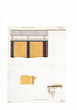
| Wall painting. South House Room 9 ... Marian Welker ... 87-403 87-403 Dirty Watercolor Paper Watercolor ... 1948 |
| South of Drain A ... ΝΝ-26 5056, 5057 ΝΝ 3011 SS 10061 Lot ΝΝ 637 ... 17 Jun 1947 ... South of Drain A |
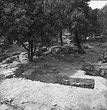
| South of Wall A ... ΟΟ-12 2370, 2371 ΟΟ 1019 P 19972 ΟΟ 1014 P 19950 Section ΟΟ 348 ... 27 Apr 1949 ... South of Wall A |
http://agathe.gr/democracy/political_organization_of_attica.html Political Organization of Attica: Demes and Tribal Representation Each tribe was divided into three parts, and each third (trittys) was from one of the three regions of Attica, plain, coast, or hills ... On one side of each plaque the name of a tribe is written: ΛΕΟ for the tribe of Leontis, and ΕΡΕ for the tribe of Erechtheis. ... ΗΑΛΙΜΟΣ is the name of a deme. The tokens were cut before firing in the kiln and would have been reunited in the process of allotting the deme office. ... Found inside the remains of the South Stoa, this inscription is a record of the metronomoi, the inspectors of weights and measures, of whom Aristotle wrote in the Athenian Constitution (51.2): "There are ten metronomoi appointed by lot, five for the city and five for Piraeus. |
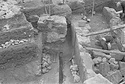
| Door sill in southern H house. South of a. Looking south ... AMS 1351 Horizontal (normal) ... Door sill in southern H house. South of a. Looking south. |
| Area South of Wall A ... ΟΟ-13 2424, 2425 ΟΟ:1949.0503:3 Lot ΟΟ 376 Lot ΟΟ 452 ... 3 May 1949 ... Area South of Wall A |
http://agathe.gr/democracy/theater.html Theater Western drama was an Athenian invention which developed late in the 6th century B.C. out of the festivals celebrated in honor of the god Dionysos. Originally held in the Agora, the plays were soon ... Originally held in the Agora, the plays were soon transferred to the South Slope of the Acropolis, where a theater holding close to 15,000 people was constructed. ... A male figure wearing the mask of a slave sits at the foot of the couch. ... He may be part of a set for a mythological comedy that parodied the story of Herakles and Auge. |
| Other. Area South of A; Poros Building Drain. Well ... ΟΟ-13 2430, 2431 ΟΟ:1949.0430:1 Lot ΟΟ 508 D 17:15 D 17:12 ... 3 May 1949 ... Area South of A; Poros Building Drain |
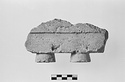
| Broken all around. Fragment of pan tile.
Inscription along edge: [Ο] CΕΠΙΦΑΝΟΥ.
Very coarse gritty clay, dark buff with intrusions. Creamy slip covers flat surfaces. South of Room A 1 of the Southwest ... 19 June 1969 ... Fragment of pan tile.
Inscription along edge: [Ο] CΕΠΙΦΑΝΟΥ.
... South of Room A 1 of the Southwest Bath, layer I. |
http://agathe.gr/democracy/the_ekklesia.html The Ekklesia (Citizens' Assembly) All Athenian citizens had the right to attend and vote in the Ekklesia, a full popular assembly which met about every 10 days. All decrees (psephismata) were ratified ... All decrees (psephismata) were ratified by the Ekklesia before becoming law. As a rule, the Ekklesia met at its own special meeting place known as the Pnyx, a large theater-shaped area set into the long ridge west of the Acropolis. ... In phase I (about 500 B.C.) the Pnyx utilized the natural slope of the hillside, but either political concerns or the exposure of the seating area to northeast winds made a reversal of the structure necessary. ... Two large stoas were begun but never finished on the south side of the Pnyx adjacent to the city wall. |
http://agathe.gr/guide/odeion_of_agrippa.html Odeion of Agrippa Late in the 1st century B.C. the Athenians were given money for a new marketplace by Caesar and Augustus, and the northern half of the old Agora square was filled with two new structures, ... Odeion of Agrippa Late in the 1st century B.C. the Athenians were given money for a new marketplace by Caesar and Augustus, and the northern half of the old Agora square was filled with two new structures, the Odeion of Agrippa and the Temple of Ares. ... Entry to the Odeion was either from the upper level of the Middle Stoa on the south or through a modest porch at ground level on the north (Fig. 53). ... It was rebuilt in the early 5th century A.D. as part of a sprawling complex, perhaps a palace, with numerous rooms, a bath, and several courtyards, which extended southward all the way across the old South Square (Fig. 55). |
http://agathe.gr/democracy/the_boule.html The Boule (The Senate) The Athenian legislature also included a deliberative body known as the Boule. It was made up of 500 members -- 50 from each of the 10 tribes -- who were chosen by lot and served ... Excavations have revealed the foundations of a nearly square building (23.30 m. ... Fragment of a marble basin, about 500 B.C. ... It was found just south of the foundations of the Old Bouleuterion. |
http://agathe.gr/guide/library_of_pantainos.html Library of Pantainos Lying partially under and behind the Late Roman wall are the remains of a building identified by its inscribed marble lintel block as the Library of Pantainos, dedicated to Athena ... It consists of a large square room and a paved courtyard, surrounded by three stoas that had shops behind their colonnades. ... The dedicator, Titus Flavius Pantainos, was the son of the head of a philosophical school and refers to himself as a priest of the philosophical muses. ... The northern stoa runs eastward, along the south side of a marble street that led in Roman times from the Agora to the Doric gateway of the market of Caesar and Augustus, also known as the Roman Agora. |
http://agathe.gr/overview/the_stoa_of_attalos.html The Stoa of Attalos The Stoa of Attalos was originally built by King Attalos II of Pergamon (159–138 B.C.), as a gift to the Athenians in appreciation of the time he spent in Athens studying under the ... The Stoa of Attalos The Stoa of Attalos was originally built by King Attalos II of Pergamon (159–138 B.C.), as a gift to the Athenians in appreciation of the time he spent in Athens studying under the philosopher Karneades. ... The finished south end of the stoa at the time of the dedication. ... Where possible, remains of the original building were incorporated: the north end, the southernmost shops, part of the south wall, and the south end of the outer steps. |
http://agathe.gr/guide/stoa_of_attalos.html Stoa of Attalos Lining the east side of the Agora square is the Stoa of Attalos (Fig. 47), built during the reign of Attalos II of Pergamon (159–138 B.C.), who studied in Athens under the philosopher Karneades ... The column capitals used upstairs for the inner colonnade are of an unusual type ("Pergamene"), a late adaptation of early Egyptian prototypes. ... Parts of the original building were left or incorporated at the south end, so the visitor can check the validity of the restoration. The reconstruction demonstrates the effectiveness of the stoa as the ideal architectural form for a public building in Greece: the colonnaded walkways provide light and fresh air for literally thousands of people, while protecting them from the intense sun of summer or the wind and rain of winter. |
http://agathe.gr/guide/temple_of_apollo_patroos.html Temple of Apollo Patroos Next to the Stoa of Zeus at the south are the remains of a small temple of Apollo Patroos (Fatherly), so-called because he was the father of Ion, founder of the Ionian Greeks, ... Temple of Apollo Patroos Next to the Stoa of Zeus at the south are the remains of a small temple of Apollo Patroos (Fatherly), so-called because he was the father of Ion, founder of the Ionian Greeks, a tribe that included the Athenians (Fig. 10). ... Reconstructed plan of the Temple of Apollo Patroos, dating from the second half of the 4th century B.C. ... In front of the temple one Apollo was made by Leochares, the other -- whom they call Alexikakos (averter of evil) -- by Kalamis. |
http://agathe.gr/democracy/the_athenian_aristocracy.html The Athenian Aristocracy Before democracy, from the 8th to the 6th century B.C., Athens was prosperous economically but no more significant than many other city-states in Greece. Silver deposits south ... Silver deposits south of Athens, quarries of fine white marble, and extensive clay beds that skilled potters used to good advantage made the city wealthy but otherwise unremarkable. ... Each earring consists of a shaft made of fine wires to which is attached a trapezoidal plaque decorated with filigree and granulation. ... Drawing of the cremation burial of a wealthy woman. |
| a) Lower part with fillet at bottom. Covered with doodles.
b) Upper part with torus at top and flat band below it.
From East Building.
Blue marble. Found at S/9-17/7 (Fall 2016). a) Erected from original ... 1959 ... a) Lower part with fillet at bottom. ... a) Erected from original recumbent position inside East Building.
b) In situ to the south of fragment a), lying recumbent north-south below epistyle A 2850. |
http://agathe.gr/guide/stoa_of_zeus_eleutherios.html Stoa of Zeus Eleutherios Lying just south of the railroad tracks, along the west side, are the remains of the Stoa of Zeus Eleutherios (Freedom) (Figs. 8, 9). This cult of Zeus was established after the ... Stoa of Zeus Eleutherios Lying just south of the railroad tracks, along the west side, are the remains of the Stoa of Zeus Eleutherios (Freedom) (Figs. 8, 9). ... According to Pausanias it was decorated with paintings done by Euphranor, a famous 4th-century artist, and the shields of those who died fighting for the freedom of Athens were displayed on the building. Rooms were added to the back of the stoa in the Early Roman period and may have housed a cult of the Roman emperors. |
http://agathe.gr/guide/south_stoa_ii.html South Stoa II South Stoa II ran westward from the south end of the East Building, parallel to the Middle Stoa (Figs. 38, 41). Dating to the second half of the 2nd century B.C., it consisted of a single ... South Stoa II South Stoa II ran westward from the south end of the East Building, parallel to the Middle Stoa (Figs. 38, 41). Dating to the second half of the 2nd century B.C., it consisted of a single Doric colonnade of limestone, the superstructure reused from a building of the 4th century B.C. ... South Stoa I was put out of use by South Stoa II, and much of the earlier building was quarried away at the west to accommodate the lower floor levels of the South Square. |
http://agathe.gr/democracy/administration_and_bureaucracy.html Administration and Bureaucracy The economy of Athens was supervised by numerous boards of officials in charge of the mint, the marketplace, weights and measures, and the grain and water supplies. Most ... One function of the Tholos was to serve as a repository for official weights and measures under the supervision of the inspectors, the metronomoi. ... Each weight carries not only an inscription giving the name of the weight but also a symbol in high relief, which served both as a visual key to the particular unit or fraction and for the benefit of the illiterate. ... The coins were struck in a wide variety of multiples or fractions of the basic unit, the drachma, which was roughly a day's wage. |
| West End of South Cut A ... ΟΟ-18 3570, 3571 ΟΟ 1407 P 20423 ΟΟ 1362 L 4654 ΟΟ 1368 MC 808 ΟΟ 1408 P 20424 ΟΟ 1409 P 20425 ΟΟ:1949.1025:14 Lot ΟΟ 574 Lot ΟΟ 575 ... 25 Oct 1949 ... West End of South Cut A |
| Central Part of South Cut A ... ΟΟ-18 3568, 3569 ΟΟ 1411 L 4669 Lot ΟΟ 604 Lot ΟΟ 609 Lot ΟΟ 587 Section ΟΟ 557 ... 26-27 Oct 1949 ... Central Part of South Cut A |
| Floor north of Wall A, south of House E, looking south ... AMS south 1108 Horizontal (normal) ... 1 Aug 2010 ... Floor north of Wall A, south of House E, looking south. |
| House I A. Great Drain; South of Pit 6. West of House IV A; South of House I A ... ΟΟ-3 444, 445 Section ΟΟ 70 Section ΟΟ 71 ... may 14 1947 ... House I A ... Great Drain; South of Pit 6 ... West of House IV A; South of House I A |
| House B, south of Wall a, looking west ... AMS Horizontal (normal) ... House B, south of Wall a, looking west. |
| House I A; South of House I A; West of House IV ... ΟΟ-3 426, 427 Lot ΟΟ 1 Section ΟΟ 72 ... may 10 1947 ... House I A; South of House I A; West of House IV |
| South end of Wall A, before removing a course of stones. [Before basket 43] ... Marcie Handler ... south Horizontal (normal) ... 25 Jul 2002 ... South end of Wall A, before removing a course of stones. |
| One front corner remains with complete profile of hawk's beak.
Travertine-like limestone presumably to be stuccoed.
From Square Peristyle, South Stoa II. From a marble pile to east of south end of Stoa ... 28 June 1950 ... One front corner remains with complete profile of hawk's beak.
Travertine-like limestone presumably to be stuccoed.
From Square Peristyle, South Stoa II ... From a marble pile to east of south end of Stoa of Attalos. |
http://agathe.gr/guide/history_of_the_agora.html History of the Agora The excavations of the Athenian Agora have uncovered about thirty acres on the sloping ground northwest of the Acropolis (Fig. 3). Material of all periods from the Late Neolithic to ... Panorama of the Agora viewed from the south, with the Hephaisteion (Theseion) at left and the restored Stoa of Attalos (museum) at right. ... Three large stoas were built in the Agora in the 2nd century (Middle Stoa [17], South Stoa II [19], and Stoa of Attalos [22]) and the archive building (Metroon [8]) was rebuilt with a colonnaded facade. ... The area was given over to a variety of large villas in the 4th and 5th centuries A.D. |
Dark Age ... House I A; South of South Wall |
| Small fragment retaining undercut hood between two glyphs.
Material and workmanship as of A 2915 series.
Square Peristyle - South Stoa.
Travertine.
Same: A 1973, A 2239, A 2924. Found in front of east ... July 1959 ... Material and workmanship as of A 2915 series.
... Same: A 1973, A 2239, A 2924 ... Found in front of east half of South Stoa II at level of mid 3rd c. |
| Comprised of four drums. Square empolion cuttings for all joints except that between shaft and base. Drums neatly lettered from top down Λ - Ο.
Marble. Found at R/6-15/19 (Fall 2016). From tower of Late ... July 1959 ... Comprised of four drums. Square empolion cuttings for all joints except that between shaft and base. ... From tower of Late Roman Fortification at S.W. corner of Library of Pantainos; from lowest course of south wall of tower together with A 2969, A 2970, A 2972 and A 2973, and fragments A 2891 and A 2892. |
http://agathe.gr/guide/south_stoa_i.html South Stoa I Measuring some 80 meters long, South Stoa I takes up much of the south side; its eastern end is the better preserved (Figs. 31, 32). It had a double colonnade, with sixteen rooms behind. It ... South Stoa I Measuring some 80 meters long, South Stoa I takes up much of the south side; its eastern end is the better preserved (Figs. 31, 32). ... Reconstruction of a dining room in South Stoa I, ca. 430–420 B.C. ... Aerial view of the east end of South Stoa I, ca. 430–420 B.C. |
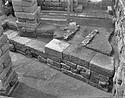
| Poros Building south of Tholos (Building A) ... also called (1949) Poros Building, Bldg. A and "Greek Building". west Horizontal (normal) ... June 1935 ... Poros Building south of Tholos (Building A). |
| Poros Building south of Tholos (Building A) ... also called (1949) Poros Building, Bldg. A and "Greek Building". west Horizontal (normal) ... June 1935 ... Poros Building south of Tholos (Building A). |
| Comprised of four drums. Square empolion cuttings for all joints except that between shaft and base. Drums neatly lettered from top down Ζ - Κ.
With this shaft goes capital A 2973 and base A 2891-A 2892 ... July 1959 ... Comprised of four drums. Square empolion cuttings for all joints except that between shaft and base. ... With this shaft goes capital A 2973 and base A 2891-A 2892.
... From tower of Late Roman Fortification at S.W. corner of Library of Pantainos; from lowest course of south wall of tower together with A 2969, A 2971, A 2972 and A 2973, and fragments A 2891 and A 2892. |
| Late walls in the court, abutting the line of the colonnade of the Square Peristyle. To the south of the foundation remains a little of the latest floor of the court. Foundation of Pier 21 of the Stoa ... south 3760 Horizontal (normal) ... 3 Jun 1954 ... Late walls in the court, abutting the line of the colonnade of the Square Peristyle. To the south of the foundation remains a little of the latest floor of the court. Foundation of Pier 21 of the Stoa at the upper left. |
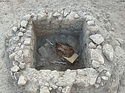
| Area south of Wall A, after cleaning, looking northeast ... AMS northeast 1016 Horizontal (normal) ... 26 Jul 2010 ... Area south of Wall A, after cleaning, looking northeast. |
| Ashy soil south of Wall A. [During Basket 2] ... Matthew Baumann ... ΒΘ East southeast Horizontal (normal) ... 15 Jun 2012 ... Ashy soil south of Wall A. [During Basket 2] |
| Ashy soil south of Wall A. [During Basket 2] ... Matthew Baumann ... ΒΘ East southwest Horizontal (normal) ... 15 Jun 2012 ... Ashy soil south of Wall A. [During Basket 2] |
| ΒΚ South; PIT A; closing of basket 8 ... Simos Trasanis ... South/Southeast Horizontal (normal) ... 26 Jun 2024 ... ΒΚ South; PIT A; closing of basket 8. |
| South Side of Street; Cut A ... ΟΟ-18 3564, 3565 ΟΟ:1949.1024:8 Lot ΟΟ 514 Lot ΟΟ 512 Section ΟΟ 553 ... 22 Oct 1949 ... South Side of Street; Cut A |
| Complete; cracked but glued together.
Plain curved roof tile. Brick red clay with white grits; pale buff on surface.
Grave, which it covered, set in Roman fill, but burial probably dates from latest Roman ... 20 July 1946 ... Used as cover for a grave just south of south wall of Peribolos of the Altar of the Twelve Gods. |
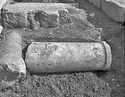
| Moldings trimmed off. Broken near middle. Laid on one side, bottom facing west.
Vertical dowel cuttings on either side of south end. North end smoothed off on top, marked with part of a letter on top of ... June 1953 ... Vertical dowel cuttings on either side of south end. North end smoothed off on top, marked with part of a letter on top of molding.
From Temple of Ares.
Pentelic marble ... In Valerian Wall, just north of South Tower. |
| Late walls in the court, abutting the line of the colonnade of the Square Peristyle. To the south of the foundation remains a little of the latest floor of the court. Foundation of Pier 21 of the Stoa ... AMS south 3760 Horizontal (normal) ... 3 Jun 1954 ... Late walls in the court, abutting the line of the colonnade of the Square Peristyle. To the south of the foundation remains a little of the latest floor of the court. Foundation of Pier 21 of the Stoa at the upper left. |
| Close view of the Agora Square with the Stoa of Attalos at left ... M.A. Frantz ... Agora (MAF). south Horizontal (normal) ... 4 May 1963 |
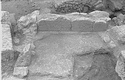
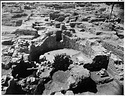
| Trench south of late floor (Wall A). End of season ... south Horizontal (normal) ... August 2006 ... Trench south of late floor (Wall A). End of season. |
Hellenistic ... South Central Area of Poros Building; South of Wall A; Fills g and h |
| Acanthus and lotus capital. Fragment from one side of lower part.
From Odeion.
Pentelic marble. Found at L/17-12/9 (Fall 2016). Found in burnt debris of Odeion floor of cryptoporticus in south central ... June 1938 |
| Square base crowned by a simple ovolo. Finished with toothed chisel, top, bottom and sides.
Capital (?) of column of Odeion cryptoporticus.
Pentelic marble. Found at M/19-11/13 (Fall 2016). Found in burnt ... 15 April 1935 |
| Parts of smooth picked upper and lower surfaces preserved, but all edges broken.
Short acanthus leaves, parts of four preserved (probably originally eight), rise to ca. one half of the capital. From and ... 28 February 1935 |
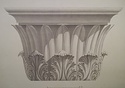
| Fragment of the lower part of a Corinthian capital. Part of the bottom surface is preserved, and most of two of the acanthus leaves. Broken away above.
Belongs to the same series as A 471 (Ο 290). Cf ... 2 April 1935 |
| Corner block. The face is picked, and shows no drafting at foot of step. The working of the anathyrosis band is not very smooth, but rather picked. At edge of joint is a smooth worked surface, not sunk ... 1933 |
| A 138 (Ζ 30) - A 144 (Ζ 36) are from the same series.
Right end of this block probably joins A 144.
Blue Hymettian marble.
Found at G/15-12/17 (Fall 2016). Pre-excavation, demolition of house 632β/16 ... 1933 |
Dowel in right end for course above still retains head. Iron hard to trace. The clamp at this end also retains some lead, both being worn down with surface of block by reuse.
Blue Hymettian marble.
A 138 ... 1933 |
| Top and one end broken away. Anathyrosis on preserved end.
The fasciae picked with a toothed chisel save for slight drafting on edges.
From the Odeion.
Pentelic marble.
Cf. A 278, A 1162 and A 1382.
Found ... 11 April 1934 |
| Corner. The shorter face of the block is less well finished than the longer, hence probably faced side of building. Rectangular dowels with pour channels for column base whose diameter was about 0.56m ... 1933 |
| One end preserved, with anathyrosis. Top, back and other end broken away. Bottom surface and triple fasciae worked with a toothed chisel into a smooth drafted edge on top and bottom of fasciae surfaces ... 23 January 1934 |
| With dentils. One end, which bears anathyrosis, and bottom partly preserved. Other end picked and broken. Evidence of a lewis hole on top. Very poor workmanship.
From the Odeion, Main Order.
Hymettian ... 2 April 1934 |
| Rectangular dowel in bottom.
Rectangular dowels for column base in top, with pour channels. Lower part of back of block projects irregularly, showing how deep paving slabs were, ca. 0.20-0.25m.
Blue Hymettian ... 1933 |
| Top surface shows practically no wear but bottom is badly worn by reuse as a paving block.
Both ends show clamp position scratched on, and further back the clamps as executed.
Same workmanship and series ... 1933 |
| Fragment from lower end of stroter of usual form. Green impurity in marble. good work.
Inscribed on underside: ΔΙΓ.
Pentelic marble. Found at L/6-12/9 (Fall 2016). From burnt debris in S.W. corner of cryptoporticus ... 1934 |
| Made up of three joining fragments, one small piece missing. Mended February 1972.
Stroter of usual form. Large veins of greenish impurities in marble. Rough work. Two cuttings for hook clamps near one ... 1934 |
http://agathe.gr/guide/altar_of_the_twelve_gods.html Altar of the Twelve Gods Near the middle of the open square, somewhat to the north, lay the Altar of the Twelve Gods (Fig. 7), today largely hidden under the Athens–Piraeus railway (1891). A corner of ... A corner of the enclosure wall survives, along with the inscribed marble base for a bronze statue that reads "Leagros, the son of Glaukon, dedicated this to the twelve gods." ... One corner of the sill only is visible, just south of the modern Athens–Piraeus railway. ... On a milestone dating to ca. 400 B.C. we read: "The city set me up, a truthful monument to show all mortals the measure of their journeying: the distance to the altar of the twelve gods from the harbor is forty-five stades" (IG II2 2640). |
| Right end broken; a part of a curved joint surface at the other end. Underside worked to be visible. In underside toward end with curved joint surface a cutting and part of the iron of a Π-clamp. Outside ... 1933 ... Right end broken; a part of a curved joint surface at the other end. ... In underside toward end with curved joint surface a cutting and part of the iron of a Π-clamp. ... Hard gray p.oros.
Cf. A 744 (Ζ 1123).
Left on a pile of block to south of Tholos. |
| Trench south of late floor (Wall A). End of season ... Craig Mauzy ... AMS south Horizontal (normal) ... August 2006 ... Trench south of late floor (Wall A). End of season. |
| Trench south of late floor (Wall A). End of season ... Craig Mauzy ... AMS south Horizontal (normal) ... August 2006 ... Trench south of late floor (Wall A). End of season. |
| Detail of south end of A-1 before removal of martyra. From the north ... AMS 1837 Horizontal (normal) ... Detail of south end of A-1 before removal of martyra. |
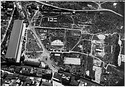
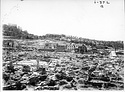
| Central area of the Agora, from across the railroad. The site of the Odeion is on the left ... south Horizontal (normal) ... 1948 |
| House B: Strosis 5 south of Wall a, looking north ... AMS Horizontal (normal) ... House B: Strosis 5 south of Wall a, looking north. |
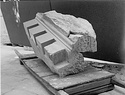
| Hawk's beak of 5th c. profile; crowning ovolo rough. In top are cuttings for two Π-clamps leading back to wall block (originally they had intended but a single clamp in the middle of the block, for which ... 1959 |
http://agathe.gr/overview/the_church_of_the_holy_apostles.html The Church of the Holy Apostles Though several churches were removed in the clearing of the site for excavation, it was decided to save and restore the little Byzantine church dedicated to the Holy Apostles ... “On February 12, 1954, the Department of Antiquities of the Ministry of Education approved the request for permission to demolish the modern addition to the Church of the Holy Apostles, with a view to restoring the church in its original form. ... The south wall seems to have suffered at least one major destruction, and from a point ca. 2 m. west of the southern apse little original masonry remains above the lower course. ... The two watercolors represent just a tiny fraction of the work he left behind. |
Hellenistic ... South Central Area of Poros Building; South of Wall A; Fills d, e and f |
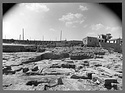
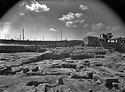
| West end of South Walls A and B ... AMS Horizontal (normal) ... West end of South Walls A and B. |
| West end of South Walls A and B ... AMS Horizontal (normal) ... West end of South Walls A and B. |
| West end of South Walls A and B ... AMS Horizontal (normal) ... West end of South Walls A and B. |
| Corner of abacus. Relieving surface on top.
Soft poros. Found in South Stoa I. 6961 Leica ... August 1966 |
| Lower jaw and right side of face preserved in two joining fragments.
Outline of molars scratched into the clay, the canines are inset. Quite a long snout and large chin. Traces of yellow paint high up ... 16 August 1966 ... Buff clay with a layer of very fine yellow clay. The head would seem too small to be assigned to South Stoa I.
Joins A 2351 ... Room 6 of South Stoa I. |
| Fragment from front top. Cutting for a patch at right end. Fine work.
Material and workmanship as of A 2915, i.e. Square Building - South Stoa II series.
Hard creamy poros. From demolition of tower of ... 21 July 1959 ... Cutting for a patch at right end. ... Material and workmanship as of A 2915, i.e. Square Building - South Stoa II series.
... From demolition of tower of Late Roman Fortification at S.W. corner of Library of Pantainos. |
State plan of South Stoa I and South Stoa II ... William B. Dinsmoor, Jr ... Fragile Torn Stained Dirty Repaired Faded Heavy Tracing Paper Drafting Ink ... 1966 |
State plan of South Stoa I and South Stoa II ... William B. Dinsmoor, Jr. |
| One T-clamp at each end and one at center of back for attachment to a backer block; lengths 0.097m., 0.112m., 0.12+; heads 0.081m., 0.069m., 0.074m.; depths 0.015m., 0.022m., 0.028m. Anathyrosis at ends ... 11 March 1981 |
| Originally one T-clamp at each end (but one broken away) and one at center of back for attachment to a backer block; lengths 0.117m., 0.112m.; heads 0.069m., 0.075m.; depths 0.035m., 0.042m. Anathyrosis ... 11 March 1981 |
| One T-clamp at left end (none at right) and one off-center at back for attachment to a backer block; lengths 0.10m., 0.11m.; heads 0.065m., 0.073m.; depths 0.042m.,0.043m. Two pry cuttings at 0.12m. from ... 11 March 1981 |
| Block now rests upside down so its original top is not visible. Both ends of block treated like right end of A 3386, i.e. rough in upper half and chamfered at front, square cut in lower half. Back of block ... 18 July 1963 ... Both ends of block treated like right end of A 3386, i.e. rough in upper half and chamfered at front, square cut in lower half. ... Cf. notebook III, p, 586, for blocks of same series reused in Market of Caesar and Augustus with different system of jointing.
... In the very middle of the top is a large dowel hole for fastening the geison (an end dowel that gripped two adjacent blocks) and a cutting for a clamp leading to the frieze backer. |
| Two guttae, and part of regula and taenia preserved.
From Square Peristyle, South Stoa II.
Poros.
Cf. A 2925. Disturbed fill. Leica, 93-56-16 (14,15) PD 1552 ... May 1951 ... Two guttae, and part of regula and taenia preserved.
From Square Peristyle, South Stoa II.
Poros.
Cf. A 2925. |
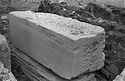
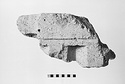
| Broken at top. worked smooth on front face, left rough-picked on back and sides, bottom also worked smooth. Front face preserves shallow wedge-shaped cutting characteristic of articulation of Eponymoi ... 21 June 1967 |
| Fragment from the lower end of a large pan tile.
Buff clay, unsurfaced.
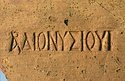
Stamped on top surface: Α Δ Ι Ο Ν Υ Σ Ι Ο Υ Ι.
From Odeion. From burnt debris in middle of south cryptoporticus. Leica, XXXIV-23, ... August 1947 ... Fragment from the lower end of a large pan tile.
... From burnt debris in middle of south cryptoporticus. |
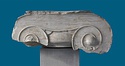
| Lower edges of volutes broken away, otherwise in good condition and fresh.
Note in place of eggs a cyma reversa and above this a taenia with fainted maeander. The crowning molding is an ovolo. The eyes ... May 1950 ... Note in place of eggs a cyma reversa and above this a taenia with fainted maeander. ... ADDENDA A 1130 not of same series, different ... Removed from east face of Valerian wall at south end of Library of Pantainos. |
| ΒΚ South; PIT A; opening of basket 6 ... Simos Trasanis ... In ΒΚ South 2024 Final Report, p. 23, fig. 29. Northeast 1041 Horizontal (normal) ... 21 Jun 2024 ... ΒΚ South; PIT A; opening of basket 6. |
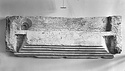
| A lintel for a single-leafed door, 0.80m. wide. The overhang has two rectilinear and two concave moldings. Triangular cuttings at each end for inserting tenons of door jambs. The cutting for the door is ... July 1954 ... A lintel for a single-leafed door, 0.80m. wide. ... Built into south door of narthex ... Built into upper part of south wall of narthex of the Church of Holy Apostles. |
| Small fragment from face of drum preserving parts of three flutings; broken on all other sides. The arris brought to an edge as sharp as the material permitted. Surface finished with toothed chisel. Surface ... 12 August 1952 |
| Apse on the south side of the Roman House A ... Apsidal Building in the notebook (SD). south Horizontal (normal) ... June 1937 ... Apse on the south side of the Roman House A. |
| Apse on the south side of the Roman House A ... Apsidal Building in the notebook (SD). south Horizontal (normal) ... June 1937 ... Apse on the south side of the Roman House A. |
| Some of the upper part of a triglyph and a bit of the adjacent metope.
Hard buff travertine.
From same building, Square Peristyle, South Stoa, as cornice A 1926 etc., A 1824 etc., A 2924, A 2931 and ... 28 April 1952 ... Some of the upper part of a triglyph and a bit of the adjacent metope.
... From same building, Square Peristyle, South Stoa, as cornice A 1926 etc., A 1824 etc., A 2924, A 2931 and A 2939 ... Marble dump between Stoa of Attalos and Northeast Stoa. |
| From a lateral horizontal cornice, a cyma reversa soffit molding with a vertical fascia high above it. The nosing molding is much battered; possibly an ovolo. In the top two rafter cuttings, and at each ... 10 May 1937 |
| Valerian Wall and Wall A, looking south along line of Wall A ... AMS Horizontal (normal) ... Valerian Wall and Wall A, looking south along line of Wall A. |
| Part of one straight flaring end preserved with a simple broad leaf pattern.
Early Christian. Circled marbles in section Ο. Leica ... May 1960 |
| One original end remains with dowel hole. Triangular in section with truncated sides.
Hard gray poros, hammer dressed on all faces. Good work.
Same series as A 194, from Eponymous Heroes. Found at I/14-10/10 ... 13 May 1948 ... Same series as A 194, from Eponymous Heroes ... Found in a late Roman level at S.W. corner of section, 15.00m. east of south end of peribolos and placed in peribolos. |
|
|

.jpg.icon.jpg)
.jpg.icon.jpg)
.jpg.icon.jpg)
.jpg.icon.jpg)

.jpg.icon.jpg)
.jpg.icon.jpg)
.jpg.icon.jpg)
.jpg.icon.jpg)


.jpg.icon.jpg)