|
|
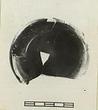
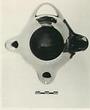
| Most of the body preserved, with part of the rim, the stumps of the horizontal handle at the back and a trace of the nozzle and wick-hole.
Low flat base. Broad body, rounding to down-sloping rim.
Good ... 24 April -13 June 1947 |
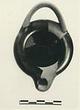
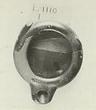
| Handle, two-thirds of nozzle and small pieces of rim, wall and base missing; restored in plaster.
Low flat base. Wall and rim form continuous curve; rim curves down to interior. Attachments for horizontal ... 2-19 May 1939 |
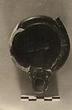
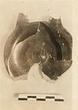
| Handle and piece of rim missing.
Low flat base; open type, with sharply inturned rim.
Good black glaze except for reserved bottom.
Type IV of Corinth collection, type 21B of Agora collection. Well. Leica, ... 15 March 1937 |
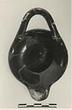
| Parts of rim missing; restored in plaster.
Low broad base, flat but slightly concave beneath. Wall and rim form continuous curve; rim wider than L 3971 (ΓΓ 705).
Nozzle short and blunt. Horizontal strap-handle ... 480-415 B.C. |
| Part of floor, handle and two-thirds of rim missing; restored in plaster.
Low offset base, the under-surface rising slightly toward the center. Wall and rim form continuous curve; rim slopes sharply down ... 2-19 May 1939 |
| Handle, about a quarter of the rim and fragment of bottom broken away; restored in plaster. Mended from three pieces.
Rounded rim; most of top open. Rounded sides, slightly raised foot, almost flat, reserved ... 4 April 1933 |
| Much of handle and of front part missing.
Very low base; horizontal handle round in section; like handles of type V.
Velvety black glaze, inside and out.
Type IV of Corinth collection, type 21B of Agora ... 13 March 1937 |
Well at 73/Μ on the lower northeast slope of the Areopagus.
Diameter of 0.90m. It seems to have been abandoned because of the very soft stereo that kept falling in from all sides. Many pieces of terracotta ... Ca. 430-420 B.C. |
Square pit in bedrock southwest of the Hephaisteion. Many marble chips from the construction of the temple of Hephaestus were found here together with a large quantity of pottery and other objects ... Ca. 450 B.C.
Ca. 390-380 B.C. |
Well at 21/Ε (beneath Library of Pantainos).
The clearing of the well was abandoned because of a cave-in of the rock walls. Heavy dumped filling, the proportion of fine black table ware high ... Ca. 440-425 B.C. |
| This filling is the largest deposit of its time found in the Agora. It may be compared with H 6:5 and with N 7:3.
Dug in soft bedrock to a depth of 11.40m; footholds cut on opposite sides of the shaft ... Ca. 490-450 B.C. |
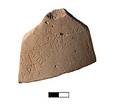
| Pit (6x10) in the valley between the Areopagus and the Hill of the Nymphs. Large cutting in bedrock with 540 ostraka, mainly of the late eighties of the 5th. c. B. C. Much pottery, principally of the early ... Ca. 500-450 B.C. |
| Howland, R. H ... American School of Classical Studies at Athens ... The author has used the trustworthy chronological data supplied by the scientific excavation of “closed deposits” at the Athenian Agora to build a continuous series of lamp types from the 7th century B.C ... 1958 |
|
|