|
|
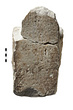
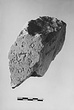
| Inscribed fragment.
Broken on all sides; the back rough picked. Mended from two fragments.
Decree concerning relations between Athens and Sparta.
Remains of twenty lines of the inscription preserved. ... 267 B.C. (?). |
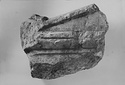
| Fragment from upper left corner of stele with pediment top.
The back rough picked.
Dedication of archonship Euandros.
Eight letters in one line, and one in the line above, preserved, beneath a taenia ... Late 3rd. century B.C. |
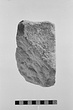
| Fragment from right side of inscribed block.
Right edge preserved; others broken.
The ends of ten lines of the inscription preserved; non-stoichedon.
Pentelic marble. Pre-excavation. Found in the modern ... Late 3rd. century B.C. |
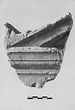
| Inscribed fragment of upper left hand corner of stele with pediment top.
Broken at bottom and right side; only a bit of the stele proper, with traces of letters in the first line is preserved.
Hymettian ... 250-150 B.C. |
| Inscribed fragment.
Small, smoothed surface at right angles to the inscribed face may represent the left edge of the block, though the letters seem extremely near the edge.
Hymettian marble. Found at a ... 4th. century B.C. |
| Fragment from top of stele.
Only inscribed and a little of top surfaces preserved.
Archonship of Asteios; preamble of the year 373/2.
Inscribed stoichedon.
Pentelic marble. Catalogued 1932. Found in wall ... 373/2 B.C. |
| Small inscription fragment.
Only one surface present, on which is inscribed in curiously pitted letters.
Pentelic marble.
Cf. I 1059, I 6132. Found in late Roman context, near the northwest corner of ... 1 March 1932 |
| Fragment of inscription.
Small bit of inscribed surface preserved; otherwise broken or chipped all round.
Pentelic marble. Found in Byzantine context, at bottom, in the southwest corner of the Market Square ... Late 5th. century B.C. |
|
|