|
|
Shallow pit in bedrock. NB fragment found in gravel to south of pit (ΟΟ 399=P18633) ... Second quarter 5th c. B.C. |
Rectangular cutting, not entirely preserved, west of underground drain. Contained good black glazed pottery, some stamped, and a little coarse ware, along with bits of bone and part of a skull ... Third quarter 5th c. B.C. |
A well (diameter 1m) in the industrial area west of the Areopagus, in the area later occupied by House C. Water level 1.50-2.m Dumped filling of broken bedrock with considerable fragmentary pottery in ... Ca. 500-480 B.C. |
Mouth and upper part of chamber cut away in modern times; two short passages, one to SW, encroaching on Mycenaean chamber tomb; here the builders apparently found the fill too soft for tunneling, so they ... Early third quarter of 3rd c. B.C. |
Construction filling of the Poros Building west of the Areopagus. Patch of stony fill beneath the courtyard. Accumulation of the second quarter of the 5th c., deposited in the last quarter ... Ca. 475-450 B.C. and later |
Well (diameter 0.91m, water level -7m) in House H, Room 10 (and pit over). Plain shaft cut in stereo; pit at mouth of well,reused as drainage pit at start of tile drain running west.
Scanty use filling ... Ca. 425-400 B.C. |
Well, neatly stone-curbed to bottom. Diameter 0.70m. The use filling, from about 3.50m to bottom, consisted chiefly of water-jars with a few small vases and some black-figured fragments.
Upper filling, ... Use filling of ca. 575-550 B.C. |
Well, unfinished?
The shallow depth, small diameter, lack of water and any use fill make it possible that this was not a well, although the character of the cutting is difficult to explain otherwise. The ... Ca. 440-420 B.C. |
| Pyre in House N, room 2, layer 5 (RSY=Pyre 8).
Near northern corner of room 6. Artifacts, bone, burnt logs, and cinders in square pit dug from level of layer 5, through layers 5 and 6; thin clay floor ... 325-300 B.C. |
| North of House G (RSY=Pyre 13).
Concentration of artifacts, small pieces of bone, and burnt material in stratum, no pit discerned. The pyre is cut by the trench of a wall of a Roman house to north. It ... 290-250 B.C. |
Well at 30/ΛΒ; the shaft possibly never used as a well; dumped filling with a small amount of fragmentary pottery ... Ca 500 B.C. |
| Pyre in House D, Room 4 (RSY=Pyre 4) in the industrial area west of the Areopagus.
Notebook refers to House N.
Pottery belongs late in third quarter of the 4th. c. BC. Pyre burned near beginning of last ... 350-300 B.C. |
| Pyre in House N, room 4 (RSY=Pyre 7), in the industrial area west of the Areopagus.
Pottery, mall pieces of calcined bone, log, wood cinders, and charcoal in diamond-shaped pit in floor sequence. The pyre ... Late 4th-early 3rd c. B.C. |
Well (diameter 0.98m) in House H, Room 13.
Two dumped fills apparently of the same date, but separated by a clay deposit of over 2.00m.
Cf. Hesperia 20 (1951), p. 253. (noted) Subdivisions:
.1=Upper ... Ca. 425-400 B.C. |
| A well in the industrial area of the Areopagus, about 7.00m. west of the West Bath, to a depth of 14.60m. This well was the direct successor to A 17:1, replacing it when it collapsed. The use filling at ... Second quarter 6th. c. |
Ca. 73-81/Drain. Fillings associated with the construction of the Great Drain South, especially the fill thrown in behind the east wall of the drain at the time of its building.
Cf. A 20-21:1 and B 19:7 ... Ca. 425-400 B.C. |
Pit in House N, Room 2 (RSY, House C). Filling thrown in behind the west wall of the Great Drain South at the time of the building of the drain and the extension of House C.
Cf. Hesperia 20 (1951), pp ... Ca. 430-410 B.C. |
Well (diameter shaft 0.95m) with POU and dumped fillings, separated by about 2.00m. of plain mud apparently fallen from the collapsed sides of the well. The fillings are, however, closely contemporary ... Ca. 425-400 B.C. |
Fillings below the courtyard floor of the Poros Enclosure west of the Areopagus. The lowest layer, over bedrock, is of the archaic period and may have accumulated on the spot before the start of building ... First half of 5th c. B.C. |
Well in house R of industrial area west of the Areopagus. This well, originally tiled, was abandoned and filled at the time of the conversion of the house into a stone-cutters' workshop.
Tiled well but ... Ca. 425-400 B.C. |
| A well on the lower slope of the Hill of the Nymphs, (diam. 1.20m -water level -7m), to 7.90m. The scanty use filling at the bottom contained water jars and pitchers as well as the inventoried objects; ... Second quarter of 6th. c. B.C. |
| Thamneus' Cellar, a storage cellar on the north slope of the Areopagus. Lower filling of mid-6th c. B.C., upper filling of last quarter of 6th c. B.C ... 6th c. B.C. |
House R, fill under drain tiles and fillings associated with house K in industrial area, including what was C 19:15, plus C 19:16 and
C 19:17.
a) House built as dwelling in second half of 5th.c.
b) Used ... Ca. 5th and 4th c. B.C. |
| Komos Cistern at 66/Κ, on the north slope of the Areopagus. Homogeneous fill.
Thirty-four stamped amphora handles. Eight Histiaian tetrobols, dating 170-160 at the earliest, found near top, possibly an ... Last quarter of 3rd c. B.C.-Early 2nd century B.C. |
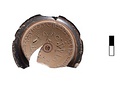
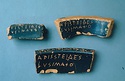
| Pit (6x10) in the valley between the Areopagus and the Hill of the Nymphs. Large cutting in bedrock with 540 ostraka, mainly of the late eighties of the 5th. c. B. C. Much pottery, principally of the early ... Ca. 500-450 B.C. |
|
|