|
|
Selīm I ... Probably Selīm I.
Mint = Constantinople, possibly Serez, and no mint name.
No date. Coin no. 15. GCM 867.15. 758, 761 ... 1512-1520 A.D. |
Uncertain Sultan ... "Ribbon fabric." Coin no. 16. GCM 867.16 758, 761 ... 15th-16th c. A.D. |
Uncertain Islamic ... "Local coinage of the second half of the 15th c. (?) ... Coins with unsystematic designs or markings ... Very few show characteristics that might be interpreted as imitations of Turkish legends. Mostly ... 8 June 1933 |
L 1079 and L 1080 are identified as from a pit at 29/ΝΓ. L 1082 and P 2130 are from a pit at 26-29/ΜΘ-ΝΑ. Probably the same pit as indicated on a note in deposit cardex. The finds are recorded together ... 5th c. |
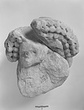
| Fragment from proper right side of a very large head with beard and corkscrew curls. Preserved is part of the side of the neck, and of the face with the right eye and beard, the fillet round the front ... Roman period. |
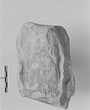
| Head and lower legs broken off.
Three female figures back to back with arms and skirts touching at sides. Feet together, both arms lowered. Peplos girded at waist worn over chiton with buttoned sleeves ... 1st c. A.D. |
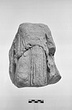
| Head, right arm, lower left arm, and legs below knees missing. Upper body battered.
The figure wears a Doric chitin with kelps. She is standing, the weight is on the left leg, the right knee bent. Traces ... 28 January 1936 |
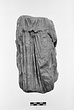
| Preserved from waist to above ankles. The figure wears a Doric chitin with long overfilled; standing with the weight on the right leg, the left leg bent.
Broken at sides; back rough-picked.
Pentelic marble ... 28 January 1936 |
|
|