|
|
| Cisterns and Wells; Cistern in 40/ΚΖ. Well. Cisterns and Wells; Well in 20/ΙΣΤ. Cisterns and Wells; Geison Block Found at 44/ΚΓ. Cisterns and Wells; Trial Pit in Stoa between Piers IV and V from South ... Α-6 1090, 1091 Α 1258 P 25555 Α 1259 P 25556 Lot Α 214 Lot Α 215 Lot Α 216 Lot Α 217 Lot Α 218 Lot Α 219 Lot Α 220 Lot Α 221 Lot Α 222 Lot Α 223 Lot Α 224 Lot Α 225 Lot Α 226 Lot Α 227 H 6:4 H 5-6.1 ... Byzantine |
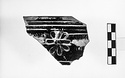
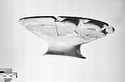
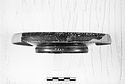
| Fragment from rim only. Vertical wall with flat horizontal rim projecting both inward and outward. Near top of wall on outside a garland of conventional rosettes and branches in thinned clay touched up ... 1932 |
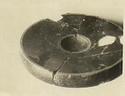
| Only the lower part remains. In the medallion an eight-petalled rosette.
On the side wall, nodules increasing in size toward the top.
Glaze dull black inside, dull brown on outside, much flaked on outside ... 1932 |
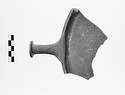
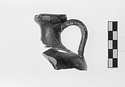
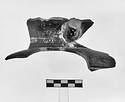
| Only the handle and part of the wall and floor remain. Very flat, with oblique side wall. Long round handle, hollow only at outer end.
Gritty, micaceous brown clay, blackened by fire on underside. Well ... 1932 |
| Part of one side with handle remains. Plump body, low vertical neck with flaring lip, round loop handles set vertically.
Gritty, pale yellow clay. Around the shoulder a garland of ivy in dull black paint ... 1932 |
| Mended from four pieces. Most of the rim and side restored in plaster. Handle missing. Foot with double moulding; low stem; bulging sides with decided shoulder; neck nearly vertical with concave curve ... 1932 |
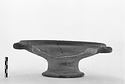
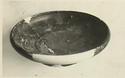
| Mended from many pieces. About one-third of the rim and sides and a small part of the edge of the foot missing. Restored in plaster. A shallow bowl with slightly offset rim, on a high hollow stand. Two ... 1932 |
| Mended from ten pieces; half the rim, a large part of the center and over half of the base missing. Strengthened with plaster. A shallow bowl, with slightly offset rim, on a high hollow stand. Two double ... 1932 |
| Fragments from rim missing; restored in plaster. Turned down rim; ring foot. Glaze badly scratched on top of plate. Middle of top and underside of foot fired red; variation in color due to stacking in ... 1932 |
| Mended from four fragments; surface chips; restored in plaster. Turned down rim; ring base.
Glaze mottled red to brownish black. Cave, south chamber, lower fill, lowest red deposit. Leica PD 2445-45 ... 1932 |
| Mended from two pieces; chips from rim restored in plaster. High ring foot; two lines of rouletted hatching around bottom of inside.
Glaze mottled red to black. Cave, south chamber, lower fill, lowest ... 1932 |
| Mended from three pieces; chips in rim restored in plaster. High ring foot; three to four bands of rouletted hatching around center inside; scratched circle in middle.
Cf. Agora XII, no. 830. Cave, south ... 1932 |
| Foot and profile preserved; mended from several fragments; rim restored in plaster for about one-fourth of circumference. Broad flaring ring foot.
Brownish black glaze. Cave, south chamber, lower fill, ... 1932 |
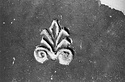
| About one-third of the plate preserved. On the floor, within a triple circle of shallow rouletting, four stamped palmettes.
Thin and very metallic glaze. Cistern. Leica, 4-322 PD 345, PD 346 ... 1932 |
| Fragmentary. Outcurved lip.
Covered inside and out with dull black glaze. Several more similar fragments found. Cistern. Leica ... 1932 |
| Only the lower part remains. High base ring; slightly concave floor from which the upper wall begins to rise steeply. On the floor, within a rouletted circle are five stamped palmettes of which four remain ... 1932 |
| Restored in plaster. False base ring set off from the side wall by a shallow groove. On the inside, about 0.01m. below the lip the glaze has been scratched from the bottom of a shallow groove.
Thin black ... 1932 |
| Broken away below the shoulder. The flaring mouth is drawn to a blunt beak.
Dull but firm black glaze. Cistern. Leica, 90-12-17, 90-34-34, 4-322 ... 1932 |
| The base and much of the mouth are missing. Piriform body; trefoil mouth. The handle rises above the lip.
Flaky black glaze.
Cf. Agora V, under no. G 90. Cistern. Leica, 4-322 ... 1932 |
| Only a fragment of the shoulder and neck preserved with part of one twisted handle. The shoulder setoff from the side wall and neck by grooves from the bottom of which the glaze was scratched, exposing ... 1932 |
|
|
.jpg.icon.jpg)