|
|
Pits in area 96-100/ΝΕ-ΝΘ (lower east slopes of Hill of the Nymphs, near extreme west edge of excavated area).
Scanty debris filling in a pit. Many fills in areas A 19 and A 20 similar in character to ... 325-300 B.C. |
Fifth century lekythos deposit in area of Mycenaean Tomb. Lot Η 81a ... 5th c. B.C. |
| Pit with burned debris north of the ancient road leading from the Agora to the Dipylon Gate, probably to be associated with the Persian sack [deposit notebook]. Also includes a similar filling lying over ... Ca. 500-470 B.C. |
Dumped debris filling east of East Building, badly shattered. There is a small amount of disturbance from the filling immediately above, but the bulk of the pottery is consistent, and very close to that ... Ca. 470-460 B.C. |
Deposit of fine table ware and lekythoi, both black-figured and red; the plain wares closely resemble those from the well H 6:5 ... 470-450 B.C. |
Pottery Deposit at 57/ΙΔ (also 57/ΙΣΤ and 63-66/Κ-ΚΕ). Contents of pit range from Mycenaean to Turkish; apparently the dump of a modern antiquities dealer ... Modern Context |
Fillings to either side of the Great Drain, in the southern part of the area west of the Areopagus; various levels, late 6th. and early 5th c. B.C. to Sullan destruction. Coins:
26 July 1946 #1-#2
30 July ... Late 6th. c. B.C.-1st. c. A.D. |
"Fauvel Collection"
Collector's dump? Debris in the cellar of a modern house, probably once that of F.S. Fauvel.
The collection included vases of all periods, from Geometric to Turkish; a number of the ... Modern Context |
Circular well cut through the old road after it had gone out of use, and filled probably at the time of the building of the drain and building A, and the throwing of fill over the road ... Ca. 430-400 B.C. |
Carefully cut in bedrock with firm footholds on either side. The use filling is represented by a few fragments of water jars (uninventoried), indicating a short period of use. The dumped filling, below ... Ca. 470-425 B.C. |
Heavy deposit of good black and plain wares ... 450-425 B.C |
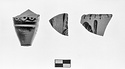
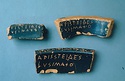
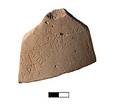
| Pit (6x10) in the valley between the Areopagus and the Hill of the Nymphs. Large cutting in bedrock with 540 ostraka, mainly of the late eighties of the 5th. c. B. C. Much pottery, principally of the early ... Ca. 500-450 B.C. |
Well at 45/Θ (Skytha Well) near the north side of the market square. No period of use was distinguished, since it was impossible to clear the well to the bottom. The considerable quantity of dumped filling ... Ca. 460-440 B.C. |
| This filling is the largest deposit of its time found in the Agora. It may be compared with H 6:5 and with N 7:3.
Dug in soft bedrock to a depth of 11.40m; footholds cut on opposite sides of the shaft ... Ca. 490-450 B.C. |
Dumped filling in a well on the west slope of the Areopagus (apparently separate, no mends between them, but differing little in date) the bottom filling apparently thrown in towards the beginning of the ... Ca. 425-400 B.C. and earlier |
|
|