|
|
Pit H ... Second half of 4th c. B.C. |
A tile-lined well at H/16-4/14,15 under the Roman Propylon. The tiles had been cut down; highest completely preserved tile at 50.696 m. Only three rings of tiling were preserved , the uppermost almost ... Ca. 350 B.C. |
It seems possible that the well ... was originally associated with the late Roman reconstruction of the Stoa, being later carried up to serve the Byz. houses. [Nbp. 364] Coins:
6 March 1939 #1-#9 ... Late 4th-early 5th century |
Byzantine Well at 54/ΜΣΤ, belonging to the house over the eastern part of the Odeion. Coins:
3 May 1935 #5
4 May 1935 #1 ... Byzantine |
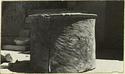
| Drum of well tiles, intact when removed; one tile broken and repaired.
Normal type with hand-holes and thickened upper rim. Red clay.
Scratched on the top of the rim of each tile: /Α. Well; the third drum ... 11 August 1947 |
Very little pottery and mainly broken tiles in this well, all mixed from Hellenistic to Early Byzantine (nbp. 1441) ... 25 May-1 June 1939 |
Construction and upper fills. Well at 116/ΣΤ, cut less than one meter from a shallower and older well at 115/ΣΤ [D 15:1]. ... a fall of loose fill occurred from the earlier into the later well ...
Filling ... 2nd c. A.D. plus 6th c. A.D. |
|
|