|
|
From Section ΟΟ. See other pieces in Study Collection-
For images, see P 20177. Grave 3. |
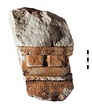
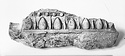
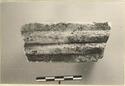
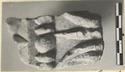
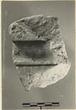
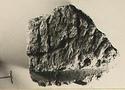
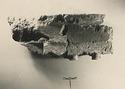
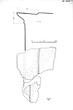
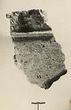
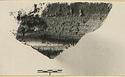
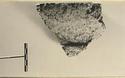
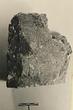
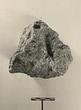
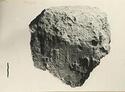
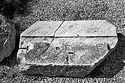
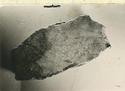
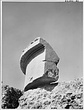
| Fragment of a small cornice block, broken all around; the corona broken off; at the back a small rough-picked area; two dentils are preserved.
Moldings:
Upper part of cyma recta (?), ca. 0.075m.
Ovolo, ... 20 April 1931 |
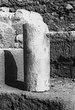
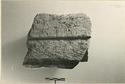
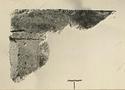
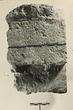
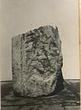
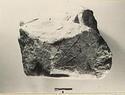
| Upper end with square dowel hole preserved. Broken below. Surface stippled to take stucco. Unfluted.
To be assigned to predecessor of Square Building.
Cf. A 1634 (ΣΑ 1055).
Poros. Found at P/14-8/2 (Fall ... 12 May 1950 |
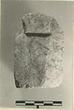
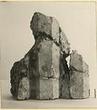
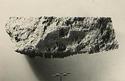
| Part of upper (?) surface with square dowel at center. Broken below. About half circumference preserved. Unfluted. Surface stippled to take stucco.
To be assigned to predecessor of Square Building (?) ... 29 July 1949 |
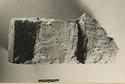
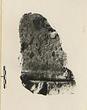
| One end broken away; edges chipped. Anathyrosis on preserved end.
Overhanging cornice on both sides; transition to resting surface on one side plain vertical, on the other cavetto and vertical.
Considerable ... 25 May 1950 |
| Five fragments preserve part of original surface of egg and dart molding of Altar of Temple of Ares (?)
a) Corner piece preserving a little of the projecting fascia above the egg and dart, the height 0.10m ... June 1950 |
| Original back probably preserved (now invisible). Otherwise broken all around. Above the smooth finished front surface preserved, a slightly raised fascia with the beginning of a concave molding.
Probably ... 20 June 1950 |
| One front corner remains with complete profile of hawk's beak.
Travertine-like limestone presumably to be stuccoed.
From Square Peristyle, South Stoa II. From a marble pile to east of south end of Stoa ... 28 June 1950 |
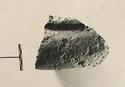
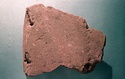
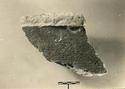
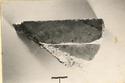
| Broken all around. Fragment from a Laconian pan tile with brown glaze on upper surface. Letters written in cream paint over glaze
Cut between north stylobate of Square Building and Valerian Wall Layer ... 29 July 1950 |
| Fragment of volute, with one small joining piece.
The bolster was fluted transversely, with band of astragal between the flutings. The eye is flat save for a measuring point. The details of the astragal ... July 1950 |
| Four joining fragments from a volute. Similar in design to A 1669 (ΣΑ 1375), but there is a marked difference of the edge of the volute and there are no drill holes in the astragal. Traces of burning ... July 1950 |
| Two non-joining fragments from volute.
Both fragments are symmetrical showing volutes on both sides. Traces of burning.
Northeast Stoa series.
Pentelic marble. Destruction debris associated with Northeast ... July 1950 |
| Fragment from bolster preserving parts of two flutings and of the intervening astragal.
Northeast Stoa series.
Pentelic marble. Destruction debris associated with Northeast Stoa. 2103 Leica, XLV-31 ... July 1950 |
| Three non-joining fragments from drum below capital. Fragments a) and b) from the top, c) from the bottom. The drum was decorated with a band of palmette and honeysuckle in low relief, resting on a plain ... July 1950 |
| Front face only is preserved.
Part of two fascia (complete width of neither is preserved). Surface hammer dressed except for a smooth border.
Northeast Stoa series.
Pentelic marble. Destruction debris ... July 1950 |
| Small fragment of a crowning molding decorated with egg and dart above a cavetto.
Northeast Stoa series.
Pentelic marble. Destruction debris associated with Northeast Stoa. 2103 Leica, XLV-31 ... July 1950 |
| Small fragment from lower front angle. Finished front and bottom with broad chisel, on sides with single point.
Northeast Stoa series.
Pentelic marble. Destruction debris associated with Northeast Stoa ... July 1950 |
| Part of front face only remains, preserving a corner, with a cyma reversa bed mold. From cornice (?).
Northeast Stoa series.
Pentelic marble. Destruction debris associated with Northeast Stoa. 2103 Leica, ... July 1950 |
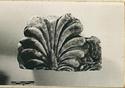
| Three joining fragments preserving the upper part of the antefix: a palmette.
Traces of burning.
Northeast Stoa series.
Pentelic marble.
Cf. A 1797 (Σ 2258). Destruction debris associated with Northeast ... July 1950 |
| Flake from the periphery.
Northeast Stoa series.
Green-grained white marble (of Karystos). Destruction debris associated with Northeast Stoa. 2103 Leica, XLV-31 ... July 1950 |
| Rough-picked behind; sawn above. In low relief on face, a flame palmette.
Northeast Stoa series.
Pentelic marble. Destruction debris associated with Northeast Stoa. 2103 Leica, XLV-31 ... July 1950 |
| Rough-picked behind, sawn at edge.
Apparently from border of a panel with plain fillet and border molding. Traces of burning.
Northeast Stoa series.
Pentelic marble. Destruction debris associated with ... July 1950 |
| Three fragments, not from the same piece of pipe.
a) Mended from several pieces preserving a considerable part of one section; inset flange on the preserved end.
b) Fragment from another similar, also ... July 1950 |
| One end and part of one end preserved, but corner between these two missing. Underside rough-picked with wide raised band near end, set in 0.03m. from end.
From the Temple of Ares.
Pentelic marble. From ... 17 June 1950 |
| Fragment from left end joint surface, preserved to bottom of via. Broken on right side. Traces of red and blue Doric leaf on crowning hawk's beak, red on face and on soffit of via. Nail hole with lead ... April 1949 |
| Broken at both ends, at back and on part of face.
Traces of blue Doric leaf on hawk's beak, red on front of fascia above mutule, blue on mutule. Nail hole on top, lead inside, set 0.038m. from front.
Stoa ... April 1949 |
| Hawk's beak crown, broken at both ends and below middle of undercut.
Traces of red and blue Doric leaf.
Stoa Poikile series.
Poros. Late Roman Wall west of Stoa of Attalos. 4089 Leica ... April 1949 |
| Fragment of mutule with one gutta. Trace of blue on soffit of mutule.
Stoa Poikile series.
Poros. Late Roman Wall west of Stoa of Attalos. 4089 Leica ... April 1949 |
| From raking cornice(?). Top surface and back of soffit of overhang and vertical fascia below, preserved. Broken at both ends, front and back and bottom.
Trace of red paint on fascia, of fine white stucco ... April 1949 |
| Four joining pieces. Top and left side, with slot for metope and upper part of left glyph preserved. Broken on other sides.
Blue paint abundantly preserved on fascia and right side of glyph. Note trace ... April 1949 |
| Top surface, front of fascia, and right glyph, right side with slot for metope, preserved. Broken elsewhere.
Blue paint on fascia and glyph; crowning ovolo of fascia battered but clear.
Stoa Poikile series ... April 1949 |
| Bottom, lower part of front, and right side with metope slot preserved. Broken at left, top and back.
Stoa Poikile series.
Poros. Late Roman Wall west of Stoa of Attalos. 4089 Leica, 83-123 PD 1180 ... April 1949 |
| Piece of corner glyph and adjoining one on left; broken top and bottom and at sides. Traces of blue paint.
Stoa Poikile series.
Poros. Late Roman Wall west of Stoa of Attalos. 4089 Leica, 83-123 PD 1180 ... April 1949 |
| Bottom of right glyph with slot for metope preserved, to complete depth of 0.105m. Relieving surface at edge of bottom surface.
Stoa Poikile series.
Poros. Late Roman Wall west of Stoa of Attalos. 4089 ... April 1949 |
| Center and edge of an end glyph with metope slot at side.
Stoa Poikile series.
Poros. Late Roman Wall west of Stoa of Attalos. 4089 Leica ... April 1949 |
| Taenia, regula with three guttae, the first one broken away, and a hawk's beak crowning the taenia. Red on taenia, blue on regula. Setting line on top 0.077m. from front of beak.
Stoa Poikile series.
Poros ... April 1949 |
| Top, right end with anathyrosis, and front preserved, with hawk's beak, taenia, regula and two guttae. Traces of Doric leaf on hawk's beak, red on taenia, blue on regula.
Stoa Poikile series.
Poros. Late ... April 1949 |
| Top surface and front preserve; hawk's beak broken away; taenia with red paint. Broken at ends, back and bottom.
Stoa Poikile series.
Poros. Late Roman Wall west of Stoa of Attalos. 4089 Leica ... April 1949 |
| Parts of three flutes preserved. Broken on all sides save flutes. Fine white stucco in two flutes, the other broken on the surface.
Stoa Poikile series.
Poros. Late Roman Wall west of Stoa of Attalos ... April 1949 |
| Torus with fillet above, probably of apophyge.
Broken at sides and top.
Stoa Poikile series.
Poros. Late Roman Wall west of Stoa of Attalos. 4089 Leica PD 1178 ... April 1949 |
| Piece of bottom of an unfluted drum with two nail holes in bottom.
Stoa Poikile series.
Poros. Late Roman Wall west of Stoa of Attalos. 4089 Leica, 83-119 PD 1178 ... April 1949 |
| Top, left end with anathyrosis, and front preserved; back, bottom and right side broken away. Crowning molding broken, but was clearly an ovolo.
Deep fascia with painted pattern: white lotus and encircled ... April 1949 |
| Painted pattern of fascia of A 1710 (ΣΑ 2165) was transferred to mortar when this pieces were built into the Late Roman wall. In excavation, A 1710 (ΣΑ 2165) came away from mortar against which it lay, ... April 1949 |
| Small bits of poros and limestone held together with mortar to which adheres bit of painted pattern of fascia of A 1710 (ΣΑ 2165). White encircled palmette with green stripe in central petal, against blue ... April 1949 |
| Two pieces join to form part of side of a s triglyph block with part of metope slot. Broken on all sides save the broad chiseled surface of the vertical of a side of a triglyph, and the top with deep chisel ... April 1949 |
| Two joining fragments of interior course. Top, front and right end preserved, broken on all other sides. Right end had anathyrosis at obtuse angle to face, forming an interior corner. Crowning molding ... April 1949 |
| Fragment of interior course. Top and front surfaces preserved except for molding broken at top; other sides broken.
Stoa Poikile series.
Poros. Late Roman Wall west of Stoa of Attalos. 4089 Leica ... April 1949 |
| Fragment of interior course with crowning molding preserved completely. Top and front surfaces preserved, broken on all other sides.
Stoa Poikile series.
Poros. Late Roman Wall west of Stoa of Attalos ... April 1949 |
| Fragment of interior course with crowning molding (cyma reversa), top and front surfaces preserved; all others broken. Crowning molding complete.
Stoa Poikile series.
Poros. Late Roman Wall west of Stoa ... April 1949 |
| Bottom and bottom part of front preserved, broken elsewhere. Bottom finished smooth with broad toothed chisel. Bottom of face is fascia with traces of faintly incised maeander pattern. Above the clear ... April 1949 |
| Front and bottom finished with fine-toothed chisel, the side roughly, with broad chisel, the surface curving out from vertical towards bottom, as if to fit around something. Three small holes in front ... April 1949 |
| Front and bottom smoothed with fine tooth chisel; broken on other sides.
In front, five nail holes: two set 0.013m. above bottom and 0.147m. apart. Above the left one of these, 0.235m., an iron nail preserved ... April 1949 |
| Top and front smoothed with tooth chisel; the front 0.07m. of top very smooth, the left end smooth anathyrosis; broken elsewhere.
On front, 0.027m. down from top and 0.075m. in front left end, a nail hole ... April 1949 |
| Bottom (or it might be a vertical joint anathyrosis) and front finished with tooth chisel and smoothed; broken on all other sides.
On front, two large nail holes, 0.06m. and 0.083m. from the bottom, 0.05m ... April 1949 |
| Tiny portion of bottom and front preserved, broken on all other sides. Tooth chisel smooth finish.
Three nail holes in vertical row, the first one 0.13m. from bottom, the next 0.05m. above it, and the ... April 1949 |
| Front only preserved, tooth chiseled.
Near one broken edge, a nail hole.
Stoa Poikile series.
Poros. Late Roman Wall west of Stoa of Attalos. 4089 Leica ... April 1949 |
| Front only preserved, tooth chiseled.
Two nail holes set 0.05m. apart, the deepest one broken through by present broken edge of block.
Stoa Poikile series.
Poros. Late Roman Wall west of Stoa of Attalos ... April 1949 |
| Front and bottom preserved, fine chiseled and smoothed; broken on other sides. At 0.265m. from bottom a nail hole.
Stoa Poikile series.
Poros. Late Roman Wall west of Stoa of Attalos. 4089 Leica ... April 1949 |
| Top and front chiseled fine and smoothed; on right end a rebate roughly chiseled 0.10m. back from front; broken on all other sides.
On front, at 0.075m. from top and 0.235m. from right end rebate, a nail ... April 1949 |
| Top surface only preserved, finished with tooth chisel; broken on all other sides. On broken face, which was probably front, remains of a nail hole set 0.075m. from the top.
Stoa Poikile series.
Poros ... April 1949 |
| Top only preserved, finished with diagonal chisel strokes. Broken on all other sides. On one side, the break goes through the end of a dowel hole.
Stoa Poikile series.
Poros. Late Roman Wall west of Stoa ... April 1949 |
| One surface preserved, finished with medium chisel, fairly smooth. At 0.10m. back from this surface is the end of a dowel (?) hole.
Stoa Poikile series.
Poros. Late Roman Wall west of Stoa of Attalos ... April 1949 |
| Front, bottom, and beginning of anathyrosis at right end preserved, broken elsewhere. A patch of white plaster is preserved on the front, with panel 0.058m. from bottom, marked by horizontal groove.
Stoa ... April 1949 |
| Vertical surface only preserved, fine tooth chiseled with patch of plaster still adhering.
Stoa Poikile series.
Poros. Late Roman Wall west of Stoa of Attalos. 4089 Leica ... April 1949 |
| One surface, finished with broad chisel and weathered, ends with a rebate 0.138m. back from the surface, and 0.035m. preserved in other dimension. This rebate cut with broad chisel. Tiny bit of surface ... April 1949 |
| Top, front and right end preserved; broken on other sides. On top, front 0.115m. smooth and weathered, broad chisel behind; weathered setting line clear at 0.115m. Front weathered; right end has anathyrosis ... April 1949 |
| Reused block. As of the reuse, the front, back, bottom and left end preserved. The bottom was originally a top surface, to judge from half a lifting tong cutting preserved, set in 0.135m. in front present ... April 1949 |
| Front, back and left end preserved; broken elsewhere. Front smooth and weathered, back finished with broad chisel, left end has anathyrosis, broken at top, at front 0.105m. wide, none at back. Orthostate ... April 1949 |
| Top, front and back preserved; broken elsewhere. On top, finished with tooth chisel, is lifting-tong cutting set 0.115m. from front and 0.125m. from back. Front smooth and weathered; back, rough tooth ... April 1949 |
| Front and bottom preserved, all other sides broken.
Fine white stucco in small patches on front and bottom; otherwise fine chiseled surface on front and tooth chisel on bottom.
Stoa Poikile series.
Poros ... April 1949 |
| Top, bottom, front and right end preserved. Top rough-picked, as in South Stoa steps; bottom worn; front weathered. Right end has anathyrosis, picked back 0.007m. deep.
Stoa Poikile series.
Poros.
ADDENDA ... April 1949 |
| Two faces adjoining at right angles, another at obtuse angle to one of these, preserved. All three treated with broad chisel with ridges left between.
Stoa Poikile series.
Poros. Late Roman Wall west of ... April 1949 |
| Front tooth chiseled; right end roughly finished with broad chisel; on top a rebate cut 0.235m. in from right end and 0.06m. (plus) deep from top, which is broken as are all other sides. The rebate is ... April 1949 |
| Top, left end and back (?) preserved; broken elsewhere. Top smooth and badly worn. Anathyrosis at top of left end, block broken at both front and back at this end, so no indication of possible side band ... April 1949 |
| Top and bit of one adjoining surface preserved. Both finished with crossed fine chisel strokes. On top, part of a cutting preserved, set 0.135m. from preserved vertical face, which is probably back.
Stoa ... April 1949 |
| Fragment a), a big block, preserves part of the dressed face, the top and one end; fragment b), a chip, preserves part of the face and end. On both, on the end 0.037m. from edge, a channel, parallel with ... 11 April 1951 |
| All surfaces preserved with anathyrosis at both ends. Setting lines on top ca. 0.395m. from front surface. On top a raised surface for 0.32m. from front.
Mason's mark on top: Ι Γ Ε.
Double T-clamps, dowel ... 11 April 1951 |
| The upper left corner preserved, with smooth-dressed top and back, broken below and at right.
The left side is decorated with a leaf pattern carved in low relief. On the face, a little of the dial remains, ... 12 April 1951 |
| Fragment of an unfluted column with a simple torus molding at the bottom. Part of dowel hole at center of bottom preserved. Broken above and at both sides, but nearly the full diameter of the shaft is ... 14 April 1951 |
| Fragment from one end of a column, the upper (?), with part of molding: half-round above plain band.
Same series as A 1770 (ΣΑ 2235), Monopteros.
Green marble. Marble dump at north end of section. 3232 ... 14 April 1951 |
| Small piece from top of top drum.
Relieving surface. Flutes beginning to curve slightly outward at top. Two flutes and one arris preserved.
Temple of Ares series.
Pentelic marble. In demolition of north ... 16 April 1951 |
| Small fragment preserving a little of face and of joint surface. Channel for lead in joint, 0.038m. in from outer face.
Temple of Ares series.
Pentelic marble. Recovered from stones used to fill up foundations ... 20 April 1951 |
| Broken at bottom and back, on left, and at tip. At right projection, ca. 0.035m. beyond palmette, ending in finished surface. Roman cement clinging to surface shows double reuse. Palmette antefix carved ... 23 April 1951 |
| A little of under surface, and some of face preserved, with a trace of the start of the molding above.
From the Temple of Ares.
Pentelic marble.
Cf. epikranitis of the Temple of Hephaistos, H. 0.207m ... 3 May 1951 |
| Broken at bottom, all the other surfaces preserved. The tapering fillet appears on both front and back. Dowel hole, well cut, on top, and socket for rails preserved on both sides.
From the enclosure of ... 17 April 1951 |
| Broken behind, below, to left and to right.
Front surface preserves smooth fascia with crowning molding above partly preserved. Mason's mark on top surface, partly broken away, Ο or Θ.
Calcined by fire, ... 20 April 1951 |
| Much weathered. One flat face preserved and possibly another adjacent rough surface. The same marble as the columns assigned to the Circular Building (the Monopteros) in section Σ.
Green Karystos marble ... 23 April 1951 |
| Broken at left, right and below. Rough-picked back preserved. A smooth relieving band runs along the front edge of the top surface. Rest of surface slightly higher and dressed with a toothed chisel. Mason's ... 3 May 1951 |
| Broken to left, right and behind. On front surface, parts of three fasciae preserved, the lower two smooth, the top one rough-picked. Part of original bottom preserved with striations of toothed chisel ... 25 April 1951 |
| Corner block, broken at right and below; part of rough-picked back possibly preserved. Top, smoothed off roughly with small toothed chisel for double T-clamp, 0.182m. in from left face.
On front surface, ... 3 May 1951 |
| Chipped; upper back right corner broken away. Above and right side worked with small toothed chisel, the same on the left side but an anathyrosis is left here. Back and below left rough. At left edge, ... 17 April 1951 |
| Mended from many pieces; small parts of rim and sides restored in plaster.
Broad rim sloping slightly down; the outer face beveled, the underside forming a continuos curve with a light collar around the ... April 1951 |
| Six fragments, non joining, but believed to come from the same block.
a) Fragment of right end, broken along left side and back. Hawk's beak on front projects 0.028m. In the higher back part is a clamp ... 9 May 1951 |
| Three joining fragments preserved about half the lower face of the block, with fillet, and of the coffer and coffer molding.
On one outer edge, the finished surface of a cutting.
Pentelic marble.
ADDENDA ... 8 May 1951 |
| Broken at back and left end. Top much worn, as block was used as a door sill (see post and pivot holes at right end).
Parts of mason's marks preserved - seem to be Γ Γ. These are ca. 0.41m. apart on centers ... 9 May 1951 |
| Broken on both sides and bottom.
On top mason's marks, the letters Γ Δ, facing inside.
From the Temple of Ares.
Pentelic marble. Byzantine walls along road between Gymnasium and Byzantine Houses to west ... 9 May 1951 |
|
|