|
|
http://agathe.gr/overview/the_archaeological_site.html The Athenian Agora The Agora of Athens was the center of the ancient city: a large, open square where the citizens could assemble for a wide variety of purposes. On any given day the space might be used ... Plan of the Agora at the height of its development in ca. ... They were supplemented by the arrival of Zeno of Kition, who chose to lecture at the Agora in the Painted Stoa. ... With the collapse of security in the empire, Athens and the Agora suffered from periodic invasions and destructions: the Herulians in the 3rd century, the Visigoths in the 4th, the Vandals in the 5th, and the Slavs in the 6th. |
Culley, Gerald R ... American School of Classical Studies at Athens ... Hesperia 46.3 3 282-298 10.2307_148048 ... 1977 |
http://agathe.gr/overview/the_stoa_of_attalos.html The Stoa of Attalos The Stoa of Attalos was originally built by King Attalos II of Pergamon (159–138 B.C.), as a gift to the Athenians in appreciation of the time he spent in Athens studying under the ... The Stoa became the major commercial building or shopping center in the Agora and was used for centuries, from its construction in around 150 B.C. until its destruction at the hands of the Herulians in A.D. 267. ... The Stoa of Attalos in November of 1952 The Stoa of Attalos in December of 1956 The reconstruction leads the visitor to appreciate why stoas were such a common form of public building among the Greeks, used in agoras, sanctuaries, near theaters, and wherever many people were expected to gather. ... Dedicated on the 3rd of September, 1956, the Stoa celebrates its 50th anniversary as the Agora museum in 2006. |
http://agathe.gr/democracy/the_athenian_aristocracy.html The Athenian Aristocracy Before democracy, from the 8th to the 6th century B.C., Athens was prosperous economically but no more significant than many other city-states in Greece. Silver deposits south ... The Athenian Aristocracy Before democracy, from the 8th to the 6th century B.C., Athens was prosperous economically but no more significant than many other city-states in Greece. ... Material wealth was displayed in the form of costly dedications made in sanctuaries such as the Acropolis of Athens or at Brauron, Eleusis, and Sounion. ... The jewelry was found in the Athenian Agora in a cremation burial of the mid-9th century B.C. |
Culley, Gerald R ... American School of Classical Studies at Athens ... Hesperia 44.2 2 207-223 10.2307_147587 ... 1975 |
Romano, David Gilman Voyatzis, Mary E ... American School of Classical Studies at Athens ... Hesperia 90.1 1 1-25 ... 2021 |
| Rim profiles on amphorae. Thallophoros. Roads. Thymaterion. Rope. Tools. Rosette. Tree of life. Runner tondo. Trial pieces. Sanctuaries in the Agora. Tripod ornament. Shapes, general history of proportions ... Agora 8 134 ... Sanctuaries in the Agora |
| Brann, E. T. H ... American School of Classical Studies at Athens ... This volume reports on Athenian pottery found in the Athenian Agora up to 1960 that can dated from about the middle of the 8th century, when “the appearance of a painter of sufficient personal distinction ... 1962 ... This volume reports on Athenian pottery found in the Athenian Agora up to 1960 that can dated from about the middle of the 8th century, when “the appearance of a painter of sufficient personal distinction to enliven the whole craft” marks a real break from the earlier Geometric style, through the third quarter of the 7th century when Protoattic gives way to black-figure and black wares. ... The topographical features of the Agora that are indicated by the places of discovery of deposits of late Geometric and Protoattic pottery are summarized under wells, houses, workshops, sanctuaries, cemeteries, and roads ... The Athenian Agora: Results of Excavations Conducted by the American School of Classical Studies at Athens |
| IG I³, 84. IG I³, 40, line 19. Attische Pachturkunden, pp. 111-116. IG II², 1241. Attische Pachturkunden, no. 36, pp. 91-95. Attische Pachturkunden, pp. 211-205. Lewis, pp. 197-198. IG II², 1289. Attische ... Agora 19 161 |
| Bookidis, N., 1990. Ritual Dining in the Sanctuary of Demeter and Kore at Corinth: Some Questions, in Sympotica, O. Murray, ed., Oxford, pp. 86-94. Bookidis, N., 1990. Ritual Dining at Corinth, in Greek ... Agora 31 xii ... Ritual Dining in the Sanctuary of Demeter and Kore at Corinth: Some Questions, in Sympotica, O. ... McK., II, 1986. The Athenian Agora: Excavations in the Heart of Classical Athens, London ... Clinton, K. 1993. The Sanctuary of Demeter and Kore at Eleusis, in Greek Sanctuaries: New Approaches, N. |
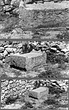
| Foundation of soft yellow poros after removal of fill in footing trench. Stone packing in trench remains, including the large block in the lower right corner of the picture ... east 103 Horizontal (normal) ... 7 May 1959 |
| Foundation of soft yellow poros after removal of fill in footing trench. Stone packing in trench remains, including the large block in the lower right corner of the picture ... AMS east 103 Horizontal (normal) ... 7 May 1959 |
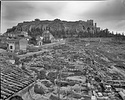
| View of the Eleusinion with the Acropolis in the background ... south Horizontal (normal) ... 19 Apr 1960 |
| View of the Eleusinion with the Acropolis in the background ... AMS south Horizontal (normal) ... 19 Apr 1960 |
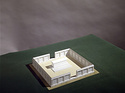
| Model of the Altar of the Twelve Gods. Model by Petros Demetriades and Kostas Papoulias, Athens, Agora Museum ... Craig Mauzy ... Raw scan in Public / Unworked / Projects / 2004.02. LCT Negatives Horizontal (normal) ... 1992 |
| Clinton, K. 1996. The Thesmoforion in Central Athens and the Celebration of the Thesmoforia in Attica in The Role of Religion in the Early Greek Polis. Proceedings of the Third International Symposium ... Agora 31 xiii ... Clinton, K. 1996. The Thesmoforion in Central Athens and the Celebration of the Thesmoforia in Attica in The Role of Religion in the Early Greek Polis. ... Demeter in the Ancient Greek City and Its Countryside in Placing the Gods: Sanctuaries and Sacred Spaces in Ancient Greece, S.E. ... Detienne, M. 1979. The Violence of Well-Born Ladies: Women in Thesmoforia, in The Cuisine of Sacrifice ampng the Greeks, M. |
| Well. Peisistratos and the Eleusinian Sanctuaries. Herodotos, 1.64.2. Thucydides, 3. 104.1. Shear, 1978, pp. 4-5. Shear, 1994, pp. 228-230. Shapiro, Art and Cult, pp. 18-47. Shapiro, Art and Cult. Shear, ... Agora 31 27 R 17:3 S 22:1 S 21:2 |
| Small poros altar still in situ on the West Slope of the Acropolis by the Beule Gate. Closely similar in material and workmanship, it may give an idea of the scheme of the Agora altar ... M. Crosby ... ca. 1949 |
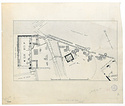
| Partially restored state plan of the northwest corner of the Agora ... W.B. Dinsmoor, Jr ... Royal Stoa to Altar of the 12 Gods.
One copy in Princeton (PK 2024). Dirty Faded Heavy Tracing Paper Drafting Ink ... 1971 |
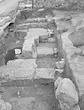
| Foundations of the Stoa, general view. In foreground, part of the early peribolos wall ... southwest 335 Horizontal (normal) ... 6 Jul 1959 |
|
|
.png.icon.jpg)

.png.icon.jpg)
.png.icon.jpg)


.png.icon.jpg)
.png.icon.jpg)