icon

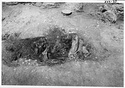
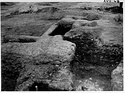
[Agora Deposit] B 21:18: Cremation, Sacrificial Pit I

Sacrificial Pit I in notebook = RSY Grave 20 ... Ca. 510-490 B.C ... Sacrificial Pit I in notebook = RSY Grave 20.

icon

[Agora Deposit] B 21:19: Cremation, Sacrificial Pit II

Sacrificial Pit II in notebook = RSY Grave 7 ... Ca. 540 B.C ... Sacrificial Pit II in notebook = RSY Grave 7.

[Agora Deposit] B 21:21: Cremation, Sacrificial Pit V

Sacrificial Pit V in notebook = RSY Grave 19 ... Last quarter 6th. c. B.C ... Sacrificial Pit V in notebook = RSY Grave 19.

[Agora Deposit] B 21:22: Cremation, Sacrificial Pit VI

Sacrificial Pit VI in notebook = RSY Grave 18 See also B 21:23 ... Ca. 525-500 B.C ... Sacrificial Pit VI in notebook = RSY Grave 18

icon

[Agora Deposit] B 21:20: Cremation, Sacrificial Pit III

Sacrificial Pit III in notebook = RSY Grave 6. Small bit of calcined bones (discarded?) ... Ca. 550-530 B.C ... Cremation, Sacrificial Pit III

icon

[Agora Deposit] B 21:23: Disturbed grave/inhumation

Rodney S. Young ... RSY/JP Disturbed Geometric burial over "Sacrificial Pit VI" (Grave B 21:22). Grave IX in notebook. Bones discarded? Pottery found in the upper filling of a sixth century cremation pit, which had perhaps ... Middle Geometric II/Transitional to Late Geometric ... RSY/JP Disturbed Geometric burial over "Sacrificial Pit VI" (Grave B 21:22). ... Pottery found in the upper filling of a sixth century cremation pit, which had perhaps cut through a Geometric inhumation to which the disturbed human bones close by may have belonged.

icon

[Agora Deposit] C 14:3: Sacrificial Pyre

Artifacts, burnt bone, ash, cinders and charcoal in pit in bedrock. The pyre lay directly under mosaic floor A. the deposit is not badly disturbed, however, and it is possible that it was laid immediately ... Early second quarter of 4th c. B.C.

icon

[Agora Deposit] F 13:1: Disturbed Sacrificial Pyre

"Perhaps a cremation burial ... " nbp. 811. "Sacrificial pyre, disturbed," GRE, deposit nb. In room on east side of building. Concentration of artifacts, fragments of bone, and abundant cinders in stratum, ... Early 3rd c. B.C.-Ca. 250 B.C ... "Perhaps a cremation burial ... " nbp. 811. "Sacrificial pyre, disturbed," GRE, deposit nb. ... Concentration of artifacts, fragments of bone, and abundant cinders in stratum, no pit discerned. The pyre was found while excavating an undated red fill that lay over the 5th c. building fill.

icon

[Agora Deposit] A 18:3: Sacrificial Pyre in NN

Sacrificial pyre, disturbed; a small pyxis (P 14864) is close to that from B 18:4. First half of 4th. c. B.C., perhaps first quarter. West of House C. Pottery and cinders in pit in stratum. The pyre was ... First half 4th. c. B.C ... Sacrificial pyre, disturbed; a small pyxis (P 14864) is close to that from B 18:4. ... Pottery and cinders in pit in stratum. The pyre was excavated in two parts: the first in 1939 (A 18:3) and the second in 1940.

icon

[Agora Deposit] A 18:9: Sacrificial Pyre over Drain A1

Grave over drain A1 (House A). Date based on the fact that the lopas has the upturned handle and the flat rather than domed lid, not found in examples from the later pyres. LT West of House C. Pottery ... First half of 4th. c. B.c.

icon

[Agora Deposit] D 17:8: Sacrificial Pyre in Poros Building, Northwest Room

Sacrificial pyre in Poros Building, NW Room (RSY= Pyre 1). Against east wall of room 5 west. artifacts, bone, carbon and ash in pit in floor sequence. the pyre lay below a floor covered with marble dust, ... Middle of 4th c. B.C ... Sacrificial pyre in Poros Building, NW Room (RSY= Pyre 1). Against east wall of room 5 west. artifacts, bone, carbon and ash in pit in floor sequence. the pyre lay below a floor covered with marble dust, the lowest floor that can be associated with the north wall of the room. The pit extends down into a layer with marbleworking waste.

icon

[Agora Deposit] F 5:2: Sacrificial Pyre under Room 18 in House 3

Grave V, under room 18 in House 3, plus burned deposit at 94/IΘ. Identified as sacrificial pyre by SIR on Agoraios Kolonos: In southeast corner of house 3. 35 artifacts, bone and charred material in pit, ... Ca. 300-275 B.C ... Identified as sacrificial pyre by SIR on Agoraios Kolonos: In southeast corner of house 3. 35 artifacts, bone and charred material in pit, in floor sequence. The pottery and burnt deposit lay in the lowest 0.08m of the pit, which was filled with earth and topped with a broken tile.

icon

[Agora Deposit] J 10:1: Unfinished Chamber Tomb

Plundered Chamber Tomb. (Tomb XII). A few meters SE of the great white marble altar. The chamber is an irregular rectangle, oriented roughly N-S, with dromos leading in at a very gentle slope from the ... LH III A ... It seems probable that the tomb collapsed before burials were made in it (the lower 1.80m of the tomb contained only collapsed bedrock and no sherds.) and perhaps the dromos may have been used as a sacrificial pit of some sort

icon

[Agora Deposit] H 13:2: Pyre

Sacrificial Pyre = Pit in floor (identified as pyre by SIR); with the characteristic small plates and saucers. "Saucer Grave" at 12/ΚΑ. Dimensions: 2m (length)x 0.70 (width). North of north wall of building ... First half 4th c. B.C ... Sacrificial Pyre = Pit in floor (identified as pyre by SIR); with the characteristic small plates and saucers. ... Long, narrow pit containing pottery and ash dug into a hard floor or surface and aligned with north wall of Building E. ... The alignment of the pit suggests a connection with Building E, and the pyre dates in the generation after its reconstruction.

icon

[Agora Deposit] C 11:4: Pit tomb, inhumation of two children

James H. Oliver ... (E.L. Smithson: Grave IX: PG). Two children's skeletons one on top of the other. Cf. PD 329 for PD 430 for second skeleton, same deposit. PG grave about 25m. SW of Cistern A at 46/ΜΔ. [In some records, ... Developed Protogeometric ... [In some records, erroneously as ΠΘ Grave 5 (an empty pit cleared in 1936), cf. nb. p. 321.] ... The bedrock forming the edges of the tomb pit was stepped in to provide an irregular ledge, running round all four sizes. maximum width of the pit at the bottom was about 0.30m. a partial lining of fieldstones was bedded on the ledges; the uppermost stones were interrupted at the southeast corner by an irregular recessed pocket containing two lekythoi. ... The latter were thought to be from a sacrificial animal or animals, but the bones were not analyzed,nor were they saved.

icon

[Agora Deposit] J 2:3: Pyre I

Sacrificial Pyre I, Classical Building II. The pyre was set through the original floor level of the northern room of the Classical Building and apparently is the remainder of a ritual conducted when the ... Ca. 375-350 B.C ... Sacrificial Pyre I, Classical Building II. ... The pyre was preserved in a thin strip of undisturbed fill between Pithos III and a Byzantine pit. Bits of bright blue and bright red pigment were found in the fill around the vessels.

icon

[Agora Deposit] L 17:4: Pyre 1

Pyre 1 in Central House, Room XI, strosis 3. Sacrificial pyre with characteristic small vases amid carbonized twigs and bone. Near north side of courtyard. This pit was cut slightly into strosis 3 (lot ... 1st quarter 4th c. B.C ... Pyre 1 in Central House, Room XI, strosis 3. Sacrificial pyre with characteristic small vases amid carbonized twigs and bone. Near north side of courtyard. This pit was cut slightly into strosis 3 (lot Φ 231), a 5th c. floor associated by the excavator with phase 2 of the house.