|
|
Filling around rubble wall (35/ΚΕ). It contained a mass of pottery, most of it uninventoried ... Ca. 425-400 B.C. |
Double Well by E. Entrance to Square Building (Well A) (formely a O 8:1) Coin
21 April 1951 #1 (disintegrated) Carefull there is two O 8:1, the actual one is a filling around rubble wall at 35/ KE.
Estimated ... 750 to early 7th century B.C ... Entrance to Square Building (Well A) (formely a O 8:1) ... Coin
21 April 1951 #1 (disintegrated) ... Carefull there is two O 8:1, the actual one is a filling around rubble wall at 35/ KE.
|
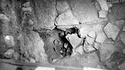
| Brian Martens ... Mycenaean Chamber Tomb J 1:11, located in the area north of Wall K, was partially excavated during the 2014 season. At this point the full western extent of the chamber has not been located because of ... LHIIIA ... Mycenaean Chamber Tomb J 1:11, located in the area north of Wall K, was partially excavated during the 2014 season. ... The work on J 1:11 was concluded in the 2015 season. ... The blocking wall consists of typical rubble construction , but includes an unusual vertical slab that acted as a jam. |
| Mycenaean Chamber Tomb occupies a considerable part of the western half of section ΕΕ; lies about half way up the north slope of the Areopagus towards its eastern end, just below the highest point of the ... Myc. III A:1 |
| Anne McCabe ... Adjacent to the SW face of Byzantine Wall 14. The circular cutting, 0.90m in diameter, appeared at 53.504m under a layer of loose rubble (Lot 481). Wall of the well roughly built, consisting at the top ... 11-19 July 2006
24 June-21 July 2009 |
| Hole at 57/ΛΣΤ = Pottery Dump at 57/ΛΣΤ. May well have accumulated on the spot where it was found, its fragmentary state being attributable to the later rubble wall laid over it.
Cf. also P 19982 (ΟΟ ... Ca. 400-375 B.C ... May well have accumulated on the spot where it was found, its fragmentary state being attributable to the later rubble wall laid over it.
... Coins:
15 June 1949 #1-#2
Consistent collection of black glazed and figured table-ware, with a few coarse amphoras and a lamp fragment |
|
|