|
|
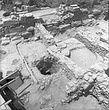
| Roman Bath, Herulian destruction debris in A3. The high proportion of vessels for eating suggests that this was not the actual bath fill but was probably dumped in from the ruined houses higher on the ... Second half of 3rd and into 4th c. A.D. |
West Road and Drain. (Road, drain and closely related cuts.) Packing in line of ancient road running along the northwest shoulder of the Areopagus. Includes excavation of 1957 titled "Road Area to North", ... Late 6th c. B.C. - Roman ... Includes excavation of 1957 titled "Road Area to North", "North cut road area", "North cut, west of road", (not including "Roman Bath" or "area of A7" notations) ... Coins:
19 April 1939 #2
24 April 1939 #4-#9
25 May 1939 #2-#3
29 May 1939 #1-#3
30 May 1939 #16
31 May 1939 #1-#4
5 June 1939 #1
13 June 1939 #1-#2
16 June 1939 #1
17 June 1939 #1-#2
20 June 1939 #1-#3
21 June 1939 #15-#22
22 June 1939 #1-#6
23 June 1939 #1-#8
17 April 1957 #2-#3
30 April 1957 #2, #7-#8
7 May 1957 #2-#3
9 May 1957 #1-#3
10 May 1957 #1-#3
11 May 1957 #1-#7
13 May 1957 #1-#5
14 May 1957 #1-#20
15 May 1957 #8
16 May 1957 #1
20 May 1957 #6 (east of road against east face of road)
25 May 1957 #1-#4 (late drain in A9 ... around lead pipe)
29 May 1957 #2 (E-W drain next to South Wall of A2)
30 May 1957 #2 (East drain in road ca. |
| Marcie Handler ... Located in the south section of Room E in the Byzantine Building east of the North-South Road. The uppermost 1.5 meters of well lining was built of well-coursed stones (some reused marble blocks) and tiles ... 12th c. A.D ... Located in the south section of Room E in the Byzantine Building east of the North-South Road. ... The later phase of the well, a Byzantine well-lining and well-head, was excavated during the 2001 season (BZ XXV p. 4953, Lot BZ 1217) and the Roman catchment basin and well-lining down to the level of the terracotta lining were excavated during the 2002 season (BZ XXVII pp. 5279 & 5285 for the catchment basin; BZ XXVII p. 5293 for the Roman well-lining).
... The packing fill for the well consisted almost entirely of fragments of tegulae mammatae (133 were found in the packing fill from 50.657 to 53.001 masl), which gives the destruction of the bath to the southwest in 395/6 AD as a terminus post quem for the original construction phase of the well. |
|
|