|
|
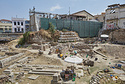
| AGORA 2022 - Preliminary Report ... John McK. Camp II ... The initial plan to excavate under the modern building at 14 St. Philip Street had to be postponed due to delayed demolition. Instead, excavations were carried out around and inside the Stoa Poikile.
In ... 14 Jun-5 Aug 2022 |
Excavation in the Athenian Agora: 1951 ... Homer A. Thompson ... A report on the 1951 excavations presented at the Open Meeting of the ASCSA, March 20, 1952.
Field work was concentrated in the market place proper, and large areas in the west, north central and southeastern ... 9 Apr-31 Aug 1951 |
| Athenian Agora
Excavation Summary for 2021 ... John McK. Camp II ... Excavations continued in sections ΒΖ and ΒΘ in and under the Classical Commercial Building, the Painted Stoa, and the orthostate enclosure suggested to be the Leokoreion.
In section ΒΖ the goal was to ... 14 Jun-6 Aug 2021 |
| Summary Report - Agora 2018 ... John McK. Camp II ... Excavations were carried out in Sections ΒΘ, ΒΖ and Ω.
In Section ΒΘ the investigations continued in the area in front of and above the Stoa Poikile. In ΒΘ East, built into a late structure, a large inscribed ... 11 Jun-3 Aug 2018 |
| Agora 2019 - Summary Report ... John McK. Camp II ... Excavations were carried out in four sections: in Section ΝΝ in the southwest corner of the archaeological site, and in the northwest corner of the Agora in Sections ΒΖ, ΒΘ East and ΒΘ West.
Section ΝΝ ... 10 Jun-2 Aug 2019 ... Excavations were carried out in four sections: in Section ΝΝ in the southwest corner of the archaeological site, and in the northwest corner of the Agora in Sections ΒΖ, ΒΘ East and ΒΘ West.
... In section ΒΘ East excavations continued in front of the Painted Stoa. The Roman basin set into the western corner of an enclosure, the possible Leokorion, was cleared. |
| Report on Excavations in the Athenian Agora 1990 ... T. Leslie Shear, Jr ... This is a report on the archaeological field work conducted in the Athenian Agora during the period from December 1989 to December 1990. The actual excavation period was preceded by preparatory operations ... 4 Jun-3 Aug 1990 ... This is a report on the archaeological field work conducted in the Athenian Agora during the period from December 1989 to December 1990. ... In section ΒΖ, Byzantine and and Roman fills were excavated. |
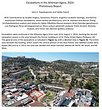
| Excavations in the Athenian Agora, 2024: Preliminary Report ... John K. Papadopoulos Debby Sneed ... A summary of the second excavation season in Section ΒΚ, in the area beneath the former building at 14 St. Philip Street.
The area was divided into three trenches and yielded mixed material from the Modern ... 10 Jun-2 Aug 2024 ... The area was divided into three trenches and yielded mixed material from the Modern to Late Roman periods. Notable features from this season were walls in ΒΚ North from the Middle Byzantine period and pits from both ΒΚ West and South, the purpose and dating of which is still under investigation. ... The study of the ancient DNA from burials in the Agora was resumed. |
| Excavation Summary Section Ω: 1971 ... John McK. Camp II ... Roman House H was fully exposed and the underlying Early Roman and Greek remains were explored ... 22 Mar-27 May 1971 |
| Report on Excavations in the Athenian Agora 1992 ... T. Leslie Shear, Jr ... This is a report on the archaeological excavations in the Athenian Agora during 1992. The investigations continued in two areas: on the south side of Hastings Street and along the north side of Hadrian ... 8 Jun-7 Aug 1992 ... This is a report on the archaeological excavations in the Athenian Agora during 1992. ... In ancient times the latter area lay at the northwest corner of the Agora; the former lay north of the market square along the street leading out of the Agora.
... A well, first used in the Roman period and then reused in the Byzantine period ,was dug and produced a large number of finds, amongst them a herm head from the Classical period. |
| Excavations in the Athenian Agora, 2025: Preliminary Report ... John K. Papadopoulos Debby Sneed ... The 2025 excavation is the third excavation season in the ΒΚ section, divided into three trenches: ΒΚ North, ΒΚ South, and ΒΚ West, and covers the central part of the Stoa Poikile. The excavation practices ... 9 Jun-1 Aug 2025 |
| Report on Excavations in the Athenian Agora 1991 ... T. Leslie Shear, Jr ... This is a report on the archaeological field work conducted in the Athenian Agora during the period from December 1990 to December 1991. The actual excavation period was preceded by the demolition of a ... 10 Jun-9 Aug 1991 ... This is a report on the archaeological field work conducted in the Athenian Agora during the period from December 1990 to December 1991. ... The most important results of the season's field work concern the topography on the north side of the Agora. It was possible to explore a section of the Eridanos River which passes through the Agora in a great masonry tunnel covered by large slabs. ... Work continued west of the Stoa Poikile in the area of the early Roman temple which was added to the Sanctuary of Aphrodite Ourania in the Augustan period. |
| Excavation Summary Section Ω: 1970 ... John McK. Camp II ... Excavations were centered around a large late Roman complex know as the Roman House H.
In addition, a late Hellenistic cistern was dug under the northwest corner of the house ... 24 May-22 Aug 1970 |
| Section ΠΠ 1948 ... Mabel Lang ... The western and northern parts of Section ΠΠ were brought down to Roman level. Revealed were Roman houses (North House and South House), drains and roads (East-West Road with two drains underneath it, ... 16 Mar-29 Apr 1948 |
| Preliminary Report on the 2004 Excavation Season ... John McK. Camp II ... All the work during the season 2004 was concentrated on the northwest corner of the Agora north of the Panathenaic Way.
In BZ North, the last remains of Byzantine fills and walls were removed and Hellenistic, ... 7 Jun-16 Jul 2004 ... All the work during the season 2004 was concentrated on the northwest corner of the Agora north of the Panathenaic Way.
In BZ North, the last remains of Byzantine fills and walls were removed and Hellenistic, early Roman and late Roman fills were explored. A gap in the archaeological record between the late Hellenistic/early Roman to late Roman periods was discovered. |
| Excavation Summary Section K: 1968 ... S. Grobel ... Excavations in Section Κ were conducted in the Marble Worker's Establishment, a series of rooms grouped around a courtyard. A cistern-well was discovered and excavated, as was a pit and a pyre burial ... 17 Jun-17 Aug 1968 ... Excavations were also carried out in the Roman Fountain House, and in the Roman Cistern connected to the fountain house.
Much of Section ΣΤ, excavated in 1932 and then filled-in, were reopened to explore the road and drainage system in the southwest Agora. A retaining wall along the Triangular Temenos, and a Geometric Grave were discovered.
|
| Section Ψ
Season of 1939 ... Eugene Vanderpool ... During the 1939 campaign in Section Ψ, several wells were dug that had been discovered but left unfinished or undug in 1938: Great Hole and Early Well at 33/Z (N 18:8); Tiled Roman Well at 18/H (N 17:1); ... 11 Apr 1939 |
| Section Φ Season of 1937 ... Eugene Vanderpool ... In antiquity the area included in Section Φ lay outside the Agora proper and were apparently occupied only by houses and small buildings. The earliest period of which any considerable remains were found ... 25 Jan-17 Jun 1937 ... In antiquity the area included in Section Φ lay outside the Agora proper and were apparently occupied only by houses and small buildings. ... It was destroyed in the late 3rd century A.D. Two Roman wells were excavated, as well as a late Roman tomb. A late Roman building covered almost the whole section and was probably part of the great complex of late Roman buildings that covered most of the center of the Agora. |
| Sections ΝΝ - ΞΞ Excavation Summary 1946 ... Rodney S. Young ... The objective of this year's excavation was to clear the southern part of the section to bedrock. Features earlier investigated (the 6th century cemetery, the Hellenistic-Early Roman terrace and one large ... 31 May-14 Aug 1946 |
| Section ΟΟ: Preliminary Summary 1947 ... Margaret Crosby, Eugene Vanderpool ... Excavations in Section ΟΟ were taken place in four parts: the modern and Turkish road levels were removed; a part of the Great Drain, and drains connected with it, were examined; high Roman levels of Building ... 17 Mar-14 Aug 1947 |
| Section Χ 1937 ... Margaret Crosby ... The area signified as Section Χ lays outside the Agora proper and no signs of any public buildings were found. The area seems to have been used for private houses from the end of the 6th c. B.C. Apart ... 25 Jan-18 May 1937 ... The area signified as Section Χ lays outside the Agora proper and no signs of any public buildings were found. ... A house of the Roman period was revealed in the central region of the section. A late Roman well was partly excavated.
|
| Section Ψ Season of 1938 ... Eugene Vanderpool ... Finds from Section Ψ span from Turkish down to the Neolithic and Geometric times. Several wells and cisterns from various periods were found and explored. The most extensive remains in the section belong ... 24 Jan-18 Jun 1938 |
| Excavation Summary Section ΒΔ: 1972 ... Stephen G. Miller ... With the exception of the removal of certain modern intrusions, the recovery of a few layers of a late Roman road, and the discovery of the westward continuation of the southern foundation of Roman Building ... 22 Mar-20 Jun 1972 |
| Section ΝΝ: 1947 ... Rodney S. Young ... Excavation continued in section ΝΝ with the aim of clearing the area for the new museum. Because of the unforeseen depth of filling, the area remained unfinished.
Several features were dug and examined ... 10 Mar-3 Nov 1947 |
| Excavation Summary Section ΟΟ 1968 ... M. Alison Frantz ... The excavation of the Roman Bath east of the Poros Building was resumed in order to clarify aspects on plan and chronology of the building. It was discovered that there had been a bath in the area from ... 17 Jun-31 Jul 1968 |
| Preliminary Report on the 2003 Excavation Season ... John McK. Camp II ... Excavations in 2003 were carried out largely in the northwest corner of the Agora known as Section BZ. The area was divided into two parts: the north-south road and areas to the west, and east of the road ... 13 Jun-25 Jul 2003 ... Excavations in 2003 were carried out largely in the northwest corner of the Agora known as Section BZ. ... After several years of exploring the Byzantine houses of the 10th century A.D. which overlay the area, the foundations were stripped away and substantial progress into the underlying Roman remains were made. ... The main topographical feature was the north-south street which divided the area in two parts with late Roman walls on both sides of the street. |
| Section ΝΝ
Season of 1939 ... Rodney S. Young ... Section ΝΝ lies at the mouth of the valley between Pnyx and Areopagus, which was the important thoroughfare from the Agora to the Pnyx and to the southern parts of the city, as well as to the Piraeus Gate, ... 26 Sep 1938-24 Jun 1939 ... Section ΝΝ lies at the mouth of the valley between Pnyx and Areopagus, which was the important thoroughfare from the Agora to the Pnyx and to the southern parts of the city, as well as to the Piraeus Gate, and it is outside the area of the public buildings of the Agora.
... Extensive remains of private houses and a bath of the Roman period were discovered, as well as walls of houses from earlier periods. |
| Section Κ 1953 ... Eugene Vanderpool ... Excavations was carried out in the building fill in the area south of the Middle Stoa, and in the area between the South Stoa and the Fountain House. Work was also done to the porch of the Fountain House ... 23 Feb-30 Jul 1953 |
| Excavation Summary Section ΟΟ: 1969 ... John McK. Camp II ... Further excavations were conducted in Section ΟΟ, supplementing those done earlier. The large Roman complex, now known as the Southwest Bath, were completely explored. Cuts to the north of the building ... 13 May-6 Jul 1969 |
| Section Ω 1969 ... John McK. Camp II ... Excavations were carried out in the Late Roman complex known as Philosophical School C, and in House D, a private house of the 5th c. B.C. which underlies the north half of the school. A second house of ... 8 Jul-23 Aug 1969 |
| The Odeion ... Homer A. Thompson ... The exploration of the Odeon was resumed and the remainder of the late accumulation around the foundations of both the Odeion and the overlying late Roman building were removed, and the pre-Odeion ground ... 1 Jun 1938-23 Jun 1939 |
| Preliminary Report on the 2002 Excavation Season ... John McK. Camp II ... Excavations continued in the northwest corner of the Agora (sections ΒΕ and ΒΖ) and in the Eleusinion area (ΕΛ), and a trial trench was opened up in the Panathenaic Way (Σ).
In section ΒΖ, the exploration ... 10 Jun-2 Aug 2002 ... Excavations continued in the northwest corner of the Agora (sections ΒΕ and ΒΖ) and in the Eleusinion area (ΕΛ), and a trial trench was opened up in the Panathenaic Way (Σ).
In section ΒΖ, the exploration of the Byzantine settlement and the late Roman remains underneath them continued. ... At the end of the season, a Roman statue head appeared.
|
| Sections Φ, Χ, Ψ, April-June 1957 ... A. L. Boegehold ... Three private dwellings, already known from the preliminary excavation of 1937, formed the major themes of the investigation this year: Southwest House, Polygonal House and Late Roman House and Water Channel ... 10 Mar-12 Aug 1957 |
| Section X
Miscellaneous Notes Compiled in Summer of 1946 ... Margaret Crosby ... This report is a summary of the excavations taken place in 1937 as well as in 1946.
Some pottery indicate habitation in the area from the Geometric period. Two shallow graves of the 6th and 5th centuries ... 27 May-21 Jun 1946 |
| Sections Ε, Ν, Η 1952 ... Homer A. Thompson ... Mycenaean graves were excavated in section Ε.
Section Ν was disturbed by late pits, bothroi and walls. Excavation was carried out through Roman levels. The area seemed to have been leveled out and raised ... 4 Mar-31 May 1952 |
| Preliminary Report on the 2005 Excavation Season ... John McK. Camp II ... Excavations were carried out in three sections in the summer of 2005: BZ, BH and Γ.
In section BZ, mostly Roman levels were excavated, dating from the 1st to the 5th centuries A.D. Much more of the north-south ... 13 Jun-5 Aug 2005 |
| Preliminary Report on the 2001 Excavation Season ... John McK. Camp II ... Excavations were carried out at the northwest of the Agora in sections ΒΖ and ΒΕ, and in the area of the Eleusinion in section ΕΛ.
In Section ΒΖ, the investigation of the settlement of the 11th century ... 11 Jun-3 Aug 2001 ... Excavations were carried out at the northwest of the Agora in sections ΒΖ and ΒΕ, and in the area of the Eleusinion in section ΕΛ.
... The lowest floor levels of the buildings were excavated down into layers of the 7th to 9th centuries, exposing the Byzantine walls to their full depth and the upper parts of the late Roman walls beneath. ... In section ΕΛ, the area just south of and uphill from the Eleusinion was excavated, along the east face of the late Roman fortification wall. |
| Section Ζ 1951 ... Homer A. Thompson ... The remaining pieces of the so-called Byzantine wall were removed, as well as a late Roman wall. Excavations in front of the Civic Offices revealed a hard road surface from the 3rd century A.D. More than ... 21 May-13 Jun 1951 |
| Preliminary Report on the 2000 Excavation Season ... John McK. Camp II ... Excavations were carried out in three sections, two to the northwest, (ΒΖ and ΒΕ) and one to the southeast of the Agora square (ΕΛ).
In Section ΒΖ the investigation of the remains of the 11th century settlement ... 6 Jun-28 Jul 2000 ... Excavations were carried out in three sections, two to the northwest, (ΒΖ and ΒΕ) and one to the southeast of the Agora square (ΕΛ).
... A large amount of late Roman coins were recovered. |
| Section ΜΜ
Season of 1939 ... Homer A. Thompson ... Section Μ was to be refilled this year and supplementary explorations took place to resolve some remaining obscurities. The most significant discovery was a road running northwest-southeast, probably the ... 20 Feb-8 Apr 1939 ... The most significant discovery was a road running northwest-southeast, probably the principal road in antiquity between the region of the Agora and that of the Sacred and the Dipylon Gates. The history of the road is well documented by the pottery from its successive layers of gravel, the earliest being Neolithic, going down to at least Roman times.
New evidence for the history of the lesser roadway between the main road and the foot of Kolonos was also brought to light. |
| A Portrait of an Imperial Priest ... John McK. Camp II ... A Roman portrait head was found on the north slopes of the Acropolis. The crown on his head indicate that the man was a priest of the imperial cult. Imperial worship in Athens is attested as early as the ... 19-20 Jun 2002 |
|
|