|
|
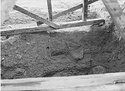
| In room A. Concentration of artifacts and burning in stratum, no pit discerned. The pyre lay below a Late Hellenistic fill with a smooth earth surface. It is described as a black patch of earth with sherds, ... 350-250 B.C ... Concentration of artifacts and burning in stratum, no pit discerned. The pyre lay below a Late Hellenistic fill with a smooth earth surface. ... Strosis II, on which the pyre rested, covered the walls of Room A, demonstrating that the pyre postdates a change of plan or abandonment of this part of the building, other parts of which survived to the Late Hellenistic period. |
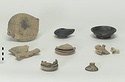
| Rubbish Dump in mouth of abandoned well in Tholos Trench F, Kitchen. Filled with ash, charcoal, broken pottery, roof tiles.
Also from Trench L.
13 March 2014 by Ann Steiner
The deposit has four components ... Ca. 425-400 B.C ... Component 1: At the top is an extensive oval-shaped pit, c. 3.20 by 1.60, distinguished by signs of burning: the Tholos Kitchen Dump: Lots Ζ 271-287 (425-400 B.C.E.)
Component 2: The second segment, moving downward, includes the top-most curb stones of a collapsed well together with ceramic material all jumbled up with the roof tiles from the Tholos, but with no signs of burning: Lots Ζ 687-690 (late 6th-late 5th c. ... Lot Ζ 694 (425-400 B.C.E)
Well walls collapse on east (?) |
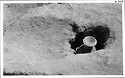
| Rodney S. Young ... Grave 6 in notebook (E.L. Smithson: Grave XXII: PG). Bones discarded. Urn cremation (trench-and-hole).
JP
Roughly rectangular trench cut through hard earth into bedrock to a depth of about 0.35m, approximately ... Late Protogeometric |
|
|