|
|
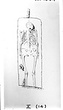
| Grave X in notebook = RSY Grave 14. PD 731-g ... Ca. 525-500 B.C ... Grave X in notebook = RSY Grave 14. |
Rodney S. Young ... Grave 15 in notebook.
Skeleton of infant inside the hydria which lay on its side, its mouth stopped by cup; a pitcher stood by the neck of the hydria ... 750-725 B.C ... Hesperia Suppl. 2 (1939), pp. 42-44, figs. 1, 26-28 (Grave X). |
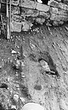
| Dorothy Burr Thompson ... Grave 23 in notebook (E.L. Smithson: Grave IV: SM). Few bones: discarded. JP says 46/ΜΖ-MΗ
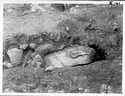
Negs. KK 99, KK 100, KK 101, X-61, X-62, X-63 PD 433 ... Final Mycenaean/Submycenaean ... Grave 23 in notebook (E.L. Smithson: Grave IV: SM). Few bones: discarded ... KK 99, KK 100, KK 101, X-61, X-62, X-63 |
| Dorothy Burr Thompson ... Grave 28 in notebook. (E.L. Smithson: Grave V: SM). No remains, probable child inhumation. Just one cup for offering (P 7693). Negs. X-77, X-78 ... Final Mycenaean/Submycenaean/Early Protogeometric ... Grave 28 in notebook. ... Smithson: Grave V: SM). No remains, probable child inhumation. ... Negs. X-77, X-78 |
| Dorothy Burr Thompson ... Grave 25 in notebook. (E.L. Smithson: Grave I: SM). Bones discarded. In some records as Grve XIV (JP)?
Notebook says (p. 947) contents: hard earth, no bones. Lisa's list says bones discarded.
Negs. X-75, ... Final Mycenaean/Submycenaean ... Grave 25 in notebook. ... Smithson: Grave I: SM). Bones discarded ... Lisa's list says bones discarded.
Negs. X-75, X-76 |
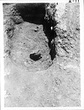
| Dorothy Burr Thompson ... Circular cutting. Grave 24 in notebook. In some records as Grave IV bis. Baby's bones: discarded. No offerings. Negs. KK 99, KK 100, X-61 ... LH III/EPG (date uncertain) ... Circular cutting. Grave 24 in notebook. In some records as Grave IV bis. Baby's bones: discarded. ... KK 99, KK 100, X-61 |
Filling in a sizeable pit. The objects, along with the dimensions of the cutting from which they came, might suggest offerings in a disturbed grave but there was no evidence of skeletal remains ... Ca. 430-415 B.C. |
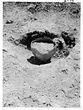
| Rodney S. Young ... Grave 20 (E.L. Smithson: Grave X: PG). Bones discarded. Pit tomb, inhumation (on bier or in coffin?), perhaps of a child. Little ash and carbon in the filling, but the grave offerings were unburned.
JP ... Developed Protogeometric ... Grave 20 (E.L. Smithson: Grave X: PG). ... Little ash and carbon in the filling, but the grave offerings were unburned.
... Negs. X-43, X-44 |
|
|