|
|
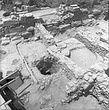
Cistern at 63/ΞΒ and channel leading west from cistern to west edge of section; also manhole at 57-58/ΞΔ-ΞΕ.
Possible further connection with other cisterns, e. g. at east edge of section Υ and/or cistern ... Cistern at 63/ΞΒ and channel leading west from cistern to west edge of section; also manhole at 57-58/ΞΔ-ΞΕ.
Possible further connection with other cisterns, e. g. at east edge of section Υ and/or cistern and channel,ΔΔ 113/Α' (L 19:2). |
Michael Laughy ... Debris pit, located in Room 2 of ΒΘ East. Pit measures ca. 2.30 by 1.70m., and nearly a meter deep. The pottery from the pit dates ca. 10th-12th c. A.D. The fill of the pit consisted of soft, black charcoal ... 10th-12th c. A.D ... Excavations | 2010 | Trenches | West | Western Section | Northern Area | East | Level 1 ... Excavations | 2010 | Trenches | West | Western Section | Northern Area | West | Fill under Lime-lined pit |
Accumulated fillings in a system of underground drains at west end of section ΔΔ with northward continuation into and across Section Υ.
The filling in the "underground passages" in section ΔΔ appears to ... 3rd c. B.C.
2nd c A.D ... Accumulated fillings in a system of underground drains at west end of section ΔΔ with northward continuation into and across Section Υ.
... B.C.; but drain channels, pits and cuttings, etc. in Υ are partly Early Roman, some mixed to Late Roman or later.
Section ΔΔ: west branch and east branch recorded separately and noted on cards for each find; not separated into subdivisions here.
... intrusive in west branch. More extensive disturbance in east branch indicated by fragments of dipper, 2nd c. plate, at least five moldmade bowls, a Roman lamp. |
| Marcie Handler ... Located in the south section of Room E in the Byzantine Building east of the North-South Road. The uppermost 1.5 meters of well lining was built of well-coursed stones (some reused marble blocks) and tiles ... 12th c. A.D ... Located in the south section of Room E in the Byzantine Building east of the North-South Road. ... Under the terracotta lining, only the north and west sides of the lining were preserved, where it was constructed of rubble and tiles.
... During the 2003 season, we dismantled the terracotta lining and packing fill of the original construction phase of the well, leaving in situ the section of the well lining that was still in tact on the northeast side of the well (at an elevation of 51.973 masl and below). |
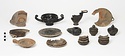
| Mike Laughy ... This pyre was found within an otherwise mostly sterile fill directly under a white floor surface in the southern section of Area IV. It was located ca. 0.50m. east of a similar deposit, Pyre J 2:25. The ... 4th c. B.C ... This pyre was found within an otherwise mostly sterile fill directly under a white floor surface in the southern section of Area IV. It was located ca. 0.50m. east of a similar deposit, Pyre J 2:25. The pots were mixed with heavy concentrations of charcoal and found across an area measuring 0.47-0.50m, east to west, 0.31-0.43m, north to south.
|
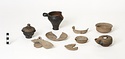
| Marcie Handler ... The Pyre was revealed in a layer of 4th c. fill in the north end of Room 6, just south of Wall 8. Room 6 is defined by the street wall (Wall A) on the west, Wall 7 on the east, Wall 9 on the south (preserved ... 4th c. B.C ... Room 6 is defined by the street wall (Wall A) on the west, Wall 7 on the east, Wall 9 on the south (preserved only as a stub on the east side of the area), and possibly Wall 8 or Wall 6 on the north.
2.5 meters SW of the pyre, a patch of floor surface at J/10-1/20 at 52.188 masl. was found. ... This pyre is the northernmost pyre found in Section ΒΖ North, and its location suggests that the Classical Commercial Building continues this far north. |
Two chambers connected by a tunnel, all filled at the same time, but with slight Hellenistic disturbance. Chamber A, to west at 14/ΛΗ, B to east at 14-15/ΛΒ on grid for section RR.
Cistern system ca. 20.00m ... Ca. 325-275 B.C ... Chamber A, to west at 14/ΛΗ, B to east at 14-15/ΛΒ on grid for section RR.
|
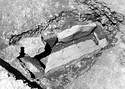
| Susan I. Rotroff ... Burial 3 beneath the floor of the Stoa Basileios. It consisted of a rectangular pit cut into bedrock to a depth of 0.44m, lined on all sides and covered with an admixture of narrow stone slabs of soft ... Final Mycenaean/Submycenaean ... The floor of the tomb was neatly worked bedrock, although it is clear from the section that bedrock in the immediate vicinity sloped down from west to east.
|
|
|