|
|
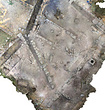
| Stoa of Zeus. Digging along West Side. Cobble Floor to East. Early Foundation to West. Pit to East of Column Base. Early Wall to West. Stratification to East. Stratification to West. Early Wall along West ... Ε-3 ... Digging along West Side ... Early Wall to West ... Early Wall along West Side |
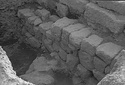
| Structure of early wall found along west side of stoa. The uppermost course seems to be euthynteria ... AMS 552 Horizontal (normal) ... 1 Aug 1931 ... Structure of early wall found along west side of stoa. |
| Structure of early wall found along west side of stoa. The uppermost course seems to be euthynteria ... AMS 552 Horizontal (normal) ... 1 Aug 1931 ... Structure of early wall found along west side of stoa. |
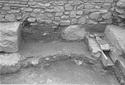
| Room 7. Foundation trench cut in bedrock for Early East-West Wall along north side revealed under Box 232. From south ... AMS Horizontal (normal) ... Foundation trench cut in bedrock for Early East-West Wall along north side revealed under Box 232. |
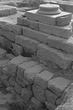
| Colonnade, North of Room 6, Strosis F along west side of area, Early Wall on left, Stylobate Drain on right, from east ... AMS Horizontal (normal) ... Colonnade, North of Room 6, Strosis F along west side of area, Early Wall on left, Stylobate Drain on right, from east. |
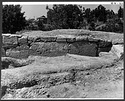
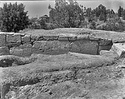
| Early retaining wall along the west side, after the removal of the stone drain cover slabs. Note modern masonry in upper left. Cf. 1997.14.0505 for a view with the slabs in place ... northwest 4124 Horizontal (normal) ... 29 Aug 1961 ... Early retaining wall along the west side, after the removal of the stone drain cover slabs. |
| Early retaining wall along the west side, after the removal of the stone drain cover slabs. Note modern masonry in upper left. Cf. 1997.14.0505 for a view with the slabs in place ... AMS northwest 4124 Horizontal (normal) ... 29 Aug 1961 ... Early retaining wall along the west side, after the removal of the stone drain cover slabs. |
| Inscribed fragments.
Prytany decree.
Fragment Β 1522, the lower half of the stele remains, including the tenon. The left side has been broken away up to the edge of the tenon and the face chipped along ... Late 3rd. or early 2nd. centuries B.C. |
| Fills Along and Related to Poros Building; Poros Building Room 1 West; Southeast Corner of Room. Fills Along and Related to Poros Building; Poros Building Room 1 West; Southeast Corner of Room; Below Lot ... ΟΟ-7 1292, 1293 ΟΟ 254 T 2415 ΟΟ 165 P 17991 ΟΟ 1469 P 20467 ΟΟ 1470 BI 648 Lot ΟΟ 146 Lot ΟΟ 147 Lot ΟΟ 148 Lot ΟΟ 149 Lot ΟΟ 150 Lot ΟΟ 151 Lot ΟΟ 152 Lot ΟΟ 153 Lot ΟΟ 154 ... Early Roman |
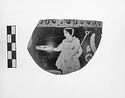
| A single piece from one side of rim and wall; beginning of handle attachment at right edge. Egg pattern along rim. Part of floral ornament beside handle. Semi-draped youth, standing right, caduceus in ... 17-24 May 1940 ... A single piece from one side of rim and wall; beginning of handle attachment at right edge. Egg pattern along rim. Part of floral ornament beside handle. ... West Terrace, south end, early fill, layer IV. |
| East Side of Northwest Room of Poros Building; Softer Fill Under Floor at North by Late Wall Trench; Probably Antedating the Floor. West Side of Northwest Room of Poros Building; Circular Pit along South ... ΟΟ-17 3292, 3293 ΟΟ 1418 L 4662 ΟΟ 1417 P 20431 ΟΟ 1423 P 20435 ΟΟ:1949.0513:1 ΟΟ:1949.0513:2 ΟΟ:1949.0513:3 ΟΟ:1949.0513:4 ΟΟ:1949.0513:5 ΟΟ:1949.0513:6 ΟΟ:1949.0513:7 Lot ΟΟ 642 Lot ΟΟ 731 Lot ΟΟ 643 ... 5th B.C. |
| About one-quarter of side preserved.
Low flat base, convex side wall continuous with narrow inward-tilted rim, but set off from it by a raised ring. Side wall outside.
Brownish black glaze outside; inside ... 11 February 1935 ... About one-quarter of side preserved.
Low flat base, convex side wall continuous with narrow inward-tilted rim, but set off from it by a raised ring. Side wall outside.
... Accumulated road metal of early north-south road along west side of Market Square and related fills in the area of the Geometric cemetery south of the Tholos. |
| Bouleuterion Plateia; Clearing Earlier Foundation Trench at Its Southwest Corner; Lowest Hard Packed Fill of Bedrock. Bouleuterion Plateia; Southeast Corner; From Lower Part of First Layer Just above Breccia ... Β-10 1957, 1958 Lot Β 252 Lot Β 253 Lot Β 254 Lot Β 255 Lot Β 256 Lot Β 257 Lot Β 258 Lot Β 259 Lot Β 260 ... 2nd half of 5th B.C ... Bouleuterion Plateia; Along Face of South Curtain Wall; Above Foundations of Earlier Monument on Its West Side ... Bouleuterion Plateia; Below Ancient Ground Level; In Front of South Screen Wall; Near West End of Early Monument ... Bouleuterion Plateia; Room to West of Tholos; From Working Chips along West Side |
| Fills Along and Related to Poros Building; Southeast Side of Poros Building; Poros Building Room 2; At East On Clay Floor at South and West. Fills Along and Related to Poros Building; Southeast Side of ... ΟΟ-7 1290, 1291 ΟΟ 692 L 4485 ΟΟ 742 P 19419 ΟΟ 741 P 19418 ΟΟ 721 P 19403 ΟΟ 747 P 19424 ΟΟ 483 P 19173 ΟΟ:1948.0429:1 Lot ΟΟ 134 Lot ΟΟ 135 Lot ΟΟ 136 Lot ΟΟ 137 Lot ΟΟ 138 Lot ΟΟ 139 Lot ΟΟ 727 Lot ... Late 4th B.C ... Fills Along and Related to Poros Building; Southeast Side of Poros Building; Poros Building Room 2; At East On Clay Floor at South and West ... Fills Along and Related to Poros Building; Southeast Side of Poros Building; Poros Building Room 2; On Floor at Base of East Wall ... Fills Along and Related to Poros Building; Southwest Corner of Poros Building; Plundered Wall Trench of West Wall of Poros Building; Beside Room 1 at West |
| About one-quarter of side preserved.
Flat bottom; nearly straight side wall slightly thickened at lip; nozzle unbridged. The rim projects slightly at the outside; not on the inside.
Attic clay, slipped ... Middle 6th century B.C ... About one-quarter of side preserved.
Flat bottom; nearly straight side wall slightly thickened at lip; nozzle unbridged. ... Attic clay, slipped outside, glazed brownish black inside; bands of glaze on inner and outer edges of lip, and around bottom of wall outside.
Type 6A of Agora collection.
... Accumulated road metal of early north-south road along west side of Market Square and related fills in the area of the Geometric cemetery south of the Tholos. |
| Roman Bath; Hypocaust Room A3; Pit with Black Earth in South Side. Roman Bath; Room A1; Northwest Corner; Under Late Floor; In Marble Chip Packing. Roman Bath; Area East of Room A1; Between Tiled Floors ... ΟΟ-17 3334, 3335 ΟΟ 1664 P 27891 ΟΟ 1665 A 3667 ΟΟ:1968.0619:1 N 48020 ΟΟ:1968.0619:2 N 48021 ΟΟ:1968.0619:3 N 48022 ΟΟ:1968.0619:4 N 48023 ΟΟ:1968.0619:5 N 48024 Lot ΟΟ 792 Lot ΟΟ 793 Lot ΟΟ 794 Lot ΟΟ ... 3rd A.D. |
| Upper left portion of inscribed stele.
Mended from two fragments. Back rough picked.
Top shows marks of rough pointed tooth chisel, over whole surface preserved. Left side, similar (?) marks with shallow ... Early 3rd. century B.C. |
| Cut Through Early Road. Cut Through Early Road to South of Tholos; Footing Trench of East Parapet. Cut Through Early Road to South of Tholos; Footing Trench of West Parapet. Cut Through Early Road to South ... Β-9 1745, 1746 Lot Β 541 Lot Β 542 Lot Β 543 Lot Β 544 Lot Β 545 Lot Β 546 Lot Β 547 Lot Β 548 Lot Β 549 Lot Β 550 Lot Β 551 Lot Β 552 ... Geometric-6th B.C ... Cut Through Early Road to South of Tholos; Footing Trench of West Parapet ... Cut Through Early Road to South of Tholos; East Extension of Cut Through Early Road; Plundered Trench for West Side Wall of Middle Drain ... Cut Through Early Road to South of Tholos; East Extension of Cut Through Early Road; From Packing along Terracotta Drain |
| Byzantine Building; Room XV; Loose Black Filling along East Side, 0.65-1.75m. Byzantine Building; Room XV; Along East Side Down to Level of Classical Floor. Byzantine Building; Room XV; Between Top of ... Η'-9 1592, 1593 Η' 613 SS 1964 Η':1933.0412:5 N 23164 Η':1933.0412:6 N 23165 Η':1933.0412:7 N 23166 Η':1933.0412:8 N 23167 Η':1933.0412:9 N 23168 Η':1933.0412:10 N 23169 Η':1933.0412:11 N 23170 Η':1933.0412:12 ... Byzantine |
| Area North of Southwest Fountain House; Layer III; Lowest Gravel above Cobbling. Deep Exploratory Trenches to North of Southwest Fountain House; Layer I. North Continuation of Stone Drain, to N of SW ... Κ-15 2927, 2928 Κ 3607 SS 14452 Κ 3608 SS 14453 Κ 3609 SS 14454 Κ 3610 SS 14455 Κ 3611 SS 14456 Κ 3612 SS 14457 Κ 3595 SS 14441 Κ 3639 SS 14478 Κ 3640 SS 14479 Κ 3641 SS 14480 Κ 3642 SS 14481 Κ 3643 SS ... Mid 2nd B.C ... Fountain House Drain just North of Southwest Fountain House Clearing behind West Wall probably from a Repair ... Clearing Early Foundation along West Side of Early Road near Southwest Corner of Middle Stoa ... House to West Side of Early Road to West of Southwest Fountain House from Below its Floor Level |
| House C; Room 3; West Half; Final Layer Under Floor. House C; Room 3; Beside West Wall. House C; Room 3; Main Mass of Fill below Floor. House C; Room 3; On Debris of Later North-South Wall through Center ... ΟΟ-7 1274, 1275 ΟΟ 251 P 18243 ΟΟ 258 L 4280 ΟΟ 264 L 4283 ΟΟ 265 SS 10095 ΟΟ 266 P 18305 ΟΟ 2092 MC 1654 ΟΟ 256 BI 581 ΟΟ 257 BI 582 ΟΟ 240 MC 710 ΟΟ:1947.0705:1 N 47106 ΟΟ:1947.0705:2 N 47107 ΟΟ:1947.0707:1 ... 1st B.C.-1st A.D. |
| Crossroads; South of Bridge; Layer 7; West of Drain; Patches in Surface by Dowelled Base. Crossroads; South of Bridge; Cut through Patch of Layer 7; Footing Trench at South of Poros Channel. Crossroads; ... ΠΠ-6 1058, 1059 Lot ΠΠ 231 Lot ΠΠ 232 Lot ΠΠ 233 Lot ΠΠ 234 Lot ΠΠ 235 Lot ΠΠ 236 Lot ΠΠ 237 Lot ΠΠ 238 Lot ΠΠ 239 Lot ΠΠ 240 ... 3rd B.C. |
| Middle Terrace; East Side; Brown Gravelly Fill with Tiles along Bedrock Cutting. Middle Terrace; South Tank; At West betweem Tank and Retaining Wall; Layer III; Sand and Kalikia. Middle Terrace; Behind ... ΝΝ-43 ΝΝ 5257 P 32184 ΝΝ 5254 P 32181 ΝΝ 2043 P 17011 Lot ΝΝ 130 Lot ΝΝ 131 Lot ΝΝ 132 Lot ΝΝ 133 Lot ΝΝ 134 Lot ΝΝ 135 ... 1st B.C. |
| Middle Terrace; East Side; Red and Brown Fill with Tiles along Retaining Wall and Cutting. Middle Terrace; Gravelly Fill to Strosis of Terrace. Middle Terrace; Brown Gravelly Fill to Strosis of Terrace ... ΝΝ-44 ΝΝ 2038 P 17006 ΝΝ 2039 P 17007 Lot ΝΝ 114 Lot ΝΝ 115 Lot ΝΝ 116 Lot ΝΝ 117 Lot ΝΝ 118 Lot ΝΝ 119 Lot ΝΝ 120 Lot ΝΝ 121 ... 1st B.C. |
| 4. Grave at 4-5/ΙΒ. Grave at 4-5/ΙΒ. 5. Stoa. Stoa. B 17. Stoa Early Wall. Polygonal Wall. Greek Stoa. 6. Foundations. East End. From Limestone Chips on Foundation. Square Foundations. Beneath One in 6-9/ΙΣΤ-ΙΖ ... Ε-4 609, 610 P 188 P 184 Lot Ε 55 Lot Ε 56 Lot Ε 57 Lot Ε 58 Lot Ε 59 Lot Ε 60 Lot Ε 61 Lot Ε 62 Lot Ε 63 Lot Ε 64 Lot Ε 65 Lot Ε 66 Lot Ε 67 Lot Ε 68 Lot Ε 69 Lot Ε 70 Lot Ε 71 Lot Ε 72 Lot Ε 73 Lot Ε ... Jun 30-Jul 1 1931 ... Stoa Early Wall ... Polygonal Wall ... Along West Side, East of Piers |
| Region of Hellenistic Building; Stoa Annex; Trial Pit at 34/Κ; Along South Side of North Wall of Late Building; From Layer of Marble Chips. Region of Hellenistic Building; Stoa Annex; Trial Pit at 34/Κ; ... Α-6 1080, 1081 Lot Α 150 Lot Α 151 Lot Α 152 Lot Α 153 Lot Α 154 Lot Α 155 Lot Α 156 Lot Α 157 Lot Α 158 Lot Α 159 Lot Α 160 Lot Α 161 ... Black Glaze-Roman |
| Tholos Trench E; Footing Trench Along North Side of Base E. Tholos Trench E; Footing Trench of Late Peribolos Wall. Tholos Trench E; East End, Between Middle and Late Drains, Layer III. Tholos Trench E; ... Ζ-15 2753, 2754 Lot Ζ 253 Lot Ζ 254 Lot Ζ 255 Lot Ζ 256 Lot Ζ 257 Lot Ζ 258 Lot Ζ 259 Lot Ζ 260 Lot Ζ 261 Lot Ζ 262 Lot Ζ 263 Lot Ζ 264 Lot Ζ 265 ... Late 5th - 2nd B.C. |
| Preliminary Report on the 2007 Excavation Season ... John McK. Camp II ... Excavation continued this year in the sections ΒΖ, ΒΗ and Γ.
In Section ΒΖ South, two areas were investigated: the north-south road and the areas west of the road. In the road, hard-packed gravel surfaces ... 13 Jun-3 Aug 2007 ... To the west, Hellenistic and Classical levels were excavated, and a pyre buried under a floor was exposed, dating to the late 4th or early 3rd century B.C.
... More of its eastern back wall was exposed, along with several cross-walls. It seems to have been a building of at least six rooms/shops set side-by-side along the street. |
| House N. Room 6 and West Room. Pit in Bedrock with Kalikia Fill. House N; Room 4; Layer 9; Under Lowest Floor of N1; Red Sandy under Green. House N; Room 4; Layer 10; Coarse Gravelly and Sand. Northeast ... ΝΝ-44 ΝΝ 4380 P 19455 ΝΝ 4381 P 19456 ΝΝ 4387 P 19458 ΝΝ 4388 T 2601 ΝΝ 4194 IL 997 ΝΝ 4386 BI 619 Lot ΝΝ 531 Lot ΝΝ 532 Lot ΝΝ 533 Lot ΝΝ 534 Lot ΝΝ 535 Lot ΝΝ 536 Lot ΝΝ 537 Lot ΝΝ 538 ... 6th-5th B.C. |
| Sherds. Lowest Burnt Layer. Lowest Burned Layer. From Lowest Burnt Layer Beneath Foundations of Stoa in Two East-West Trial Tunnels at 16-17 and 25-26. Kylikes Pit; Bottom Burnt Layer. Below Top of Polygonal ... Α-4 660, 661 P 7104 P 750 Lot Α 84 Lot Α 85 Lot Α 86 Lot Α 87 Lot Α 88 Lot Α 89 Lot Α 90 Lot Α 91 Lot Α 92 Lot Α 93 Lot Α 94 Lot Α 95 Lot Α 96 Lot Α 97 Lot Α 98 ... Black Figure |
| Dorothy Burr Thompson ... Child's Grave (E.L. Smithson: Grave XXVIII: G).
Cf. Container Lot ΣΤ 165 (fill over geometric grave).
Neat, rectangular, unlined trench, cut into bedrock to a preserved depth of 0.20m,below the level ... Early Geometric I |
| Monument Base in Southwest Corner; Layer III. Monument Base in Southwest Corner; Layer III; Above Ruins of Early Oblique Wall. Monument Base in Southwest Corner; Footing Trench along North Side of South ... ΚΚ-8 1482, 1483 ΚΚ 1089 P 8984 Lot ΚΚ 370 Lot ΚΚ 371 Lot ΚΚ 372 Lot ΚΚ 373 Lot ΚΚ 374 Lot ΚΚ 375 Lot ΚΚ 376 Lot ΚΚ 377 Lot ΚΚ 378 Lot ΚΚ 379 Lot ΚΚ 380 Lot ΚΚ 381 ... 5th B.C ... Monument Base in Southwest Corner; Layer III; Above Ruins of Early Oblique Wall ... Monument Base in Southwest Corner; Footing Trench along North Side of South Foundation ... Roman Building I; Room 6; 55-56/ΝΖ; Debris of West Wall |
| Agora 2019 - Summary Report ... John McK. Camp II ... Excavations were carried out in four sections: in Section ΝΝ in the southwest corner of the archaeological site, and in the northwest corner of the Agora in Sections ΒΖ, ΒΘ East and ΒΘ West.
Section ΝΝ ... 10 Jun-2 Aug 2019 ... In section ΒΘ West, work continued in the Byzantine levels above the Painted Stoa. ... Two large limestone blocks along the south side of the enclosure wall were further examined. ... The digging of an Archaic well was finished and the removal of a Middle Byzantine wall started. |
| Preliminary Report on the 2006 Excavation Season ... John McK. Camp II ... This summer the 75th anniversary of the beginning of the excavations and the 50th anniversary of the reconstruction of the Stoa of Attalos were celebrated.
Excavation were concentrated on two areas: northwest ... 13 Jun-4 Aug 2006 ... In deeper layers, a pyre of early Hellenistic date was found. Within the road itself, more of the hydraulic installations were cleared, including a second lead pipe and the drain along the side of the road. ... A poros block, incorporated in a pit, can perhaps be associated with the eastern part of the Stoa Poikile, just within its northern wall. |
|
|
.jpg.icon.jpg)
.jpg.icon.jpg)

.jpg.icon.jpg)
.jpg.icon.jpg)

.jpg.icon.jpg)
.jpg.icon.jpg)
.jpg.icon.jpg)
.jpg.icon.jpg)
.jpg.icon.jpg)
.jpg.icon.jpg)
.jpg.icon.jpg)
.jpg.icon.jpg)
.jpg.icon.jpg)
.jpg.icon.jpg)

.jpg.icon.jpg)