|
|
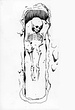
| James H. Oliver ... (E.L. Smithson: Grave IX: PG). Two children's skeletons one on top of the other. Cf. PD 329 for PD 430 for second skeleton, same deposit.
PG grave about 25m. SW of Cistern A at 46/ΜΔ.
[In some records, ... Developed Protogeometric |
Well in branch of Aqueduct (ca. 13/ΚΔ) 3rd c. A.D. - 5th c. A.D ... 3rd c. A.D. |
Well at 75/Ε. Dumped debris of Herulian destruction, including much material from the first half of the 3rd c ... 3rd c. A.D. |
Appears to be use filling from 3rd c. A.D., pre-Herulian into 4th c. or later. Lined with tiles. Coins:
6 May 1937 #1-#2 (disintegrated) ... Early 3rd-early 6th c. |
Coins:
15 March 1934 #6 ... 6th-7th c. A.D. |
| Dumped filling mostly of 3rd c. A.D., but dumped as late as 5th century. Nbp. 143: The fill in this cistern was of three kinds: to within .60m. of the floor plain broken bedrock with no sherds; then a ... 10-17 February 1937 |
Well at 74/Ι, on the lower north slope of the Areopagus.
Use fill from early 1st to 3rd c. A.D.
Dump fill from 4th c. A.D. Coins
9 April 1938 #2
9 May 1938 #1 Container 20 (lost) p. 1529 ... 1st c. to 3d c. A.D. |
Well dug through cistern at 64/Γ. Seems to have been stratified; four fills recorded but here treated as one as divisions are rather "arbitrary".
Agora V, p. 126: Constructed in late 1st c.; use filling ... 3rd c. A.D. POU (before 267 A.D.) |
East-West Street (63-64/ΙΣΤ, etc.)
Packing in line of ancient east-west street along Areopagus north slopes.
Lower fills, predominantly late 6th-early 5th c. B.C.
Middle fills, last quarter of the 5th ... Various levels and dates |
| Well at 52/Ι, on the lower northeast slopes of the Areopagus. It was cut down and re-used in the late Roman period, in connection with the water channel. Use fill of 1st to early 2nd c.
Dump fill 5th to ... Early to Late Roman |
NW corner of Civic Offices, lowest layer above Roman road metal[classical floor, see nbp. 1907]. Coins:
12 May 1950 #1-#10 ... Mid 3rd. c. A.D. |
Roman Group L.
Layer I (cont. 59-64) Pre-Herulian second half of 3rd c. (bottom, 15.95-13.90).
Layer II (cont. 42-58) 4th c.-first quarter of 4th c. (11.90-13.90).
Layer III (cont. 17-41) -4th c. (10.00 ... Second half 3rd c.-early 5th c. A.D. |
The cistern at 70/ΝΗ and the channel [65/ΞΑ] between chambers 70/ΝΗ and 63/ΞΒ seem to have a uniform dumped filling of first half 2nd c. A.D ... First half of 2nd c. A.D. |
Use filling of first half of 1st c.; dumped filling of late 1st c.(?). This well, near its mouth, cuts off the end of the upper passage of the cistern at 53/Ε. Subdivisions:
.1=Dumped filling
.2=POU ... First half of 1st c. A.D. POU |
| Construction filling of well N 20:3 which was dug through this cistern; a few later sherds at upper levels may result from late repairs to well tiling. Coins:
6 April 1938 #14-#15
8 April 1938 #4 Some ... Second half 1st c. A.D. |
Coins:
19 May 1938 #1 (illegible)
20 May 1938 #3-#5, #12-#20 (Dump) ... 4th-6th c. A.D. |
Early Roman, late 1st c. A.D. with some later fragments. Coins:
31 May 1938 #1-#12
1 June 1938 #1-#5
2 June 1938 #1-#2 ... Late 1st c. B.C. |
Well at 16/ΚΗ, in SW corner of Gymnasium complex. Lowest Roman deposit. 9th-10th century Byzantine and Turkish
Coins:
24 April 1935 #3
Envelope 4 in Tin 14 ... 5th c. A.D. - 10th c. A.D. |
Well at 55/ΚΕ
Period of Use dated to the last quarter of 5th c. B.C., Upper fill dated to the same (deposited later) in Agora XXX. Coins
1 April 1938 #10 ... Last quarter of 5th c. B.C. |
The pottery of the first six meters (containers 1-3 of 117 containers total) contains a good deal of unglazed early Byzantine along with very late Roman. Below this begins a great mass of Roman pottery ... 4th-6th c. A.D. POU |
Filling over bedrock. Coins:
26 May 1938 #7-#10
27 May 1938 #1
28 May 1938 #1 ... 1st-early 2nd c. A.D. |
Stratified well; very late Roman verging on Byzantine. Coins
19 April 1939 #1-#8
22 April 1939 #1-#2
25 April 1939 #1
15 May 1939 #1 Subdivisions:
.1=0.00-15.25m.
.2=15.25-21.00m.
.3=21.00-22.00m ... 3rd-5th c. A.D.
9th c A.D. |
| Tiled Well at S edge of E-W Road, 73/ΜΗ. Contemporary upper and lower fills separated by layer of sterile mud.
Latest coin dates ca. 200. Koan amphora handle with stamped handle dates slightly after 200 ... 210-160 |
Filling of a well on the lower north slopes of the Areopagus, dug early in the 1st c. B.C. [construction fill]; in use into the the 2nd c. A.D.[well fill] (H Ms.) No apparent stratification.
Hellenistic ... 2nd c. A.D. |
Upper fill (top to around 4.50m.) was in a pit of large dimensions above the preserved well shaft. From the bottom and shaft proper no catalogued pottery. No tiling in place in well but fragments of tiles ... 3rd-4th c. A.D. |
From the mouth to 10.50m. a fill of earth with mixed sherds, Roman 4th. c. to geometric. Probably dumped in to fill the well. From 10.50-17.75m. the fill was of broken bedrock, with a few sherds scattered ... 5th. c ... 5th. c ... ΠΘ:99/ΝΑ |
| A tiled well with two periods of use, Byzantine and Late Roman.
Some coarse Byzantine pottery from the upper part. from the lower part, pre-Herulian pottery, lamps and figurines. Also ΑΡ 221 (A 1202) the ... 3rd c. A.D. (before 267 A.D.)
11th-12th c. A.D. |
Well at 71/ΛΒ (diameter ca. 1.10m) near the east wall of the entrance porch.
Narrows toward bottom, collapsed at top. Six footholds preserved at south, three at north, spaced at ca. 0.50m. Uniform fill ... Late 8th in early 4th c. B.C. |
Well dug through N 18:1 (cistern at 79/ΜΗ) on the lower north slopes of Areopagus; the cistern was the northern chamber of a system; the southern chamber is at 84/ΝΣΤ (N 19:1).
A single dumped deposit ... 3rd-4th c. A.D. |
Essentially uniform fill of III-IV c. A.D. with a Byzantine upper fill. Coins:
14 June 1937 #1-#3
15 June 1937 #2
16 June 1937 #1
17 June 1937 #1-#2
18 June 1937 #1-#4
19 June 1937 #1-#4
9 June 1938 #1-#3 ... Late 3rd-mid-4th c. A.D ... Late 3rd-mid-4th c. A.D ... ΛΛ:99/Η |
The well had two upper fills and a stratified deposit at the bottom. The well deposit is divided into two parts, 3rd. c. and 2nd. c. (with perhaps late 1st. c.).; dumped filling of 5th century. Coins: ... 1st.-3rd. c. A.D ... 1st.-3rd. c. A.D ... ΠΘ:99/ΝΑ |
Cistern shaft southeast foot of Kolonos Agoraios. Unstratified fill.
Ten stamped amphora handles; Type 34A lamp; many fragments of long-petal b suggesting material deposited ca. 140 or later. Cf. Pireus ... Ca. 200-125 B.C. |
7th c. well below east part of Odeion Cavea Trench K). Use filling negligible; dumped filling of the second half of the 7th c. B.C.
Brann Well H. Diameter 1.10m. Cut into bedrock. During excavation seepage ... 650-600 B.C. |
Containers 87-99. Coins:
7 April 1937 #30-#31
8 April 1937 #41-#82
9 April 1937 #3-#4 (#4=Dump)
13 April 1937 #1
14 April 1937 #1-#10 ... Late 2nd c. A.D. |
Dumped filling of 6th c. A.D. Coins:
3 May 1939 #1-2 (red earth above well)
9 June 1939 #1
10 June 1939 #1
12 June 1939 #1-#5
13 June 1939 #1
19 June 1939 #1-#2, #3 (Dump)
7 May 1940 #1
9 May 1940 #1
27 ... Early 1st-5th c. A.D. POU |
| Upper mixed dumped fill (last quarter 3rd c.-4th c.) with Roman POU below 10.40m. Coins:
16 February 1937 #1 (disintegrated)
17 February 1937 #1 (disintegrated)
8 April 1937 #5-#10 (dump)
9 April 1937 ... 2nd half of 1st c.-first half of 3rd c. A.D. |
Empty to 4.00m. From there to 9.20m. much coarse pottery, stucco fragments, animal bones, lead defixiones. ... The presence of fragments of stelae and architectural members near bottom point to dumped ... Late 2nd-early 3rd c. A.D. |
Cistern System #3: West Chamber at 69/ΛΣΤ, joined by a crooked passage to 69/Λ. Under the southwest corner of the Hellenistic Building to the north of the Temple of Hephaistos. Upper fill of early 1st ... 175-125 B.C. |
Modern fill to 21.00m. at which depth a human skeleton weighed down with iron. ER fill from 21.00-28.00m. (bottom). A POU fill with a possible break around 25.00m ... 1st to mid-2nd c. A.D. |
|
|