|
|
| James H. Oliver ... (E.L. Smithson: Grave IX: PG). Two children's skeletons one on top of the other. Cf. PD 329 for PD 430 for second skeleton, same deposit.
PG grave about 25m. SW of Cistern A at 46/ΜΔ.
[In some records, ... Developed Protogeometric |
| Rodney S. Young ... Grave 20 (E.L. Smithson: Grave X: PG). Bones discarded. Pit tomb, inhumation (on bier or in coffin?), perhaps of a child. Little ash and carbon in the filling, but the grave offerings were unburned.
JP ... Developed Protogeometric ... The se pots, all unburned and clustered together, would have been placed in the area immediately above the feet of the deceased.
c) in the lowest 0.30m, very damp earth with very little ash, much heavy black matter "of a different character", from that in the layer above.
... X-43, X-44 |
| Grave XX in notebook = RSY Grave 16. PD 731-i ... Late 6th. c. B.C ... Hesperia 20 (1951), pp. 97-98, fig. 13 and pl. 44 c-d (Grave 16). |
Coins:
22 March 1933 #1-#44 ... Late Roman- Mid 5th c. |
A small concentration of pottery in lowest 1.80m., possibly a use fill. Three fills above, with little pottery, ranging from Hellenistic to late Roman in date. Coins:
26 February 1934 #4-#6
27 February ... 325-200 B.C. |
Possibly a short period of use but chiefly a debris filling including a number of fragments from disturbed early burials. Two pot fragments, believed to be from lower body of P 18525, added from Well 3 ... Ca. 575-550 B.C ... Hesperia Suppl. 2 (1939), p. 44 (Well C). |
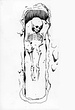
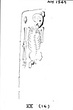
| Child grave. Grave 21 in notebook. No burning. No offerings. Covered by a 5th c. filling disturbed in Turkish times. Neg. ΚΚ 83, shows skeleton. Possibly discarded? ... 27 March 1936 |
South Stoa II Construction Fill.
About 85 stamped amphora handles, many with parallels in building fills of Middle Stoa and Stoa of Attalos. Fragments of long-petal bowls confirm date after mid-2nd c ... To ca. 140 B.C ... Fragments of long-petal bowls confirm date after mid-2nd c. Types 25 A', 33 A, 35 B, and 44 A lamps. |
| Susan I. Rotroff ... Burial 3 beneath the floor of the Stoa Basileios. It consisted of a rectangular pit cut into bedrock to a depth of 0.44m, lined on all sides and covered with an admixture of narrow stone slabs of soft ... Final Mycenaean/Submycenaean ... Hesperia 44 (1975), pp. 372-374, pl. 83,c. |
Shaft fill, not mouth fill, of drawshaft at 42/Θ. This is part of the cistern system 44/ΙΓ - 46/ΙΑ - 42/Θ.
Thirteen stamped amphora handles; fragments of Arretine pottery; over half of bowls long-petal ... 1st c. B.C.-early 1st c. A.D. |
Part of the cistern system 44/ΙΓ - 46/ΙΑ - 42/Θ. The filling of the 46/ΙΑ cistern shaft, with the exception of a little Roman at the top, was the same as the bottom fill of 44/ΙΓ - late Hellenistic, running ... Late 2nd-early 1st c. B.C ... Part of the cistern system 44/ΙΓ - 46/ΙΑ - 42/Θ. The filling of the 46/ΙΑ cistern shaft, with the exception of a little Roman at the top, was the same as the bottom fill of 44/ΙΓ - late Hellenistic, running down to the end of the 1st c. B.C. and perhaps into the 1st c. A.D. (p. 3149).
|
| Grave XVII in notebook = RSY Grave 15.
Only lower half of skeleton preserved. Bones discarded? ... Last quarter of the 6th. c. B.C. |
| Eugene Vanderpool ... Mycenaean Chamber Tomb.
Although badly disturbed at various times in antiquity, it was clearly a chamber tomb with the chamber little more than a cubby-hole at the end of a steep dromos, entered at the ... Myc. III A-B ... Hesperia 21 (1952), pp. 106-107, pl. 25 b, c ... Agora XIII, pp. 199-201, 274, pls. 44, 77, 79 (Tomb XIII). |
| John Camp ... Protogeometric Grave about 0.60m to the southeast of T 15:2.
Unlined roughly rectangular-elliptical pit, oriented north-south, neatly cut into bedrock to a depth of 0.70m, with rounded corners. The pit ... Early-Developed Protogeometric |
| Dog's Grave, the bones carefully disposed. It contained a small amount of contemporary pottery in the fill, of which some deposited nearby, may have been intended as offerings ... Third quarter of 4th c. B.C. |
North of east branch of Great Drain. Coins:
21 June 1973 #1 ... 4th c. A.D ... 4th c. A.D ... Λ:44-48/Γ-Ε |
Clay pit with clear light yellow clay thoroughly suitable for pottery making ... 1st-early 2nd c. A.D ... 1st-early 2nd c. A.D ... Κ:44/ΙΖ |
Klepsydra: Filling in antechamber, behind the parapet of the Klepsydra. Dated to the time of the rebuilding of the springhouse after the Sullan sack, but containing earlier material. Coins:
31 May 1938 ... Second quarter of 5th c. to middle of 1st c. B.C. |
A circular cutting in bedrock ... Late 6th-early 5th c. B.C ... Late 6th-early 5th c. B.C ... ΠΘ:44/Ζ |
Located in Room IV, strosis 3, of SW House. Archaic, later disturbed, filling in and over undug well. See also L-M 17-18:1 where objects SS 14318 and T 3576 are actually from the filling over the undug ... 6th-5th c. B.C ... 6th-5th c. B.C ... Φ:44-45/ΛΓ-ΛΔ |
Hellenistic fill South of Middle Stoa near NW corner of Heliaea. This fill contained material later in date than that which made up the middle Stoa Building Fill.
Only the coins (and a few amphora handles ... To ca. 140 B.C. |
Well just outside the southwest corner of the market square ... Late 7th-early 6th c. B.C ... Late 7th-early 6th c. B.C ... Δ':44/ΙΗ |
Coins:
10 March 1936 #1-#2
11 March 1936 #1 ... 200 to late 1st c ... 200 to late 1st c ... ΠΘ:44/ΙΓ |
Part of the cistern system 44/ΙΓ - 46/ΙΑ - 42/Θ.
Objects with context as "cistern 44ΙΓ, mouth of 46/ΙΑ" are listed with D 12:2.
The following objects are from "earth", i.e. no context layer:
SS 5334, ... Late Hellenistic-Early Roman ... Part of the cistern system 44/ΙΓ - 46/ΙΑ - 42/Θ.
... The following objects are from "earth", i.e. no context layer:
SS 5334, SS 5336, SS 5343, SS 5438, SS 5441, SS 5442, SS 5444, SS 5446, SS 5635, SS 5740
LL 2130, L 2132, L 2188
T 1045, T 1067
P 7138
Nineteen stamped amphora handles; many late 2nd c. lamps. |
Well at 96/Ι in arm of cistern at 94/Θ (F 15:2). Probably the rebuilding of an earlier well.
P 3149, P 3150, P 3154 are jars from packing in cistern arm; construction fill - early Roman.
P 4588 is listed ... Second half of 3rd c. A.D.=POU |
Brown earth with occasiional small stones, quite distinct from upper and lower fills. Pottery mostly Hellenistic with an occasional late Roman sherd scattered through it at all levels. [nbp. 3112] Coins: ... Mostly 1st c. with some Roman ... Mostly 1st c. with some Roman ... ΠΘ:44/ΙΓ |
Construction fill below floor of Brick Building.
Areas involved:
a) Western portion of Room A: packing below floor.
b) Room B: packing below floor of northern,larger room.
c) Fill over water channel in ... First quarter 2nd century, before its end |
Michael Laughy ... West and adjacent to Modern Wall 5, we excavated 12th-13th c. A.D. fill, in some places a half meter deep or more. The fill was remarkably uniform in content throughout. Typical pottery included: fine ... 12th-13th c. A.D ... West and adjacent to Modern Wall 5, we excavated 12th-13th c. A.D. fill, in some places a half meter deep or more. ... At the time of this summary, the legible coins are Frankish, and date to the early 13th c. A.D.
Coins: ΒΘ-96; ΒΘ-98 -128; ΒΘ-135 -145
Pottery lots: T 141, T 143
Notebook: ΒΘ VIII
Baskets: 43, 57; pp. 1557, 1587
X-Section: pp. 1460, 1500
Grid: K/6,9-3/5,9
Elevation: 54.544-54.111m ... sherds: 2037
"classical black glaze": 44 |
Accumulated debris on the west side of the market square.
Related layers added 1999/2000 (JWH), e.g. "Gravelly layer above burning", "Clearing Classical floor", "Lowest level above bedrock", "Below burning", ... First half of 5th c. A.D. |
Middle Stoa Building Fill (with filling to S) (See also Κ: H-I-J 14-15 and Λ: K-M 13-14)
This deposit is not definitive and must be considered with the above deposits before details are entered into database; ... To ca. 180 B.C. |
|
|