|
|
Cistern System #3: East Chamber at 69/Λ, joined by a crooked passage to 69/ΛΣΤ. Under the southwest corner of the Hellenistic Building to the north of the Temple of Hephaistos ... 175-125 B.C ... East Chamber at 69/Λ |
Well at 69/Ο Coins:
29 May 1935 #8
30 May 1935 #1-#2 11th c? ... Byzantine-Mid to late 2nd c ... Well at 69/Ο |
Pit below floor at 69/ΛΗ ... Early Byzantine ... Pit below floor at 69/ΛΗ. |
Marble Chip Fill at 67-69/ΚΑ-ΚΖ (now C 19:5). Asterisk: C 19:15* ... ΝΝ:67-69/ΚΑ-ΚΖ |
Containers 53 (transitional)-69. Coins:
20 May 1938 #6
21 May 1938 #1
26 May 1938 #1-#2 ... Early Roman 1st c. A.D ... Containers 53 (transitional)-69. |
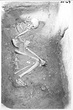
| Grave in cella of Hephaisteion. Grave XLV in notebook.
One skeleton. Pottery discarded? Coin
8 March 1939 #22 Neg. XV-69 ... 7 March 1939 ... Neg. XV-69 |
Well at 69/ΚΗ (diameter 1m).
The well forms the south apse of the apsidal cutting south of the late Roman entrance porch ... Late 8th c. B.C ... Well at 69/ΚΗ (diameter 1m).
|
| Mid 3rd cent. to 1st cent. BCE ... Hesperia Suppl. 47 (2013), no. 69, p. 181, figs. 119, 122. |
Well at 69/ΛΕ (diameter 0.95m).
Narrows at bottom. Footholds on east and west. Uniform fill. Bones found in the well make it likely that it had cut through a grave, as it was itself overlain by one ... Late 8th c. B.C ... Well at 69/ΛΕ (diameter 0.95m).
|
Rectangular shaft cut in rock with NE-SW orientation. Upper part of grave cut into fill over bedrock; this fill later swept away. Paving of small stones. Few human teeth and ribs.
(Dimensions: L. 1.62m, ... 725-200 B.C ... Hesperia Suppl. 2 (1939), pp. 99-100 and fig. 69 (Grave XXIII). |
| Homer A. Thompson ... Cremation burial (trench-and-hole) under S. edge of E-W Street, southern burial. In some records as Grave XLVI.
Neat trench, rectangular as preserved, but may have originally been square, cut partly through ... Early Geometric I ... Agora XXXVI, Tomb 10, pp. 69-77, figs. 2.23-2.30. |
Well dug through bedrock-settling basin of cistern at 69/ΜΗ. Coins:
21 May 1936 #24-#26
22 May 1936 #14
29 May 1936 #2-#4
2 June 1936 #1-#3
3 June 1936 #2-#4
4 June 1936 #4-#6 Cf. also container ΚΚ 336 ... 3rd c. A.D ... Well dug through bedrock-settling basin of cistern at 69/ΜΗ. |
Well at 69/ΚΔ (Well G: PG, ELS).
Diameter 0.75m. Fairly but not perfectly evenly cut; no foot-holds in sides. Very little water gathered. The well produced a small amount of pottery, the bulk of it coming ... Protogeometric ... Well at 69/ΚΔ (Well G: PG, ELS).
|
Cistern System #3: West Chamber at 69/ΛΣΤ, joined by a crooked passage to 69/Λ. Under the southwest corner of the Hellenistic Building to the north of the Temple of Hephaistos. Upper fill of early 1st ... 175-125 B.C ... ΚΚ:69/ΛΣΤ |
| Eugene Vanderpool ... Grave (adult female). (In some records as Grave XXXI).
The tomb was partly destroyed in antiquity; there are sherds of all periods down to Late Roman (and later) note din the fill immediately above it ... Middle Geometric I ... Φ:69/ΚΔ |
| N.A. Doenges Evelyn Lord Smithson ... "Near or in Grave" (width 0.50m)
Grave to the east of the southeast corner of the great court of the Gymnasium. Shallow and superimposed on Well N 11:5. It is a simple cist oriented north and south, with ... 750-725 B.C ... Ο:69/ΛΕ |
| Homer A. Thompson ... PG grave to NW of Pier 19 (Grave 4).
It consisted of a rectangular pit, oriented north-south, cut into bedrock. Only the lowest part of the tomb pit was preserved; the upper part was cut away in the Classical ... Earlier-Developed Protogeometric ... Agora XXXVI, Tomb 69, pp. 441-445, figs. 2.328-2.331, 2.337. |
Well to N of Nymphaeum at 115/ΙΣΤ. A good water supply but no evidence for a period of use.
Exceptionally heavy dumped filling, including much fine tableware, many wine- jar fragments and other objects ... Ca. 420-400 B.C ... Hesperia 83 (2014), p. 198, 201, 226-232, 238, 243, nn. 69, 70, 71, 82, fig. 7, table 2 ... Hesperia 24 (1955), pp. 69-70. |
Well at 69/ΟΒ (Late 5th c.)
Lower fill dated to 420-400 B.C. in Agora XXX.
There were no use filling and the well was apparently not a success as a water-supply: there was no concentration of water-jars ... 420-400 B.C ... Well at 69/ΟΒ (Late 5th c.)
|
Rectangular shaft neighboring the well D 17:12. Dug only to a depth of 4.40m. and provided with two galleries or channels extending from it. Apparently never intended as a well. Refilled with the dug bedrock ... 4th c. B.C ... ΟΟ:69/ΛΗ |
Cistern in Room 12, House C=House N.
Simple flask-shaped chamber with draw shaft, in House M, Room 1; no tunnels. Excavated as single fill, but later analysis of material suggested two fills. Coins:
24 ... 4th. c. B.C ... ΝΝ:69/ΜΖ |
Fill perhaps from the dismantling of House N when it was abandoned; full of small stones and broken roof tiles (nb.p. 4398) ... Ca. 150 B.C ... ΝΝ:69/ΜΖ |
Coins:
24 April 1947 #1-#2 ... 250-190 B.C ... ΝΝ:69/ΜΖ |
| Eugene Vanderpool ... Grave (E.L. Smithson: Grave XVI: PG). Bones discarded.
Only the lower portion of the urn-hole was preserved in bedrock, roughly oval in outline, with a maximum preserved width at the top of 0.70m narrowing ... Late Protogeometric/Early Geometric I ... Φ:69/Κ |
| Sacrificial pyre in Poros Building, NW Room (RSY= Pyre 1).
Against east wall of room 5 west. artifacts, bone, carbon and ash in pit in floor sequence. the pyre lay below a floor covered with marble dust, ... Middle of 4th c. B.C ... Hesperia Suppl. 47 (2013), no. 32, pp. 142, 143, figs. 7, 67, 69, 70. |
Cistern system West of Bouleuterion: (see also B: cistern system to West of Tholos). Third Chamber from North. A well was dug through the bottom in Byz. times. Cf. deposit F 9:2. Coins:
3 May 1934 #1 ... 160-140 B.C., with Byz. disturbance
Early 3rd to late 2nd c. B.C. POU ... Delos XXVII, p. 328 under E 69 and p. 366. |
| Well South of Soft Yellow Poros Foundation. Dumped filling of a collapsed well, that, due to hazardous conditions, could not be cleared below- 2.50m. The well was partly cut on the east side by a Byzantine ... Protogeometric-Early Geometric II, ca. 850 B.C ... Hesperia 67 (1998), pp. 375-404, figs. 4, 5, pls. 65-69. |
| "Perhaps a cremation burial ... " nbp. 811. "Sacrificial pyre, disturbed," GRE, deposit nb.
In room on east side of building. Concentration of artifacts, fragments of bone, and abundant cinders in stratum, ... Early 3rd c. B.C.-Ca. 250 B.C ... Β':69/ΙΖ |
| Mycenaean tomb: Myc. III A:1-2.
SAI
Small rectangular chamber, 2.30m wide by 1.80m deep,, entered from the east through a dromos 1.10m wide which contracted to a doorway 0.92m. wide. the doorway preserved ... 2nd half of 14th c ... ΝΝ:69-71/Ν-ΝΒ |
| Dorothy Burr Thompson ... Grave 2. Urn cremation (trench-and-hole). In some records as XXIII.
Variously labeled as grid 7/Δ, 7/Γ and 7/Γ-Δ.
Rectangular pyre trench cut through earth into bedrock, with only the lowest 0.04m surviving ... Transitional Late Protogeometric/Early Geometric I ... Agora XXXVI, Tomb 9, pp. 67-69, 529-530, figs. 2.14, 2.21, 2.22, 3.15, 3.16, pl. |
"Fauvel Collection"
Collector's dump? Debris in the cellar of a modern house, probably once that of F.S. Fauvel.
The collection included vases of all periods, from Geometric to Turkish; a number of the ... Modern Context ... Ξ:69/ΜΣΤ |
| Mycenaean Chamber Tomb under north side of Temple of Ares, towards its west end.(1951).
The tomb had a hasty and unfinished appearance oddly at variance with its long history and the quality of the pottery ... 1st: Myc IIB-IIA:1-2, 2nd: Myc. IIIC:1 (1450-1200 B.C.) ... Hesperia 91 (2022), p. 114, n. 69. |
Roman Water Mill: construction fill in footing trench of mill race wall Coins:
24 April 1933 #2-#30, #39-#40, #43-#44, #46-#67, #69-#76, #82-#95
25 April 1933 #30, #32-#35, #37-#40, #42-#43, #45, #47 ... 450-475 A.D ... Coins:
24 April 1933 #2-#30, #39-#40, #43-#44, #46-#67, #69-#76, #82-#95
25 April 1933 #30, #32-#35, #37-#40, #42-#43, #45, #47
26 April 1933 #16-#21, #23-#28, #30-#31
28 April 1933 #6-#9, #11
8 May 1933 #4-#8
9 May 1933 #2-#11, #14-#15
10 May 1933 #6-#10, #12-#23
15 May 1933 #4-#7
23 May 1933 #1-#2, #4-#6, #13
20 June 1933 #4, #6
21 June 1933 #9-#10
22 June 1933 #1-#3
23 June 1933 #10-#11
26 June 1933 #1-#3, #6-#19
27 June 1933 #3-#5
28 June 1933 #2
6 July 1933 #6-#7
7 July 1933 #1-#12, #14-#15, #18 |
| In area West of the Areopagus. Fills with many figurines and molds, possibly from a terracotta factory.
Twelve stamped amphora handles; no long-petal bowls; Type 54 A lamp Coins:
31 May 1939 #11
1 June ... Mostly 200-150 B.C ... Hesperia Suppl. 23 (1989), p. 69. |
| A cave-in not long after the digging of this shaft destroyed its possible usefulness as a well and thereafter it was used as a dump. Two principle periods of such use were noted, and within these several ... Ca. 575-480 B.C ... Hesperia 15 (1946), pp. 265-336, pls. 25-69. |
Tiled well, ca. 30m south of the Tholos. Associated with Building D. Hellenistic Group A with Late Roman fill in upper 3.00m. Objects A 245 and P 4597 are from fill on floor around well-head, contemporary ... 325-260 B.C ... Hesperia Suppl. 23 (1989), p. 69. |
Cistern at the southeast foot of Kolonos Agoraios.
Nbp. 2369: Two chamber cisterns, 88/ΛΔ and 100/ΚΘ, united by a long straight passage running almost due N-S. A draw shaft at 95/ΚΘ is set just off the ... Use filling of late 4th-early 3rd c. B.C.
Accumulative fillings of late 3rd-early 2nd and late 1st c. B.C.
Upper dumped filling of 3rd c. A.D ... Hesperia Suppl. 23 (1989), p. 69. |
Middle Stoa Building Fill (with filling to S) (See also Κ: H-I-J 14-15 and Λ: K-M 13-14)
This deposit is not definitive and must be considered with the above deposits before details are entered into database; ... To ca. 180 B.C ... Hesperia Suppl. 23 (1989), p. 69. |
Accumulated debris on the west side of the market square.
Related layers added 1999/2000 (JWH), e.g. "Gravelly layer above burning", "Clearing Classical floor", "Lowest level above bedrock", "Below burning", ... First half of 5th c. A.D ... Coins:
4 March 1933 #1-#4
8 March 1933 #1-#2
9 March 1933 #1-#12
10 March 1933 #1-#9 and #10-#12
11 March 1933 #1-#17 (Below burning)
13 March 1933 #1-#3 and #4-#7 and #8
14 March 1933 #1-#3
15 March 1933 #1-#4
16 March 1933 #1-#29 (above burning) and #30-#44 and #45-#48
17 March 1933 #1-#68 and #69-#88
18 March 1933 #1-#14 (above burning) and #15-#17
20 March 1933 #36-#50 and #51-#53
21 March 1933 #1-#51 and #52-#59
22 March 1933 #45-#92 and #106-#108
23 March 1933 #1-#12
24 March 1933 #1-#20
28 March 1933 #1-#29
31 March 1933 #1-#7
1 April 1933 #3-#13
3 April 1933 #1-#3 and #4-#7
5 April 1933 #22
10 April 1933 #3-#27 (SE corner of Dorpfeld's Stoa Bas.)
11 April 1933 #1-#38
12 April 1933 #38-#39 (SE corner of Dorpfeld's Stoa Bas.)
20 April 1933 #7-#14
21 April 1933 #13-#17
22 April 1933 #6-#20 (#19, #20 from dump)
24 April 1933 #2-#6
25 April 1933 #2-#4
26 April 1933 #1-#3
27 April 1933 #1-#7 and #8-#12
28 April 1933 #1-#6
3 May 1933 #5-#123
4 May 1933 #1-#21 and #22-#42
5 May 1933 #1-#22
6 May 1933 #1-#2
8 May 1933 #26
9 May 1933 #5-#6
12 May 1933 #1-#73
13 May 1933 #1-#9
15 May 1933 #1-#22
16 May 1933 #1-#13 and #17-#18
17 May 1933 #6-#16 and #17-#19 and #20-#32
18 May 1933 #1-#10 (Lowest layer above class. floor)
19 May 1933 #1-#15 and #16-#19
20 May 1933 #1-#21 and #22-#29
22 May 1933 #1-#62
23 May 1933 #1-#34 and #35-#36
24 May 1933 #1-#6
27 May 1933 #1-#25 and #26-#28
29 May 1933 #1-#31 and #32-#33
30 May 1933 #1-#5 and #6-#11
31 May 1933 #1-#5 and #6-#8
1 June 1933 #1-#15 and #19-#22
2 June 1933 #16-#33 and #35-#37
3 June 1933 #1-#9
5 June 1933 #1-#22 and #23-#25 and #27-#28
6 June 1933 #1-#3 and #9-#11 and #12
7 June 1933 #29 (disintegrated)
8 June 1933 #24
9 June 1933 #1-#2
15 June 1933 #9-#13 |
|
|