|
|
Room 8, Pit 1 in Layer 2. Notebook ΒΕ XII is missing ... 11th c. A.D. |
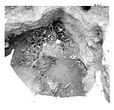
| David Scahill ... Behind northeast corner of Classical Building; east wall C. Below Hellenistic levels and early Classical pit. Chamber cut through bedrock, depth ca. 0.90m., diameter ca. 2m., roughly square in shape, angling ... LH III A:1 |
East of Classical Building II backwall, above Mycenaean chamber tomb K 2:5. Rough circular pit of reddish brown fill cut into geometric fill that extends down inside tomb. Some evidence of burning on pottery ... Ca. 460 B.C. |
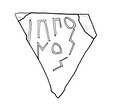
| Layer of crushed bedrock with ostraka, behind Classical Building ... 17 June-17 July 1996
28 July 1997 |
Ione Shear ... Tile burial of an adult male found in 1991 on top of cover slab of south channel of river ... 27 June-3 July 1991 |
| Pit in Layer 9, lined on the sides and bottom with small stones ... Late 5th c. B.C. |
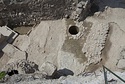
| The cistern was lined with stones at the top with an opening 0.80 m in diameter. For the most part, it seemed to cut into bedrock except along its northern edge where some 5th c. B.C fill remains and main ... 2-19 July 2010 |
Coins:
30 May 1933 #19 ... Turkish |
|
|