|
|
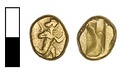
| Persian Empire ... Χρυσός Δαρεικός: Περσία 5ος αιώνας π.Χ. Coin no. 1. Casts. Late Roman fill; red. King running r., carrying spear and bow. Oblong incuse. C 254, 91-2-16 ... 480's - mid-4th c. B.C. |
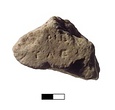
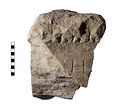
| Inscribed fragment.
Inscribed face only preserved.
Two lines of the inscription preserved; stoichedon.
Space between lines: 0.013m.
Space between letters, two including: 0.021m.
Pentelic marble. Finished ... 24 April 1940 |
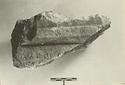
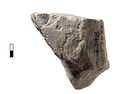
| Inscribed fragment from upper left corner of small pedimental stele.
Rough picked back and left edge preserved; at top rough picked surface near corner preserved; elsewhere broken.
Letters on moulding ... 8 February 1952 |
| Inscribed fragment.
Inscribed face, part of rough picked top and probably bit of rough picked back preserved. Break at top of front suggests crowning moulding broken away.
Surface badly worn; traces of ... 1 April 1952 |
| Inscribed fragment.
Broken all around, except left edge.
Pentelic marble. Found in modern house walls, south of the Market Square. Leica ... 21 March 1958 |
| Inscribed fragment.
Broken all around.
Only a small part of face preserved.
Pentelic marble. Finished Found in modern house wall, south of the Market Square. Leica ... 10 April 1958 |
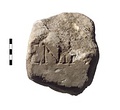
| Inscribed fragment.
One corner of a large base; mouldings chipped off above.
Rough picked face.
Pentelic marble. Found in modern house wall, south of the Market Square. Leica ... 10 April 1958 |
| Inscribed fragment.
Inscribed face only preserved.
Traces of six lines of the inscription preserved.
Pentelic marble. Found in marble dump, in the southeastern part of the Market Square. Leica ... 19 March 1936 |
|
|