|
|
| Destruction Fill in channel of Apsidal Building.
Cf. nb.p. 989 for continued digging in this channel. Coins:
24 July 1990 #202, #204, #208
27 July 1990 #219-#222
30 July 1990 #226
31 July 1009 #236
1 August ... 14 June-3 August 1990 |
A total of 79 ostraka was recovered from Room 5 of the Classical Building.
More of this deposit was excavated in the 2021 season on the opposite side of the scarp of Wall R, up against the face of Wall ... 500-475 B.C. |
| Marcie Handler ... This deposit is a Mycenaean cist grave with two cover slabs, a type of burial described by Immerwahr in Agora XIII (pp. 103-104). Cist graves appear side by side with chamber tombs in the Mycenaean cemeteries ... LHIIB-LHIIIA:1 |
| David Scahill ... Below packed clay floors in Room 2 of Classical Building II; bordered on east and south sides by polygonal cross wall and back wall extension for Classical Building. Late Roman wall and drain installation ... LHIII A:1 |
| The remains of a pyre disturbed by the construction of Wall 106. The compact, light brown soil contained some ash and bone and 5 nearly complete pots or saucers ... First half 3rd. c. B.C. |
Well in Byzantine Room 9. Excavation of the well terminated at 49.00m. due to cave-in danger. Topped by a stone sill and marble putael, the upper part of well is of Byzantine-period stone masonry; lower ... Byzantine |
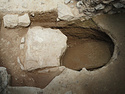
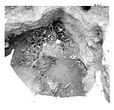
| David Scahill ... Behind northeast corner of Classical Building; east wall C. Below Hellenistic levels and early Classical pit. Chamber cut through bedrock, depth ca. 0.90m., diameter ca. 2m., roughly square in shape, angling ... LH III A:1 |
East of Classical Building II backwall, above Mycenaean chamber tomb K 2:5. Rough circular pit of reddish brown fill cut into geometric fill that extends down inside tomb. Some evidence of burning on pottery ... Ca. 460 B.C. |
|
|