|
|
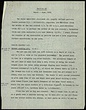
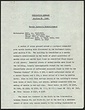
| Section ΠΠ March-June, 1956 ... A. Boegehold ... The ruins unearthed in section ΠΠ represent six roughly defined periods: 4th century B.C. to Hellenistic, Augustan, pre-Herulian, post-Herulian, Byzantine and Turkish.
The results of the excavation are ... 20 Feb-29 Jun 1956 ... The ruins unearthed in section ΠΠ represent six roughly defined periods: 4th century B.C. to Hellenistic, Augustan, pre-Herulian, post-Herulian, Byzantine and Turkish.
The results of the excavation are presented by period in the report. A note suggesting further excavations in the area is added. |
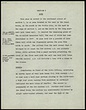
| Section Ζ 1951 ... Homer A. Thompson ... The remaining pieces of the so-called Byzantine wall were removed, as well as a late Roman wall. Excavations in front of the Civic Offices revealed a hard road surface from the 3rd century A.D. More than ... 21 May-13 Jun 1951 |
| Section ΜΜ
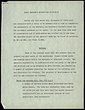
Season of 1939 ... Homer A. Thompson ... Section Μ was to be refilled this year and supplementary explorations took place to resolve some remaining obscurities. The most significant discovery was a road running northwest-southeast, probably the ... 20 Feb-8 Apr 1939 ... Section Μ was to be refilled this year and supplementary explorations took place to resolve some remaining obscurities. ... Originally an alley, it was buried in earth filling and formed into a new wider road in the Augustan period. It was bordered by a Doric colonnade on the north side and by buildings and enclosures on the south side, where also foundations of a monumental stairway giving access to the hilltop were revealed.
|
| Section ΜΜ
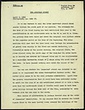
Summaries for 1936 ... Homer A. Thompson ... Three main ancient features were excavated within Section ΜΜ: the North Stoa, the South Building and the ancient East-West Street passing between the two buildings. After the destruction of the buildings, ... 10 Feb-25 May 1936 |
| 1961: Season's Report for Section K ... Homer A. Thompson ... A report on the completing of the exploration of the Heliaia, the Southwest Fountain House and the southwest entrance to the Agora, as well as some work of conservation and path-making in the area ... 24 Jul-19 Aug 1961 |
| Sections Ε, Ν, Η 1952 ... Homer A. Thompson ... Mycenaean graves were excavated in section Ε.
Section Ν was disturbed by late pits, bothroi and walls. Excavation was carried out through Roman levels. The area seemed to have been leveled out and raised ... 4 Mar-31 May 1952 ... Mycenaean graves were excavated in section Ε.
Section Ν was disturbed by late pits, bothroi and walls. ... The area seemed to have been leveled out and raised as part of a landscaping project turning the area into a level square. ... A Mycenaen well was found as well as a fine Archaic altar and peribolos. |
| Excavation Summary Section K: 1968 ... S. Grobel ... Excavations in Section Κ were conducted in the Marble Worker's Establishment, a series of rooms grouped around a courtyard. A cistern-well was discovered and excavated, as was a pit and a pyre burial ... 17 Jun-17 Aug 1968 ... Excavations in Section Κ were conducted in the Marble Worker's Establishment, a series of rooms grouped around a courtyard. A cistern-well was discovered and excavated, as was a pit and a pyre burial. ... A retaining wall along the Triangular Temenos, and a Geometric Grave were discovered.
|
| Section ΟΟ 1948 ... Margaret Crosby ... Work in Section ΟΟ was concentrated on the east and west ends of the north side of the section: parts of the ancient east-west street were explored; ca 20 meters of the Great Drain was clearly exposed; ... 8 Mar-26 Apr 1948 ... Work in Section ΟΟ was concentrated on the east and west ends of the north side of the section: parts of the ancient east-west street were explored; ca 20 meters of the Great Drain was clearly exposed; remains of a house (House E) from the 4th century and Hellenistic period, with cistern (Cistern A), water storage tank and a well (Well I) were found; the Roman Bath (Building A and Hypocaust area) was further explored, and a well in the central court (Well II) dug out; a trial cut was dug in a long, narrow poros building with a large open yard and a series of small rooms; and an early Geometric grave was found and excavated. |
|
|