|
|
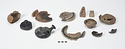
Figurine Deposit in Roman Building 4, Room 20, strosis 1. Coins:
13 April 1937 #1 ... To 4th c. A.D ... Figurine Deposit in Roman Building 4, Room 20, strosis 1. |
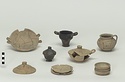
Tile-lined Well in NE room (R/18,19-13/20).
Homogenous dump ... 350-325 B.C ... Tile-lined Well in NE room (R/18,19-13/20).
|
| Disturbed pyre dispersed in fill of Room 5, House D.
Pyre pots in very fragmentary condition were noticed by Barbara Tsakirgis in later analysis of pottery that had been excavated in 1938; no mention of ... 14 June 1938 |
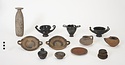
| Pyre in Room 8 of Roman House H. Concentration of artifacts, bone, and flecks of carbon in stratum, no pit discerned. the pyre lay within a red fill apparently contemporary with it, but with some later ... 300-290 B.C. |
House F, room 4 below floor at -2.00m., fill 4. Deposit created by A.W. and first appears in his thesis (Biblio. below). Coins;
19 May 1949 #1-#16 Cf. coins from 17 June 1949 #1-#4 listed with lot OO 490 ... First quarter 2nd c A.D. |
| (RSY=Pyre 2). Pyre in the industrial area west of the Areopagus, in House B. In northern corner of room. No pit discerned. A deposit of small stones (a marker/) lay 0.30m above the level of the pyre, ... Third quarter of the 4th. century. |
Greek House J, under room 8 of Roman House H.
Typical though very fragmentary pyre pottery lay dispersed in a stratum over bedrock with pottery ranging from the 5th to the mid-3rd c.
In same general area ... Early 4th c. B.C.? ... Greek House J, under room 8 of Roman House H.
... In same general area as pyre Q 20:4, it must come from a different, earlier pyre. |
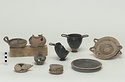
| Pyre in north central room of house, measuring 0.50m east-west by 0.35m north-south. Pottery, bone, and burnt material in pit dug into layer IIb (crushed bedrock floor: lot Ω 464, 4th c.) and covered by ... 350-325 B.C. |
|
|