|
|
| Clinton, Myth and Cult, pp. 51-53. IG I³ 78, lines 37-40 ... Agora 31 103 ... IG I³ 78, lines 37-40 |
| Inscribed fragment of stele.
Sides, back and bottom preserved. Bevel at bottom of face.
On the inscribed face, two rosette-like bosses.
One line of the inscription preserved above; three below.
Pentelic ... 4th. century B.C. |
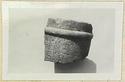
| Fragment from top of columnar grave monument.
Part of top and about half of the circumference preserved.
Three lines of the inscription preserved.
Hymettian marble. Found in the wall of the modern house ... 15-20 January 1934 |
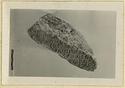
| Inscribed fragment.
Inscribed face only preserved.
Nine lines of the inscription preserved.
Pentelic marble.
Transferred to the Epigraphical Museum on 15th. June 1967; now EM 13365; to be joined to IG ... 9 January 1938 |
| Inscribed fragment.
Inscribed face only preserved.
Fifteen lines of the inscription preserved.
Pentelic marble.
Cf. IG II2, no. 2195.
Transferred to the Epigraphical Museum on 27th. April 1972. Found ... 28 January 1936 |
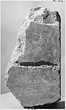
| Inscribed fragment.
Broken top, bottom and left side.
Roughly hatched groove horizontal across face. Back rough picked.
Blue Hymettian marble. Found on Panathenaic Road, along curbing. Leica, 86-564, 88-42, ... 4 August 1970 |
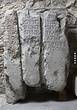
| Three fragments of an inscribed statue base. Top rough picked.
The fragments join (in the order c, a, b), but the stone has been split in three pieces, so that one or more letters are missing in each line ... 1st. century A.D. |
| A.W. Gomme, A Historical Commentary on Thucydides II, 1956, p. 633. R. Meiggs, Athenian Empire, p. 211. W. Schüler, Die Herrschaft der Athener im ersten attischen Seebund, 1974, p. 60. SEG XXIX, 13. A ... Agora 16 22 I 5879 ... 17 June 1937 |
|
|
.png.icon.jpg)


.png.icon.jpg)
