|
|
| Rodney S. Young ... Grave 9 (E.L. Smithson: Grave XVIII: PG). Bones discarded.
JP
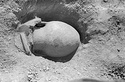
Roughly circular pit, about 0.59m in diameter, cut into soft bedrock to a depth of 0.42m. Tomb encountered only about 0.12-0.15m below the ... Protogeometric |
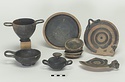
| Artifacts, burnt bone, ash, cinders and charcoal in pit in bedrock. The pyre lay directly under mosaic floor A. the deposit is not badly disturbed, however, and it is possible that it was laid immediately ... Early second quarter of 4th c. B.C. |
Chamber cistern at 95/Κ and Cistern shaft at 95/ΚΕ plus the passage between. System heavily disturbed throughout in Turkish times except for a small amount of red fill on floor of shaft. Coins:
4 May 1936 ... Hellenistic |
| North of House G (RSY=Pyre 13).
Concentration of artifacts, small pieces of bone, and burnt material in stratum, no pit discerned. The pyre is cut by the trench of a wall of a Roman house to north. It ... 290-250 B.C. |
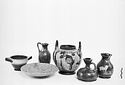
RSY Grave 49. Outside Archaic Cemetery ... 550-525 B.C ... Hesperia 20 (1951), p. 108, pls. 47 c, 48 a (Grave 49). |
| Pit in Layer 9, lined on the sides and bottom with small stones ... Late 5th c. B.C. |
| Pyre in House C, Room 12 (RSY=Pyre 9) in the industrial area west of the Areopagus.
Notebook refers to House N.
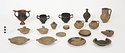
Beside west wall of room 12. Pottery, burnt bone, and cinders in a roughly round pit; disturbed ... Ca. 250 B.C ... Hesperia Suppl. 47 (2013), no. 47, p. 159, 160, figs. 78, 92, 93 ... Hesperia 20 (1951), pp. 125-126, pl. 52 c (Pyre 9). |
A small concentration of pottery in lowest 1.80m., possibly a use fill. Three fills above, with little pottery, ranging from Hellenistic to late Roman in date. Coins:
26 February 1934 #4-#6
27 February ... 325-200 B.C. |
|
|