|
|
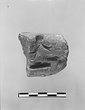
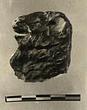
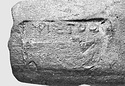
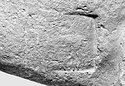
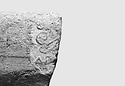
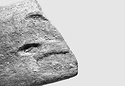
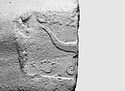
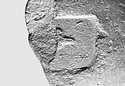
| Two joining fragments preserve top part of rectangular mould. Full width of mold surface not preserved; high rim broken off froom one corner and side.
Lion, right, bringing down a deer (?).
Back smooth ... 2 May 1940 |
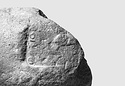
| First interpretation: Mold signed fragment.
Broken at left and chipped along outer edge at top.
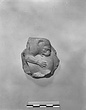
Preserved is a male figure, bearded and partly draped, reclining on a couch and playing the double flutes, ... 27 March 1939 |
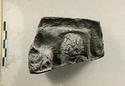
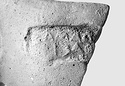
| Fragment from mold for upper left corner of high relief; depressed frame.
Relief widens towards bottom of fragment.
In the positive, upper front part of head in profile left; above it a thyrsos, horizontally, ... 1949 |
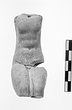
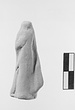
| Nude male figure.
Mended from six fragments. Head and arms missing; with holes for attachment; lower legs missing, and large part from left side.
Traces of white.
Buff clay.
ADENDA Cf. Delos IV, pp. 26 ... 1949 |
| Circular stamp, only a small part of edge struck; two rings of letters; no symbol(?) at centre. Par: filed w/ Pn 170 (AH 165), see end of [ ... ] stps w/ out
dev in USEFUL LISTS(VG)* Gravelly washed-in fill ... 29 April 1939 |
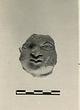
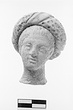
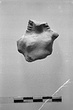
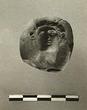
| First interpretation: child 's face.
Fat woman 's face, broken off at neck and behind.
Traces of red glaze and of white in eyes.
Red clay. Brown fill and sand over red.
Hellenistic and late Roman. 1680 ... 15 May 1939 |
| First interpretation: female head.
Broken off at neck.
Heavy draped wreath around head.
ADDENDA, D. Burr-Thompson: Male head.
Blond clay. 100-104/* Great Drain to east and west overflow.
Sand Hellenistic ... 25 May 1939 |
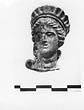
| Broken off at base of neck.
The head is tipped slightly to the figure 's right; the hair is parted, drawn back from the brows in soft waves and crowned by a high fluted diadem. Strips of clay attached ... 25 May 1939 |
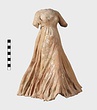
| Woman, probably Nike, moving-flying or running-forward with very full drapery blown black. Drapery slipped down over one shoulder and breast.
Head, lower arms and small fragments missing; mended from many ... 26 July 1946 |
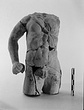
| On left hip traces of scabbard (?) hanging from strap which passes over right shoulder; handle of sword (?) grasped in right hand, blade broken off.
Mended from many pieces; head, left arm and legs from ... 26 July 1946 |
| Perhaps from a plastic pot.
Broken off at neck.
Bridle and reins added in white over red (or vice versa ?).
Soft buff clay covered with dull black glaze. Layer I. 602 Leica ... 26 July 1946 |
| Relief plaque of lioness attacking a bull.
Original surface preserved at top and at lower part of right side.
Back broken. Head and foreshoulder of lioness preserved. Bull 's head missing.
She is bitting ... Card: 4th c. B.C. |
| A small woman.
Head missing, otherwise apparently complete.
Roughly modelled; the back plain.
No trace of color.
ADDENDA, D. Burr-Thompson: Late Hellenistic (?) New grid questionable. Dump from Middle ... 1940 |
| First interpretation: standing nude male figurine.
Chest and lower part of head, with stumps of arms preserved.
The left arm was stretched straight out at the side, the right also partly extended. A single ... 25 April 1940 |
| Head turned, probably female, to left; curly hair framing the face. Beginning of drapery below the neck.
Mold taken, as impression, from a figurine and retouched: (hair)? House N, N.E. area, layer 3 B; ... 26 March 1948 |
| Curve fragment.
Symbol across middle. Rdg: =[---]o Xoi(rov)= (AB)*Msc: needs a proper file of endings;
stped on vert bran; late?(VG 9.i.53)* Finished Great Drain, Hellenistic sand fill, overflow to east ... 25 May 1939 |
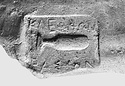
| Rectangular stamp; hooked object(?); three lines. Msc: prob from jar of =AINEAS?= dated in the term of
=SWSIFRWN= (hooked obj?)* Great Drain to south; Hellenistic sand fill. Κυδοσθένε
υς Δημητρί
ου ... 27 May 1939 |
| Struck diagonally; device, pruning hook(?); two lines.
Early Thasian.
Cf. Pridik (1917), p. 42, no. 134, pl. VII, 15. Par: Pridik 1917, 42, 134, Pl 7, 15 which is not so
completely impressed (=h= missing; ... 4 May 1939 |
| Rectangular stamp, lower part not struck; symbol across middle.
Cf. Pridik (1917), pp. 41, 54, nos. 112, 411, pl. VII, 22, 23. Par: for dev cf Pridik 1917, Pl 7, 22, 23 (text 54,411 and
41,112)(VG)* Finished ... 6 May 1939 |
| Rectangular stamp; two lines; symbol across middle.
Cf. Pridik (1917), pl. IV, 1. Par: Pridik 1917, Pl 4, which however is not the same(VG)* Finished Red fill; late Roman and Byzantine. [Θασί]ω̣ν
dolphin ... 12 May 1939 |
| Long piece of handle preserved.
Most of stamp broken off; rectangular stamp well down curve; octapus. Finished Great Drain south, sand Hellenistic fill. Θα̣[σίων]
aphlaston
Ἀρ[---] 1785 Leica ... 20 May 1939 |
| Rectangular stamp broken off diagonally at right; symbol across middle; line above and below. Finished Great Drain south, sand Hellenistic fill. Θασ[ίων] (Σ lunate)
device
[---]εοφ[---] 1786 Leica ... 22 May 1939 |
| Curve fragment.
Rectangular stamp, broken at one end; leaf or cross in middle. Stp: v rough, apptly retouched(VG)* Finished Great Drain south, sand Hellenistic fill. [Θα]σ̣[ίων]
branch?
Ἀριστοφαν̣( ... 22 May 1939 |
| Rectangular stamp well down on curve; two lines; symbol (thyrsos?) across centre. Finished Late brownish-red fill. Θασί[ων]
thyrsos l.
Ἡροφάντου̣ 1467 Leica ... 16 May 1939 |
| Long curve fragment.
Rectangular stamp broken at right; part of symbol at middle; line above and below; horn; inverted. Finished Great Drain south, Hellenistic sand fill. [Πυ]θίων
horn
Θασ[ίων] (inverted) ... 23 May 1939 |
| Rectangular stamp with alabastron(?) at centre. Date: called 2/2 4c BC by ZT in 1958(VG)* Finished Fill in second pit to southeast of Wall 6. Κλεόφων
vaseI
Θασίω̣ν 513 Leica ... 25 May 1940 |
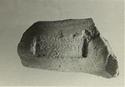
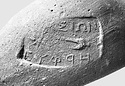
| One end of rectangular stamp with device (bird on wing) at centre. Finished Fill II. [Θα]σ̣ί̣ων
bird on wing
[ Ἀρισ]το̣φά(νης) 156 Leica ... 24 April 1940 |
| Broad thin, rather twisted handle.
Yellow-buff clay.
Rectangular stamp, broken at right; retrograde.
Early Thasian. Dte: early*Cxt: NB p914?(VG)* Finished Fill III; 4th century B.C.(?). Δαμάσ(της)
Θάσιο̣[ν] ... 27 April 1940 |
| Part of rim of double handle preserved.
Rectangular stamp with thunderbolt; stamped on one half.
Cf. SS 609. Corpus no. 730. Fill II. thunderbolt 161, 228 Leica ... 30 April 1940 |
| Square(?) stamp with cluster at centre.
Early Thasian. Date: pottery 1/2 4c BC; [ ... ] of not known - prhps for LT?;
NB p144 refers to container 110, the [ ... ] of which [ ... ] to
a Meg bowl frag w/ the ... 2 May 1940 |
RSY Grave A.
Under the Roman House with three rooms floored with mosaic near the southwest side of the area. The burial consisted of a pot laid on its side over the bedrock, presumably containing a child ... 7 August 1947 |
A well (diameter 1m) in the industrial area west of the Areopagus, in the area later occupied by House C. Water level 1.50-2.m Dumped filling of broken bedrock with considerable fragmentary pottery in ... Ca. 500-480 B.C. |
Pits ( A 19:3, A 19:4, A 19:5, A 19:6 in area 96-100/ΝΕ-ΝΘ (lower east slopes of Hill of the Nymphs, near extreme west edge of excavated area).
Sometimes called as "Pit 2". Pit with reddish black fill ... 350-300 B.C. |
Pits in area 96-100/ΝΕ-ΝΘ (lower east slopes of Hill of the Nymphs, near extreme west edge of excavated area).
Pit with bones. Many fills in areas A 19 and A 20 similar in character to the fills in these ... 350-300 B.C. |
Pits in area 96-100/ΝΕ-ΝΘ (lower east slopes of Hill of the Nymphs, near extreme west edge of excavated area).
Scanty debris filling in a pit. Many fills in areas A 19 and A 20 similar in character to ... 325-300 B.C. |
Pits in area 96-100/ΝΕ-ΝΘ (lower east slopes of Hill of the Nymphs, near extreme west edge of excavated area).
Shallow pit in bedrock against N. face of wall. dMax. depth 0.20m.d.
Many fills in areas ... Ca. 325-300 B.C. |
| (RSY=Pyre 2). Pyre in the industrial area west of the Areopagus, in House B. In northern corner of room. No pit discerned. A deposit of small stones (a marker/) lay 0.30m above the level of the pyre, ... Third quarter of the 4th. century. |
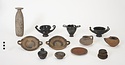
| A compact group of four complete vases and a lamp, found on a house floor; possibly the remains of a sacrificial pyre but without evidence of burning or the characteristic votive vases.
Layer II, "nest ... 425-400 B.C. |
E.L. Smithson: Group H: Collapsed well west of the Great Drain.
First described as 105-107/Protogeometric Pit ... Protogeometric |
Scanty debris filling in a pit. The wishbone-handled bowl (P 16753) is of the middle of the third quarter of the 5th. c. century, as are also two red figured fragments, P 25820 and P 25821; the deposit ... Ca. 450-400 B.C. |
|
|