|
|
| The Fifth Century ... Agora 1 106 ... 400-500 A.D ... The Fifth Century |
Bradeen, D. W ... American School of Classical Studies at Athens ... Hesperia 32.2 2 187-208 10.2307_147176 ... 1963 ... The Fifth-Century Archon List |
Meritt, Benjamin D ... American School of Classical Studies at Athens ... Hesperia 14.2 2 61-133 10.2307_147005 ... 1945 ... Attic Inscriptions of the Fifth Century |
Koehler, Carolyn G ... American School of Classical Studies at Athens ... Hesperia 50.4 4 449-458 10.2307_147883 ... 1981 ... Corinthian Developments in the Study of Trade in the Fifth Century |
Corbett, Peter E ... American School of Classical Studies at Athens ... Hesperia 18.4 4 298-351 10.2307_146717 ... 1949 ... Attic Pottery of the Later Fifth Century from the Athenian Agora |
Pease, M. Z ... American School of Classical Studies at Athens ... Hesperia 6.2 2 257-316 10.2307_146521 ... 1937 ... A Well of the Late Fifth Century at Corinth |
Wallace, William ... American School of Classical Studies at Athens ... Hesperia 5.2 2 273-284 10.2307_146548 ... 1936 ... An Eretrian Proxeny Decree of the Early Fifth Century |
Clinton, Kevin ... American School of Classical Studies at Athens ... Hesperia Supplement 19 27-37 10.2307_1353967 ... 1982 ... The Nature of the Late Fifth-Century Revision of the Athenian Law Code |
Boulter, C ... American School of Classical Studies at Athens ... Hesperia 22.2 2 59-115 10.2307_146985 ... 1953 ... Pottery of the Mid-Fifth Century from a Well in the Athenian Agora |
Pit at 57/ΚΑ; small pit on the lower north slope of the Areopagus, measuring 1.05x0.80mx0.80m deep. There were traces of burning and a few bones in it, since none of them are recognizably human it is probably ... 480 - 470 B.C. |
Thick ring at the join of neck. Part of the neck ornament a tiny part of the shoulder ray and upper part of the crest of Athena preserved.
Athena is turned to left. Her crest is outlined with a red band ... Thick ring at the join of neck. ... This kind of ornament is assigned(?) to the Panathenaic of the fifth century (ours is certainly one of its last appearance); a fifth century date is also supported by the use of red (Beazley, Panathenaica p. 454).
End of fifth century. |
Lalonde, G. V ... American School of Classical Studies at Athens ... Hesperia 37.2 2 123-133 10.2307_147686 ... 1968 ... A Fifth Century Hieron Southwest of the Athenian Agora |
| Fifth century pit in line with the Stoa colonnade ... AMS west Horizontal (normal) ... ca. 1935 ... Fifth century pit in line with the Stoa colonnade. |
| Fifth century pit in line with the Stoa colonnade ... west Horizontal (normal) ... ca. 1935 ... Fifth century pit in line with the Stoa colonnade. |
| Watercolor by Piet de Jong showing the Doric order f the late fifth-century B.C. stoa of Zeus ... Craig Mauzy ... PD 21 Horizontal (normal) ... 2006 ... Watercolor by Piet de Jong showing the Doric order f the late fifth-century B.C. stoa of Zeus. |
| Tholos. Trench along south side of modern cellar. Looking west. Black fill at rear end gone, but also some of the fifth century fill at the far end ... AMS Horizontal (normal) ... 8 May 1934 ... Black fill at rear end gone, but also some of the fifth century fill at the far end. |
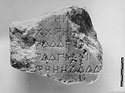
| Fragment of fifth century stele: Building accounts of the Propylaea ... Horizontal (normal) ... Fragment of fifth century stele: Building accounts of the Propylaea. |
MacDonald, Brian R ... American School of Classical Studies at Athens ... Hesperia 50.2 2 141-146 10.2307_148013 ... 1981 ... The Phanosthenes Decree Taxes and Timber in Late Fifth-Century Athens |
| Late Byzantine. Byzantine Floor. Early Byzantine or Characterless Sherds. Characterless and Roman Sherds. Brown Earth. Hellenistic. Sherds of the Fifth Century. Hard Packed Ancient Floor. Gravel. Stamped ... Η-4 754, 755 SS 1638 Lot Η 55 SS 1638 ... 18 May 1933 ... Sherds of the Fifth Century |
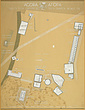
| Piet de Jong poster, end of fifth century BC ... Piet de Jong ... Exhibited at the Benaki Museum, 15 November 2006 to 7 January 2007 ... 1957 |
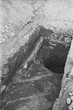
| Tholos. Trench along south side of modern cellar. Looking east. Trench cleared to bedrock. Close view to show the location of the mouth of the Early Well and step marking top of the fifth century fill ... AMS Horizontal (normal) ... 8 May 1934 ... Close view to show the location of the mouth of the Early Well and step marking top of the fifth century fill. |
Thick ring at the joint of the neck. Very little part of the tongues on the shoulder and of the Athena's crest. Athena is turned to left. The crest is outline with a red band; round it's base, at the point ... Thick ring at the joint of the neck. ... The use of red mineral makes a dating still in the fifth century certain (Beazley, Panathenian p. 454). End of fifth century. |
http://agathe.gr/democracy/the_verdict.html The Verdict After the speeches and other evidence had been presented, the members of the jury voted by casting ballots. A series of vase paintings of the early 5th century B.C. show a mythological story, ... A series of vase paintings of the early 5th century B.C. show a mythological story, the vote for the arms of Achilles. ... Whether or not the voting scenes that appear on vases depicting this story show an actual method of voting in early 5th-century Athens, their appearance at this time may have been prompted by the enhanced importance of voting that resulted from the reforms of Kleisthenes. ... The majority are datable to the 4th century B.C., but the latest, and especially those of lead, may run into the 2nd century B.C. |
Well in the industrial area west of the Areopagus.
A flask-shaped cistern in House H with a dumped fill of the late fifth century brought from elsewhere and evidently deposited sometime in the 3rd c. B.C ... Ca. 420-400 B.C ... Well in the industrial area west of the Areopagus.
A flask-shaped cistern in House H with a dumped fill of the late fifth century brought from elsewhere and evidently deposited sometime in the 3rd c. ... Especially to be noted is the stamped Thasian amphora handle SS 9636, one of the earliest stamps recording names of officials. |
Wall fragment, glazed inside Right leg and part of peplos of Athena, to left. White for the leg; the lower hemline as well as the drapery folds, incised.
First half of fifth century. LI-48 ... White for the leg; the lower hemline as well as the drapery folds, incised.
First half of fifth century. |
Broken away below the waist.
Pan playing on a syrinx.
Clay: Buff, coarse, covered in front with red paint. Hollow, back unmodelled. From a disturbed area to the south of the retaining wall of the ... Fifth century B.C. |
| Preface. List of Plates. Abbreviations and Bibliography. Introduction. Catalogue. Observations on Athenian Portrait Style in the Roman Period. The Romanization of Greek Portraits. The Late Republican Period ... Agora 1 vii ... The Third Quarter of the Third Century ... The Fourth Century ... The Fifth Century |
| From southeast, Late Roman disturbance gone. 1: Propylon, 2: archaic floor, 3-4: trenches of fifth century walls. From the east ... AMS Horizontal (normal) ... From southeast, Late Roman disturbance gone. 1: Propylon, 2: archaic floor, 3-4: trenches of fifth century walls. From the east. |
| From west, Late Roman disturbance gone. 1: Propylon, 2: archaic floor, 3-4: trenches of fifth century walls. From the east ... AMS Horizontal (normal) ... From west, Late Roman disturbance gone. 1: Propylon, 2: archaic floor, 3-4: trenches of fifth century walls. From the east. |
| From east, Late Roman disturbance gone. 1: Propylon, 2: archaic floor, 3-4: trenches of fifth century walls. From the east ... AMS Horizontal (normal) ... From east, Late Roman disturbance gone. 1: Propylon, 2: archaic floor, 3-4: trenches of fifth century walls. From the east. |
| The lower part of the nozzle and front wall, and part of the bottom.
Signed.
Unglazed.
Buff clay.
Type XXVII of Corinth collection. Well. Upper fill. Second century A.D. construction; at transition from ... May-June 1937 ... The lower part of the nozzle and front wall, and part of the bottom.
... Second century A.D. construction; at transition from Sixth century A.D. to Fifth century B.C. |
Only the lower part of the face remains.
After moulding the nostrils and the corners of the mouth over emphasized by piercing. The size and glaze on the interior suggest that fragment comes from a ... Late fifth century B.C. |
Male phallos attached as spout to the side of a vase. On the inside is a bit of the shoulder of the aryballos?
Clay: Firm, buff. Reddish glaze on the upper part of the outer face and smeared over the ... Early fifth century B.C. |
Upper and lower extremities missing.
Seated figure, legs covered, right elbow knee, shaggy legs, grossly exaggerated membrum virile.
Clay: Fine, buff, coated with no white glaze, pink-red painted applied ... Fifth century B.C. |
| The Athenian Agora; Volume 15; Inscriptions; The Athenian Councillors; Introduction; The Council and the Prytaneis. Aristotle, Ἀθ. Πολ., 21, 6. Charles Hignett, A History of the Athenian Constitution, ... Agora 15 1 ... Meritt, The Athenian Calendar in the Fifth Century, 1928, passim ... Meritt, The Athenian Calendar in the Fifth Century, 1928, p. 124 ... Meritt, The Athenian Calendar in the Fifth Century, 1928, pp. 99-100 |
Mould for the left side of a ram's head with curling horn. For a rhyton.
Clay reddish, hard. Burned? From a disturbed area to the north of the retaining wall of the Assembly Place III ... Early fifth century B.C. ? |
Male phallos, attached as spout to the side of a vase. On the inside is a ledge for the reception of a lid. Scratched into the clay on the upper part of the outer face: ΚΕΡΚΙΩ.
Clay: Fine, buff, burned ... Early fifth century B.C. |
Broken at top only.
The right side is set at an obtuse angle to the base line.
A draped figure sits to right on a throne with lions feet, holding kin the hand a stick? The peculiar shape suggests the ... Early fifth century B.C. |
http://agathe.gr/democracy/the_council_and_magistrates.html The Council and the Magistrates Like selection for military service, allotment to the Council was organized according to the division by tribes; 50 members from each tribe acted as a unit in the Council ... The Council and the Magistrates Like selection for military service, allotment to the Council was organized according to the division by tribes; 50 members from each tribe acted as a unit in the Council and held the presidency (prytany) of the Council for one of its 10 prytanies, with a third of their number constantly on duty and in residence in the Tholos, the round building next to the Council House (Bouleuterion) (14, 15). 14. Civic buildings on the west side of the Agora, from the southeast. 15. ... Allotment tokens, 450–430 B.C. The Council also supervised the election of the generals, one from each of the 10 tribes, who were the chief executive officers of the administration, replacing in this function the archons, whose power decreased in the early fifth century when they began to be chosen by lot. |
| Tholos. Trench along south side of modern cellar. Looking east. Trench cleared to bedrock. Lower right, part of poros column and base. Upper right, in deep shadow, the Early Well. The step at the upper ... AMS Horizontal (normal) ... 8 May 1934 ... Upper right, in deep shadow, the Early Well. The step at the upper left represents the slightly packed surface of the fifth century fill at the east. |
|
|
.png.icon.jpg)

.jpg.icon.jpg)
.png.icon.jpg)

.png.icon.jpg)