|
|
| Phaidon Street Cistern: North Chamber
Sullan destruction debris. One of two chambers connected by tunnel.
Two latest coins date to 87/86. Gray ware lamp of first quarter of 1st c. A.D. indicates disturbance ... 2nd c. B.C ... Phaidon Street Cistern: North Chamber
Sullan destruction debris. |
| Cistern with dumped filling, second quarter of 4th c. B.C. Also Lot Φ 187bis (selected coarse).
No coins ... Ca. 375-350 B.C ... Aischines Street Cistern: North Chamber |
Cistern system West of Bouleuterion: (see also B: cistern system to West of Tholos). Third Chamber from North. A well was dug through the bottom in Byz. times. Cf. deposit F 9:2. Coins:
3 May 1934 #1 ... 160-140 B.C., with Byz. disturbance
Early 3rd to late 2nd c. B.C. POU ... Third Chamber from North. |
Once vaulted chamber north of Hephaisteion. Grave V in notebook. Vault gone. Five skulls. Pottery discarded. Coins:
17 April 1936 #2 ... 27-28 April 1936 ... Once vaulted chamber north of Hephaisteion. |
Cistern system West of Bouleuterion: (see also B: cistern system to West of Tholos). First Chamber from North.
Part of three-chamber cistern system, including also G 11:1, with Byzantine and modern disturbance ... 150-ca. 75 B.C., with Byz. disturbance ... First Chamber from North.
Part of three-chamber cistern system, including also G 11:1, with Byzantine and modern disturbance throughout; The uppermost fill-modern. |
Scanty filling on floor of lower chamber and from mud in north passage. Estimated Grid ... 2nd c. A.D ... Scanty filling on floor of lower chamber and from mud in north passage. |
Cistern System #3: East Chamber at 69/Λ, joined by a crooked passage to 69/ΛΣΤ. Under the southwest corner of the Hellenistic Building to the north of the Temple of Hephaistos ... 175-125 B.C ... Cistern System #3: East Chamber at 69/Λ, joined by a crooked passage to 69/ΛΣΤ. Under the southwest corner of the Hellenistic Building to the north of the Temple of Hephaistos. |
| Mycenaean Chamber Tomb by Stoa Pier 12 (Burial 10).
The entire north side of the chamber had been cut away by Stoa Pier 12 and most of the depth by leveling operations in connection with Square Building, ... Early Myc. IIIA ... Mycenaean Chamber Tomb by Stoa Pier 12 (Burial 10).
The entire north side of the chamber had been cut away by Stoa Pier 12 and most of the depth by leveling operations in connection with Square Building, so that the greatest preserved depth was only 0.25m. What remained of the chamber measured 1.30m east-west by 0.90m north-south. |
Cistern System #3: West Chamber at 69/ΛΣΤ, joined by a crooked passage to 69/Λ. Under the southwest corner of the Hellenistic Building to the north of the Temple of Hephaistos. Upper fill of early 1st ... 175-125 B.C ... Cistern System #3: West Chamber at 69/ΛΣΤ, joined by a crooked passage to 69/Λ. Under the southwest corner of the Hellenistic Building to the north of the Temple of Hephaistos. |
Cistern-chamber on the northwest side of Kolonos Agoraios, 10 to 12m west of the end of the Hellenistic Building. Dimensions at bottom 2.50m x 2.75m.
The west chamber of a cistern system composed of two ... Use filling early 1st-2nd c. B.C ... Cistern-chamber on the northwest side of Kolonos Agoraios, 10 to 12m west of the end of the Hellenistic Building. ... The west chamber of a cistern system composed of two chambers connected by a passage (91/Ν); the east chamber at 91/Ν (E 5:1) retained little or no traces of its original period of use. North of the Hephaisteion. |
| Eugene Vanderpool ... Mycenaean Chamber Tomb.
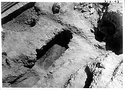
Although badly disturbed at various times in antiquity, it was clearly a chamber tomb with the chamber little more than a cubby-hole at the end of a steep dromos, entered at the ... Myc. III A-B ... Mycenaean Chamber Tomb.
Although badly disturbed at various times in antiquity, it was clearly a chamber tomb with the chamber little more than a cubby-hole at the end of a steep dromos, entered at the north by two steps, and with the stone blocking-wall preserved for a few courses. |
| Plundered Chamber Tomb. (Tomb XII). A few meters SE of the great white marble altar. The chamber is an irregular rectangle, oriented roughly N-S, with dromos leading in at a very gentle slope from the ... LH III A ... Plundered Chamber Tomb. (Tomb XII). A few meters SE of the great white marble altar. The chamber is an irregular rectangle, oriented roughly N-S, with dromos leading in at a very gentle slope from the north. |
| Brian Martens ... Mycenaean Chamber Tomb J 1:11, located in the area north of Wall K, was partially excavated during the 2014 season. At this point the full western extent of the chamber has not been located because of ... LHIIIA ... Mycenaean Chamber Tomb J 1:11, located in the area north of Wall K, was partially excavated during the 2014 season. At this point the full western extent of the chamber has not been located because of a dividing baulk and a possible second chamber or passage appears to open at the northeast. At season-end, the chamber measures about 3x2.25 m. |
Connected with G 14:3.
There was a layer of Late Roman fill. It rested over a layer of 2nd c. B.C Hellenistic and then another of 4th c. B.C Hellenistic; the passage between the two cisterns contained ... Late Hellenistic |
| David Scahill ... Behind northeast corner of Classical Building; east wall C. Below Hellenistic levels and early Classical pit. Chamber cut through bedrock, depth ca. 0.90m., diameter ca. 2m., roughly square in shape, angling ... LH III A:1 ... Below Hellenistic levels and early Classical pit. Chamber cut through bedrock, depth ca. 0.90m., diameter ca. 2m., roughly square in shape, angling inward toward top. ... More bone fragments in middle and north. Bronze objects in northeast corner. |
| Brian Martens ... It was partially excavated during the 2012 and 2013 seasons. The tomb, located at the center of Room III in the NE area of section ΒΖ, was found under fill surrounding perpendicular mid-to late 6th c ... LHIIIA ... In 2017, we were granted permission to remove the two fragmentary foundations overlying the chamber of the tomb: Walls 17 and 18. ... A strip of fill at the north side of the cutting, just below the scarp of Wall L remained unexcavated at the end of the season (J/17,18-1/10,11; 51.290-51.376 masl.)
2018:
We removed a final strip of fill in the chamber below the scarp under Wall K (J/17,19-1/10,11). ... Scarping revealed the blocking wall of the chamber. A more complete analysis of these findings appears in the 2018 end-of-season report. |
Cistern chamber at 52/Θ (53/Θ). Part of the H-I 16-17 system.
Cf. S.E. Tunnel (container 147) and west and north passages (container 156).
Upper fill: (packing for LR mosaic floor)
Lower fill: Hellenistic ... Hellenistic-Late Roman ... Cistern chamber at 52/Θ (53/Θ). ... Tunnel (container 147) and west and north passages (container 156).
|
| Mycenaean Grave to W of Pier 12 (Burial 11).
The northern part of the tomb had been cut away by the foundation trench for the south stylobate of the Square Building that preceded the Stoa, and the dromos, ... Myc. IIB-IIIA:1 ... The northern part of the tomb had been cut away by the foundation trench for the south stylobate of the Square Building that preceded the Stoa, and the dromos, if one existed, must have been lost in this operation. The chamber was small with an original east-west dimension of 1.60m and a preserved north-south dimension of 1.20m, the walls preserved to a maximum height of 0.90m. ... Although it might be argued from the single internment and the absence of any preserved dromos that this was a pit grave, the location of the body along the edge of the cutting would seem rather to indicate a small chamber tomb that has been cut away at the north. |
| Mycenaean Grave at SE corner of Pier 12 (Burial 9).
There are no traces of dromos, which must have been located at the north and have been cut away by the trench four the south stylobate of the Square ... Myc. III A:1 ... There are no traces of dromos, which must have been located at the north and have been cut away by the trench four the south stylobate of the Square Building. The dimensions of the chamber are 1.60m east-west by a preserved length of 1.40m north-south. ... The broken bedrock plus the presence of more than one burial is certain indication of a chamber tomb rather than a pit grave. |
Mycenaean Tomb under Valerian wall (Burial 12).
It was impossible to fix the limits of the tomb in any direction, since at the north and south it was cut by the wall, an operations could not be extended ... Myc. III B |
| Mycenaean Chamber Tomb under north side of Temple of Ares, towards its west end.(1951).
The tomb had a hasty and unfinished appearance oddly at variance with its long history and the quality of the pottery ... 1st: Myc IIB-IIA:1-2, 2nd: Myc. IIIC:1 (1450-1200 B.C.) ... Mycenaean Chamber Tomb under north side of Temple of Ares, towards its west end.(1951).
... The original dromos ran from west to east and entered the chamber toward the south end of the long west wall. The doorway itself was only 0.80m wide.
The chamber was a small room roughly hewn out of bedrock. |
| An extensive cistern system on the lower north slope of the Areopagus, south chamber with blind tunnel extending further south (south tunnel); north chamber; drawshaft further north, extends to north tunnel ... Ca. 320-240 B.C ... An extensive cistern system on the lower north slope of the Areopagus, south chamber with blind tunnel extending further south (south tunnel); north chamber; drawshaft further north, extends to north tunnel. ... About the same time,the southern chamber was dispensed with and the mouth of the passage leading to the north chamber was carefully walled, the one plastered face of the wall looking toward the northern chamber. ... Some years later, the chamber was finally abandoned and filled in with earth. |
Cistern-system west of the Stoa of Zeus. Two chambers connected by a tunnel, each with two fills. Lower fill in south chamber contemporary with upper fill in north chamber, at the end of the 4th c. B.C ... Ca. 375-160 B.C ... Lower fill in south chamber contemporary with upper fill in north chamber, at the end of the 4th c. ... Subdivisions:
.1=Upper filling in south chamber
.2=Lower fillings in both chambers |
| Mycenaean Chamber Tomb SE of Stoa Pier 12 (Burial 8).
Roughly rectangular, measuring 1.70m by 1.40m, and was cut down to within 0.65m. by the construction of the Square Building. A rectangular cutting ... Early Myc. IIIA ... Mycenaean Chamber Tomb SE of Stoa Pier 12 (Burial 8).
... Across the north end lay the single skeleton of a child with head to east, lying on its back with knees doubled up. ... No offerings and no trace of bones were found in the rest of the chamber, which had been somewhat disturbed in Classical times. |
Lower levels of cistern to N. of House of Greek Mosaic.
Connected by tunnel to another chamber that was apparently cleared by Wilhelm Dorpefeld in the 19th c. Roman fill in mouth. Coins:
6 July 1964 # ... Ca. 325-290 B.C. |
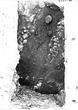
| David Scahill ... Below packed clay floors in Room 2 of Classical Building II; bordered on east and south sides by polygonal cross wall and back wall extension for Classical Building. Late Roman wall and drain installation ... LHIII A:1 ... Late Roman wall and drain installation above west side. Chamber cut into soft bedrock, depth ca. 50.926msl, diameter ca. 2m. roughly square.
... At floor of tomb, concentration of bone fragments and pots, mostly broken in situ, concentrated against the north side of the tomb, with some bone fragments across the middle, and on the south side with more pots. ... Toward the west against the north side, a bronze dagger and spear point. |
Well dug through N 18:1 (cistern at 79/ΜΗ) on the lower north slopes of Areopagus; the cistern was the northern chamber of a system; the southern chamber is at 84/ΝΣΤ (N 19:1).
A single dumped deposit ... 3rd-4th c. A.D ... Well dug through N 18:1 (cistern at 79/ΜΗ) on the lower north slopes of Areopagus; the cistern was the northern chamber of a system; the southern chamber is at 84/ΝΣΤ (N 19:1).
|
| E.D. Townsend Vermeule ... Protogeometric Grave no. 2 at North of Temple of Ares (Grave XXXVII). Rectangular stone-lined pit in filling of Mycenaean chamber tomb (J 7:2); the skeleton of a boy. Cf. P 21275 which is from the "preliminary ... Middle Protogeometric ... Protogeometric Grave no. 2 at North of Temple of Ares (Grave XXXVII). Rectangular stone-lined pit in filling of Mycenaean chamber tomb (J 7:2); the skeleton of a boy ... P 21275 which is from the "preliminary exploration" of protogeometric burial on the north side of the Temple of Ares, not within this grave. |
Crescent-shaped cutting in bedrock at 47/ΙΓ; on the north slope of the Areopagus, slightly to the west of the dromos of the Mycenaean Chamber Tomb.
Dimensions of cutting : max. diameter ca. 2.50m.; depth ... Ca. 500-450 B.C.
400-350 B.C ... Crescent-shaped cutting in bedrock at 47/ΙΓ; on the north slope of the Areopagus, slightly to the west of the dromos of the Mycenaean Chamber Tomb.
|
| Mycenaean Small Chamber tomb.
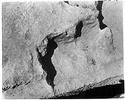
The cist measures 1,90m E to W, 0.75-0.90m N to S, max. depth -1.30m. Nothing was found in it; cleaned in modern times and used as a cesspool. Some of the SW part of it had ... Myc. IIIA, early 14th c ... Mycenaean Small Chamber tomb.
The cist measures 1,90m E to W, 0.75-0.90m N to S, max. depth -1.30m. ... All that remains of the chamber is a small segment with a maximum preserved dimension of 1.20m, which is bordered on the north by a modern wall and on the east by a cesspool. ... A terracotta Roman drain cuts across the chamber from SE to NW and its bottom is slightly below the floor of the chamber.
|
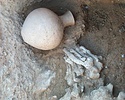
| David Scahill ... At northeast corner of Classical Building II; on south side of dromos of Tomb K 2:5, and separated from it by ca. 0.6m of bedrock. Chamber cut through bedrock. The northeast corner of chamber defined ... LHIII A:1 ... At northeast corner of Classical Building II; on south side of dromos of Tomb K 2:5, and separated from it by ca. 0.6m of bedrock. Chamber cut through bedrock. The northeast corner of chamber defined. Rest of tomb runs under later wall foundations to the south and west.
... A courseware pitcher upside down in the north east corner. |
| Mycenaean Chamber Tomb occupies a considerable part of the western half of section ΕΕ; lies about half way up the north slope of the Areopagus towards its eastern end, just below the highest point of the ... Myc. III A:1 ... Mycenaean Chamber Tomb occupies a considerable part of the western half of section ΕΕ; lies about half way up the north slope of the Areopagus towards its eastern end, just below the highest point of the hill. The tomb consists of a roughly rectangular chamber approached from the north by a long dromos. it is entirely hewn out of the rock of the hill and except for the wall of rough stones that blocked the doorway, there is no masonry. ... Group of objects:
a) on the east bench, a little north of its center (BI 511, P 15234-15239)
b) on the floor in the northeast corner of the chamber just to the left of the door (B 704, P 15358-15359)
c) on the floor of the chamber, about 0.40m from the south wall, near its mid-point (B 705, BI 513, BI 514, BI 530
d) on the floor in the northwest part of the chamber, at the foot of the bench about midway between the grave and the north wall of the chamber (J 64, J 65, J 68) |
| Homer A. Thompson ... PG grave north of Stoa Pier 19 (Grave 6). In some records as Grave XLIII.
Unlined rectangular pit cut into a shallow depression in bedrock that was formed by the collapse of the roof of Mycenaean Chamber ... Developed Protogeometric ... PG grave north of Stoa Pier 19 (Grave 6). ... Unlined rectangular pit cut into a shallow depression in bedrock that was formed by the collapse of the roof of Mycenaean Chamber Tomb Q 8:8. The north end of the tomb had been sheared away for the construction of the Stoa. |
| Mycenaean Chamber Tomb below Middle Stoa Terrace.
The tomb was entered from the west by a stepped dromos, at least 4.20m long by 1.10 to 1.50m. wide, splaying slightly toward the doorway, which was 1.26m ... Myc. IIIA:1 ... Mycenaean Chamber Tomb below Middle Stoa Terrace.
... The doorway was found blocked with a stone packing, which included near its top a broken conglomerate grave marker, and which proved to have been erected at least three times; during one of the occasions of reopening, the doorway was widened 0.20m to the north. The chamber, while described as a "small irregular trapezoid", is of about average size and actually quite rectangular by Agora standards. |
Mycenaean Deposit (Gully) in front of NE Stoa (corrected from P 7:1).
It consisted of a series of irregular pits, some gradually linked up with one another to form what seemed a natural gully. The largest ... Mycenaean IIIA-B ... The largest pit measuring 1.70m east-west by about 1.20m north-south and having a maximum depth of 0.90m was situated from five to ten meters northeast of the gully proper and was cut at the north by the back wall of Northeast Stoa, which was set down a little into it.
... Because of its proximity to the chamber tombs and because of the exceptional quality of several of the vases, it seems likely that some of the material came from disturbed tombs
Addenda 2025: Pit with Mycenaean pottery cut at the North by NE Stoa. |
Evidence of stratification into five layers, although joins between the layers. Layer VI added when the construction of the Roman building above required it. No subdivisions assigned.
Flask-shaped cistern ... Early 3rd-late 2nd c. B.C ... Flask-shaped cistern chamber located on the northern slopes of Agoraios between the NW corner of the Hellenistic Building and the Temple of Aphrodite Ourania. ... Water was received at the north end of this and entered the cistern through a passage which was apparently dammed at the place it entered the cistern with a low block to provide for settling of sediment.
|
Cistern at 9/Β (10/Β on plan), at the NW foot of the Areopagus, some 200m to the west of the Coroplast's Dump. It had evidently belonged to one of the small houses in that thickly populated residential ... Second half 4th c. B.C ... That sculptors lived near by is attested by the presence in the filling of two unfinished works roughly blocked out of re-used marble. The chamber , lined with the usual waterproof cement, was roughly rectangular at the bottom, measuring north side 1.25m, east side 1.80m., south side 2.06m., west side 1.70m., and reaching a maximum depth of 3.80m.
|
| Marcie Handler ... This deposit is a Mycenaean cist grave with two cover slabs, a type of burial described by Immerwahr in Agora XIII (pp. 103-104). Cist graves appear side by side with chamber tombs in the Mycenaean cemeteries ... LHIIB-LHIIIA:1 ... Cist graves appear side by side with chamber tombs in the Mycenaean cemeteries of the Agora.
... Two slabs: a worked, flat, roughly rectangular poros limestone slab on the east (which had collapsed in the tomb,, sloping down to the north), and an unworked boulder with a naturally flat top surface and uneven underside on the west (it was still in situ). |
|
|