|
|
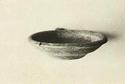
| Mended from three fragments; about half the rim and wall missing. Flat bottom left rough.
Glazed all over, dull and smeary. Pocket (below Hellenistic fill). Pyre? Found with P 1467. Leica ... 10 March 1933 ... Pocket (below Hellenistic fill). |
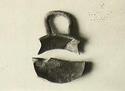
| Mended from five fragments. Thickened rim; flat bottom left rough.
All over glaze, smeary and dull.
Cf. P 1102, found with 5th. and 4th. c. sherds. Pocket (below Hellenistic fill). Pyre? Leica ... 10 March 1933 ... Pocket (below Hellenistic fill). |
| Mended from three pieces; about half the bottom preserved and less than one-quarter of the rim.
Fabric and shape very similar to P 1467, but without any thickening at the rim and with the single preserved ... 10 March 1933 ... Pocket (below Hellenistic fill). |
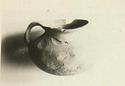
| Mended from two pieces; a bit of the lip and a piece from the lower part of the wall missing. Squat rounded body, small flaring rim, flat vertical handle from rim to shoulder. The upper part made on the ... 10 March 1933 ... Pocket (below Hellenistic fill). |
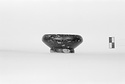
| Mended from four pieces; hole in center of bottom. Ring foot, grooved beneath; thick walls; incurving rim.
Attic clay. Glaze fair quality, much chipped. From pocket in bedrock. Leica, 91-17-9, 82-441 ... 22 April 1932 |
| Mended from four pieces; more than one-quarter of the rim preserved and about three-quarters of the base.
The broad flaring rim is set off from the flat center by a wide scraped groove colored red; there ... 10 March 1933 ... Pocket (below Hellenistic fill). |
| Several joining fragments preserve part of the wall, shoulder, neck and rim.
The lower part mold made; the rounded shoulder, neck and rim wheel made. Short wide neck with round mouth; flaring rim grooved ... 21 April 1948 |
| The bowl mended from six fragments, the lid from four. A large part of one side of the bowl and two small bits from the rim of the lid missing.
Black glaze over all, save for the resting surface of the ... 10 March 1933 ... Pocket (below Hellenistic fill). |
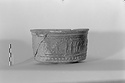
| A small fragment from the side and a chip from the rim are missing. The bowl has an offset rim, flat, with two mouldings below: one wide, one narrow. Between two raised ridges under the main zone is a ... 13 May 1933 ... He also calls the vases cylindrical pyxides, and unites eight exmples to form a class related to no other class of Hellenistic relief ware save perhaps the "Homeric" bowls. He sets the date to a period later than 280 B.C., or the invasion of Delphi by the Gauls (two fragments of the same ware were found with relief bowls, apparently Hellenistic, in tombs at Delphi). ... Gravelly pocket beside great drain. |
|
|