|
|
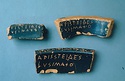
A total of 79 ostraka was recovered from Room 5 of the Classical Building.
More of this deposit was excavated in the 2021 season on the opposite side of the scarp of Wall R, up against the face of Wall ... 500-475 B.C ... A total of 79 ostraka was recovered from Room 5 of the Classical Building.
More of this deposit was excavated in the 2021 season on the opposite side of the scarp of Wall R, up against the face of Wall 4. ... The excavation produced a substantial number of new ostraka. |
Ostrakon deposit, sand fill in a shallow channel in bedrock at the bottom of the Great Drain in the valley between the Areopagus and the Hill of Nymphs.
This group of ostraka may well come from a single ... Ca. 490-480 B.C ... Ostrakon deposit, sand fill in a shallow channel in bedrock at the bottom of the Great Drain in the valley between the Areopagus and the Hill of Nymphs.
This group of ostraka may well come from a single ostrakophoria, but there is always the possibility that the water of the drain may have carried down earlier or later pieces ... 172 ostraka and a small amount of contemporary pottery, with a few later intrusions. |
| Pit (6x10) in the valley between the Areopagus and the Hill of the Nymphs. Large cutting in bedrock with 540 ostraka, mainly of the late eighties of the 5th. c. B. C. Much pottery, principally of the early ... Ca. 500-450 B.C ... Pit (6x10) in the valley between the Areopagus and the Hill of the Nymphs. Large cutting in bedrock with 540 ostraka, mainly of the late eighties of the 5th. c. ... Much pottery, principally of the early 5th. c., but with some as late as the middle, at which time the fill was dumped. |
Packing under cobblestones 7 or 8 meters west of the Temple of Hephaistos. A similar filling found in a small hole in bedrock three or four meters north of the Temple. The high quality of the pottery from ... Ca. 500-440 B.C ... Packing under cobblestones 7 or 8 meters west of the Temple of Hephaistos. A similar filling found in a small hole in bedrock three or four meters north of the Temple. The high quality of the pottery from this deposit and the fact that some of it shows signs of burning has suggested that it might have come from a sanctuary destroyed by the Persians. But the presence in the filling of a number of ostraka from ostrakaphoria of the eighties indicates that some at east of the debris accumulated elsewhere and was brought in in connection with filling or leveling operations undertaken soon after the Persian defeat.
|
|
|