|
|
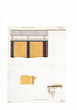
| Wall painting. South House Room 9 ... Marian Welker ... 87-403 87-403 Dirty Watercolor Paper Watercolor ... 1948 |
| South of Drain A ... ΝΝ-26 5056, 5057 ΝΝ 3011 SS 10061 Lot ΝΝ 637 ... 17 Jun 1947 ... South of Drain A |
| South of Wall A ... ΟΟ-12 2370, 2371 ΟΟ 1019 P 19972 ΟΟ 1014 P 19950 Section ΟΟ 348 ... 27 Apr 1949 ... South of Wall A |
http://agathe.gr/democracy/political_organization_of_attica.html Political Organization of Attica: Demes and Tribal Representation Each tribe was divided into three parts, and each third (trittys) was from one of the three regions of Attica, plain, coast, or hills ... On one side of each plaque the name of a tribe is written: ΛΕΟ for the tribe of Leontis, and ΕΡΕ for the tribe of Erechtheis. ... ΗΑΛΙΜΟΣ is the name of a deme. The tokens were cut before firing in the kiln and would have been reunited in the process of allotting the deme office. ... Found inside the remains of the South Stoa, this inscription is a record of the metronomoi, the inspectors of weights and measures, of whom Aristotle wrote in the Athenian Constitution (51.2): "There are ten metronomoi appointed by lot, five for the city and five for Piraeus. |
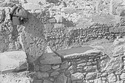
| Door sill in southern H house. South of a. Looking south ... AMS 1351 Horizontal (normal) ... Door sill in southern H house. South of a. Looking south. |
| Area South of Wall A ... ΟΟ-13 2424, 2425 ΟΟ:1949.0503:3 Lot ΟΟ 376 Lot ΟΟ 452 ... 3 May 1949 ... Area South of Wall A |
http://agathe.gr/democracy/theater.html Theater Western drama was an Athenian invention which developed late in the 6th century B.C. out of the festivals celebrated in honor of the god Dionysos. Originally held in the Agora, the plays were soon ... Originally held in the Agora, the plays were soon transferred to the South Slope of the Acropolis, where a theater holding close to 15,000 people was constructed. ... A male figure wearing the mask of a slave sits at the foot of the couch. ... He may be part of a set for a mythological comedy that parodied the story of Herakles and Auge. |
| Broken all around. Fragment of pan tile.
Inscription along edge: [Ο] CΕΠΙΦΑΝΟΥ.
Very coarse gritty clay, dark buff with intrusions. Creamy slip covers flat surfaces. South of Room A 1 of the Southwest ... 19 June 1969 ... Fragment of pan tile.
Inscription along edge: [Ο] CΕΠΙΦΑΝΟΥ.
... South of Room A 1 of the Southwest Bath, layer I. |
| Other. Area South of A; Poros Building Drain. Well ... ΟΟ-13 2430, 2431 ΟΟ:1949.0430:1 Lot ΟΟ 508 D 17:15 D 17:12 ... 3 May 1949 ... Area South of A; Poros Building Drain |
http://agathe.gr/democracy/the_ekklesia.html The Ekklesia (Citizens' Assembly) All Athenian citizens had the right to attend and vote in the Ekklesia, a full popular assembly which met about every 10 days. All decrees (psephismata) were ratified ... All decrees (psephismata) were ratified by the Ekklesia before becoming law. As a rule, the Ekklesia met at its own special meeting place known as the Pnyx, a large theater-shaped area set into the long ridge west of the Acropolis. ... In phase I (about 500 B.C.) the Pnyx utilized the natural slope of the hillside, but either political concerns or the exposure of the seating area to northeast winds made a reversal of the structure necessary. ... Two large stoas were begun but never finished on the south side of the Pnyx adjacent to the city wall. |
http://agathe.gr/guide/odeion_of_agrippa.html Odeion of Agrippa Late in the 1st century B.C. the Athenians were given money for a new marketplace by Caesar and Augustus, and the northern half of the old Agora square was filled with two new structures, ... Odeion of Agrippa Late in the 1st century B.C. the Athenians were given money for a new marketplace by Caesar and Augustus, and the northern half of the old Agora square was filled with two new structures, the Odeion of Agrippa and the Temple of Ares. ... Entry to the Odeion was either from the upper level of the Middle Stoa on the south or through a modest porch at ground level on the north (Fig. 53). ... It was rebuilt in the early 5th century A.D. as part of a sprawling complex, perhaps a palace, with numerous rooms, a bath, and several courtyards, which extended southward all the way across the old South Square (Fig. 55). |
http://agathe.gr/democracy/the_boule.html The Boule (The Senate) The Athenian legislature also included a deliberative body known as the Boule. It was made up of 500 members -- 50 from each of the 10 tribes -- who were chosen by lot and served ... Excavations have revealed the foundations of a nearly square building (23.30 m. ... Fragment of a marble basin, about 500 B.C. ... It was found just south of the foundations of the Old Bouleuterion. |
http://agathe.gr/guide/library_of_pantainos.html Library of Pantainos Lying partially under and behind the Late Roman wall are the remains of a building identified by its inscribed marble lintel block as the Library of Pantainos, dedicated to Athena ... It consists of a large square room and a paved courtyard, surrounded by three stoas that had shops behind their colonnades. ... The dedicator, Titus Flavius Pantainos, was the son of the head of a philosophical school and refers to himself as a priest of the philosophical muses. ... The northern stoa runs eastward, along the south side of a marble street that led in Roman times from the Agora to the Doric gateway of the market of Caesar and Augustus, also known as the Roman Agora. |
http://agathe.gr/overview/the_stoa_of_attalos.html The Stoa of Attalos The Stoa of Attalos was originally built by King Attalos II of Pergamon (159–138 B.C.), as a gift to the Athenians in appreciation of the time he spent in Athens studying under the ... The Stoa of Attalos The Stoa of Attalos was originally built by King Attalos II of Pergamon (159–138 B.C.), as a gift to the Athenians in appreciation of the time he spent in Athens studying under the philosopher Karneades. ... The finished south end of the stoa at the time of the dedication. ... Where possible, remains of the original building were incorporated: the north end, the southernmost shops, part of the south wall, and the south end of the outer steps. |
http://agathe.gr/guide/south_stoa_ii.html South Stoa II South Stoa II ran westward from the south end of the East Building, parallel to the Middle Stoa (Figs. 38, 41). Dating to the second half of the 2nd century B.C., it consisted of a single ... South Stoa II South Stoa II ran westward from the south end of the East Building, parallel to the Middle Stoa (Figs. 38, 41). Dating to the second half of the 2nd century B.C., it consisted of a single Doric colonnade of limestone, the superstructure reused from a building of the 4th century B.C. ... South Stoa I was put out of use by South Stoa II, and much of the earlier building was quarried away at the west to accommodate the lower floor levels of the South Square. |
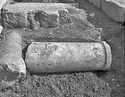
| a) Lower part with fillet at bottom. Covered with doodles.
b) Upper part with torus at top and flat band below it.
From East Building.
Blue marble. Found at S/9-17/7 (Fall 2016). a) Erected from original ... 1959 ... a) Lower part with fillet at bottom. ... a) Erected from original recumbent position inside East Building.
b) In situ to the south of fragment a), lying recumbent north-south below epistyle A 2850. |
| Floor north of Wall A, south of House E, looking south ... AMS south 1108 Horizontal (normal) ... 1 Aug 2010 ... Floor north of Wall A, south of House E, looking south. |
http://agathe.gr/guide/stoa_of_attalos.html Stoa of Attalos Lining the east side of the Agora square is the Stoa of Attalos (Fig. 47), built during the reign of Attalos II of Pergamon (159–138 B.C.), who studied in Athens under the philosopher Karneades ... The column capitals used upstairs for the inner colonnade are of an unusual type ("Pergamene"), a late adaptation of early Egyptian prototypes. ... Parts of the original building were left or incorporated at the south end, so the visitor can check the validity of the restoration. The reconstruction demonstrates the effectiveness of the stoa as the ideal architectural form for a public building in Greece: the colonnaded walkways provide light and fresh air for literally thousands of people, while protecting them from the intense sun of summer or the wind and rain of winter. |
| Central Part of South Cut A ... ΟΟ-18 3568, 3569 ΟΟ 1411 L 4669 Lot ΟΟ 604 Lot ΟΟ 609 Lot ΟΟ 587 Section ΟΟ 557 ... 26-27 Oct 1949 ... Central Part of South Cut A |
| West End of South Cut A ... ΟΟ-18 3570, 3571 ΟΟ 1407 P 20423 ΟΟ 1362 L 4654 ΟΟ 1368 MC 808 ΟΟ 1408 P 20424 ΟΟ 1409 P 20425 ΟΟ:1949.1025:14 Lot ΟΟ 574 Lot ΟΟ 575 ... 25 Oct 1949 ... West End of South Cut A |
|
|

.jpg.icon.jpg)
.jpg.icon.jpg)
.jpg.icon.jpg)

.jpg.icon.jpg)
.jpg.icon.jpg)
.jpg.icon.jpg)
