|
|
| Index. Pottery. Greek (other than Geometric Area). Hellenistic Pocket. Sherds Listed. Walls and Floors at 27-30/ΙΘ-ΚΒ. Wells. West Buildings. East Scarp and Walls in 28 ... Δ'-1 186, 187 ... Sherds Listed |
Pit in bedrock (disturbed child's grave?). No bones or ashes. No lots.
No coins listed. P 14520 was certainly from the north end, doubtless a grave offering; few sherds (first half of 5th century) came ... Late 6th - early 5th c. B.C ... No coins listed ... P 14520 was certainly from the north end, doubtless a grave offering; few sherds (first half of 5th century) came from the north end as well. |
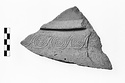
| Fragment from wall, broken all around.
Running spiral design with crosses in angles. Heavy projecting molding above.
Russet micaceous clay.
Note: the general context was late 4th c. B.C., but it included ... 25 August 1953 ... B.C., but it included a number of black figure sherds, e.g. late Kleinmeister cups. Other objects from here listed p. 2626 (XIV). |
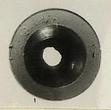
| Foot of a small black glazed kylix. Scratched line around base of stem. Concave outer face and outer part of underside reserved.
Scratched on the underside: This was listed here (and published as) C ... November 1949 ... This was listed here (and published as) C 18:11 but it is from a tin of deposit A 18-19:1 ... Ostrakon fill, from sherds. |
| Not completely excavated due to instability of chamber walls and water. Sherds of all periods - Greek, Roman and Byzantine - were found in it [nbp. 424].
Re-examined in 2010. Photos and notes on NB pages ... 10th c. A.D ... Not completely excavated due to instability of chamber walls and water. Sherds of all periods - Greek, Roman and Byzantine - were found in it [nbp. 424].
... Photos and notes on NB pages listed below.
2010 Final Report
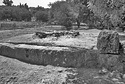
Cistern G 14:3 is plaster lined and built with stone, at least in its upper portion, and contains a series of footholds at the northeast and southwest. |
http://agathe.gr/publications/monographs.html Monographs Excavations in the civic and cultural center of classical Athens began in 1931 and have continued almost without interruption to the present day. The first Athenian Agora volumes presenting ... Within each part the monuments are arranged alphabetically and under each monument the texts are listed alphabetically by author with inscriptions at the end. ... With thousands of names from 700 years of administration listed, the dedications also provide a rich source for prosopographers. ... This book is a complete catalogue and discussion of these sherds. Chapter One discusses the history of ostracism in Athens with brief remarks about the “candidates.” |
|
|
.jpg.icon.jpg)