|
|
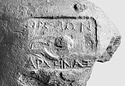
| Strigil. Finished 4th century B.C. fill under early Roman Agora floor. Θασίων
oil flask?
strigil
Ἄρχηναξ Leica ... 28 May 1951 ... 4th century B.C. fill under early Roman Agora floor. |
| Right end of rectangular stamp preserved; oar.
Joins with SS 11724. Martyr, cutting working floor to Agora floor. [Θασίων]
[oa]r
[Ναυσικύδ]ης Leica ... 21 May 1954 ... Martyr, cutting working floor to Agora floor. |
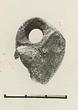
| Handle and immediately adjacent parts only preserved.
Handle pierced, with two grooves above, none below.
Glaze, orange-red over white slip. Cutting Agora floor, 4a. 4301-4302 Leica ... 15 May 1951 ... Cutting Agora floor, 4a. |
| Small fragment of discus and rim, plain so far as preserved.
Brownish-red glaze.
Buff clay. Agora floor. On strosis at level of euthynteria of Poros Monument Base. 4281 Leica ... 9 May 1951 ... Agora floor. On strosis at level of euthynteria of Poros Monument Base. |
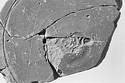
| Some of discus and rim preserved.
Discus, part of relief decoration, uncertain subject.
Rim, impressed lozenges.
Glaze, dull reddish-brown.
Type XXV of Corinth collection. Cutting Agora floor, 42. 4301-4302 ... 15 May 1951 ... Cutting Agora floor, 42. |
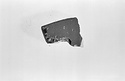
| From the wall of a large unglazed pot.
Incised outside:
Pinkish clay; buff surface. Cutting Agora floor, fill of second half of 5th. c. B.C. 4620 Leica PD 1133-6(D 40) ... 12 June 1951 ... Cutting Agora floor, fill of second half of 5th. c. |
| Three joining fragments preserve about half of foot and floor.
Foot stamp in center of floor.
Dark buff clay. Dull red glaze.
Sigillata.
Cf. P 4651, P 12424, P 14981. Cutting Agora floor of late ... 30 May 1951 ... Three joining fragments preserve about half of foot and floor.
Foot stamp in center of floor.
... Cutting Agora floor of late 2nd. c. |
Fragment; foot and part of floor.
Raised ring on floor. Heavy moulding beneath. Floor thickens to rim. Junction of foot and underside reserved ... Ca. 400 B.C. |
Rim and part of floor missing.
Deeply grooved resting surface; pointed underside. Sloping, nearly straight floor. Very deep scraped groove around depression and edge of floor. Rim not sharply angular ... Ca. 225? |
Part of foot, floor and wall.
Low ring foot, with concave moulding on inner face. Floor elaborately moulded beneath. Wall inset from floor. Reserved: center of underside ... 425-400 B.C. |
One-third of rim and floor and small part of foot restored.
Beveled resting surface; pointed underside. Sloping, nearly straight floor. Deep scraped groove around depression and edge of floor.
Fairly ... 250-225 |
Ring foot. Groove at junction of floor and rim on top. Two grooves on edge of rim on top. Thickening at center of floor and underside. Rouletting on floor. Unglazed ... 325-300 B.C. |
| Broken all around. About half of a foot-shaped stamp, broken lengthwise; a little of signature preserved:
Hard red clay and glaze; as Arretine.
Sigillata. Cutting Agora floor 2. 4301 Leica, 93-43-20 ... 15 May 1951 ... Cutting Agora floor 2. |
Rim and part of floor restored.
Narrow, rounded resting surface, worn but probably not reserved; pointed underside. Sloping, concave floor. Small depression. Glazed groove around depression and edge of ... 200-175 |
Three-fourths of rim and chips of floor missing.
Deeply grooved resting surface; pointed underside. Shallow body, flat floor. Broad, very shallow reserved groove around depression and edge of floor. Lustrous ... Ca. 310 |
Center of floor missing.
Ring foot. Groove on vertical face of rim and on outer edge of floor. Reserved: resting surface, junction of foot and under side and groove on outer edge of floor ... Ca. 400 B.C. |
About one-third of rim and floor restored.
Flat resting surface; pointed underside. Thin-walled plate with straight, sloping floor. Scraped groove around depression and edge of floor. Small depression ... 250-225 |
Half of rim restored.
Flat resting surface; nippled underside. Convex wall. Groove around edge of floor. Projecting rim slopes down to outside. Shiny black-to-red glaze on floor only.
For groove on floor ... Ca. 300 |
Stand and floor fragment.
Lower edge of stand moulded; two holes in wall. Cut through the center of the floor, a hole ca. 5.8 cm. in diameter. Heavy pink household fabric with buff surfacing; floor worn ... Context 4th c. B.C. |
Center of floor missing.
Ring foot. Rim offset from floor and thickened at edge. Pair of suspension holes in foot. Totally glazed ... 375-350 B.C. (?) |
|
|