|
|
Investigations within the Stoa of Zeus, the north part, various levels.
Notebook references: Stoa Trench E Layers IV and V, Stoa Pits A, B and C, and Layers I and II of area between back wall and retaining ... 5th c. B.C. |
Filling inside N room of Temple of Apollo, including directly under the foundations of the N room ... Ca. 350 B.C. and earlier |
Lower fill:
See Deposit G-I 11-12, where the finds are again listed.
Dug as Tholos Trench A, Layer VI, no finds.
Dug as Tholos Trench C, Layer IV+Va, A 756, A 757, P 10507.
Dug as Tholos Trench N, Layer ... 6th c. B.C. |
A strosis into which were set the foundations of house of 7th c. B.C. to SE of Tholos (=Building A and Trench W, layers h + i) ... 8th-7th c. B.C. |
From kiln in house of 7th c. B.C. (=Building A), to southeast of Tholos. Tholos Trench U, furnace ... 675-625 B.C. |
Pit in Tholos Trench V (below Layer e).
In plan it would seem to have been oval, though its east end is c/../ by the south wall of the North Archaic Home. Its N-S width is 1.25m, its E-W length is 1.40m ... 7th-early 6th c. B.C. |
| Kernos Pit #1 under Valerian Wall. P 30173-P 30174 added on May 7, 1973 ... 4th c. B.C. |
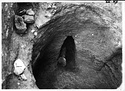
Well 4: Late Neolithic. Diameter ca. 1.15. No water ... Late Neolithic |
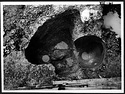
Well 8: Archaic. On the northwest slope of the Acropolis.
Depth from surface of rock, -16.10m.
Diameter top ca. 0.90; bottom ca 0.80m. Water level, ca. -9m ... Late 6th - early 5th c. B.C. |
Well 7: Late Neolithic
No water. Diam., top ca. 1.25x1.10, bottom ca. 1.10x0.80 Turkish disturbance (Lot ΟΑ 209) ... Late Neolithic |
Klepsydra: Filling in overflow channel = Channel A, North of Paved Bldg. (was T 26-27:1) Three layers, all containing a mixture of early material (LHIIIC and Protogeometric) with late Hellenistic and early ... Mid 1st. c. A.D. with later intrusions |
Klepsydra: Filling in antechamber, behind the parapet of the Klepsydra. Dated to the time of the rebuilding of the springhouse after the Sullan sack, but containing earlier material. Coins:
31 May 1938 ... Second quarter of 5th c. to middle of 1st c. B.C. |
Klepsydra: West Passage. Loose fill, and fill between boulders.
Cf. Hesperia 12 (1943), pp. 246-248 Probable P 12807 belongs in this deposit ... Late 2nd c. A.D. |
Well 3: archaic.
Diameter, top ca. 1; bottom ca. 0.90m. Water level just above ca. -10m Use filling including figured, black and plain wares.
Scanty dumped filling. Upper fill-Dark Age.
Middle fill/Bottom-early ... Last quarter of the 6th c. B.C. |
Byzantine Building: Room XV (loose black filling). Coins:
12 April 1933 #5-#15
13 April 1933 #1 ... Byzantine |
Pithos at NE corner of Byzantine Building. Coins:
20 May 1938 #1, #3 ... Late 11th-Early 12th c. A.D. |
Well 5: Late Neolithic. Diameter ca. 0.85m. No water ... Late Neolithic |
Well 6: archaic. Diameter 1.20m
Well on the northwest slope of the Acropolis, below the Klepsydra.
There are three fills, all thrown into the unfinished well at the same time (end of 6th- beginning of ... Last quarter of 6th c. B.C. |
Well 1: 5th c.
Shallow irregular shaft, probably originally dug in the Neolithic or the Middle Helladic period,but cleaned out and refilled with a filling composed of loosely thrown in dug bedrock and ... 5th c. B.C. |
Well 2: archaic. Diameter, top ca. 1.00; bottom ca. 0.90m.
Water level:ca -7.00m In the use filling, along with the plain water pots was a black-figured neck amphora assigned to the Edinburgh painter ... Last quarter of the 6th c. B.C. |
Kitchen Dump in Tholos Trench T ... 375-350 B.C. |
Filling on original floor of Primitive Bouleuterion = Building D.
Metroon pit η. H 10:2 is also contemporary with the construction of the building ... Third quarter 6th c. B.C. |
Beneath layer 11. "Despite its extreme irregularity this pit may be an early well, for it would seem definitely to be an artificial cutting and sherds were found in its lowest part," (Nbp. 2095).
Contemporary ... SubMycenaean |
Early Roman, late 1st c. A.D. with some later fragments. Coins:
31 May 1938 #1-#12
1 June 1938 #1-#5
2 June 1938 #1-#2 ... Late 1st c. B.C. |
Dealer's Dump at 10/Θ.
Debris filling beneath a modern house floor, apparently from the shop of an antiquities' dealer; otherwise unrelated to the Agora area. Compare similar dumps, K 14:1 and N 10:1 ... Modern context |
The pottery of the first six meters (containers 1-3 of 117 containers total) contains a good deal of unglazed early Byzantine along with very late Roman. Below this begins a great mass of Roman pottery ... 4th-6th c. A.D. POU |
A small square well at 37/ΚΑ (about 0.60x0.70m), on the north slope of the Areopagus. Curbed with rough stones.
Filling of a small shallow well which contained nothing from the POU and since no water was ... Ca. 350-320 B.C. |
Filling over bedrock. Coins:
26 May 1938 #7-#10
27 May 1938 #1
28 May 1938 #1 ... 1st-early 2nd c. A.D. |
Pit at 36/ΙΖ ... Late Hellenistic to Early Roman |
Coins:
19 May 1938 #1 (illegible)
20 May 1938 #3-#5, #12-#20 (Dump) ... 4th-6th c. A.D. |
| Cistern at 53/ΚΓ and channels. The pottery in the cistern and in the two channels was a thoroughly mixed lot of broken material from 5th c. B.C. to 4th c. A.D. and all seemed the same except the bottom ... 5th c. B.C.-4th c. A.D. |
Pit at 57/ΚΑ; small pit on the lower north slope of the Areopagus, measuring 1.05x0.80mx0.80m deep. There were traces of burning and a few bones in it, since none of them are recognizably human it is probably ... 480 - 470 B.C. |
Well at 55/ΚΕ
Period of Use dated to the last quarter of 5th c. B.C., Upper fill dated to the same (deposited later) in Agora XXX. Coins
1 April 1938 #10 ... Last quarter of 5th c. B.C. |
Well at 56/ΚΖ, just south of the south wall of the northern Late Roman Building ... Second half of 2nd c. - early 3rd c. A.D. |
| Roman Pithos at 38/ΛΔ. Cf. also Ψ734 (P 14037) from late pit at 41/ΛΓ ... Early to Middle Roman |
Deposit at 42/ΙΕ beside rubble wall under modern cellar wall ... 5th c. B.C. |
Manhole at 55/ΚΔ (Same system as O 19:2) ... 8 April 1938 |
Cistern at 63/ΛΑ (part of cistern system 63/ΛΑ-65/ΜΑ-70/ΛΣΤ, consisting of two chambers and a well). Roman upper fill with modern cesspool fill above. Channel finds: MC 517, SS 8078.
Only datable object ... 300-195 B.C. |
Roman Dump/Cesspool ... Second half 1st c.-1st half 2nd c. A.D. |
Cistern at 70/ΛΣΤ in the northeast slope of the Areopagus.
Part of system with two chambers and well. Homogeneous fill.
13 stamped amphora handles. Latest lamp type 46 B. N 72206 (Ω-344), picked up near ... Second half of 3rd c. - Early 2nd c. B.C. |
Well at 67/ΛΓ on the northeast slope of the Areopagus. Connected with the same cistern system as O 20:2.
Dug as several fills but probably a continuous accumulation Coin
28 May 1938 #1 (?) Illegible N ... 300-250 B.C. |
Hole at 65/ΚΔ; small cutting in bedrock with scanty pottery ... 450-400 B.C. |
Patch of burned filling at 66-67/ΚΘ-Λ (or Λ-ΛΑ) Coin
18 May 1938 #10 P 34428 added from Lot Ω 102 ... Early 5 c. B.C. (?) |
| Disturbed pyre dispersed in fill of Room 5, House D.
Pyre pots in very fragmentary condition were noticed by Barbara Tsakirgis in later analysis of pottery that had been excavated in 1938; no mention of ... 14 June 1938 |
Well at 8/ΙΑ-ΙΒ, beneath the north colonnade of the Square Peristyle, just west of the north end of the Stoa of Attalos. Quite uniform fill. Diameter 1.15m. No P.O.U. Coins:
4 April 1938 #39 ... 650-600 B.C.
5th c. B.C. |
Well at 19/ΚΔ, beneath the west colonnade of the Square Market Building in the northeast corner of the Agora. Diameter ca. 1.25m. Water level ca. -3.50m. The construction of the well was rather careless, ... Ca. 580-560 B.C. |
Well at 22/ΚΓ. Diameter 1.05m Coins:
7 June 1938 #7-#10 ... Early Byzantine |
Well at 24/ΝΒ-ΝΓ ... 18-19 April 1938 |
Well at 29/ΛΕ, to the SE of the market square, west of the Panathenaic Way.
Circular shaft, caved in at mouth. Diameter 1.20m. Diameter narrows to 0.50m at bottom of shaft, which is slightly concave. No ... Late 8th century B.C. |
South Tunnel: Bone Factory. Starts at 4-6/Μ and runs south to well. Coin
14 March 1938 #33 Lot ΑΑ 19, does it belong here? ... Second half of 2nd c. A.D. |
Cistern at 6/ΛΓ.
Hellenistic lower fill, with mixed Hellenistic and late Roman fill above, and Byzantine fill in mouth. Coins
1 June 1938 #1-#8
2 June 1938 #1-#6
3 June 1938 #1-#3
4 June 1938 #1-#2
6 June ... 2nd century, with Byzantine disturbance |
Cistern at 17-18/ΛΑ (Coroplasts' Dump) outside the market square to the southeast, west of the Panathenaic Way.
Upper and lower fill distinguished during excavation, but material from both appears to ... To ca. 330-320 B.C. |
Rodney S. Young ... (E.L. Smithson: Grave XXXVI:PG). Early fill over bedrock. No remains.
Two fragmentary unburned vases were found together on bedrock, beneath Roman and Byzantine fill. Disturbed earth over bedrock for several ... Early Protogeometric |
Pit at 18-20/Λ-ΛΓ.
The cistern S 19:3 and the well S 19:8, together with a Roman well, S 19:1, had collapsed to form a large pit S 19:5. The upper part of the pit was dug to a depth of ca. -8m as deposit ... 7-8 April 1938
28 April-26 May 1938 |
Well at 9/ΛΔ, left unfinished. Coins
27 May 1938 #1 (sand at top) M.C. suggests date as second half of 6th c. (March 1956), p. 1052.
No containers ... 550-500 A.D. |
Well at 18/ΜΓ, on the lower north slope of the Acropolis, under the course of the later Panathenaic Way, west of the Archaic Building.
Diameter 0.97m. Water level 8m.
At the mouth of the well and to a ... Late 8th to 675 B.C. |
Well at 19/Λ.
The bottom of this well contained a considerable quantity of dug bedrock which had fallen in before the well came into use; over this was a fill with oinochoae representing the POU. The presence ... 340-325 B.C. |
Well at 5/ΚΘ. Digging abandoned at -7.20m for fear of collapse.
Upper 50cm, fill in broken in mouth, very late Roman (4th-7th. c. A.D.)
Fill below 50cm to 6.50mL late roman with some earlier material (from ... 4th-7th century A.D. |
Kernos Pit #2 at 33/ΛΑ. P 30175-P 30186 (ΙΙ 635-ΙΙ 646) added on 7 May 1973 ... Early 4th c. B.C. |
Lower fill may be original. Part of North side cut away by modern bothros wall. Fragments of Pilgrim Jug of Grey Ware, related to Turkish Grey Ware? ... 12th or 13th c. A.D. |
Well C - Passage, belongs with II - Brick Shaft. All dumped fills. No objects catalogued from Well C of section ΟΑ. One object (I 5422) catalogued from modern fill in shaft, one from dump (I 5545). Coins: ... 2nd c. A.D.- Byzantine |
Dumped fill in shaft. Estimated Grid ... Byzantine |
Well East of Circular Building, at 25/ΙΗ.
Well dug originally in 5th c. B.C. and probably had POU fill. In 2nd c. A.D. the shaft was intersected by a horizontal vaulted brick tunnel belonging to the Brick ... 5th c. B.C.(?) |
Trial cut at 26/ΙΣΤ-ΙΖ, Layer I; Circular Building, 22m south of Eleusinion. P 30171, P 30172, L 5818 added on 7 May 1973 ... 4th c. B.C. |
Pithos at 38/ΚΣΤ Coins:
9 February 1938 #6 (disintegrated) ... 9-16 February 1938 |
Investigations in the Hellenistic Metroon, various levels. Stoa Pits A, B, C, D, E, F, H and I (various layers).
Locations include:
SW corner of Primitive Bouleuterion; from contemporary filling alongside ... 8th-6th c. B.C. |
A pit, perhaps a well, extending beneath the foundations of [Building D, the Primitive Bouleuterion] the Hellenistic Metroon. Not completely dug due to its position. A dumped filling so far as dug, apparently ... Ca. 575-525 B.C. |
A well in room A of the Archaic House. Well with very irregular outline, cut down in the bedrock some 10m NE of the Tholos. Its filling yielded a handful of plain potsherds and the oinochoe P 13256 of ... Sub-Mycenaean(?) |
Dug as Tholos Trench V, Room E, burnt filling of plundered wall trench of S wall of court. See also lot Ζ 484 ... Late 6th c. B.C. |
Filling of Middle Drain (Tr. H+F in Section Ζ). Sand and gravel filling of the old course of the west branch of the Great Drain, a large (ca. 1.00m. deep and 1.30m. wide) underground channel in the area ... 150-100 B.C. |
| Rubbish Dump in mouth of abandoned well in Tholos Trench F, Kitchen. Filled with ash, charcoal, broken pottery, roof tiles.
Also from Trench L.
13 March 2014 by Ann Steiner
The deposit has four components ... Ca. 425-400 B.C. |
Various layers and dates, primarily from Tholos Tr. L (area of early road drain), Q (area of road) and V (area of road).
Also Room G of Trench V listed with G-H 11-12 probably has road layers (no finds, ... 8th c.-ca. 480 B.C. |
Archaic house with Distyle Porch (= Building J) in southeast of section: packing beneath floors (Layers a and b of Tholos Trench S.Layer b=Beneath original floor dated to ca. 500 B.C.
Layer a=Between original ... 6th-early 5th c. B.C. |
See also H 12:1. Coins:
22 February 1938 #2-#37 ... 3rd-2nd c. B.C. |
Well at SE corner of Court of Late Roman Building (Trench C). Estimated Grid ... 12th c. A.D. |
Pit in Road at 52/ΚΖ-ΚΗ Coins:
11 March 1938 #10-#17
12 March 1938 #1-#6, #88-#93
14 March 1938 #8-#10
15 March 1938 #21-#23 Herulian? ... Roman |
Well dug through cistern at 64/Γ. Seems to have been stratified; four fills recorded but here treated as one as divisions are rather "arbitrary".
Agora V, p. 126: Constructed in late 1st c.; use filling ... 3rd c. A.D. POU (before 267 A.D.) |
Dumped fillings thrown in during second quarter of 1st c. B.C. containing mostly debris resulting from Sulla's sack in 86 B.C.
Agora XXIX, p. 464: Four fills distinguished during excavations ... but seemingly ... Late 2nd c. and early 1st c. B.C. POU; 110-75 B.C. |
Well at 74/Ι, on the lower north slope of the Areopagus.
Use fill from early 1st to 3rd c. A.D.
Dump fill from 4th c. A.D. Coins
9 April 1938 #2
9 May 1938 #1 Container 20 (lost) p. 1529 ... 1st c. to 3d c. A.D. |
Cistern at 60/ΙΕ; bell-shaped cistern with a channel 1.65m high and 4.60m long, leading to a dead end against bedrock. This channel runs north with a slight curve to the east and looks as though it was ... Second half of 3rd c. B.C.-Early 2nd c. B.C. |
At 67/ΙΗ, at the northeast slope of the Areopagus.
Cistern with drawshaft, 4.60m deep. The drawshaft had been cleared to bottom in the eighteenth or nineteenth century, and some of the fill in the main ... Most second half of 3rd c. B.C. |
| Margaret Crosby ... Grave, disturbed.
Rectangular cutting in bedrock 1.70m long and 0.60m deep. The north half was cut away by a modern cellar wall and only 0.20-0.10m of fill was left. A the bottom there was a thick layer ... 510 - 490 B.C. |
East-West Street (63-64/ΙΣΤ, etc.)
Packing in line of ancient east-west street along Areopagus north slopes.
Lower fills, predominantly late 6th-early 5th c. B.C.
Middle fills, last quarter of the 5th ... Various levels and dates |
Pocket in bedrock 35/Ε. The filling consisting chiefly of coarse ware and roof tiles; some of the material Archaic, but the deposit as late as the mid-5th c. B.C ... Ca. 500-450 B.C. |
Well at 32/ΣΤ ... Late 6th c. B.C. |
| Well at 52/Ι, on the lower northeast slopes of the Areopagus. It was cut down and re-used in the late Roman period, in connection with the water channel. Use fill of 1st to early 2nd c.
Dump fill 5th to ... Early to Late Roman |
| Construction filling of well N 20:3 which was dug through this cistern; a few later sherds at upper levels may result from late repairs to well tiling. Coins:
6 April 1938 #14-#15
8 April 1938 #4 Some ... Second half 1st c. A.D. |
It may perhaps be assumed that in the 5th c. the Romans cleaned the well to 25.30m., thus removing 2nd c. and subsequent fill, and then began to reuse the shaft. Coins
20 May 1938 #6
21 May 1938 #1
25 ... POU 1st c. and 5th-6th c. A.D. |
Well at 30/ΛΣΤ Coins (none useful)
25 May 1938 #3-#6
26 May 1938 #3-#4 ... Early 3rd cent and of 4th-6th cent. A.D. |
Tile well at 52/ΛΣΤ, in the northern late Roman building in the room with the apse. The top was covered by a large stone, and the well had never been filled after the last period of use. water stood to ... Late 1st (?) cent.-early 3rd to 6th cent. |
| Osteotheke. (Group N). Coin
7 May 1938 #7 83/ΜΔ (83-84/ΜΓ-ΜΕ: If I judge from p. 811, this grid would be the concrete retaining wall). Somebody else wrote the following grid on page 878: 83-85/ΜΓ-ΜΣΤ ... Early 7th cent. |
Well at 19/ΝΒ, on the lower north slope of the Areopagus ... 550-525 B.C. |
Well at 15/ΝΒ Coin
18 April 1938 #1 ... 18-20 April 1938 |
Well cut through cistern at 51/ΙΑ (merged with R 17:1); well and cistern filled at one time ... 5th c. A.D. |
Well at 56/ΚΣΤ. Diameter 1.05m. Found in 18 April 1938.
Dug in 3 May 1938 ... 600-575 B.C. |
Tile-curbed well; it drew water from Poros Aqueduct. Coins
8 June 1938 #1
14 June 1938 #2 (where is this coin? 30 July 1976 p. 1137). First mentioned as Well at 46/ΙΗ ... 8-14 June 1938 |
| Grave (?). Identified as pyre by SIR.
Pyre pots dispersed in fill over a pebble floor, with pottery ranging from the 5th c. B.C. to 3rd c. A.D. (lot ΑΑ 168), and lying directly below modern fill. No burning ... 400-350 B.C. |
| Small pit (in Layer I) = Grave ("Pyre") Identified as pyre by SIR.
Pottery and burning ("pit filled with black") in pit slightly west of Panathenaic Road, dug into layer I (lot AA 180, much earlier 6th ... 275-250 B.C. |
Cistern at 43/ΙΣΤ, outside the southeast corner of the market square, slightly west of the Panathenaic way. A small neat plaster-lined cistern filled with material evidently all dumped at the same time ... Ca. 375-350 B.C. |
|
|