|
|
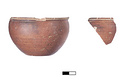
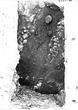
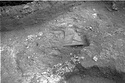
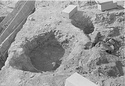
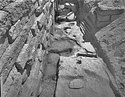
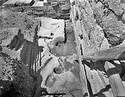
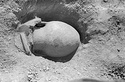
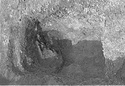
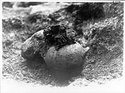
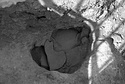
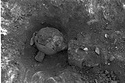
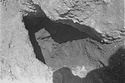
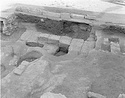
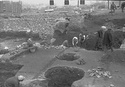
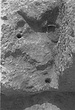
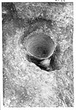
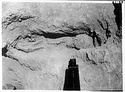
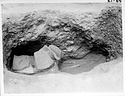
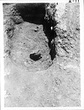
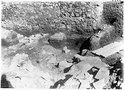
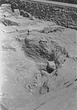
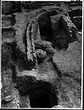
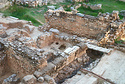
Apparently an unsuccessful well. P 37220-P 37224 (Κ 4519-Κ 4523) Catalogued on October 2012 (JPK, SS)
P 37741-P 37742 (Κ 4549-Κ 4550) Catalogued on April 2017 (BL) ... Protogeometric ... Protogeometric |
Located just north of the stepped retaining wall between the Great Drain and the Poros Monument (Propylon).
Short period of use; dumped filling above, mostly cemetery debris ... Early Protogeometric ... Early Protogeometric |
E.L. Smithson: Group H: Collapsed well west of the Great Drain.
First described as 105-107/Protogeometric Pit ... Protogeometric ... Protogeometric Pit-Well |
Well at 15/ΜΓ (Well E: PG, ELS). Supplementary filling around its top Small partly glazed one handler
Fragment of black figured kylix
Small protogemetric cup
Fragment of skyphos
Rim fragment of Large Open ... Protogeometric-6th - 5th c. B.C ... Small partly glazed one handler
Fragment of black figured kylix
Small protogemetric cup
Fragment of skyphos
Rim fragment of Large Open Vase
Protogeometric Oinochoe
Handmade wide-mouthed amphora
Fragmentary oinochoe
Hnadmade pitcher x3
Vertibrae strung on rib bone
Conical foot
Amphora (?) |
| David Scahill ... Protogeometric/Early Geometric well under floors in Room 1, Classical Building II, on north side of south ashlar wall. See J 3:9 for the burial within this well.
Cf. Hesperia Suppl. 50 (2018), p. 106, ... 27 June 2001
17 July 2002 ... Protogeometric/Early Geometric well under floors in Room 1, Classical Building II, on north side of south ashlar wall. |
| E.D. Townsend Vermeule ... Protogeometric Grave no. 2 at North of Temple of Ares (Grave XXXVII). Rectangular stone-lined pit in filling of Mycenaean chamber tomb (J 7:2); the skeleton of a boy. Cf. P 21275 which is from the "preliminary ... Middle Protogeometric ... Protogeometric Grave no. 2 at North of Temple of Ares (Grave XXXVII). ... P 21275 which is from the "preliminary exploration" of protogeometric burial on the north side of the Temple of Ares, not within this grave. |
E.D. Townsend Vermeule ... PG grave no. 1. Mycenaean Chamber tomb under Temple of Ares. No remains, but cf. P 21275. Cf. under J 7:2 (PG grave no. 1), Agora XIII, pp. 183-190 ... Protogeometric ... Protogeometric |
| Rodney S. Young ... Grave 2 in notebook (E.L. Smithson: Grave XV: PG). Urn cremation (trench-and-hole), adult female.
JP
It consists of a roughly rectangular pit or trench cut into bedrock to a depth of 0.35m., measuring ... Late Protogeometric ... Late Protogeometric |
| Rodney S. Young ... Grave 7 in notebook (E.L. Smithson: Grave XXI: PG). Bones discarded. Disturbed and damaged cremation (originally trench-and-hole), the east end cut away, probably contained the burial urn.
JP
It consisted ... Late Protogeometric ... Late Protogeometric |
| Homer A. Thompson ... PG grave north of Stoa Pier 19 (Grave 6). In some records as Grave XLIII.
Unlined rectangular pit cut into a shallow depression in bedrock that was formed by the collapse of the roof of Mycenaean Chamber ... Developed Protogeometric ... Developed Protogeometric |
Eugene Vanderpool Homer A. Thompson ... Mycenaean burial (no offerings) in NW corner of Stoa Terrace (original north end).
" It consisted merely of an adult skeleton lying in an extended position with head to east and the left leg slightly flexed ... Mycenaean or Protogeometric ... Although the exact form of the grave was not determined- the tomb looks more like a partially-lined simple pit grave than a true cist-and despite the fact that no grave goods were found, the tomb was designated Mycenaean, although the excavator always thought of it as Protogeometric."
According to Papadopoulos "a Mycenaean date for the tomb cannot be established and remains a possibility, and a Protogeometric date, on the basis of the evidence, cannot be categorically dismissed."
|
Well a in west part of Odeion Cavea, probably unfinished. The dumped fill mostly potters' refuse including test pieces.
Well D. Diameter ca. 0.90m ... Early Protogeometric ... Early Protogeometric |
| Homer A. Thompson ... PG grave to NW of Pier 19 (Grave 4).
It consisted of a rectangular pit, oriented north-south, cut into bedrock. Only the lowest part of the tomb pit was preserved; the upper part was cut away in the Classical ... Earlier-Developed Protogeometric ... Earlier-Developed Protogeometric |
| Homer A. Thompson ... PG grave to NW of Stoa Pier 19 (Tomb no. 5 in notebook). In some records as Grave XLII.
It consisted of a rectangular pit, oriented north-south, cut into bedrock. The sides of the pit were lined and the ... Earlier-Developed Protogeometric ... Earlier-Developed Protogeometric |
Klepsydra: Filling in overflow channel = Channel A, North of Paved Bldg. (was T 26-27:1) Three layers, all containing a mixture of early material (LHIIIC and Protogeometric) with late Hellenistic and early ... Mid 1st. c. A.D. with later intrusions ... Three layers, all containing a mixture of early material (LHIIIC and Protogeometric) with late Hellenistic and early Roman, though in differing proportions. |
Well L: PG, ELS. Includes a displaced grave (K 12:2 bis). The pottery appears less consistent than that in the pit at 70/ΜΕ. Depth of well 6.25m. below the top of wall B. PD 2780 ... Protogeometric ... Protogeometric |
| Rodney S. Young ... Grave 9 (E.L. Smithson: Grave XVIII: PG). Bones discarded.
JP
Roughly circular pit, about 0.59m in diameter, cut into soft bedrock to a depth of 0.42m. Tomb encountered only about 0.12-0.15m below the ... Protogeometric ... Protogeometric |
S.W. of Archaic Temple : Pocket in bedrock. The pocket was cut through a red clay floor. 71 sherds.
Objects: loom weights; lamp.
Early ware: Gray Minyan; Mycenaean; Protogeometric-Late Geometric; Subgeometric; ... Early 6th c. B.C. and earlier ... Early ware: Gray Minyan; Mycenaean; Protogeometric-Late Geometric; Subgeometric; mottled glaze.
|
Cleaning over bedrock along west side of Kolonos Agoraios. Context Protogeometric-Geometric disturbed. Objects from ΠΘ 24-28/ΝΗ-ΞΔ are added because P 8141 is published in Hesp. Suppl. 20, p. 153 as this ... To 2nd. c. B.C ... Context Protogeometric-Geometric disturbed. |
| Rebecca Wood Robinson ... Damaged Protogeometric grave (E.L. Smithson: Grave XL).
Small corner only preserved, cut in part into the filling of the Submycenaean Grave J 9:2. In this corner, and spilling into the disturbed upper ... Late Protogeometric ... Late Protogeometric |
| Dorothy Burr Thompson ... Grave 1. Urn cremation (trench-and-hole), adult female 30-40 years old).
Mentioned as Grave XVII in Deposit list.
Consisted of a roughly circular pit, approximately 0.30-0.40m in diameter, cut into ... Late Protogeometric ... Late Protogeometric |
Well at 69/ΚΔ (Well G: PG, ELS).
Diameter 0.75m. Fairly but not perfectly evenly cut; no foot-holds in sides. Very little water gathered. The well produced a small amount of pottery, the bulk of it coming ... Protogeometric ... Protogeometric |
Alison Frantz ... Vases from "Child's Grave" disturbed by the Late Hellenistic cistern. No remains. JP
But see P 27110 ... Late Protogeometric/Early Geometric I ... Late Protogeometric/Early Geometric I |
| Dorothy Burr Thompson ... Grave 11 in notebook (E.L. Smithson: Grave XII: PG). Bones discarded. Burned deposit in a rectangular trench in bedrock.
JP ... Late Protogeometric ... Late Protogeometric |
| Dorothy Burr Thompson ... Grave 12 in notebook. Cut in bedrock. (E.L. Smithson: Grave VII: PG) Few bones (discarded). Rectangular cutting in bedrock.
JP ... Early Protogeometric ... Early Protogeometric |
| Rodney S. Young ... Grave 3 in notebook (E.L. Smithson: Grave XIII: PG). Urn cremation (trench-and-hole), adult female.
JP
Rectangular trench, measuring approximately 1.10x0.45m, but which may have been larger, cut through ... Late Protogeometric ... Late Protogeometric |
| Rodney S. Young ... Grave 4 in notebook (E.L. Smithson: Grave XX: PG). Bones discarded. Grave of older child.
JP
Rectangular pit, cut into bedrock to a depth of 0.26m, approximately 0.97m long and 0.36m wide. Tomb oriented ... Late Protogeometric ... Late Protogeometric |
| Rodney S. Young ... Grave 6 in notebook (E.L. Smithson: Grave XXII: PG). Bones discarded. Urn cremation (trench-and-hole).
JP
Roughly rectangular trench cut through hard earth into bedrock to a depth of about 0.35m, approximately ... Late Protogeometric ... Late Protogeometric |
| Rodney S. Young ... Grave 19 (In some records as Grave VIII). No remains, no burned matter or traces of burning.
JP
A small cutting with a single offering. The pit may have been for a simple child/infant inhumation, with ... Early Protogeometric ... Early Protogeometric |
| James H. Oliver ... (E.L. Smithson: Grave IX: PG). Two children's skeletons one on top of the other. Cf. PD 329 for PD 430 for second skeleton, same deposit.
PG grave about 25m. SW of Cistern A at 46/ΜΔ.
[In some records, ... Developed Protogeometric ... Developed Protogeometric |
| Eugene Vanderpool ... Early Geometric grave (E.L. Smithson: Grave XXXIX) ... Late Protogeometric ... Late Protogeometric |
Well K: PG, ELS ... Protogeometric ... Protogeometric |
| Well South of Soft Yellow Poros Foundation. Dumped filling of a collapsed well, that, due to hazardous conditions, could not be cleared below- 2.50m. The well was partly cut on the east side by a Byzantine ... Protogeometric-Early Geometric II, ca. 850 B.C ... Protogeometric-Early Geometric II, ca. 850 B.C. |
| Well I: PG, ELS. The collapsed well north of the Middle Stoa Terrace. This pit, or shallow well, into which a Turkish storage pit lined with stones was set, produced purely Proto-Geometric pottery and ... Protogeometric ... Protogeometric |
Dorothy B. Thompson A.W. Parsons ... Displaced grave in well K 12:2. Adult female inhumation (AA 290). As Deposit K 12:2a in Agora XXXVI ... "Submycenaean"/Early Protogeometric ... "Submycenaean"/Early Protogeometric |
| Eugene Vanderpool ... Grave (E.L. Smithson: Grave XXXVIII: PG)
Shallow oval cutting in natural bedrock lintel of Mycenaean chamber tomb O 7:5, containing a large two-handled cooking pot. Within, the unburned bones of a foetal ... Developed-Later Protogeometric ... Developed-Later Protogeometric |
| John Camp ... Protogeometric Grave about 0.60m to the southeast of T 15:2.
Unlined roughly rectangular-elliptical pit, oriented north-south, neatly cut into bedrock to a depth of 0.70m, with rounded corners. The pit ... Early-Developed Protogeometric ... Early-Developed Protogeometric |
N-S Cut on 20m. line (area of Road, area of Stoa, area N of Stoa)
various levels and dates over the three areas.
Investigations to the northwest of the market square in the area of the road that bordered ... Protogeometric to Late Roman ... Area North of Stoa:
Habitation earth above gravel: gray minyan, protogeometric
See also cut on 50m. line (E-F 2-3:2). |
R. Ross Holloway ... Protogeometric Grave in Koletti Garden. Male inhumation.
Tomb first encountered and partially damaged by workmen who were digging a cess pit for the restored Koletti House on Polygnotos street. The tomb ... "Submycenaean"/Early Protogeometric ... "Submycenaean"/Early Protogeometric |
| John Camp ... Protogeometric grave (female inhumation) located about 0.60m northwest of T 15:1. It consisted of a roughly rectangular pit, with the corners slightly rounded, oriented approximately north-south. The pit ... "Submycenaean"/Early Protogeometric ... "Submycenaean"/Early Protogeometric |
Rodney S. Young ... (E.L. Smithson: Grave XXXVI:PG). Early fill over bedrock. No remains.
Two fragmentary unburned vases were found together on bedrock, beneath Roman and Byzantine fill. Disturbed earth over bedrock for several ... Early Protogeometric ... Early Protogeometric |
Eugene Vanderpool ... Disturbed burial: Pocket in bedrock (Grave 11: PG). In some records as Grave XI. No remains. No cutting or traces of burning nearby
The coin listed here was found "cleaning bedrock", presumably at the ... Developed to Late Protogeometric ... Developed to Late Protogeometric |
| Rodney S. Young ... Grave 20 (E.L. Smithson: Grave X: PG). Bones discarded. Pit tomb, inhumation (on bier or in coffin?), perhaps of a child. Little ash and carbon in the filling, but the grave offerings were unburned.
JP ... Developed Protogeometric ... Developed Protogeometric |
Well east of Geometric Grave. The upper part collapsed into a pit, cut into by Middle Geometric grave I 18:1 and by a Byzantine wall. Some evidence for period of use; little pottery. At the top a few Geometric ... Early Protogeometric ... Early Protogeometric |
| Dorothy Burr Thompson ... Grave 15 in notebook. Burial of child (E.L. Smithson: Grave XIV: PG). Single bone. Nb. says: few bones.
Skull fragment, few ribs and fingers (bones discarded). Negs. KK 24 and KK 30 431 ... Developed to Late Protogeometric ... Developed to Late Protogeometric |
Disturbed "Votive Deposit" at 27-28/ΙΖ-ΙΗ
Reddish fill in five circular cutting in bedrock, considered by the excavators to have been one deposit. Fill was disturbed in later periods, probably by construction ... 7th c. B.C, with intrusions ... Early ware:
Gray Minyan; Mycenaean; Protogeometric fehlbrant; ray-based kotyle, Corinthianizing; Protogeometric- Late Geometric; Protoattic.
|
| Eugene Vanderpool ... Grave (E.L. Smithson: Grave XVI: PG). Bones discarded.
Only the lower portion of the urn-hole was preserved in bedrock, roughly oval in outline, with a maximum preserved width at the top of 0.70m narrowing ... Late Protogeometric/Early Geometric I ... Late Protogeometric/Early Geometric I |
| Eugene Vanderpool ... Grave (E.L. Smithson: Grave III: SM).
The close proximity and similarity of this tomb and tomb M 16-17:1 strongly suggests that they were intentionally laid out in relation to one another and were contemporary ... Late Mycenaean/Submycenaean-Earliest Protogeometric ... Late Mycenaean/Submycenaean-Earliest Protogeometric |
| Eugene Vanderpool ... Grave (E.L. Smithson: Grave II: SM).
Unlined trench, roughly the size of the deceased, cut into bedrock to a depth of just over 1.50m. Oriented north-south, the tomb pit measured 1.69m in length (length ... Late Mycenaean/Submycenaean-Earliest Protogeometric ... Late Mycenaean/Submycenaean-Earliest Protogeometric |
| Dorothy Burr Thompson ... Grave 28 in notebook. (E.L. Smithson: Grave V: SM). No remains, probable child inhumation. Just one cup for offering (P 7693). Negs. X-77, X-78 ... Final Mycenaean/Submycenaean/Early Protogeometric ... Final Mycenaean/Submycenaean/Early Protogeometric |
PG Well opposite ΣΑ Pier 18 Container 1, chiefly 6th c. B.C. discarded. Estimated Grid ... Protogeometric-Early Geometric ... Protogeometric-Early Geometric |
North of Eleusinion: Loose fill in pit outside Roman Building. 14 inventoried items, 22 objects, 325 sherds.
Objects : terracottas; handmade object; large figurine; lamps.
Early ware : Gray Minyan; Mycenaean; ... 6th c. B.C. and earlier ... Early ware : Gray Minyan; Mycenaean; Protogeometric-Late geometric; imitation Corinthian.
|
Fill in abandoned cistern, lower terrace adjacent yo the Eleusinion on the north.
Uncatalogued material: 189 sherds, 4 objects. Many kernoi fragments.
Objects : loom weights; lamp.
Early ware : Gray Minyan; ... Mid. 4th c. B.C ... Early ware : Gray Minyan; Protogeometric-late Geometric.
|
| Dorothy Burr Thompson ... Grave 2. Urn cremation (trench-and-hole). In some records as XXIII.
Variously labeled as grid 7/Δ, 7/Γ and 7/Γ-Δ.
Rectangular pyre trench cut through earth into bedrock, with only the lowest 0.04m surviving ... Transitional Late Protogeometric/Early Geometric I ... Transitional Late Protogeometric/Early Geometric I |
| Eugene Vanderpool ... "Submycenaean" grave into Mycenaean gully.
Rectangular trench cut partly in bedrock, partly through Mycenaean domestic filling. No pottery catalogued ... Late Helladic IIIC-Early Protogeometric ... Late Helladic IIIC-Early Protogeometric |
Trial trench IV. A thin strip of undisturbed fill excavated on the north side of the upper terrace, just inside the line of the Archaic peribolos wall.
Probably this small patch of clay represents part ... Protoattic ... Early Ware: Geometric; Protogeometric-Late Geometric; Protoattic.
|
| Eugene Vanderpool ... E.L. Smithson: Grave XXXV. Adult female inhumation. Deposit summary and notebook write at 31/Θ-I ... Final Mycenaean/Submycenaean-Early Protogeometric ... Final Mycenaean/Submycenaean-Early Protogeometric |
| Eugene Vanderpool ... Infant grave near Phaidon street cistern. No offerings.
Roughly rectangular, almost elliptical cutting in bedrock, measuring 0.70m long, 0.35m wide, and 0.40m deep, oriented south-southwest to north-northeast ... Late Helladic III C/Early Protogeometric (date uncertain) ... Late Helladic III C/Early Protogeometric (date uncertain) |
North of Eleusinion: Fill in Room 3 of Roman Building. 614 sherds (6 miniature shapes, 20 intrusive sherds).
Objects : terracottas; loom weights; spindle whorls; disks; handmade tray; lamps.
Early ware ... First half of 6th c. B.C.-Mixed Fill to ca. 480 B.C ... Early ware : Gray Minyan; Mycenaean; Protogeometric-Late Geometric; imitation Corinthian.
|
| Marcie Handler ... Cist grave for two infants. The grave was cut into a sterile rocky layer on its southern and western sides, and a sterile fill layer on its northern and eastern sides. No obvious grave marker was present, ... Early Iron Age ... Date
The two vessels found in Cist Grave J 2:31 provide two different dates: the amphoriskos appears to belong to the transition from Submycenaean to Early Protogeometric, while the one-handled cup seems to belong to the Middle Protogeometric period (or possibly the transition between Early and Middle Protogeometric). ... We might imagine, instead, that the two children died and were interred together toward the beginning of the Middle Protogeometric (ca. 1000 B.C.), with one newly acquired vessel and one vessel that had been in the family’s possession for a generation or two. |
| Rodney S. Young ... Disturbed burial (no remains), probably an infant pot inhumation.
Inhumation grave 17 in notebook. (E.L. Smithson: Grave XIX: PG).
Shallow oval cutting containing a banded amphora on its side, mouth ... LPG ... Both pots Protogeometric, the amphora probably intrusive in the 4th. c. |
| Eugene Vanderpool ... Grave (adult female). (In some records as Grave XXXI).
The tomb was partly destroyed in antiquity; there are sherds of all periods down to Late Roman (and later) note din the fill immediately above it ... Middle Geometric I ... The cinerary urn, probably once stood in a shallow sinking a little in from the northwest end (cf. trench-and-hole). the cutting itself proved to be an enlargement of the mouth of the filled in Protogeometric well M 17:5. ... Excavating the green clayey earth below the tomb, largely redeposited and decomposed bedrock, the excavator quickly noted Protogeometric sherds, while the cutting itself for the well rounded out to a diameter of ca. 0.75m towards the bottom, slightly greater towards the top.
|
| David Scahill ... Below packed clay floors in Room 2 of Classical Building II; bordered on east and south sides by polygonal cross wall and back wall extension for Classical Building. Late Roman wall and drain installation ... LHIII A:1 ... Loose fill of stones and earth with large number of Geometric sherds ranging from Protogeometric to late Geometric in date, from top of cutting extending down into layer of tomb contents. |
| Rodney S. Young ... Grave 8 in notebook. Bones discarded. Fragments of an iron pin found on the chest and a fragment of a Protogeometric krater base found beside the body were not inventoried.
JP
Unlined roughly rectangular ... LH III/EPG (date uncertain) ... Fragments of an iron pin found on the chest and a fragment of a Protogeometric krater base found beside the body were not inventoried.
|
Well at 15/ΙΕ = Pocket in side of Turkish Pit at 15/ΙΔ.
Shallow well on the lower slopes of the Acropolis, east of the Panathenaic Way, in the area later occupied by the Archaic Building.
Located 3.5m ... 700-675 B.C. with intrusions ... Early Ware: Gray Minyan; Mycenaean; Protogeometric; Late Geometric-Protoattic: miniatures; banded amphora; amphora decorated; oinochoe; krater; bowls; bowl with return handle; shallow bowl; small bowl; standed bowl; lekanis; plate; large skyphos; skyphos; cup/skyphos; kotyle; one-handled cup; one-handled mug with graffito; lid; pyxis lid; assorted shapes, not identifiable; distinctive for decoration: krater; jug; hydria; decorated lid; kantharos; bowl; large closed pot.
|
| Eugene Vanderpool ... Rectangular pit, oriented east-west, cut party into filling of Early Protogeometric pit-well (I 18:4), to a preserved depth of about 0.30m. A late Byzantine wall founded below the floor of the grave destroyed ... Middle Geometric I ... Rectangular pit, oriented east-west, cut party into filling of Early Protogeometric pit-well (I 18:4), to a preserved depth of about 0.30m. |
| C.G. Thomas ... Geometric grave. Bones discarded.
Tomb located about 2m west/west-southwest of the EG1 child inhumation, beneath the restored line of a hypothetical wall connecting the western "apse' and the south wall ... Middle Geometric II ... A few small and clearly earlier sherds in the fill, mainly Protogeometric, probably derive from earlier disturbed burials in the vicinity. |
|
|