|
|
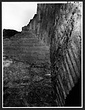
Late Roman fills on line of Dromos xx ... Late Roman ... Late Roman fills on line of Dromos |
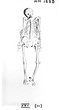
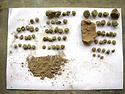
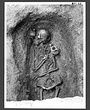
Tomb at 53-54/ΛΕ-ΛΣΤ-ΛΗ (Late Roman), on the lower north slope of the Areopagus Nb. says ΛΕ-ΛΗ. Deposit list and deposit DB say: ΛΕ-ΛΣΤ ... 350-400 A.D ... Tomb at 53-54/ΛΕ-ΛΣΤ-ΛΗ (Late Roman), on the lower north slope of the Areopagus |
Coins:
5 April 1937 #1
8 April 1937 #3 (disintegrated)
9 April 1937 #1
10 April 1937 #9-#67
12 April 1937 #3-#6
13 April 1937 #1, (found 7 April 1937), # 24
14 April 1937 #1-#2 (found 8 April 1937)
16 ... Late Roman, 4th-early 5th. c. A.D ... Late Roman Fill |
Late Roman ... Late Roman Dump |
8/ΛΘ to 14/ΛΒ. Coins:
12 February 1932 #2-#3, #13-#14, #25-#28
13 February 1932 #8, #31-#33
15 February 1932 #7-#12, #13-#27, #28-#42
16 February 1932 #5-#10 ... Late Roman- Ca. A.D. 520-540 ... Late Roman Gully |
Upper fill (top to around 4.50m.) was in a pit of large dimensions above the preserved well shaft. From the bottom and shaft proper no catalogued pottery. No tiling in place in well but fragments of tiles ... 3rd-4th c. A.D ... Late Roman Hole |
Deposit beneath re-used poros blocks.
Fragments of 2 ancient blocks of soft, white poros were reused here for a later foundation. the course of the late wall cannot be traced beyond the length of the two ... 15-17 July 1931 ... Late Roman Lamp Deposit |
Lamps all found together at the southeast corner of the excavated area, in a deposit running in part under the dike of earth which has been left against the wall of the street.
Includes 10 lamps in Section ... 17-18 June 1931
15 May 1933 ... Late Roman Lamp Deposit |
Chronology mixed to late Roman ... Roman ... Chronology mixed to late Roman. |
Late Roman mixed destruction fill.
The fill in both the staircase and the cistern chamber was the same mixed destruction fill containing a large quantity of Hellenistic pottery mixed in with late 3rd-early ... 4th. c. A.D ... Late Roman mixed destruction fill.
The fill in both the staircase and the cistern chamber was the same mixed destruction fill containing a large quantity of Hellenistic pottery mixed in with late 3rd-early 4th c. |
Well at 16/ΚΗ, in SW corner of Gymnasium complex. Lowest Roman deposit. 9th-10th century Byzantine and Turkish
Coins:
24 April 1935 #3
Envelope 4 in Tin 14 ... 5th c. A.D. - 10th c. A.D ... Well in Π Late Roman to Turkish |
Destruction debris in L.R. water basin, 6th-7th c. A.D, set against back wall of South Stoa II ... 6th c. or 7th c. A.D ... Destruction Debris in Late Roman Water Basin |
Found during removal of late Roman wall in area Ι/11. No container ... 28 June 1967 ... Found during removal of late Roman wall in area Ι/11. |
Late Roman Pit. No clear page reference but see nbpp. 1308-1309 ... 22-29 July 1957 ... Late Roman Pit. |
Late Roman Building to W of N end of Stoa (from its wall and below floor) Coins:
July 12 1950 #1-#4 ... 11-12 July 1950 ... Late Roman Building to W of N end of Stoa (from its wall and below floor) |
Well at SE corner of Court of Late Roman Building (Trench C). Estimated Grid ... 12th c. A.D ... Well at SE corner of Court of Late Roman Building (Trench C). |
Well at 56/ΚΖ, just south of the south wall of the northern Late Roman Building ... Second half of 2nd c. - early 3rd c. A.D ... Well at 56/ΚΖ, just south of the south wall of the northern Late Roman Building |
| Grave XXI in notebook = RSY Grave 11. Pottery discarded; late Roman, mostly coarse. PD 731-e ... Ca. 530 B.C ... Pottery discarded; late Roman, mostly coarse. |
Destruction fill in octagonal room of Gymnasium and Rooms to North; also basement room F of late Roman Gymnasium ... Late Roman ... Destruction fill in octagonal room of Gymnasium and Rooms to North; also basement room F of late Roman Gymnasium. |
Filling on bedrock.; accumulation extending to about the middle of the 6th c. with earlier material. Some later intrusions to late Roman (?) ... Ca. 600-550 B.C ... Some later intrusions to late Roman (?) |
Well at 69/ΚΗ (diameter 1m).
The well forms the south apse of the apsidal cutting south of the late Roman entrance porch ... Late 8th c. B.C ... The well forms the south apse of the apsidal cutting south of the late Roman entrance porch. |
Pit in floor of cellar of House 634/19. Contents mixed to late Roman. Pottery 4th c. B.C. to 4th c. A.D. discarded ... 25 April 1958 ... Contents mixed to late Roman. |
Pit at 36/ΙΖ ... Late Hellenistic to Early Roman ... Late Hellenistic to Early Roman Pit |
Cistern C (pit) in West Room of late Roman House.
Mixed dump of material, with a little Classical, much Roman dating at least as late as 3rd century A.D., and large amount of late Hellenistic. Coins:
1 ... Late Hellenistic and Roman ... Late Hellenistic and Roman |
Well at 5/ΚΘ. Digging abandoned at -7.20m for fear of collapse.
Upper 50cm, fill in broken in mouth, very late Roman (4th-7th. c. A.D.)
Fill below 50cm to 6.50mL late roman with some earlier material (from ... 4th-7th century A.D ... Upper 50cm, fill in broken in mouth, very late Roman (4th-7th. c. ... Fill below 50cm to 6.50mL late roman with some earlier material (from earth from digging this well). |
Pit in deep depression in bedrock. Also includes containers from early fill under late Roman floors down to bedrock at 81-83/ΚΗ-ΛΒ. Notebook cites early fill, ca. 6th. c., with some obviously late disturbance ... 7th c. to ca. 575 B.C ... Also includes containers from early fill under late Roman floors down to bedrock at 81-83/ΚΗ-ΛΒ ... Notebook cites early fill, ca. 6th. c., with some obviously late disturbance. |
| Well at 52/Ι, on the lower northeast slopes of the Areopagus. It was cut down and re-used in the late Roman period, in connection with the water channel. Use fill of 1st to early 2nd c.
Dump fill 5th to ... Early to Late Roman ... It was cut down and re-used in the late Roman period, in connection with the water channel. |
| A tiled well with two periods of use, Byzantine and Late Roman.
Some coarse Byzantine pottery from the upper part. from the lower part, pre-Herulian pottery, lamps and figurines. Also ΑΡ 221 (A 1202) the ... 3rd c. A.D. (before 267 A.D.)
11th-12th c. A.D ... A tiled well with two periods of use, Byzantine and Late Roman.
Some coarse Byzantine pottery from the upper part. from the lower part, pre-Herulian pottery, lamps and figurines ... Subdivisions:
.1=Byz. fill
.2=Late Roman fill
Estimated Grid |
Primarily late Roman material but some scrappy early Roman. Coins:
5 March 1934 #1-#4
6 March 1934 #1-#3
7 March 1934 #1-#2
8 March 1934 #1-#4
9 March 1934 #1-#4
10 March 1934 #1 ... Ca. A.D. 350 dumped fill ... Primarily late Roman material but some scrappy early Roman. |
Early Roman, late 1st c. A.D. with some later fragments. Coins:
31 May 1938 #1-#12
1 June 1938 #1-#5
2 June 1938 #1-#2 ... Late 1st c. B.C ... Early Roman, late 1st c. |
Well at the southeast corner, almost on the line of the east-west street. Upper Fill: Late Roman dumped fill.
Lower Fill: Dark Age: ca. 7th c. A.D.
Coin
30 March 1939 #34 ... 7th-Late 6th century ... Upper Fill: Late Roman dumped fill.
|
Well at 73/ΜΓ.
The upper walls were of small stones but changed to tiles at a depth of ca. 12m which suggests that it perhaps was originally built in Late Roman times ... Byzantine ... The upper walls were of small stones but changed to tiles at a depth of ca. 12m which suggests that it perhaps was originally built in Late Roman times. |
It seems possible that the well ... was originally associated with the late Roman reconstruction of the Stoa, being later carried up to serve the Byz. houses. [Nbp. 364] Coins:
6 March 1939 #1-#9 ... Late 4th-early 5th century ... It seems possible that the well ... was originally associated with the late Roman reconstruction of the Stoa, being later carried up to serve the Byz. houses. |
Stratified well; very late Roman verging on Byzantine. Coins
19 April 1939 #1-#8
22 April 1939 #1-#2
25 April 1939 #1
15 May 1939 #1 Subdivisions:
.1=0.00-15.25m.
.2=15.25-21.00m.
.3=21.00-22.00m ... 3rd-5th c. A.D.
9th c A.D ... Stratified well; very late Roman verging on Byzantine. |
| Well in Room 7 of Roman House H, partially covered by caldarium of added bath complex (Room 6). Stone well-head; 0.85m in diameter. Stpped because of danger of collapse. Cut through bedrock, water from ... 6th c. A.D ... Well in Room 7 of Roman House H, partially covered by caldarium of added bath complex (Room 6). ... Nondescript Late Roman. |
| Deposit of terracottas, molds and pottery in a shallow pit sloping downward from north to south. This deposit was located beneath a layer of fill under a Late Roman plaster floor (Lots ΒΕ 2093-2095). The ... 1st c. A.D ... This deposit was located beneath a layer of fill under a Late Roman plaster floor (Lots ΒΕ 2093-2095). The deposit was cut at its south end by the Byzantine/Late Roman disturbance excavated in Lots ΒΕ 2087-2088, which explains the presence of terracottas in those contexts. ... Lot ΒΕ 2096-Lot ΒΕ 2102 Early Roman coarse: 6 tins with one sack of fine wares; terracotta figurines and mould fragments. |
Brown earth with occasiional small stones, quite distinct from upper and lower fills. Pottery mostly Hellenistic with an occasional late Roman sherd scattered through it at all levels. [nbp. 3112] Coins: ... Mostly 1st c. with some Roman ... Pottery mostly Hellenistic with an occasional late Roman sherd scattered through it at all levels. |
Pocket of soft fill in bedrock at corner of Late Roman house, with a hoard of lead tokens. No pottery catalogued.
Herulian debris: cf. D 10:1, D 11:7 Coins:
25 May 1935 #8 Estimated Grid
No pottery catalogued ... 25 May 1935 ... Pocket of soft fill in bedrock at corner of Late Roman house, with a hoard of lead tokens. |
Rectangular pit (in Trench IX); dumped filling of late 5th. c. B.C. with some disturbance as late as Early Roman. P 18559 and P 18510 from above this pit ... 5th c. B.C ... Rectangular pit (in Trench IX); dumped filling of late 5th. c. B.C. with some disturbance as late as Early Roman. |
Late Roman Fills: SE Building, Conglomerate Wall. (see O-Q 18-19)Deposit list under O-Q 18-19 Coins
21 May 1938 #14
23 May 1938 #1-#2
24 May 1938 #2, #3-#4
25 May 1938 #3 Asterisk: O-P 20-21* ... Late Roman Fills: SE Building, Conglomerate Wall. |
Filling between tongue walls to north of main apse in Late Roman complex, equals "Coroplasts' Dump" overlying Odeion south side.
Containers Ο 17-Ο 20 are from "debris of burnt building" [i.e. Odeion ... 267-ca. 350 A.D ... Filling between tongue walls to north of main apse in Late Roman complex, equals "Coroplasts' Dump" overlying Odeion south side.
... These finds include only those from "Late Roman fill between tongue walls" (the "brownish earth" indicated on nbp. 252 plan),and not from "debris of burnt building" which should fall under Destruction Debris of Odeion deposit L-M 9-12. |
Nbp. 3104: When dug, the fill of the well divided itself into 3 deposits.
Objects catalogued from the "earth" are: L 4838, P 21602, P 21603, P 21604. Dumped filling of Turkish times. Coins:
17 May 1937 ... Late 6th-7th c. A.D ... Coins:
17 May 1937 #1
A little very coarse very Late Roman pottery. |
Cistern at 6/ΛΓ.
Hellenistic lower fill, with mixed Hellenistic and late Roman fill above, and Byzantine fill in mouth. Coins
1 June 1938 #1-#8
2 June 1938 #1-#6
3 June 1938 #1-#3
4 June 1938 #1-#2
6 June ... 2nd century, with Byzantine disturbance ... Hellenistic lower fill, with mixed Hellenistic and late Roman fill above, and Byzantine fill in mouth. |
Destruction debris in Late Roman Buildings on Lower north slope of Areopagus (see summaries) see now O-Q 18-19. See Agora VII, p. 227 and lists in JP's file (JP is Judith Perlzweig)
Deposit list under ... Destruction debris in Late Roman Buildings on Lower north slope of Areopagus (see summaries) see now O-Q 18-19. |
Irregular depression in bedrock (ca. 7x5m), ca. 2m deep; area south of E-W Late Roman wall. Dumped filling apparently intended to level off the area. Coins:
11 March 1952 #10
12 March 1952 #1-#5
13 March ... Ca. 400-325 B.C ... Irregular depression in bedrock (ca. 7x5m), ca. 2m deep; area south of E-W Late Roman wall. Dumped filling apparently intended to level off the area. |
Both in cistern and in passage 88/ΛΔ-95/ΚΘ-100/ΚΘ.
Use filling of late 4th-early 3rd c. B.C.; accumulative fillings of 3rd c. and of late 1st c. B.C.; dumped filling of 4th.c. A.D ... Upper dumped filling of 3rd c. A.D., but with earlier material |
From the mouth to 10.50m. a fill of earth with mixed sherds, Roman 4th. c. to geometric. Probably dumped in to fill the well. From 10.50-17.75m. the fill was of broken bedrock, with a few sherds scattered ... 5th. c ... From the mouth to 10.50m. a fill of earth with mixed sherds, Roman 4th. c. to geometric. ... These were late Roman probably of the 4th. c. |
The pottery of the first six meters (containers 1-3 of 117 containers total) contains a good deal of unglazed early Byzantine along with very late Roman. Below this begins a great mass of Roman pottery ... 4th-6th c. A.D. POU ... The pottery of the first six meters (containers 1-3 of 117 containers total) contains a good deal of unglazed early Byzantine along with very late Roman. Below this begins a great mass of Roman pottery that continues to 16.00m. Below 16.00m there is much less pottery and it seems somewhat earlier than the rest, perhaps late 4th c. A.D. |
Digging abandoned at 17.10m.
Nbp. 2863: The fill in the mouth to -6.50 was a dump of mixed hellenistic and late roman sherds. From -6.50 to -11.00m. small stones with a few late roman sherds 4th-5th c ... 4th-5th c. A.D ... Nbp. 2863: The fill in the mouth to -6.50 was a dump of mixed hellenistic and late roman sherds. From -6.50 to -11.00m. small stones with a few late roman sherds 4th-5th c. |
| Roman Pithos at 38/ΛΔ. Cf. also Ψ734 (P 14037) from late pit at 41/ΛΓ ... Early to Middle Roman ... Roman Pithos at 38/ΛΔ ... Cf. also Ψ734 (P 14037) from late pit at 41/ΛΓ. |
Refuse pit at 51/Ζ; it had been partly cut away at the north by the late Roman retaining wall; the dumped filling a homogeneous deposit of figured, black and plain wares. Red figure oinochoe in the style ... Ca. 450-420 B.C ... Refuse pit at 51/Ζ; it had been partly cut away at the north by the late Roman retaining wall; the dumped filling a homogeneous deposit of figured, black and plain wares. |
Connected with G 14:3.
There was a layer of Late Roman fill. It rested over a layer of 2nd c. B.C Hellenistic and then another of 4th c. B.C Hellenistic; the passage between the two cisterns contained ... Late Hellenistic ... There was a layer of Late Roman fill. It rested over a layer of 2nd c. ... Therefore, it appears that this cistern had several periods of use: Hellenistic (at least one phase contemporary with the 2nd century B.C, phase of House E to the north), Late Roman (probably associated with the amphora and perhaps also maybe the platform and the drain), and finally Byzantine.
|
| Hellenistic Pyre below packed clay floors of Room 2; west of Late Roman wall extension, below tile platform terracotta drain installation, bordered on the north by bedding foundation stones of crosswall ... Ca. 300 B.C ... Hellenistic Pyre below packed clay floors of Room 2; west of Late Roman wall extension, below tile platform terracotta drain installation, bordered on the north by bedding foundation stones of crosswall between rooms 2 and 3. |
Cistern at the southeast foot of Kolonos Agoraios.
Nbp. 2369: Two chamber cisterns, 88/ΛΔ and 100/ΚΘ, united by a long straight passage running almost due N-S. A draw shaft at 95/ΚΘ is set just off the ... Late 2nd-early 1st c. B.C.-86 B.C ... Nbp. 1787: This cistern contained a hopeless mixture of sherds, from hellenistic to late roman ... One can say in a general way that the hellenistic fill lay over the bottom of this cistern and the roman above it, but every basket of Hellenistic contained also Roman sherds.
Nbp. 2441: ... the cistern was very mixed - Hellenistic, Late Roman, and coarse Byzantine. ... Subdivisions:
.1=Upper disturbed filling.
.2=Undisturbed late Hellenistic filling. |
POU = 10.00-11.30m.
"The well is important because it gives us a terminus post quem for Building D." (nbp. 3346)
Shallow well, producing little water or trouble, but a great quantity of coarse late Roman ... Ca. A.D. 300-370 and Ca. A.D. 400 ... (nbp. 3346)
Shallow well, producing little water or trouble, but a great quantity of coarse late Roman pottery, with Type XXVIII lamps. |
Hellenistic-Early Roman fill over bedrock, along west side of Kolonos Agoraios. Consistent dumped filling; occasionally there is a late Roman fragment intruded from the filling above, but this seems not ... 26-29 February 1936
2-12 March 1936 ... Hellenistic-Early Roman fill over bedrock, along west side of Kolonos Agoraios. Consistent dumped filling; occasionally there is a late Roman fragment intruded from the filling above, but this seems not to affect the deposit which suggests some large scale operation, serving to level the area and to fill in the pits and grave cuttings of earlier periods. |
Late Roman, perhaps as late as 7th c., but excavator noted small amount of material made close dating impossible throughout. Nbpp. 2448-2449: The fill of this well throughout is mixed and there are numerous ... Early to Late Roman ... Early to Late Roman |
Abandoned digging at 6.25m. due to water level. Tile well could be associated with a bit of late Roman wall to the south, with floor level about one meter above that of pebble floor. Well tiles were not ... 14-22 April 1948 ... Tile well could be associated with a bit of late Roman wall to the south, with floor level about one meter above that of pebble floor. |
Disturbed "Votive Deposit" at 27-28/ΙΖ-ΙΗ
Reddish fill in five circular cutting in bedrock, considered by the excavators to have been one deposit. Fill was disturbed in later periods, probably by construction ... 7th c. B.C, with intrusions ... Early ware:
Gray Minyan; Mycenaean; Protogeometric fehlbrant; ray-based kotyle, Corinthianizing; Protogeometric- Late Geometric; Protoattic.
... Intrusions:
Red-ware; late Roman; Late Roman lamps; coarse ware, combed ware; micaceous water jugs; yellow/white glaze; lidded bowl; shallow coarse ware dish. |
The almost complete red figure hydria set into this cutting suggests the possibility of a 5th c. burial put into a much earlier grave cutting; however, the remainder of the filling appears thoroughly disturbed ... 450-425 B.C- Late Roman disturbance ... 450-425 B.C- Late Roman disturbance |
"Oinophorus Well".Tiled well in House H (diameter 0.80m, water level -4.70m). Height of tiles 0.64m Heavy well deposit; lamps,, type XXVII; many basket-handled water jars; oinophoros with labors of Herakles ... Use filling of early 2nd-mid.-3rd c. A.D ... Subdivisions:
.1=top-2.95m. Late Roman dump.
.2=2.95-7.00m. |
Cistern on lower northeast slope of the Areopagus.
Two Hellenistic fills with late Hellenistic to Roman fill above.
Use fill characterized by broken water jars (lower fill); contemporary dump (middle fill); ... Early 1st c. B.C ... Two Hellenistic fills with late Hellenistic to Roman fill above.
Use fill characterized by broken water jars (lower fill); contemporary dump (middle fill); nearly sterile layer (probably part of middle fill); Roman upper fill.
Sixty-eight stamped amphora handles. Middle fill contained fruit measure conforming to late 2nd c. decree. |
| Shallow pit in bedrock on the upper terrace, ca. 3m. southeast of the Rocky Outcrop. Uncatalogued material: 46 sherds, 61 terracotta figurines and 4 objects.
Early ware : Neolithic; Gray Minyan; Mycenaean; ... Archaic with intrusions ... Early ware : Neolithic; Gray Minyan; Mycenaean; Middle-Late Geometric: Protoattic; kalathos; Corinthian type kotyle.
... Intrusions : Classical ware; black glaze bowl; jug.
Late Roman ware : combed ware; coarse ware; red-glazed. |
Deposit in the industrial area west of the Areopagus, underlying a Roman bath. Pottery examined in June 1955; latest pieces noted: one fragment Pergamene and one fragment brittle ware; no certainly post-Sullan ... Late 2nd c. B.C. |
Filling in the footing trench of the late Roman Fortification.
Includes Layer 1 and Layer 2 of Library Colonnade opposite Room 2. "Note: both these layers are fill thrown into V.W. footing trench." (nb.p ... End 3rd. c. A.D ... Filling in the footing trench of the late Roman Fortification.
|
| Kevin Daly ... Grave in north room of Roman temple, west of well J 2:4; adult inhumation ... Late Helladic IIIC Late-Final Mycenaean/Submycenaean |
| Extract from notebook ΠΘ XIX, pp. 3644-3646. Well at 105/ΝΗ (report on sorting of pottery, July 19, 1951 - H.S. Robinson).
"Not a useful well" HSR.
Well dug to 1.50m., vi/9/36; dug from 1.50m. to bottom ... Early Roman; use fillings of 2nd. c. B.C. and 1st. and 4th. c. A.D.; dumped filling of late 4th. c. (HSR)
Fill I: 2nd. c. B.C.
Fill II-V: to second half of 4th. c. A.D.
Fill VI: mixed to Byzantine ... Early Roman; use fillings of 2nd. c. ... A.D.; dumped filling of late 4th. c. (HSR)
Fill I: 2nd. c. |
A small concentration of pottery in lowest 1.80m., possibly a use fill. Three fills above, with little pottery, ranging from Hellenistic to late Roman in date. Coins:
26 February 1934 #4-#6
27 February ... 325-200 B.C ... Three fills above, with little pottery, ranging from Hellenistic to late Roman in date. |
Well 15: Mycenaean. It was situated about 35 meters down the slope northwest of the exit of the Mycenaean Fountain.
Well circular or roughly oval in section.
Diameter max. width to -4.0: ca. 1.50, below ... Late Mycenaean ... About 0.30m below, a late Roman pit which cut into the north side sherds occurred in fair quantity and the fill seemed to be pure.
|
Top fill to 1.00m. = dump of late Hellenistic ware mixed with some Roman of 2nd c. to early 3rd. c. Intermediate fill 1.20-2.00m. = dump with tiles and stucco, almost no sherds. Coins:
6 February 1937 ... 2nd-3rd c. A.D ... = dump of late Hellenistic ware mixed with some Roman of 2nd c. to early 3rd. c. |
Klepsydra: Filling in overflow channel = Channel A, North of Paved Bldg. (was T 26-27:1) Three layers, all containing a mixture of early material (LHIIIC and Protogeometric) with late Hellenistic and early ... Mid 1st. c. A.D. with later intrusions ... Three layers, all containing a mixture of early material (LHIIIC and Protogeometric) with late Hellenistic and early Roman, though in differing proportions. |
Tiled well, ca. 30m south of the Tholos. Associated with Building D. Hellenistic Group A with Late Roman fill in upper 3.00m. Objects A 245 and P 4597 are from fill on floor around well-head, contemporary ... 325-260 B.C ... Hellenistic Group A with Late Roman fill in upper 3.00m. ... Upper fill: Presence of moldmade relief bowls indicates date at least as late as last quarter of 3rd c. |
| Marcie Handler ... It was situated in the NW corner of Room 3 in the Classical Commercial Building, just S of Wall 11, the cross-wall that divides Room 3 from Room 4 to the north. The pyre pots were found surrounded by ... Late 4th c. B.C ... The pyre deposit continued up to the north face of late Roman Wall C, suggesting that these lower courses of Wall C were packed into a narrow trench instead of built up within a wider foundation trench. |
| David Scahill ... Roman temple north. Adult male inhumation. Pit tomb, partially stone-lined ... Late Mycenaean or Final Mycenaean/Submycenaean |
Roman well re-used in Byzantine times. Subdivisions:
.1=0.00-13.80m.
.2=13.80-23.50m.
.3=23.50-25.00m ... Late 1st-early 2nd, 4th-5th, 11th centuries. |
| Bronze-casting pit and furnace against S apse of Church (106/ΛΕ). Late Roman sherds of the 4th and the 6th c. A.D. were found with fragments of moulds from bronze casting. The west end was destroyed by ... 5th-6th c. A.D ... Bronze-casting pit and furnace against S apse of Church (106/ΛΕ). Late Roman sherds of the 4th and the 6th c. |
| Well in East Colonnade of Roman House H. Diameter 0.80m, lined with field stones set in mortar. used as a cistern as well.
No useful pottery dates. Capital from colonnade A 3866 and part of shaft found ... 29 July 1970 ... Well in East Colonnade of Roman House H. Diameter 0.80m, lined with field stones set in mortar. used as a cistern as well.
... Capital from colonnade A 3866 and part of shaft found at 2.50m-3.00m, indicating destruction of house (late 6th, 580's by Slavs). |
| Eugene Vanderpool ... Grave (E.L. Smithson: Grave XVI: PG). Bones discarded.
Only the lower portion of the urn-hole was preserved in bedrock, roughly oval in outline, with a maximum preserved width at the top of 0.70m narrowing ... Late Protogeometric/Early Geometric I ... No trace of pyre debris was encountered in the vicinity of the tomb, and the material overlying the grave yielded material of Late Roman date, indicating that damage to the tomb probably dates to that time. |
| Marcie Handler ... Fill within the drain from the basin on the west side of Roman Room B through Wall A.
After we removed the fill within the basin on the west side of Roman Room B (BZ XXVII p. 5325), we began excavating ... Late Roman ... Late Roman |
North of Eleusinion: Loose fill in pit outside Roman Building. 14 inventoried items, 22 objects, 325 sherds.
Objects : terracottas; handmade object; large figurine; lamps.
Early ware : Gray Minyan; Mycenaean; ... 6th c. B.C. and earlier ... North of Eleusinion: Loose fill in pit outside Roman Building ... Early ware : Gray Minyan; Mycenaean; Protogeometric-Late geometric; imitation Corinthian.
|
Tile well at 52/ΛΣΤ, in the northern late Roman building in the room with the apse. The top was covered by a large stone, and the well had never been filled after the last period of use. water stood to ... Late 1st (?) cent.-early 3rd to 6th cent ... Tile well at 52/ΛΣΤ, in the northern late Roman building in the room with the apse. |
North of Eleusinion: Fill in Room 3 of Roman Building. 614 sherds (6 miniature shapes, 20 intrusive sherds).
Objects : terracottas; loom weights; spindle whorls; disks; handmade tray; lamps.
Early ware ... First half of 6th c. B.C.-Mixed Fill to ca. 480 B.C ... North of Eleusinion: Fill in Room 3 of Roman Building ... Early ware : Gray Minyan; Mycenaean; Protogeometric-Late Geometric; imitation Corinthian.
... B.C. intrusions; much Mycenaean and Middle Helladic; 4th c. B.C; Roman; Byzantine; Turkish. |
Nbp. 1740: From the gravel fill at the level of the lowest step, late Hellenistic pottery, higher up (middle to top steps) early Roman. Coins:
23 March 1948 #1-#4
24 April 1948 #1-#33
26 April 1948 #1-#26 ... Late Hellenistic-Early Roman ... Nbp. 1740: From the gravel fill at the level of the lowest step, late Hellenistic pottery, higher up (middle to top steps) early Roman. |
| John Camp ... Protogeometric grave (female inhumation) located about 0.60m northwest of T 15:1. It consisted of a roughly rectangular pit, with the corners slightly rounded, oriented approximately north-south. The pit ... "Submycenaean"/Early Protogeometric ... The original depth of the tomb would have been at least slightly greater, since the bedrock around it was leveled in Late Roman times, if not earlier. ... A substantial Late Roman wall ran across the tomb, covering but not disturbing the skeleton from mid-thigh to instep; the bones were recovered by tunneling. |
Well south of the apse of Room 3, Roman House H. Cut through bedrock, diameter ca. 1.15m, stopped at ca. -10.80m because of danger of collapse. Water at very top, up to bottom of parapet between well and ... 2nd-4th c. A.D ... Well south of the apse of Room 3, Roman House H. Cut through bedrock, diameter ca. 1.15m, stopped at ca. -10.80m because of danger of collapse. ... A.D. back to the late 1st/early 2nd c. ... The well apparently went out of use as such with the construction of Roman House H. |
Accumulated fillings in a system of underground drains at west end of section ΔΔ with northward continuation into and across Section Υ.
The filling in the "underground passages" in section ΔΔ appears to ... 3rd c. B.C.
2nd c A.D ... ; but drain channels, pits and cuttings, etc. in Υ are partly Early Roman, some mixed to Late Roman or later.
... Section Υ: pit at 31-32/ΜΘ-Ν, 31-32/ΜΣΤ-ΜΖ, 36-38/ΞΔ, 33/ΝΒ, 31-32/ΜΓ-ΜΣΤ, 31/ΜΑ-ΜΓ
two fragments of semi-glazed bowls with everted rim (late 2nd c.?) intrusive in west branch. More extensive disturbance in east branch indicated by fragments of dipper, 2nd c. plate, at least five moldmade bowls, a Roman lamp. |
| Well cut into bedrock, associated with late Roman building G in ΕΛ 1.2m in diameter, narrows to 0.5m at bottom. Disturbed by later pits at top. Excavated from 85.77-79.25m (6.52m), but bedrock at 85.91m ... Late 4th/early 5th AD ... Well cut into bedrock, associated with late Roman building G in ΕΛ 1.2m in diameter, narrows to 0.5m at bottom. |
Cistern at 60/ΙΕ; bell-shaped cistern with a channel 1.65m high and 4.60m long, leading to a dead end against bedrock. This channel runs north with a slight curve to the east and looks as though it was ... Second half of 3rd c. B.C.-Early 2nd c. B.C ... If this be true, the cistern at 53/ΚΓ which was disturbed in late Roman times is contemporary with that at 60/ΙΕ. |
| John Camp ... Burial north of Roman temple, E. of polygonal wall.
The tomb, as preserved, consisted of the cinerary urn, which stood in an upright position, its upper part damaged by later disturbance. It contained ... Late Helladic IIIC Late-Final Mycenaean/Submycenaean |
Dumped fill. Well lining collapsed at ca. 0.60m. from bottom, apparently at start of POU, forcing abandonment. Pottery described as mixed to "latest Roman", including combed and gouged; all very fragmentary; ... Late Roman ... Pottery described as mixed to "latest Roman", including combed and gouged; all very fragmentary; discarded.
... Lot Υ 13 for pottery from fill in channel leading to well 39/ΞΔ (late 4th c. B.C.). |
Upper fill early Roman. Lower fill latest Hellenistic.
No house walls clearly associated with it, and apparently no attempt made to assign it to any particular house. Subdivisions:
.1=Upper fill
.2=Lower ... Late Hellenistic-Early Roman ... Late Hellenistic-Early Roman |
| Well cut into bedrock under late Roman building in ΕΛ. 1.2m in diameter with small cutting of unclear function at south edge about 0.2m wide. Walls cut straight down, tapering near bottom to 0.8m. Footholds ... Late Archaic ... Well cut into bedrock under late Roman building in ΕΛ. 1.2m in diameter with small cutting of unclear function at south edge about 0.2m wide. ... There were 14 layers of fill from two periods-the Roman resurfacing of the area using Hellenistic fill (possibly associated with Deposit T-U 21:1, but not kept as such since floors were damaged in area directly above) and dumped fill from the late 6th/early 5th c. ... Layers:
Hellenistic fill under Roman floors
I.(86.34-85.93m) rubble
II.(85.93-85.58m) dark brown rubble
III.(85.57-85.30m) more stony rubble
IV.(85.30-84.80m) very rocky, almost sterile, increase of clay and sand
V.(84.80-84.03m) less rocks, almost sterile, increase of clay and sand
Late 6th/early 5th B.C dumped fills
VI.(84.03-82.64m) mix of clay and sand deposits, dog skulls
VII.(82.64-81.79m) mostly sand
VIII.(81.79-81.39m) light brownish-grey clay, almost sterile
IX.(80.39-80.99m) mix of grey clay, brown clay and sand, much ceramic
X.(80.99-80.24m) sandy, more ceramic
XI.(80.19-77.74m) sandy, enormous stones (some 100kg+). |
Pit (= collapsed cistern). Fill mixed, late Hellenistic to early Roman. The cistern floor has an E-W channel, no doubt running from the pit at 107/Ζ to the well at 107/ΙΓ (B 21:24). Coins:
10 June 1939 ... 150-100 B.C ... Fill mixed, late Hellenistic to early Roman. |
| Use filling of middle of 1st to late 6th c. (Roman Group M); dumped filling of 9th and 10th c. Down to a depth of about 21.00m. the fill of the well contained very few objects, the latest of them being ... 1st-6th c. A.D ... Use filling of middle of 1st to late 6th c. (Roman Group M); dumped filling of 9th and 10th c. ... At 21.00m. there was a sudden change and very late Roman objects began to appear in great numbers.
|
Well-shaft abandoned before use because of crumbling of rock.
From top to 15.00m. a dumped fill predominantly early Roman but containing material of late 1st c. B.C. to mid-1st c. A.D. A rock filled shaft ... 1st c. B.C. to mid-1st c. A.D ... From top to 15.00m. a dumped fill predominantly early Roman but containing material of late 1st c. |
| David Scahill ... Below packed clay floors in Room 2 of Classical Building II; bordered on east and south sides by polygonal cross wall and back wall extension for Classical Building. Late Roman wall and drain installation ... LHIII A:1 ... Below packed clay floors in Room 2 of Classical Building II; bordered on east and south sides by polygonal cross wall and back wall extension for Classical Building. Late Roman wall and drain installation above west side. ... Loose fill of stones and earth with large number of Geometric sherds ranging from Protogeometric to late Geometric in date, from top of cutting extending down into layer of tomb contents. |
A well outside the market square to the southeast, 20m west of the Panathenaic Way; Modern fill in upper 1.65m. with Early Roman dumped fillings below. Coins:
9 May 1939 #37 (dirt pile)
10 May 1939 #53 ... Late 1st c. B.C.-early 1st c. A.D. |
| Julia Shear ... Burial. Roman Temple south half, in fill south of temple crosswall and norh of polygonal wall, layer 37a.
Small, roughly circular pit. The diameter of the pit appeared to be only slightly greater than ... Late Helladic IIIC Late-Final Mycenaean/Submycenaean |
Diameter 0.95m; water level -9.10m.
Plais shaft cut in stereo from bottom of slender flask-shaped cistern. Scanty fill from house destruction in 5th c. A.D.; Christian lamps; unfinished statuette of Castor ... Late Roman ... Late Roman |
| Dumped filling of late 2nd c. B.C.; Roman Group F, dumped filling of second quarter to end of 1st c. B.C. on the lower northeast slope of the Areopagus.
Diameter at bottom -3.20m Upper fill: Latest coins ... Second quarter to end of 1st c. B.C ... Dumped filling of late 2nd c. B.C.; Roman Group F, dumped filling of second quarter to end of 1st c. |
|
|