|
|
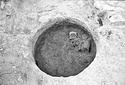
| Pit in Layer 9, lined on the sides and bottom with small stones ... Late 5th c. B.C ... Hesperia Suppl. 47 (2013), p. 38, n. 129. |
Well M: EG, under the south court of the Poros Building.
Hesperia 20 (1951), p. 144 (noted) ... Middle Geometric ... Well M: EG, under the south court of the Poros Building.
Hesperia 20 (1951), p. 144 (noted). |
Disturbed pit with a skull. Pottery discarded. Late context; more likely Turkish than Geometric.
See Hesperia 14 (1945), p. 303 for skull description ... 4 May 1936 ... Late context; more likely Turkish than Geometric.
See Hesperia 14 (1945), p. 303 for skull description. |
| Pit (f) in bedrock used for casting archaic bronze statue for the first Temple of Apollo Patroos (Hesperia 6 (1937), pp. 82-84) ... 6th c. B.C ... Pit (f) in bedrock used for casting archaic bronze statue for the first Temple of Apollo Patroos (Hesperia 6 (1937), pp. 82-84). |
Klepsydra: West Passage. Loose fill, and fill between boulders.
Cf. Hesperia 12 (1943), pp. 246-248 Probable P 12807 belongs in this deposit ... Late 2nd c. A.D ... Loose fill, and fill between boulders.
Cf. Hesperia 12 (1943), pp. 246-248 |
Filling accumulated between the time of the Persian sack and the building of the Stoa.
Cf. Hesperia 6 (1937), pp. 14-18 and H 6:5 ... Filling accumulated between the time of the Persian sack and the building of the Stoa.
Cf. Hesperia 6 (1937), pp. 14-18 and H 6:5. |
Fillings immediately antedating the building of the Stoa.
Cf. Hesperia 6 (1937), p. 20 and the debris of a pottery works behind the Stoa (H 7:1) ... Fillings immediately antedating the building of the Stoa.
Cf. Hesperia 6 (1937), p. 20 and the debris of a pottery works behind the Stoa (H 7:1). |
Cistern at 65/ΜΑ.
Same system as 63/ΛΑ and 70/ΛΣΤ (not yet cleared).
Mentioned in Hesperia VIII, 1939, p.216 Not yet cleared? Nothing catalogued? ... Mentioned in Hesperia VIII, 1939, p.216 |
Pit in shop I of Roman Stoa, 2.50m. behind the Royal Stoa. Most of the pottery dates to the third quarter of the 5th c. B.C. Many of the vessels were marked with a ligature, indicating that this was the ... 3rd quarter 5th c. B.C ... Hesperia 93 (2024), p. 236 ... Hesperia Suppl. 25 (1992). |
| Initially uncovered with a diameter of c. 1.05m. Its south side extends under the south wall of the Classical structure and so clearly predates it. The highest preserved portion of the well shaft (at the ... 22 July-9 August 1994
26 June 1995
3-7 July 1995 ... Hesperia 83 (2014), p. 200, table 2 ... Hesperia Suppl.46 (2011) ... Hesperia 89 (2010), p. 626, n. 41. |
Dug as Metroon Porch Pit A and Pit C (layers II and III). ... 7th-6th c. B.C ... Hesperia Suppl. 46 (2011), p. 375 ... Hesperia 62, (1993) 472-473. |
Amphora dump at P/2,3-6/6,8.
Layer "8b" in Room 6 of Greek House δ.
Trench cut into lower levels next to west wall of Room 6. Fragments of amphorai, tiles.
No coins ... Early Hellenistic ... Hesperia Suppl. 47 (2013), pp. 97, 101 ... Hesperia 42 (1973), p. 141. |
| Laura Gawlinski ... Bronze foundry north of bridge on Piraeus street, east of Great Drain.
Keyhole-shaped bronze casting pit, cut into bedrock.
2016: Continuation of the excavation of a rectangular pit with foundry debris, ... Late 6th-early 5th c. B.C.
(Late Archaic/ Early Classical) ... Hesperia 89 (2020), pp. 627-628, fig. 32, n. 43 ... Hesperia 46 (1977), p. 374 ... Hesperia 19 (1950), p. 330. |
| Dimensions: 1.10m in diameter and 1,36m deep.
It could have been started as a well but then abandoned at a shallow depth (perhaps due to Persian invasion of Athens). BG vessels (including one inscribed ... 500-470 B.C ... Hesperia 83 (2014), p. 200, table 2 ... Hesperia Suppl. 46 (2011), p. 375 ... Hesperia 89 (2010), p. 626, n. 41. |
| Well cut into bedrock under late Roman building in ΕΛ. 1.2m in diameter with small cutting of unclear function at south edge about 0.2m wide. Walls cut straight down, tapering near bottom to 0.8m. Footholds ... Late Archaic ... Hesperia 83 (2014), p. 201, table 2 ... Hesperia Suppl. 46 (2011), p. 376. |
| David Scahill ... At northeast corner of Classical Building II; on south side of dromos of Tomb K 2:5, and separated from it by ca. 0.6m of bedrock. Chamber cut through bedrock. The northeast corner of chamber defined ... LHIII A:1 ... Hesperia 89 (2020), pp. 617-619 ... Hesperia 72 (2003), p. 264, fig. 28. |
| Herm head deliberately buried in a pit with coins of the 2nd half of the 4th c. Head found at an elevation of 51.907. Bottom of the pit at 51.637 m. Coins:
27 June 1972 #199-#205
Bits of bronze, iron ... 2nd half 4th c. B.C ... Hesperia 42 (1973), p. 380. |
In front of room III from the South. Coins:
28 June 1933 #1
1 July 1933 #1
8 July 1933 #1 (dump)
12 July 1933 #1 (dump)-#2 (dump)
3 May 1934 #1
12 May 1934 #1 Estimated Grid ... Byzantine ... Hesperia 6 (1937), p. 202. |
Dug as Tholos Trench V, Room E, burnt filling of plundered wall trench of S wall of court. See also lot Ζ 484 ... Late 6th c. B.C ... Hesperia 62 (1993), p. 477. |
| Well O: EG. AS 875-878 ... Middle Geometric ... Hesperia 5 (1936), p. 33. |
Listed in nb. as 16-17/ΞΖ. Pit with furnace debris ... 5th c. B.C. - Hellenistic ... Hesperia 46 (1977), p. 374. |
Well beneath 4th c. Klepsydra Drain, within foundations of west end of the Middle Stoa. Diameter 0.90m, cut through bedrock, with handholes on sides. Top 4.50m. dumped fill; 4.50-6.15m. period of use ... Mid-8th c. B.C ... Hesperia 68 (1999), p. 262. |
Pit I at 45/ΙΘ (= Well) (noted also 4th c. pocket in side of this pit).
This is part of the Terracotta Deposit (H 17:4) and the objects listed here are also listed in H 17:4. Containers/lots for this ... Geometric-Protoattic ... Hesperia 2 (1933), 542-640. |
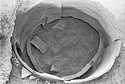
A pit running E-W under Holy Apostle St., about 1.20m. square and 0.90m. deep. Built with stones about the size of a man's head. Coins:
24 April 1935 #12-#13 ... 18th c ... Hesperia 11 (1942), p. 24. |
Red fill with burning over south part of Heliaea. Post Herulian Metal- Worker's establishment. Coins:
20 May 1953 #1-#2
4 May 1953 #1 P 30199 (Κ 4282), B 1544-1546 (Κ 4281, Κ4283-4284) catalogued on May ... Late 3rd. c. A.D ... Hesperia 23 (1954), p. 33. |
Middle Helladic Pit at NW corner of church of St. Athanasius Estimated Grid ... Middle Helladic ... Hesperia 87 (2018), p. 224 ... Hesperia 20 (1951), p. 144. |
Beneath layer 11. "Despite its extreme irregularity this pit may be an early well, for it would seem definitely to be an artificial cutting and sherds were found in its lowest part," (Nbp. 2095).
Contemporary ... SubMycenaean ... Hesperia 92 (2023), pp. 115, 176, fig. 1 ... Hesperia Suppl. 4 (1940), p. 3. |
Exploratory excavation trench between east front of Hellenistic Metroon and Great Drain.
Cf. Hesperia Suppl. 4 (1941), p. 106.
Cf. also Metroon Drain Cut I 9:1 and F-G 12:1 and H 12:9 ... 8th-6th c. B.C ... Exploratory excavation trench between east front of Hellenistic Metroon and Great Drain.
Cf. Hesperia Suppl. 4 (1941), p. 106.
|
| Well I: PG, ELS. The collapsed well north of the Middle Stoa Terrace. This pit, or shallow well, into which a Turkish storage pit lined with stones was set, produced purely Proto-Geometric pottery and ... Protogeometric ... Hesperia 83 (2014), p. 200, table 2 ... Hesperia Suppl. 20 (1982), p. 152, n. 39. |
Well a in west part of Odeion Cavea, probably unfinished. The dumped fill mostly potters' refuse including test pieces.
Well D. Diameter ca. 0.90m ... Early Protogeometric ... Hesperia 19 (1950), p. 37, n. 2., pl. 16 ... Hesperia 4 (1935), pp. 362-363. |
| Fill in stone-curbed well P 35772 possibly belongs to this deposit, Lot 899 ... 3rd. c. A.D ... Hesperia 83 (2014), p. 146, 154, 155, figs. 3, 11 ... Hesperia 20 (1951), p. 280. |
Located just north of the stepped retaining wall between the Great Drain and the Poros Monument (Propylon).
Short period of use; dumped filling above, mostly cemetery debris ... Early Protogeometric ... Hesperia 83 (2014), p. 200, table 2 ... Hesperia Suppl. 20 (1982), p. 152, n. 38. |
Estimated Grid ... Ca. 510-480 B.C ... Hesperia 15 (1946), pp. 265-336. |
Containers Lot Α 306-Lot Α 340. Estimated Grid ... Ca. 575-535 B.C ... Hesperia 7 (1938), pp. 363-411. |
| Laura Gawlinski ... Circular pit uncovered in Early Building II, south of Room E latrine, adjacent to the preserved latrine floor surface. Continues beneath the latrine surface and the western scarp (unexcavated). Fill relatively ... Late 5th c. B.C ... Hesperia Suppl. 47 (2013), p. 137. |
Lower fill:
See Deposit G-I 11-12, where the finds are again listed.
Dug as Tholos Trench A, Layer VI, no finds.
Dug as Tholos Trench C, Layer IV+Va, A 756, A 757, P 10507.
Dug as Tholos Trench N, Layer ... 6th c. B.C ... Hesperia Suppl. 46 (2011), p. 375. |
Lined with small stones.
Difference noted between the pottery from the top and that from the bottom. Coins:
11 April 1933 #13 (disintegrated)
12 April 1933 #1-#6 (disintegrated) (Coin no. 1. N 18194 found ... Turkish ... Hesperia 11 (1942), pp. 25-28. |
(now G 12:22) Asterisk: H 12:5* ... Hesperia Suppl. 46 (2011), p. 375. |
Drain in corridor of Poros Building. Deposit is from the period of use of the drain. Cf. also containers 140 and 602 ... Late 5th-early 4th c. B.C ... Hesperia 20 (1951), pp. 174-175. |
Casting pit near SE corner of Poros Building, Room C 3. Combined with D 18:4 ... 1st c. B.C.-1st c. A.D ... Hesperia 46 (1977), pp. 375-376. |
Flower Pot Pits. Coins:
10 March 1936 #2
11 March 1936 #9
12 March 1936 #1
13 March 1936 #1-#3, #7
14 March 1936 #1, #9
2 April 1936 #1
7 January 1937 #1-#2
8 January 1937 #1
12 January 1937 #1-#2 ... 9-18 March 1936
1-2 April 1936
7-12 January 1937 ... Hesperia 6 (1937), pp. 396-425. |
"Debris Pit" beneath starting line in Panathenaic Way.
Dug as
Trench B (1971), pp. 1631-1649 (notebook not seen, PF);
finds record both Layer 28 and beneath Layer 28.
Trench I, pit 16a, (1973), pp. 3010-3022 ... 2 August 1971
4-6 July 1973
27 June-11 July 1980 ... Hesperia Suppl. 46 (2011), p. 375. |
North of east branch of Great Drain. Coins:
21 June 1973 #1 ... 4th c. A.D ... Hesperia 46 (1977), pp. 369-372. |
Listed in nb. as 15/ΞΤ. Pit with bronze casting debris ... To 3rd quarter of 5th c. B.C ... Hesperia 46 (1977), pp. 374-375. |
| Late 4th-early 3rd c. B.C ... Hesperia 46 (1977), pp. 359-363. |
The Building Fill had been badly disturbed and has been divided into several different lots, resulting in two main divisions: layer 5 (upper building fill) and layer 6 (lower building fill). Later investigation ... 23 June-16 July 1973 ... Hesperia 87 (2018), pp. 215-278. |
Well P: EG ... Middle Geometric ... Hesperia 20 (1951), p. 144, (noted). |
Deposit alongside Greek House I, perhaps giving the construction date of the second phase. Deposit list title it as : outside of east wall of Roman House H ... Last quarter of the 4th c. B.C ... Hesperia Suppl. 47 (2013), p. 175. |
Well in Room 5 of Roman House H.
Under cement border of andron of Greek House G. Diameter 1.10m, cut through bedrock. water at ca. 3.55m. Hand or foot holes along one side.
0-7.25m crushed bedrock fill ... 5th c. B.C ... Hesperia Suppl. 46 (2011), p. 376. |
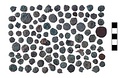
| A closely compacted group of 431 bronze coins found at ca. 52.50m., against the east brick wall. No sign of a container. Others dribbled down against the channel wall in a restricted area to as deep as ... Late Roman ... Hesperia 46 (1997), pp.511-512. |
| Marcie Handler ... Cist grave for two infants. The grave was cut into a sterile rocky layer on its southern and western sides, and a sterile fill layer on its northern and eastern sides. No obvious grave marker was present, ... Early Iron Age ... Hesperia 89 (2020), pp. 620-622. |
| Late Geometric well ... Late Geometric ... Hesperia 68 (1999), pp. 262-263. |
| Brian Martens ... Located in the southern section of Room I, now bound by the scarp of Wall U at the north,, the scarp of Wall L at the east,, and a modern pit at the south. At its now low elevations, excavated in the 2015 ... Third quarter of 5th c. B.C ... Hesperia 89 (2020), p. 626 (noted). |
Also called Turkish well. Coins:
19 April 1933 #1-#4 ... 19 April-4 May 1933 ... Hesperia 11 (1942), pp. 20-21. |
Brian Martens ... This deep stratum (ca. 030m) is delayed Persian destruction cleanup deposited in the 470s B.C. it contains about one generation's worth of pottery, almost exclusively dating between about 500-470 B.C ... 29 June-19 July 2017
12–15 July 2022 ... Hesperia 89 (2020), p. 625 (noted). |
| David Scahill ... Protogeometric/Early Geometric well under floors in Room 1, Classical Building II, on north side of south ashlar wall. See J 3:9 for the burial within this well.
Cf. Hesperia Suppl. 50 (2018), p. 106, ... 27 June 2001
17 July 2002 ... See J 3:9 for the burial within this well.
Cf. Hesperia Suppl. 50 (2018), p. 106, n. 10. |
Klepsydra: Pits or cuttings beneath Paved Court ... Mycenaean ... Hesperia 12 (1943), pp. 205ff, 223 ... Hesperia 10 (1941), pp. 7-8 ... Hesperia 9 (1940), p. 7. |
Well (diameter 0.98m) in House H, Room 13.
Two dumped fills apparently of the same date, but separated by a clay deposit of over 2.00m.
Cf. Hesperia 20 (1951), p. 253. (noted) Subdivisions:
.1=Upper ... Ca. 425-400 B.C ... Two dumped fills apparently of the same date, but separated by a clay deposit of over 2.00m.
Cf. Hesperia 20 (1951), p. 253. |
| Pit and drain at SE corner of Apollo Temple. Antedates building of Apollo Temple which was assigned to a date 'late in the third quarter' ... 3rd quarter 4th c. B.C ... Hesperia 78 (2009), pp. 389-396 ... Hesperia 6 (1937), pp. 101-102. |
Middle Helladic Gully ... Middle Helladic ... Hesperia 87 (2018), p. 224 ... Hesperia 83 (2014), p. 201, table 2. |
Well at 69/ΛΕ (diameter 0.95m).
Narrows at bottom. Footholds on east and west. Uniform fill. Bones found in the well make it likely that it had cut through a grave, as it was itself overlain by one ... Late 8th c. B.C ... Hesperia 30 (1961), pp. 125-127 ... Hesperia XXIX, 1960, pp. 413, noted. |
| David Scahill ... Behind northeast corner of Classical Building; east wall C. Below Hellenistic levels and early Classical pit. Chamber cut through bedrock, depth ca. 0.90m., diameter ca. 2m., roughly square in shape, angling ... LH III A:1 ... Hesperia 89 (2020), p. 617 (noted) ... Hesperia Suppl. 43 (2009), p. 101, n. 16 ... Hesperia 72 (2003), pp. 254, 263-273, figs. 8-10, 28-29. |
| Excavation of this pit began in 1995, tentatively identified as a pyre. This proved to be so with continued excavation in 1996. The deposits J 2:8 and J 2:9 were combined to become J 2:9. Miniature vessels ... Ca. 300 B.C ... Hesperia Suppl. 47 (2013), no. 12, pp. 113, 114, figs. 22-24, 37, 38 ... Hesperia 68 (1999), pp. 278-281 ... Hesperia 20 (1951), pp. 67-134. |
| David Scahill ... Below packed clay floors in Room 2 of Classical Building II; bordered on east and south sides by polygonal cross wall and back wall extension for Classical Building. Late Roman wall and drain installation ... LHIII A:1 ... Hesperia 89 (2020), p. 595, n. 3 ... Hesperia Suppl. 43 (2009), p. 101, n. 16 ... Hesperia 72 (2003), pp. 254-262, figs. 8, 9, 16-27. |
| A well at the northeast corner of Classical Building, behind back wall. Dumped fill appears to have occurred as a single event as there are joining sherds throughout.
POU date ca. first half 5th c. B.C.; ... 5th c. B.C ... Hesperia Suppl. 47 (2013), p. 27, n. 66 ... Hesperia 72 (2003), pp. 250-254, figs. 10-15. |
| A well in the courtyard (Room 8) of a Byzantine House of Period II. The well was covered by a large squared poros wellhead and a marble puteal (apparently neither inventoried). Within the well shaft, the ... 14 July-9 August 1989
2-13 July 1990 ... Hesperia 83 (2014), pp. 246, 200, table 2 ... Hesperia 66 (1997), pp. 528-530, pls. 102c, 103a. |
| David Scahill ... Beneath toichobate floor level in Room 1 of Classical Building II, against the south ashlar wall, ca. 1.50m. east of the southwest corner of the building. Deposit of broken pyre pots in small pit, 1.00m ... Ca. 325 B.C ... Hesperia Suppl. 47 (2013), no. 4, pp. 105-107, figs. 22-26 ... Hesperia 72 (2003), p. 247. |
Investigations in Room to N of Tholos, various layers and periods. ... 470 B.C.-post-Herulian reuse ... Hesperia Suppl. 4 (1940), pp. 73-84. |
Tile-lined Well in Room 2 of Street Stoa (5/8-13/13), ca. 0.64m in diameter. Tiles set in pairs for each circuit, tops carefully lettered for placement, one hand-hole per tile. Actual well earlier (?) ... 21-26 June 1972 ... Hesperia 91 (2022), p. 134, n. 2. |
Original bottom of pithos was damaged (probably by ground water) and a second, higher bottom consisting of squarish terracotta tiles laid. Fill above second, higher floor was unusually rich in pottery ... Byzantine ... Hesperia 83 (2014), p. 200, table 2. |
Coins:
2 May 1935 #1-#4 ... Turkish ... Hesperia 11 (1942), p.28, fig. 35. |
Coins:
30 May 1933 #19 ... Turkish ... Hesperia 11 (1942), p. 22, fig. 17. |
Grave XXIII in notebook = RSY Grave 46.
Late Hellenistic filling in a disturbed grave, west of Areopagus ... 19 June 1939 ... Hesperia 20 (1951), p. 107 (Grave 46). |
House K: Brown fill (publ. House U). Filling between terrace wall and house wall at the extreme west end of the Areopagus; a brown gravelly filling of early Roman date found here undisturbed but occurring ... Early Roman ... Hesperia 20 (1951), p. 136, fig. 1. |
| Marcie Handler ... Continued from 2000 season, 10-12 July 2000; BZ XXIII p. 4472.
The hoard was originally excavated during the 2000 season (Lot BZ 1049, 5th-6th centuries AD), from a higher elevation through a gap in the ... 10-12 July 2000
21-22 July 2003 ... Hesperia 72 (2003), pp. 246, fig. 9. |
| A tile lined well under Room I of Byzantine House.
A concrete shaft belonging to the mill cut off the top of the well and left in place 3 complete sets of tiles and most of a fourth set. All but the lowest ... 17-18 c. A.D ... Hesperia 83 (2014), p. 200, table 2. |
| Coins:
19 July 1995 #1254
20 July 1995 #1252
21 July 1995 #1268 Three additional finds, A 4916, IL 1909, T 4387, are from outside the well proper and not in the finds list but cf. pp. 7243, 7245 and section ... 4th-12th c. A.D ... Hesperia 83 (2014), p. 200, table 2. |
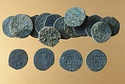
| Coin hoard. Room 2: soft soil north of floor surface. Coins:
23 July 1999 #924-#944. Anonymous folles with the head of Christ on the obverse dating between 770-1059 ... 23 July 1999 ... Hesperia 72 (2003), p. 245, fig. 6. |
| Coins:
16 June 1981 #89
17 June 1981 #94-#95, #100 (not a coin).
19 June 1981 #103-#104, #335-#336
23 June 1981 #111-#112 ... 9th-13th c. A.D ... Hesperia 83 (2014), p. 200, table 2. |
| Laura Gawlinski ... Well in courtyard of Early Building I, adjacent to wall of Room B. Tile lined; upper course in situ, lower two collapsed probably in antiquity. Letters inscribed on rims (eta, phi, omicron, theta). Medium ... First quarter of the 4th c. B.C ... Hesperia 84 (2015), pp. 475-476 ... Hesperia 83 (2014), pp. 200, 232, n. 74, table 2 ... Hesperia Suppl. 47 (2013), no. 27, pp. 135, 136, figs. 57, 62. |
Well 19: Latest Mycenaean. Near Klepsydra. Diameter mouth 1.25-1.35m., narrowing about a third of the way down and becoming rectangular, 0.90-1.0 to a side. Muddy at m; water collecting rapidly at 8.m ... Late Mycenaean ... Hesperia 92 (2023), pp. 115, 122, 175, 176, n. 60, 265, fig. 1 ... Hesperia 83 (2014), pp. 216, 201, table 2 ... Hesperia Suppl. 20 (1982), p. 146 ff. |
Mycenaean well and grave.
Single burial, that of a middle-aged man, had been made in the mouth of an unproductive well near the southeast corner of the South Square ... Myc. IIIB-C:1 ... Hesperia 92 (2023), fig. 1 ... Hesperia 35 (1966), p. 45. |
| Disturbed pyre dispersed in fill of Room 5, House D.
Pyre pots in very fragmentary condition were noticed by Barbara Tsakirgis in later analysis of pottery that had been excavated in 1938; no mention of ... 14 June 1938 ... Hesperia 83 (2014), p. 200, table 2 ... Hesperia Suppl. 47 (2013), no. 59, p. 173, figs. 109, 110. |
| Pyre against north face of polygonal wall, Room 2, Classical Building II. No floor preserved above, but the pyre is below floor level 51.820masl, preserved just to the east and above patchy floor with ... Ca. 275-260 B.C ... Hesperia Suppl. 47 (2013), no. 9, pp. 111, 112, figs. 22-24, 34 ... Hesperia 72 (2003), p. 247. |
| Located at the bifurcation of the Panathenaic Way and West Road.Byzantine fill (9th-10th century) in upper 5.70m. with a series of Classical to Hellenistic accumulations below. Coins:
10 July 1971 #861 ... 14 June-27 July 1971 ... Hesperia 91 (2022), p. 134, n. 2 ... Hesperia Suppl. 50 (2018), p. 106, n. 10 ... Hesperia 83 (2014), p. 200, table 2. |
| Mycenaean Chamber Tomb under north side of Temple of Ares, towards its west end.(1951).
The tomb had a hasty and unfinished appearance oddly at variance with its long history and the quality of the pottery ... 1st: Myc IIB-IIA:1-2, 2nd: Myc. IIIC:1 (1450-1200 B.C.) ... Hesperia 91 (2022), p. 114, n. 69 ... Hesperia 89 (2020), p. 598, n. 12 ... Hesperia 24 (1955), pp. 187-219. |
Pit in House N, Room 2 (RSY, House C). Filling thrown in behind the west wall of the Great Drain South at the time of the building of the drain and the extension of House C.
Cf. Hesperia 20 (1951), pp ... Ca. 430-410 B.C ... Hesperia 20 (1951), pp. 210-212. |
Pit at 23/ΚΣΤ Coins:
9 May 1935 #2-#17 "In addition to the catalogued pieces, it contained some coarse ware and a few glazed sherds, either painted or with simple sgraffito design" These all thrown. Hesperia ... 1100 A.D ... "In addition to the catalogued pieces, it contained some coarse ware and a few glazed sherds, either painted or with simple sgraffito design" These all thrown. Hesperia VII, p. 434. |
| Brian Martens ... Mycenaean Chamber Tomb J 1:11, located in the area north of Wall K, was partially excavated during the 2014 season. At this point the full western extent of the chamber has not been located because of ... LHIIIA ... At the end of season, a strip of fill remained atop the blocking wall.
Cf. Hesperia 87 (2018), p. 663. |
Klepsydra: Filling in antechamber, behind the parapet of the Klepsydra. Dated to the time of the rebuilding of the springhouse after the Sullan sack, but containing earlier material. Coins:
31 May 1938 ... Second quarter of 5th c. to middle of 1st c. B.C ... Hesperia 75 (2006) ... Hesperia 44 (1975), p. 384 ... Hesperia Suppl. 10 (1956), p. 157, no. 154. |
Courtyard Well (R/15-13/20).
The well went out of use as a result of the Herulian sack of 267 A.D. in the upper part of the well the well-head itself was found, one of the finest in the Agora collection ... 27 June-15 July 1975 ... Hesperia Suppl. 47 (2013), p. 39, n. 142. |
Well in Byzantine Room 9. Excavation of the well terminated at 49.00m. due to cave-in danger. Topped by a stone sill and marble putael, the upper part of well is of Byzantine-period stone masonry; lower ... Byzantine ... Hesperia 83 (2014), p. 246, 200, table 2. |
Well L: PG, ELS. Includes a displaced grave (K 12:2 bis). The pottery appears less consistent than that in the pit at 70/ΜΕ. Depth of well 6.25m. below the top of wall B. PD 2780 ... Protogeometric ... Hesperia 83 (2014), pp. 222, 200, table 2. |
| The cistern was lined with stones at the top with an opening 0.80 m in diameter. For the most part, it seemed to cut into bedrock except along its northern edge where some 5th c. B.C fill remains and main ... 2-19 July 2010 ... Hesperia 84 (2015), pp. 493-494, fig. 24. |
| Marcie Handler ... This deposit is a Mycenaean cist grave with two cover slabs, a type of burial described by Immerwahr in Agora XIII (pp. 103-104). Cist graves appear side by side with chamber tombs in the Mycenaean cemeteries ... LHIIB-LHIIIA:1 ... Hesperia 89 (2020), pp. 613-617, fig. 20. |
E.L. Smithson: Group H: Collapsed well west of the Great Drain.
First described as 105-107/Protogeometric Pit ... Protogeometric ... Hesperia Suppl. 20 (1982), p. 152, n. 39. |
Pit at 18/ΚΔ-ΚΕ Coins:
22 April 1936 #67-#73
24 April 1936 #2-#3 ... 22-24 April 1936 ... Hesperia 11 (1942), pp. 19-20. |
| Marcie Handler ... Pyre under floor no. 9 in the center of Room 4. It was adjacent to the southern face of Wall 4, but at lower elevation than the lowest course of the wall foundation (which was found at 52.250 masl.), suggesting ... 375-350 B.C ... Hesperia 89 (2020), pp. 622, 624, fig. 29. |
| Tom Milbank ... An unlined and relatively narrow (ca. 0.82m. in diameter) well cut through hard-pack and bedrock. Although three periods of use can be discerned in the stratigraphy of the well below a depth of ca. 5.47m., ... Middle Geometric I ... Hesperia 83 (2014), p. 218, 200, table 2. |
| Brian Martens ... It was partially excavated during the 2012 and 2013 seasons. The tomb, located at the center of Room III in the NE area of section ΒΖ, was found under fill surrounding perpendicular mid-to late 6th c ... LHIIIA ... Hesperia 89 (2020), pp. 596-609, fig. 4. |
|
|