|
|
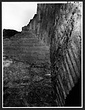
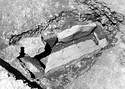
Exploratory excavation trench between east front of Hellenistic Metroon and Great Drain.
Cf. Hesperia Suppl. 4 (1941), p. 106.
Cf. also Metroon Drain Cut I 9:1 and F-G 12:1 and H 12:9 ... 8th-6th c. B.C ... Cf. also Metroon Drain Cut I 9:1 and F-G 12:1 and H 12:9. |
Exploration in the area between the east front of the Hellenistic Metroon and the Great Drain, from accumulated road metal of early north-south road.
For levels in the same road further south, see F-G ... 575-525 B.C. |
Cut to east of Exedra. Accumulated road packing between the Stoa of Zeus and the early altar to the east, various levels and dates, as late as early as 6th c. B.C. and as late as 5th c. A.D ... 15-17 April 1935 |
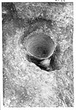
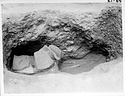
| Side-chamber at the bottom of a circular shaft. AA 27; ST 103 from shaft above burial. PD 427 ... Neolithic |
Trial cut at 26/ΙΣΤ-ΙΖ, Layer I; Circular Building, 22m south of Eleusinion. P 30171, P 30172, L 5818 added on 7 May 1973 ... 4th c. B.C ... Trial cut at 26/ΙΣΤ-ΙΖ, Layer I; Circular Building, 22m south of Eleusinion. |
| Susan I. Rotroff ... Grave 2 (bis). Cut into by builders of I 5:2. No remains.
Possible contents in I 4-5:1 Layer C (= layer 6, lower building fill), catalogued as ΒΓ 2065 - ΒΓ 2125 ... Middle Helladic or later Bronze Age (date uncertain) ... Grave 2 (bis). Cut into by builders of I 5:2. ... Possible contents in I 4-5:1 Layer C (= layer 6, lower building fill), catalogued as ΒΓ 2065 - ΒΓ 2125. |
Crosscut between Middle stoa Piers 1 and 2 from west (south aisle), layer II.
Chiefly late 5th to mid-4th c. B.C. Coins:
2 July 1965 #1 ... Late 5th to mid-4th c. B.C. |
Well east of Geometric Grave. The upper part collapsed into a pit, cut into by Middle Geometric grave I 18:1 and by a Byzantine wall. Some evidence for period of use; little pottery. At the top a few Geometric ... Early Protogeometric ... The upper part collapsed into a pit, cut into by Middle Geometric grave I 18:1 and by a Byzantine wall. ... At the top a few Geometric sherds, perhaps displaced from I 18:3. |
Well beneath 4th c. Klepsydra Drain, within foundations of west end of the Middle Stoa. Diameter 0.90m, cut through bedrock, with handholes on sides. Top 4.50m. dumped fill; 4.50-6.15m. period of use ... Mid-8th c. B.C. |
| Susan I. Rotroff ... Grave 5. Adult (female?) inhumation.
Cist grave lined and covered with slabs of limestone, sandstone and schist. Cut into virgin soil under Royal Stoa at I/12,13-5/3,4. Grave measures 1.79x0.39-0.49x ca ... Final Mycenaean/Submycenaean ... Cist grave lined and covered with slabs of limestone, sandstone and schist. Cut into virgin soil under Royal Stoa at I/12,13-5/3,4. |
| A tile lined well under Room I of Byzantine House.
A concrete shaft belonging to the mill cut off the top of the well and left in place 3 complete sets of tiles and most of a fourth set. All but the lowest ... 17-18 c. A.D ... A tile lined well under Room I of Byzantine House.
A concrete shaft belonging to the mill cut off the top of the well and left in place 3 complete sets of tiles and most of a fourth set. |
Located beneath line of Poros Gutter, from a square settling basin cut in bedrock at the north end of Trench II, South of Theseion, 1.30m below the modern road surface. The basin is lined with rough-picked ... Last quarter of 5th c. B.C.-early 4th c. B.C. |
| Susan I. Rotroff ... Grave 4 under Royal Stoa. Cist Grave cut into bedrock and lined with limestone and schist slabs. There were two layers of cover slabs with a layer of dirt between. Grave measured 0.98x0,25-0,32x0,25-0,30 ... Final Mycenaean/Submycenaean |
| Located in Middle Stoa, west, south aisle, beneath pressure pipe (cf. A 4900). The siting of the well is remarkable in its proximity to Well I 13:3, also Geometric in date, which was found in 1968 only ... Second half of 8th c B.C ... The siting of the well is remarkable in its proximity to Well I 13:3, also Geometric in date, which was found in 1968 only some 1.70m to the northwest (under the Klepsydra Drain).
Diameter of just over 0.80m. with handholds cut into the west and east sides of the shaft at meter-long intervals all the way down.
|
| Homer A. Thompson ... (Grave XXX: EG)
Rectangular cutting with burned bones of a female 40-45 years old, and both burned and unburned pottery fragments.
Rectangular trench, measuring approximately 0.80m long, 0.40m wide, with ... Middle Geometric I |
| (Grave XXIX: EG).
Rectangular cutting with remains of charred human bones and both burned and unburned pottery fragments. Bones discarded.
Rectangular trench cut through earth into bedrock, oriented east-west ... Middle Geometric I |
Burial disturbed. Located in Middle Stoa, north aisle, "upper trench", piers 3 and 4. Two individuals: small child (ca. 5 yrs. old) and adult female.
In its disturbed state the burial was found (at elevation ... First half of 7th c. B.C. |
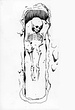
| Susan I. Rotroff ... Grave 2. Adult female inhumation. Grave extending under the south retaining wall of the Temenos of the Royal Stoa. It is oriented ne-sw, with head at sw. Grave built of slabs of schist, with packing of ... Final Mycenaean/Submycenaean |
| Eugene Vanderpool ... Rectangular pit, oriented east-west, cut party into filling of Early Protogeometric pit-well (I 18:4), to a preserved depth of about 0.30m. A late Byzantine wall founded below the floor of the grave destroyed ... Middle Geometric I ... Rectangular pit, oriented east-west, cut party into filling of Early Protogeometric pit-well (I 18:4), to a preserved depth of about 0.30m. ... The earth-cut sides of the tomb-pit were in part lined with fieldstones, and similar fieldstones were encountered in the fill off the tomb. |
| Well at 52/Ι, on the lower northeast slopes of the Areopagus. It was cut down and re-used in the late Roman period, in connection with the water channel. Use fill of 1st to early 2nd c.
Dump fill 5th to ... Early to Late Roman |
| Susan I. Rotroff ... Burial 3 beneath the floor of the Stoa Basileios. It consisted of a rectangular pit cut into bedrock to a depth of 0.44m, lined on all sides and covered with an admixture of narrow stone slabs of soft ... Final Mycenaean/Submycenaean |
Pit in SW corner of Heliaia Peristyle (mint).
The four Athenian imperial coins (Κ-1641 - Κ-1644) belong to the Athenian Imperial Group III, a series that can be very closely dated to the middle of the ... Mid 3rd c. A.D. |
Cistern to N of well in Room 9 of South Stoa I.
The well apparently cut through some cistern or early cavity which the builders of the well filled with whole amphorae and stones. We did not remove all ... 7 July 1967 ... Cistern to N of well in Room 9 of South Stoa I.
The well apparently cut through some cistern or early cavity which the builders of the well filled with whole amphorae and stones. |
Debris, Room I of Street Stoa (R/16,20-13/10,15).
The lack of any rooftiles and similar architectural debris suggests that perhaps it was brought in from an adjacent area and dumped in the room. This is ... 6-8 May 1975 ... Debris, Room I of Street Stoa (R/16,20-13/10,15).
... One would be that after the Herulian sack the upper walls were so badly damaged that it proved easier to cut down the floor level rather than rebuild the walls (cf. refurbishing of the Metroon). |
| Rodney S. Young ... RSY/JP Disturbed Geometric burial over "Sacrificial Pit VI" (Grave B 21:22). Grave IX in notebook. Bones discarded?
Pottery found in the upper filling of a sixth century cremation pit, which had perhaps ... Middle Geometric II/Transitional to Late Geometric |
| Grave 1 in notebook (E.L. Smithson: Grave XXV: PG). No remains. Probable trench-and-hole.
JP
Roughly circular pit measuring 0.39m in diameter cut into bedrock to a depth of 0.72m. Pyre refuse-described ... Late PG/EG I |
N-S Cut on 20m. line (area of Road, area of Stoa, area N of Stoa)
various levels and dates over the three areas.
Investigations to the northwest of the market square in the area of the road that bordered ... Protogeometric to Late Roman ... N-S Cut on 20m. line (area of Road, area of Stoa, area N of Stoa)
various levels and dates over the three areas.
... No subdivisions are given but the layers and of the stoa are dated over the three areas as follows:
Area of Road:
Layer I- IV and pit below Layer I: 1st c. ... Area of Stoa:
Layer I: Early Roman
Layer II: Hellenistic
Layer III: 1st c. |
| Homer A. Thompson ... Cremation burial (trench-and-hole) under S. edge of E-W Street, southern burial. In some records as Grave XLVI.
Neat trench, rectangular as preserved, but may have originally been square, cut partly through ... Early Geometric I |
Well cut through cistern at 6/ΝΕ (C 9:7).
The stele I 3244 in position in the cistern over the mouth of the well is listed with the cistern deposit C 9:7. Coins:
26 February 1936 #2-#4
27 February 1936 ... A.D. 1st ... Well cut through cistern at 6/ΝΕ (C 9:7).
The stele I 3244 in position in the cistern over the mouth of the well is listed with the cistern deposit C 9:7. |
Well cut through cistern at 40/Θ on Kolonos Agoraios (E 11:1). Two use periods plus an upper dumped fill from which the following objects: B 319, I 3994, SS 5745, T 1235. Coins:
6 April 1936 #18-#21
7 ... First half of 1st c. A.D.
4th-early 5th c. A.D ... Well cut through cistern at 40/Θ on Kolonos Agoraios (E 11:1). Two use periods plus an upper dumped fill from which the following objects: B 319, I 3994, SS 5745, T 1235. |
N-S Cut on 50m. line (area of Road, area of Stoa, area N of Stoa) various levels and dates over the three areas.
Investigations to the northwest of the market square in the area of the road running out ... Prehistoric to Roman ... N-S Cut on 50m. line (area of Road, area of Stoa, area N of Stoa) various levels and dates over the three areas.
... Area of Stoa:
Layer I: 2nd-3rd c. A.D.
... Area North of Stoa:
Layer I: early Roman
Layer II: late 3rd-early 4th c. |
| Eugene Vanderpool ... Grave (E.L. Smithson: Grave XVI: PG). Bones discarded.
Only the lower portion of the urn-hole was preserved in bedrock, roughly oval in outline, with a maximum preserved width at the top of 0.70m narrowing ... Late Protogeometric/Early Geometric I |
A well on the NW slope of the Areopagus; unfinished well-shaft dug to a depth of only 3.05m., and refilled with broken pottery and other debris. The shaft clearly was begun with the intention of digging ... Ca. 520-480 B.C ... "The two fills (Fill I to 1.75m.; and Fill II, 1.75-3.05m.) appear to be contemporary" (deposit nb.). ... Lots ΓΓ 499-501: Top to -1.75m (Fill I), black glaze fragments.
... Lots ΓΓ 506-511: Top to -1.75m (Fill I), coarse.
Lots ΓΓ 512-515: -1.75m to bottom (Fill II), coarse. |
| Tom Milbank ... An unlined and relatively narrow (ca. 0.82m. in diameter) well cut through hard-pack and bedrock. Although three periods of use can be discerned in the stratigraphy of the well below a depth of ca. 5.47m., ... Middle Geometric I |
| Homer A. Thompson ... Cremation burial (trench-and-hole) under S. edge of E-W Street, northern burial. In some records as Grave XLVII.
The western part of the offering trench of the tomb was lost to a Turkish cess pit, and ... Middle Geometric I |
| Laura Gawlinski ... Circular pit uncovered in Early Building II, south of Room E latrine, adjacent to the preserved latrine floor surface. Continues beneath the latrine surface and the western scarp (unexcavated). Fill relatively ... Late 5th c. B.C ... Appears to be cut into surrounding harder fills. ... At least three layers of fill.
Layer I 57.98-57.87m, harder fill with what appeared to be decomposing mudbrick.
... This pit seemed to be cut into surrounding harder fills that were also of the 4th c. |
Lower fill:
See Deposit G-I 11-12, where the finds are again listed.
Dug as Tholos Trench A, Layer VI, no finds.
Dug as Tholos Trench C, Layer IV+Va, A 756, A 757, P 10507.
Dug as Tholos Trench N, Layer ... 6th c. B.C ... Lower fill:
See Deposit G-I 11-12, where the finds are again listed.
... See Deposit G-H 10-11, where the finds are again listed.
Cut S. of Metroon, Layer XII, (Section Β), P 5878, L 1866.
|
| Eugene Vanderpool ... Grave (adult female). (In some records as Grave XXXI).
The tomb was partly destroyed in antiquity; there are sherds of all periods down to Late Roman (and later) note din the fill immediately above it ... Middle Geometric I |
| Dorothy Burr Thompson ... Child's Grave (E.L. Smithson: Grave XXVIII: G).
Cf. Container Lot ΣΤ 165 (fill over geometric grave).
Neat, rectangular, unlined trench, cut into bedrock to a preserved depth of 0.20m,below the level ... Early Geometric I |
| Margaret Crosby ... Grave 1 (Grave XXVI: EG) Urn cremation (trench-and-hole), adult male?
[JP]
Boots or Booties Grave. Near the west branch of the Great Drain, about 100m to the southwest of the Agora horos inscription ... Early Geometric I |
| Dorothy Burr Thompson ... Grave 2. Urn cremation (trench-and-hole). In some records as XXIII.
Variously labeled as grid 7/Δ, 7/Γ and 7/Γ-Δ.
Rectangular pyre trench cut through earth into bedrock, with only the lowest 0.04m surviving ... Transitional Late Protogeometric/Early Geometric I |
| John Travlos ... (Grave XXXII: EG) Urn cremation (trench-and-hole). Published as cremation burial of a warrior.
The tomb was probably originally oriented north-south, with the urn-hole at the south end. The north side ... Transitional Early Geometric II-Middle Geometric I |
| Eugene Vanderpool ... Grave (E.L. Smithson: Grave II: SM).
Unlined trench, roughly the size of the deceased, cut into bedrock to a depth of just over 1.50m. Oriented north-south, the tomb pit measured 1.69m in length (length ... Late Mycenaean/Submycenaean-Earliest Protogeometric ... Unlined trench, roughly the size of the deceased, cut into bedrock to a depth of just over 1.50m. Oriented north-south, the tomb pit measured 1.69m in length (length of the skeleton in situ, 1.65m), and had a width, as excavated, of 0.40-0.58m. the west side was slightly undercut, and a small part of the east side was cut buy the cellar wall of a modern house, but only the very edge of the tomb at an upper level was touched, whereas the contents of the grave were untouched. ... Notebook says 67/Θ-Ι and then 67/I, cards say 67/I. |
| James H. Oliver ... (E.L. Smithson: Grave IX: PG). Two children's skeletons one on top of the other. Cf. PD 329 for PD 430 for second skeleton, same deposit.
PG grave about 25m. SW of Cistern A at 46/ΜΔ.
[In some records, ... Developed Protogeometric |
| Well cut into bedrock, associated with late Roman building G in ΕΛ 1.2m in diameter, narrows to 0.5m at bottom. Disturbed by later pits at top. Excavated from 85.77-79.25m (6.52m), but bedrock at 85.91m ... Late 4th/early 5th AD ... Well cut into bedrock, associated with late Roman building G in ΕΛ 1.2m in diameter, narrows to 0.5m at bottom. ... Layers:
I. (85.77-84.94m) mixed rocky fill.
|
Well at 19/ΚΔ, beneath the west colonnade of the Square Market Building in the northeast corner of the Agora. Diameter ca. 1.25m. Water level ca. -3.50m. The construction of the well was rather careless, ... Ca. 580-560 B.C ... Baskets I and II found 7 April 1938
Basket IV and mud found 14 April 1938 ... T 1653 and P 12680 suggest that the well-diggers may have cut through a child's burial of Mycenaean times.
|
| Laura Gawlinski ... Ovoid pit cut into bedrock or sterile fill just north of preserved floor surfaces in the so-called Strategeion. Length (west-east) 2.6m; widens at 1.25m from the east scarp so that at west pit is 0.75m ... 4th B.C ... Ovoid pit cut into bedrock or sterile fill just north of preserved floor surfaces in the so-called Strategeion. ... It appears likely that this pit cut into at least the lower floor layers to the south.
... Therefore, it seems that both whole and fragmentary amphorae were dumped here.
Layer I: 57.59-56.99m.
|
| Well cut into bedrock under late Roman building in ΕΛ. 1.2m in diameter with small cutting of unclear function at south edge about 0.2m wide. Walls cut straight down, tapering near bottom to 0.8m. Footholds ... Late Archaic ... Well cut into bedrock under late Roman building in ΕΛ. 1.2m in diameter with small cutting of unclear function at south edge about 0.2m wide. Walls cut straight down, tapering near bottom to 0.8m. ... Layers:
Hellenistic fill under Roman floors
I.(86.34-85.93m) rubble
II.(85.93-85.58m) dark brown rubble
III.(85.57-85.30m) more stony rubble
IV.(85.30-84.80m) very rocky, almost sterile, increase of clay and sand
V.(84.80-84.03m) less rocks, almost sterile, increase of clay and sand
Late 6th/early 5th B.C dumped fills
VI.(84.03-82.64m) mix of clay and sand deposits, dog skulls
VII.(82.64-81.79m) mostly sand
VIII.(81.79-81.39m) light brownish-grey clay, almost sterile
IX.(80.39-80.99m) mix of grey clay, brown clay and sand, much ceramic
X.(80.99-80.24m) sandy, more ceramic
XI.(80.19-77.74m) sandy, enormous stones (some 100kg+). |
Well shaft cut through a cistern channel which was then packed with three amphorae (P 3123, P 3125, P 4201) of 1st or at latest early 2nd c. A.D. (These three amphorae could be considered with F 15:2) ... 3rd-4th c. A.D ... Well shaft cut through a cistern channel which was then packed with three amphorae (P 3123, P 3125, P 4201) of 1st or at latest early 2nd c. ... Objects SS 2040, SS 2041, SS 2043, P 3143, P 3144, MC 73, I 1454 are included with F 15:2, cistern fill (pp. 81, 573).
|
Mycenaean Well (S/1,2-13/20,14/1). Underneath the NE Room of the Library of Pantainos, along its S side, as a cutting in bedrock containing reddish fill with bits of green bedrock. The feature is rectangular ... 30 June-23 July 1975 ... The location of the well immediately beside a wall of the library main room, as well as the coincidence of the top edge of the well with the bottom level of the library Main Room wall, would suggest that the shaft was cut into during preparations for the construction of the library, which also removed any structural remains that may have been associated with the use phases of the Classical wells.
... (layers I-III), Roman pottery from 66.10-65.00masl ? |
| Extract from notebook ΠΘ XIX, pp. 3644-3646. Well at 105/ΝΗ (report on sorting of pottery, July 19, 1951 - H.S. Robinson).
"Not a useful well" HSR.
Well dug to 1.50m., vi/9/36; dug from 1.50m. to bottom ... Early Roman; use fillings of 2nd. c. B.C. and 1st. and 4th. c. A.D.; dumped filling of late 4th. c. (HSR)
Fill I: 2nd. c. B.C.
Fill II-V: to second half of 4th. c. A.D.
Fill VI: mixed to Byzantine ... Well dug to 1.50m., vi/9/36; dug from 1.50m. to bottom (22.80m.), iv/9/37 - iv/23/37. Cut in bed-rock (no tiles reported); diameter at mouth: 1.04m.; depth 22.80m.
... Subdivisions: (PAF/data mgmt)
.1= Fill I = 22.80 (bottom)-22.25m.
.2= Fill II = 22.25-21.30m.
.3= Fills III, IV, V = 21.30-1.50m.
.4= Fill VI = 1.50m to top, including Dump |
|
|