|
|
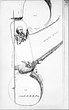
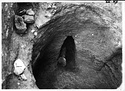
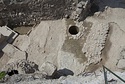
Cistern chamber in the area of the southeast Temple, the mouth cut back in antiquity ... Late 4th - early 3rd c. B.C ... Cistern A |
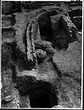
Cistern (diameter 0.90m) with two channels; the fill of the cistern proper, below the scant upper (Byzantine) deposit, appears to have been dumped all at the same time, to 325-275 B.C. Notebook says "all ... 325-275 B.C ... Cistern A |
Cistern A for 1935 (there is another Cistern A, for 1936, D-E 8-9:1) Coins:
16 May 1935 #4-#5
17 May 1935 #1-#2
18 May 1935 #1-#2
20 May 1935 #1-#2
22 May 1935 #1
23 May 1935 #2-#6
24 May 1935 #1-#7
25 ... 16-25 May 1935
6 February 1936 ... Cistern A for 1935 (there is another Cistern A, for 1936, D-E 8-9:1) ... Also, from rock-cut channel leading south from cistern (27/8/1961) S 589, S 590, SS 4316, IL 254, IL 258, IL 286, T 885, T 901, A 578, P 5947, P 6449 and coins ΠΘ-34, ΠΘ-35. |
| Listed in notebook as at 6/ΛΗ but later found to be at 12/ΛΗ.
Originally B 16:1.
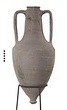
Large cistern distinguished by a short (1.75m) blind tunnel running SW from its floor, and a shallow (ca. 0.80m originally) ... Ca. 150 B.C ... Large cistern distinguished by a short (1.75m) blind tunnel running SW from its floor, and a shallow (ca. 0.80m originally) settling basin just south of the cistern mouth. The lowest part of the cistern as well as the tunnel had been packed with amphoras. |
| Report on sorting of pottery, August 1951, by H.S. Robinson [nb p. 3666].
Cistern discovered and dug to 1.60m., vi/10/36; dug to bottom iv/22/37-v/6/37. Diam. At mouth 0.26m.; neck begins to widen out ... 1st. c. B.C. to post-Herulian ... Robinson [nb p. 3666].
Cistern discovered and dug to 1.60m., vi/10/36; dug to bottom iv/22/37-v/6/37. ... Well-plastered, without footholds; at 2.90-3.85m. a passage opens out to the south, curving slightly eastward, for 5.00m., at which point it is blocked by fill from another (cistern?) |
| Filling in eastern channel at W. end of casting pit A 16:1. Early Roman (1st c. A.D.) but with some later disturbances (3rd. and 4th. c. A.D. and Byz.). P 25747 (VG thinks strayed from A 16:1)
Estimated ... 1st. c. A.D. |
| Construction filling of well N 20:3 which was dug through this cistern; a few later sherds at upper levels may result from late repairs to well tiling. Coins:
6 April 1938 #14-#15
8 April 1938 #4 Some ... Second half 1st c. A.D ... Construction filling of well N 20:3 which was dug through this cistern; a few later sherds at upper levels may result from late repairs to well tiling. |
| Cistern in the valley between the Areopagus and the Hill of the Nymphs. Simple, flask-shaped chamber withdraw-shaft; no tunnels. Mouth cut away in Byzantine times. Lower filling, 3rd c. B.C. Coins:
25 ... 25-30 April 1947 |
| "From the phot. and description, p. 555, this appears to be a built pithos, rather than a cistern." [deposit nb] Grid 30/ΙΔ also mentioned ... 28 July-3 August 1931 ... "From the phot. and description, p. 555, this appears to be a built pithos, rather than a cistern." |
| Cistern at 79/ΜΗ.
A well dug through at a later date destroyed all cistern filling.
No filling preserved. No typed list ... Probably 3rd cent. B.C ... Cistern at 79/ΜΗ.
A well dug through at a later date destroyed all cistern filling.
|
Reused as part of a modern cistern; scanty remains of ancient fill towards bottom. No containers of pottery ... 1st c. A.D ... Reused as part of a modern cistern; scanty remains of ancient fill towards bottom. |
A large chamber cistern filled in the second c. BC when a well (C 9:16) was dug through its floor. Well tiles were run up from the floor of the cistern to just below its neck; a double layer of complete ... Late 2nd c. B.C ... A large chamber cistern filled in the second c. BC when a well (C 9:16) was dug through its floor. Well tiles were run up from the floor of the cistern to just below its neck; a double layer of complete wine amphorae was packed over the floor around the well tiles to hold them in place. |
Not a group, one object only.
Dug bedrock. Coins:
29 April 1947 #1 |
A small flask-shaped cistern on the lower southeast slope of Kolonos Agoraios. Lined with hydraulic cement and containing a large quantity of glazed table ware and a fair amount of coarse ware; a homogeneous ... 350-325 B.C ... A small flask-shaped cistern on the lower southeast slope of Kolonos Agoraios. Lined with hydraulic cement and containing a large quantity of glazed table ware and a fair amount of coarse ware; a homogeneous fill with joins at all levels. |
Coins:
25 April 1947 #1
26 April 1947 #1-#5
28 April 1947 #1-#3 |
Coins:
29 April 1947 #2-#4
30 April 1947 #1-#2 ... 2nd. c. B.C. |
Evidence of stratification into five layers, although joins between the layers. Layer VI added when the construction of the Roman building above required it. No subdivisions assigned.
Flask-shaped cistern ... Early 3rd-late 2nd c. B.C ... Layer I: red earth in the central depression, probably the accumulation of the last period of use of the cistern as a source of water. ... It was put in to fill the cistern immediately after Layer II, and having settled, was later supplemented with layers IV and V, in close succession. |
"baskets" 1-5 Coins:
22 April 1937 #7
23 April 1937 #17-#18
24 April 1937 #1
coins from Dump:
28 May 1937 #31-#32 ADDENDA Top-early 4th. c. consistent with coins of Licinius and Maximinus in good condition ... post-Herulian |
Coins:
26 April 1937 #1-#7
27 April 1937 #2-#5
28 April 1937 #1 ... 1st. c. B.C.-1st. c. A.D. |
"baskets" 11-12 Coins:
29 April 1937 #1-#2
6 May 1937 #1 d5.20m.-Bottomd.
ADDENDA Bottom-see 1970 Hayes's list ... 1st. c. B.C.-1st. c. A.D. |
According to dates of finding: 'Mixed Greek and Roman'. |
Chronology based VG's analysis of jars and stamps, 12 June 1957.
P 25802: Pergamene and Arretine fragments, recorded along with the wine jars, but the pottery apparently not kept separate and these pieces ... To ca. 140 B.C. |
Cistern at the southeast foot of Kolonos Agoraios.
Nbp. 2369: Two chamber cisterns, 88/ΛΔ and 100/ΚΘ, united by a long straight passage running almost due N-S. A draw shaft at 95/ΚΘ is set just off the ... Late 2nd-early 1st c. B.C.-86 B.C ... Cistern at the southeast foot of Kolonos Agoraios.
Nbp. 2369: Two chamber cisterns, 88/ΛΔ and 100/ΚΘ, united by a long straight passage running almost due N-S. ... Nbp. 1787: This cistern contained a hopeless mixture of sherds, from hellenistic to late roman ... One can say in a general way that the hellenistic fill lay over the bottom of this cistern and the roman above it, but every basket of Hellenistic contained also Roman sherds.
|
Cistern System #1f: Shaft at 1/ΝΘ = Well A. Scanty dumped filling. Coins:
19 February 1936 #2-#3
20 February 1936 #16-#20
21 February 1936 #5-#7
22 February 1936 #1 ... Mid-4th to 3rd c. B.C ... Cistern System #1f: Shaft at 1/ΝΘ = Well A. |
Within the precinct of the Hephaisteion, about 10m. north of the north stylobate of the temple.
Flask-shaped pit (W. (bottom) 3.14 x 2.73m) probably originally intended as a cistern; used for dumping ... Ca. 375-310 B.C.-Byzantine ... (bottom) 3.14 x 2.73m) probably originally intended as a cistern; used for dumping waste from a metal furnace. A substantial mass of iron slag found at the bottom along with a thick waste of bricks, charcoal and sand and a quantity of pottery. At 1.60m. a layer of stones, also containing some pottery, had been dumped in over the furnace waste. |
Note of 20-III-52 (deposit nb): Have looked up notebook pp. 1101 ff. The fill of this well was certainly Roman, also some part of the fill behind the tiles - but is that only a part tunneled as a passage ... 2nd-3rd c. A.D ... The fill of this well was certainly Roman, also some part of the fill behind the tiles - but is that only a part tunneled as a passage from another cistern, which was stopped up by late jars when the late people found the shaft of 86/ΞΕ? |
Cistern at 60/ΙΕ; bell-shaped cistern with a channel 1.65m high and 4.60m long, leading to a dead end against bedrock. This channel runs north with a slight curve to the east and looks as though it was ... Second half of 3rd c. B.C.-Early 2nd c. B.C ... Cistern at 60/ΙΕ; bell-shaped cistern with a channel 1.65m high and 4.60m long, leading to a dead end against bedrock. This channel runs north with a slight curve to the east and looks as though it was intended to meet a channel which started west from the cistern at 53/ΚΓ. ... If this be true, the cistern at 53/ΚΓ which was disturbed in late Roman times is contemporary with that at 60/ΙΕ. |
Well in the industrial area west of the Areopagus.
A flask-shaped cistern in House H with a dumped fill of the late fifth century brought from elsewhere and evidently deposited sometime in the 3rd c. B.C ... Ca. 420-400 B.C ... Well in the industrial area west of the Areopagus.
A flask-shaped cistern in House H with a dumped fill of the late fifth century brought from elsewhere and evidently deposited sometime in the 3rd c. |
Cistern at 43/ΙΣΤ, outside the southeast corner of the market square, slightly west of the Panathenaic way. A small neat plaster-lined cistern filled with material evidently all dumped at the same time ... Ca. 375-350 B.C ... Cistern at 43/ΙΣΤ, outside the southeast corner of the market square, slightly west of the Panathenaic way. A small neat plaster-lined cistern filled with material evidently all dumped at the same time. |
With cistern at 17/ΟΕ-ΟΣΤ (P 10:2), two chambers connected by a passage.
18/Π went out of use first and was closed off from 17/ΟΕ-ΟΣΤ; filled up at one time with material dating between 350 and 300 B.C ... 325-285 B.C ... With cistern at 17/ΟΕ-ΟΣΤ (P 10:2), two chambers connected by a passage.
18/Π went out of use first and was closed off from 17/ΟΕ-ΟΣΤ; filled up at one time with material dating between 350 and 300 B.C. with a miscellaneous collection of tiles, coarse pottery and other household objects, with a few good black-glazed pieces and two dateable coins.
17/ΟΕ-ΟΣΤ continued in use until ca. 250 B.C. when it was filled up at one time with an apparently contemporary group of discarded household pottery. A slight accumulation of infiltrative material of 1st c. A.D. was found at the top, probably introduced when the top of the cistern was broken in. |
Also noted as 32-33/Μ. The N wall collapsed. A very shallow deposit of ancient fill over its stuccoed floor. Coins:
10 May 1939 #3-#4 ... Hellenistic, 4th-early 3rd, Roman, 4th c. A.D. |
A cistern leading to the east of the road leading from the southwest corner of the market square. Filled all at one time, last quarter of 2nd. c. B.C. (nbp. 493).
Included are the Hellenistic finds from ... Late 2nd c. B.C ... A cistern leading to the east of the road leading from the southwest corner of the market square. ... Included are the Hellenistic finds from "north cistern arm" and "south cistern arm" as recorded from well 96/I: SS 2040, SS 2041, SS 2043, MC 73, I 1454, P 3143, P 3144. ... Coins:
6 March 1934 #1 (well 96/Ι in north cistern arm)
9 March 1934 #1
10 March 1934 #1-#9, #23-#24 (found in baskets from 94/Θ?)
|
Chamber cistern at 95/Κ and Cistern shaft at 95/ΚΕ plus the passage between. System heavily disturbed throughout in Turkish times except for a small amount of red fill on floor of shaft. Coins:
4 May 1936 ... Hellenistic ... Chamber cistern at 95/Κ and Cistern shaft at 95/ΚΕ plus the passage between. System heavily disturbed throughout in Turkish times except for a small amount of red fill on floor of shaft ... Subdivisions:
.1=cistern shaft and passsage
.2=cistern chamber |
According to the excavator " a pre-herulian filling dumped in to fill the cistern some few years after the Herulian destruction". Coins:
10 June 1936 #2-#6
11 June 1936 #1-#19
12 June 1936 #23-#27 P 11936 ... A.D. 267 to mid 3rd c ... According to the excavator " a pre-herulian filling dumped in to fill the cistern some few years after the Herulian destruction". |
Well dug through N 18:1 (cistern at 79/ΜΗ) on the lower north slopes of Areopagus; the cistern was the northern chamber of a system; the southern chamber is at 84/ΝΣΤ (N 19:1).
A single dumped deposit ... 3rd-4th c. A.D ... Well dug through N 18:1 (cistern at 79/ΜΗ) on the lower north slopes of Areopagus; the cistern was the northern chamber of a system; the southern chamber is at 84/ΝΣΤ (N 19:1).
A single dumped deposit filled both the well-shaft and the cistern ... It included marbles, a window tile, a millstone, and a well-head as well as pottery and other objects: destruction debris. |
With cistern at 18/Π (P 10:1), two chambers connected by a passage.
18/Π went out of use first and was closed off from 17/ΟΕ-ΟΣΤ; filled up at one time with material dating between 350 and 300 B.C.
17/ΟΕ-ΟΣΤ ... 17 April 1937
27-28 May 1937 ... With cistern at 18/Π (P 10:1), two chambers connected by a passage.
18/Π went out of use first and was closed off from 17/ΟΕ-ΟΣΤ; filled up at one time with material dating between 350 and 300 B.C.
17/ΟΕ-ΟΣΤ continued in use until ca. 250 B.C. when it was filled up at one time with an apparently contemporary group of discarded household pottery. A slight accumulation of infiltrative material of 1st c. A.D. was found at the top (P 19718), probably introduced when the top of the cistern was broken in.
|
| Not completely excavated due to instability of chamber walls and water. Sherds of all periods - Greek, Roman and Byzantine - were found in it [nbp. 424].
Re-examined in 2010. Photos and notes on NB pages ... 10th c. A.D ... Photos and notes on NB pages listed below.
2010 Final Report
Cistern G 14:3 is plaster lined and built with stone, at least in its upper portion, and contains a series of footholds at the northeast and southwest. Around its mouth is the remains of a square platform of tile, stone and mortar, with a segment of a square ceramic drain running along the northeast. It connects with cistern G 14:5 through an underground passage (No new lots or finds). |
Cistern system West of Bouleuterion: (see also B: cistern system to West of Tholos). Third Chamber from North. A well was dug through the bottom in Byz. times. Cf. deposit F 9:2. Coins:
3 May 1934 #1 ... 160-140 B.C., with Byz. disturbance
Early 3rd to late 2nd c. B.C. POU ... Cistern system West of Bouleuterion: (see also B: cistern system to West of Tholos). Third Chamber from North. A well was dug through the bottom in Byz. times. |
| Marcie Handler ... The contents of this Hellenistic cistern shaft were excavated in a series of layers: the preserved top of the shaft, six layers in the shaft and the fill within the tunnel. At the bottom of the shaft on ... POU: Mid-3rd c. BC
Dumped fill: after 225 BC ... The contents of this Hellenistic cistern shaft were excavated in a series of layers: the preserved top of the shaft, six layers in the shaft and the fill within the tunnel. At the bottom of the shaft on its northwest side, a vaulted tunnel lead off to the northwest, which was excavated to a distance of 1.5m. The shaft was filled with a mixture of pottery, roof tiles (mostly painted), bone, charcoal, and chunks of the shaft lining that must have fallen from the upper portion of the shaft, which is no longer preserved. |
The East Chamber of a double cistern lying between the northeast corner of the Theseion and the Annex to the Stoa of Zeus Eleftherios. ... Both chambers went out of use as water containers simultaneously ... Ca. 200 B.C ... The East Chamber of a double cistern lying between the northeast corner of the Theseion and the Annex to the Stoa of Zeus Eleftherios. ... Both chambers went out of use as water containers simultaneously and served for a short time as refuse dumps ... this occurred in Hellenistic times. ... The following objects are published together with those from G 6:2 but were found in the west chamber of the cistern system which is deposit F 6:3: A 230, P 366, P 367, P 403-P 407, P 2387-P 2393, L 459, L 461, L 462, L 464, L 1114, L 1115, T 133, T 134.
|
The cistern at 70/ΝΗ and the channel [65/ΞΑ] between chambers 70/ΝΗ and 63/ΞΒ seem to have a uniform dumped filling of first half 2nd c. A.D ... First half of 2nd c. A.D ... The cistern at 70/ΝΗ and the channel [65/ΞΑ] between chambers 70/ΝΗ and 63/ΞΒ seem to have a uniform dumped filling of first half 2nd c. |
| Dumped filling mostly of 3rd c. A.D., but dumped as late as 5th century. Nbp. 143: The fill in this cistern was of three kinds: to within .60m. of the floor plain broken bedrock with no sherds; then a ... 10-17 February 1937 ... Nbp. 143: The fill in this cistern was of three kinds: to within .60m. of the floor plain broken bedrock with no sherds; then a layer 15-20 cm. thick with Turkish sherds, and [then] Roman 3rd c. pottery, mostly fragments of micaceous red water jars, over the floor. |
Channel to West of Cistern at 63/ΞΒ. Part of Cistern System A which includes the cistern 63/ΞΒ (M 19:2), this channel to the west, and the manhole at 57-58/ΞΔ-ΞΕ. Coins:
31 May 1946 #1
3 June 1946 #1
6 ... Early 3rd c. B.C ... Channel to West of Cistern at 63/ΞΒ. Part of Cistern System A which includes the cistern 63/ΞΒ (M 19:2), this channel to the west, and the manhole at 57-58/ΞΔ-ΞΕ. |
Built against the south wall of the annex to the Poros Building
west of the Areopagus. At the west the upper layer of marble chips carried against it, the lowest were cut by it.
Part of same system as ... 225-100 B.C. |
Cistern C (pit) in West Room of late Roman House.
Mixed dump of material, with a little Classical, much Roman dating at least as late as 3rd century A.D., and large amount of late Hellenistic. Coins:
1 ... Late Hellenistic and Roman ... Cistern C (pit) in West Room of late Roman House.
Mixed dump of material, with a little Classical, much Roman dating at least as late as 3rd century A.D., and large amount of late Hellenistic. |
Cistern at 63/ΛΑ (part of cistern system 63/ΛΑ-65/ΜΑ-70/ΛΣΤ, consisting of two chambers and a well). Roman upper fill with modern cesspool fill above. Channel finds: MC 517, SS 8078.
Only datable object ... 300-195 B.C ... Cistern at 63/ΛΑ (part of cistern system 63/ΛΑ-65/ΜΑ-70/ΛΣΤ, consisting of two chambers and a well). ... Only datable object a Rhodian stamped amphora handle (ca. 211). |
Essentially uniform fill of III-IV c. A.D. with a Byzantine upper fill. Coins:
14 June 1937 #1-#3
15 June 1937 #2
16 June 1937 #1
17 June 1937 #1-#2
18 June 1937 #1-#4
19 June 1937 #1-#4
9 June 1938 #1-#3 ... Late 3rd-mid-4th c. A.D. |
A 3rd. c. B.C. cistern and an unfinished rectangular cutting of the 2nd c. B.C. which destroyed some of its upper part. These two features are combined in this deposit; the following objects are identified ... 3rd-2nd c. B.C ... A 3rd. c. B.C. cistern and an unfinished rectangular cutting of the 2nd c. ... Upper cistern and shaft fill: 14 stamped amphora handles. ... Lower cistern fill: 3 Rhodian amphora handles. latest coin dates in last quarter of 3rd c. |
Cistern at 72/ΛΘ. Under NW corner of Roman House H. Stucco-lined, bottle-shaped cistern, poor condition. Diameter at bottom -2m.
Two tunnels, one leading east, one west, ca. 1.65m high and 0.80m across ... 150-110 B.C. with a few earlier pieces |
Cistern at the southeast foot of Kolonos Agoraios.
Nbp. 2369: Two chamber cisterns, 88/ΛΔ and 100/ΚΘ, united by a long straight passage running almost due N-S. A draw shaft at 95/ΚΘ is set just off the ... Use filling of late 4th-early 3rd c. B.C.
Accumulative fillings of late 3rd-early 2nd and late 1st c. B.C.
Upper dumped filling of 3rd c. A.D ... Cistern at the southeast foot of Kolonos Agoraios.
Nbp. 2369: Two chamber cisterns, 88/ΛΔ and 100/ΚΘ, united by a long straight passage running almost due N-S. ... A revised list of assigned objects prepared by GRE is followed here to sort objects found in the cistern system 88/ΛΔ - 95/ΚΘ - 100/ΚΘ.
|
Two chambers connected by a tunnel, all filled at the same time, but with slight Hellenistic disturbance. Chamber A, to west at 14/ΛΗ, B to east at 14-15/ΛΒ on grid for section RR.
Cistern system ca. 20.00m ... Ca. 325-275 B.C ... Two chambers connected by a tunnel, all filled at the same time, but with slight Hellenistic disturbance. Chamber A, to west at 14/ΛΗ, B to east at 14-15/ΛΒ on grid for section RR.
... Basically a single dumped filling; the presence in the filling of a few later objects ... possibly as late as the second half of the 3rd c., probably indicates a supplementary filling. |
West Chamber of Cistern System #2. This chamber filled earlier than the East Chamber. No stratification but at 3.80m. considerable pottery of the late 5th c. B.C., as in 60/ΛΗ cistern, presumably a portion ... First half of 3rd c. A.D ... West Chamber of Cistern System #2. This chamber filled earlier than the East Chamber. ... B.C., as in 60/ΛΗ cistern, presumably a portion of the Theseion Precinct filling. |
Dumped fill in shaft. Estimated Grid ... Byzantine |
| Matt McCallum ... Plaster lined cistern. The cistern seems to have been bottle shaped; the walls are narrower at the preserved top, which is broken along its entire circuit, and gradually widen until about a third of the ... 12th c. AD ... Plaster lined cistern. The cistern seems to have been bottle shaped; the walls are narrower at the preserved top, which is broken along its entire circuit, and gradually widen until about a third of the way down, at which point they remain consistently vertical until they hit the flat bottom floor. |
Flask-shaped cistern (1959) (Cistern under Room 4 in NE corner of Section). Upper filling soft silt with a little pottery. Lower filling hard silt, almost no pottery.
1.35m in diameter at the floor with ... End of the 4th c. B.C ... Flask-shaped cistern (1959) (Cistern under Room 4 in NE corner of Section). Upper filling soft silt with a little pottery. |
| An extensive cistern system on the lower north slope of the Areopagus, south chamber with blind tunnel extending further south (south tunnel); north chamber; drawshaft further north, extends to north tunnel ... Ca. 320-240 B.C ... The entire interior was covered with a single coat of waterproof plaster. ... Later, the entire tunnel was blocked off by a similar wall set in the side of shaft. ... A.D.
Cistern System, 45/Β and 45/ΙΑ (Hell. |
| Komos Cistern at 66/Κ, on the north slope of the Areopagus. Homogeneous fill.
Thirty-four stamped amphora handles. Eight Histiaian tetrobols, dating 170-160 at the earliest, found near top, possibly an ... Last quarter of 3rd c. B.C.-Early 2nd century B.C ... Komos Cistern at 66/Κ, on the north slope of the Areopagus. ... At least 119 bowls are products of Workshop of Bion; only 15 made by Workshop A. Great similarity among bowls, many with same stamps. ... Four molds made by Workshop of Bion, one perhaps a practice piece made by unskilled apprentice.
|
| Cistern at 53/ΚΓ and channels. The pottery in the cistern and in the two channels was a thoroughly mixed lot of broken material from 5th c. B.C. to 4th c. A.D. and all seemed the same except the bottom ... 5th c. B.C.-4th c. A.D ... Cistern at 53/ΚΓ and channels. The pottery in the cistern and in the two channels was a thoroughly mixed lot of broken material from 5th c. ... A.D. and all seemed the same except the bottom fill in the manhole (nb. p. 616) which was a rather consistent lot of coarse pottery, about 3rd c. |
Cistern at 17-18/ΛΑ (Coroplasts' Dump) outside the market square to the southeast, west of the Panathenaic Way.
Upper and lower fill distinguished during excavation, but material from both appears to ... To ca. 330-320 B.C ... Cistern at 17-18/ΛΑ (Coroplasts' Dump) outside the market square to the southeast, west of the Panathenaic Way.
Upper and lower fill distinguished during excavation, but material from both appears to be contemporary.
The cistern S 19:3 and the well S 19:8, together with a Roman well S 19:1, had collapsed to form a large pit (S 19:5). The cistern was dug separately, although some of its distinctive fill of terracotta figurines and votive material had fallen into the pit S 19:5. |
Cistern System #1c: Shaft (well) at 25/ΞΑ. Began as a manhole but opened up by early-mid Byzantine as a well ... Late 12th c. A.D ... Cistern System #1c: Shaft (well) at 25/ΞΑ. Began as a manhole but opened up by early-mid Byzantine as a well. |
Pocket of soft fill in bedrock at corner of Late Roman house, with a hoard of lead tokens. No pottery catalogued.
Herulian debris: cf. D 10:1, D 11:7 Coins:
25 May 1935 #8 Estimated Grid
No pottery catalogued ... 25 May 1935 |
Cistern-system west of the Stoa of Zeus. Two chambers connected by a tunnel, each with two fills. Lower fill in south chamber contemporary with upper fill in north chamber, at the end of the 4th c. B.C ... Ca. 375-160 B.C ... Cistern-system west of the Stoa of Zeus. Two chambers connected by a tunnel, each with two fills. |
Connected with G 14:3.
There was a layer of Late Roman fill. It rested over a layer of 2nd c. B.C Hellenistic and then another of 4th c. B.C Hellenistic; the passage between the two cisterns contained ... Late Hellenistic ... There was a layer of Late Roman fill. It rested over a layer of 2nd c. ... Therefore, it appears that this cistern had several periods of use: Hellenistic (at least one phase contemporary with the 2nd century B.C, phase of House E to the north), Late Roman (probably associated with the amphora and perhaps also maybe the platform and the drain), and finally Byzantine.
|
Well shaft cut through a cistern channel which was then packed with three amphorae (P 3123, P 3125, P 4201) of 1st or at latest early 2nd c. A.D. (These three amphorae could be considered with F 15:2) ... 3rd-4th c. A.D ... Well shaft cut through a cistern channel which was then packed with three amphorae (P 3123, P 3125, P 4201) of 1st or at latest early 2nd c. ... Objects SS 2040, SS 2041, SS 2043, P 3143, P 3144, MC 73, I 1454 are included with F 15:2, cistern fill (pp. 81, 573).
... It seems more likely that tiles were robbed in late 4th c., one 1st c. amphora of packing fell in and then a 4th c. dump was dropped in, capped by tile fragments; later a 5th c. dump on top.
|
Cistern-shaft at the southeast foot of Kolonos Agoraios.
Nbp. 2369: Two chamber cisterns, 88/ΛΔ and 100/ΚΘ, united by a long straight passage running almost due N-S. A draw shaft at 95/ΚΘ is set just ... Upper fill, Late Roman with some Hellenistic.
Middle fill, Sullan debris to last quarter of 1st c. B.C.
Lower fill, 4th-3rd c. B.C.=POU and abandonment ... Cistern-shaft at the southeast foot of Kolonos Agoraios.
Nbp. 2369: Two chamber cisterns, 88/ΛΔ and 100/ΚΘ, united by a long straight passage running almost due N-S. ... A revised list of assigned objects prepared by GRE is followed here to sort objects found in the cistern system 88/ΛΔ - 95/ΚΘ - 100/ΚΘ.
|
| Cistern and well in Marble Worker's House. Coins:
5 August 1968 #1-#6 (#5 and #6 disintegrated. Missing 19/7/1973)
6 August 1968 #1bis-#25 (#5 in Lot 503 not a coin but bronze bits of nail. #6 not a coin ... 325-275 B.C ... Cistern and well in Marble Worker's House ... Missing 19/7/1973)
6 August 1968 #1bis-#25 (#5 in Lot 503 not a coin but bronze bits of nail. #6 not a coin. |
Cistern at 70/ΚΕ and channels. Part of same system as D 17:3 and D 17:5. It was set against a corner of the lowest foundation block. Thus one is forced to assume that enough of the wall remained at least ... Ca. 200-150 B.C ... Cistern at 70/ΚΕ and channels. ... It was set against a corner of the lowest foundation block. ... After Sulla many of the blocks at the east and were pulled out, the north wall of court F was placed on the western foundations, but at a slightly different angle, and the wall as such ceased to exist.
|
| Phaidon Street Cistern: South Chamber.
Connected by tunnel to O 17:5.
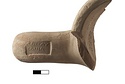
Knidian stamped amphora handle; fragments of five long-petal bowls, one made in worn mold. Type 35 A lamp. Coins
9 August 1957 #1-#3 ... Late 2nd c. B.C ... Phaidon Street Cistern: South Chamber.
... Type 35 A lamp. |
| The cistern was lined with stones at the top with an opening 0.80 m in diameter. For the most part, it seemed to cut into bedrock except along its northern edge where some 5th c. B.C fill remains and main ... 2-19 July 2010 ... The cistern was lined with stones at the top with an opening 0.80 m in diameter. ... The shaft has a cement lining with 4 sets of hand-holes place on opposite sides at intervals of about 0.30 m going down. The opening begins to widen very gradually at about 1 m down, forming a bottle shape, with a maximum diameter of 1.55 m at the bottom, and a total depth of 2.80m. |
Cistern at 9/Β (10/Β on plan), at the NW foot of the Areopagus, some 200m to the west of the Coroplast's Dump. It had evidently belonged to one of the small houses in that thickly populated residential ... Second half 4th c. B.C ... Cistern at 9/Β (10/Β on plan), at the NW foot of the Areopagus, some 200m to the west of the Coroplast's Dump. ... The chamber , lined with the usual waterproof cement, was roughly rectangular at the bottom, measuring north side 1.25m, east side 1.80m., south side 2.06m., west side 1.70m., and reaching a maximum depth of 3.80m.
|
Cistern with two tunnels, the one entering its neck cut off by an early Roman well, the other, at the bottom not excavated.
Chamber conical in shape, with a depressed draw basin in the center of the floor ... Early Roman-3rd c. B.C ... Cistern with two tunnels, the one entering its neck cut off by an early Roman well, the other, at the bottom not excavated.
Chamber conical in shape, with a depressed draw basin in the center of the floor. ... Two molds, stamp for manufacture of molds, and clay stacking ring suggest fill is dump from potter's establishment. all molds and fragments of bowls produced by Workshop of Bion. Cistern M 21:1, 20 meters to southwest, also contained molds and large quantity of bowls, mostly products of Workshop of Bion. |
Late Roman mixed destruction fill.
The fill in both the staircase and the cistern chamber was the same mixed destruction fill containing a large quantity of Hellenistic pottery mixed in with late 3rd-early ... 4th. c. A.D ... The fill in both the staircase and the cistern chamber was the same mixed destruction fill containing a large quantity of Hellenistic pottery mixed in with late 3rd-early 4th c. |
Cistern on the lower Acropolis slopes, west of Panathenaic Way; dumped filling of 1st century B.C.
Bottom diameter 3.90m. Cistern with connecting draw-shaft and a dead end tunnel dates from Late Hellenistic ... 1st century B.C ... Cistern on the lower Acropolis slopes, west of Panathenaic Way; dumped filling of 1st century B.C.
Bottom diameter 3.90m. Cistern with connecting draw-shaft and a dead end tunnel dates from Late Hellenistic times. ... Types 48 D and 51 b lamps indicate cistern remained open until end of 2nd c. |
Well cut through the floor of a cistern. Apparently a dumped fill in an unused well. Coins:
16 March 1934 #15 (illegible)
17 March 1934 #2
19 March 1934 #1-#4
20 March 1934 #1-#3
22 March 1934 #1
23 March ... 1st-early 2nd c. A.D ... Well cut through the floor of a cistern. Apparently a dumped fill in an unused well. |
The West Chamber of a double cistern lying between the northeast corner of the Theseion and the Annex to the Stoa of Zeus Eleftherios. ... Both chambers went out of use as water containers simultaneously ... 225-165 B.C ... The West Chamber of a double cistern lying between the northeast corner of the Theseion and the Annex to the Stoa of Zeus Eleftherios. ... ... The following objects are published together with those from G 6:2 but were found in the west chamber of the cistern system: A 230, P 366, P 367, P 403-P 407, P 2387-P 2393, L 459, L 461, L 462, L 464, L 1114, L 1115, T 133, T 134. ... A V, p. 921) |
Filling in a cistern chamber in the area west of the Areopagus. Main dumped fill of 2nd. c. B.C., with small amount of later material in uppermost 1.00m. A connecting passage contained some material of ... 2nd. c. B.C ... Filling in a cistern chamber in the area west of the Areopagus. ... B.C., with small amount of later material in uppermost 1.00m. A connecting passage contained some material of the 4th. c. |
May be of Hellenistic origin when cistern system went out of use.
For a general note on the cistern see Nb. ΟΕ III, pp. 246 ff.
Objects from B 586 various depths (no subdivision): S 2324-S 2330,
P 34894, ... Late 2nd-early 6th c. A.D ... May be of Hellenistic origin when cistern system went out of use.
For a general note on the cistern see Nb. ... Nb.p. 2331: We shall measure depths from the mouth of the cistern, remembering that the floor of the cistern ... lies 3.55m. below the mouth.
|
Well. Construction, use and dumped fillings of the Hellenistic period. Tile-lined well with a packing of jars behind the tiles; the well cut through (Fill 4) the passage of a cistern (B 21:25). At 9.00m ... Hellenistic ... Tile-lined well with a packing of jars behind the tiles; the well cut through (Fill 4) the passage of a cistern (B 21:25). At 9.00m. a threatened collapse of the walls caused abandonment of the excavation work at the point when the use-filling had just been reached. |
Drawshaft of a complex cistern system with two chambers (D 11:4, E 11:1), two more drawshafts (D 11:3, D 12:2), and two blind tunnels, all of which were filled later than D 11;2. Coins:
26 March 1936 #1 ... 300-215 B.C ... Drawshaft of a complex cistern system with two chambers (D 11:4, E 11:1), two more drawshafts (D 11:3, D 12:2), and two blind tunnels, all of which were filled later than D 11;2. |
Cistern System #3: East Chamber at 69/Λ, joined by a crooked passage to 69/ΛΣΤ. Under the southwest corner of the Hellenistic Building to the north of the Temple of Hephaistos ... 175-125 B.C ... Cistern System #3: East Chamber at 69/Λ, joined by a crooked passage to 69/ΛΣΤ. |
Dump, 4th c. Cut through a cistern which was probably constructed in the 4th c. B.C, near the southwest corner of the market square. Coins:
25 May 1935 #1 (with L 1809) (disintegrated) Subdivisions:
.1=Upper ... Second half 1st c.-end 2nd c ... Cut through a cistern which was probably constructed in the 4th c. |
Associated with the Tholos.
Originally a well but after it had been in use for a short time the shaft was partially filled in and the upper part widened to form a large cistern.
The pottery falls into ... 335-250 B.C ... Originally a well but after it had been in use for a short time the shaft was partially filled in and the upper part widened to form a large cistern.
|
Cistern system on Kolonos Agoraios, shaft into south passage (81/ΝΘ). The fill again seemed to be a dumped fill; probably rather late 3rd. c. Coins:
8 June 1936 #1-#3 ... Late 3rd. c ... Cistern system on Kolonos Agoraios, shaft into south passage (81/ΝΘ). The fill again seemed to be a dumped fill; probably rather late 3rd. c. |
Cistern-chamber on the northwest side of Kolonos Agoraios, 10 to 12m west of the end of the Hellenistic Building. Dimensions at bottom 2.50m x 2.75m.
The west chamber of a cistern system composed of two ... Use filling early 1st-2nd c. B.C ... Cistern-chamber on the northwest side of Kolonos Agoraios, 10 to 12m west of the end of the Hellenistic Building. ... The west chamber of a cistern system composed of two chambers connected by a passage (91/Ν); the east chamber at 91/Ν (E 5:1) retained little or no traces of its original period of use. |
Filling over Floor of Square Peristyle (beneath Stoa).
122 stamped amphora handles. Many parallels with handles from cistern M 21:1. Latest coin dates ca. 200. latest lamp types 33 A and 34 A. Fragment ... 200 B.C ... Many parallels with handles from cistern M 21:1. Latest coin dates ca. 200. latest lamp types 33 A and 34 A. |
Well dug through cistern at 64/Γ. Seems to have been stratified; four fills recorded but here treated as one as divisions are rather "arbitrary".
Agora V, p. 126: Constructed in late 1st c.; use filling ... 3rd c. A.D. POU (before 267 A.D.) ... Well dug through cistern at 64/Γ. Seems to have been stratified; four fills recorded but here treated as one as divisions are rather "arbitrary".
... The floor of the cistern is at -2.90m. ... A human skeleton identified as female by Angel, was found at a depth of -13.50m, at the point where the pottery changes from the late third or fourth century to the early third. |
It is a considerable deposit including both figured and plain wares, the red-figure consistently of the second quarter of the 4th c. Estimated Grid ... Ca 375-340 B.C. |
East Chamber of Cistern System #2. The fill in layers, but probably a destruction fill with layering not significant. Coins:
4 May 1936 #1-#6
5 May 1936 #1-#7
6 May 1936 #2-#6
LRD pottery and gouged ware ... Late 5th-early 6th c. A.D ... East Chamber of Cistern System #2. The fill in layers, but probably a destruction fill with layering not significant. |
Cistern system, 88/ΝΓ (shaft and passages). Apparently a dumped filling of Roman times, drawn mostly from some Hellenistic deposit. Coins:
31 March 1937 #1-#5
1 April 1937 #4-#5
3 April 1937 #1-#2
5 April ... Hellenistic and Roman, 4th c. A.D ... Cistern system, 88/ΝΓ (shaft and passages). Apparently a dumped filling of Roman times, drawn mostly from some Hellenistic deposit. |
| Well in East Colonnade of Roman House H. Diameter 0.80m, lined with field stones set in mortar. used as a cistern as well.
No useful pottery dates. Capital from colonnade A 3866 and part of shaft found ... 29 July 1970 ... Diameter 0.80m, lined with field stones set in mortar. used as a cistern as well.
... Capital from colonnade A 3866 and part of shaft found at 2.50m-3.00m, indicating destruction of house (late 6th, 580's by Slavs). |
Well at 67/ΛΓ on the northeast slope of the Areopagus. Connected with the same cistern system as O 20:2.
Dug as several fills but probably a continuous accumulation Coin
28 May 1938 #1 (?) Illegible N ... 300-250 B.C ... Connected with the same cistern system as O 20:2.
Dug as several fills but probably a continuous accumulation |
Small fill; most pottery Hellenistic but a few fragments of early Roman present. Coins:
27 May 1937 #3-#4 ... 265-200 B.C. |
Pit at 18-20/Λ-ΛΓ.
The cistern S 19:3 and the well S 19:8, together with a Roman well, S 19:1, had collapsed to form a large pit S 19:5. The upper part of the pit was dug to a depth of ca. -8m as deposit ... 7-8 April 1938
28 April-26 May 1938 ... Pit at 18-20/Λ-ΛΓ.
The cistern S 19:3 and the well S 19:8, together with a Roman well, S 19:1, had collapsed to form a large pit S 19:5. The upper part of the pit was dug to a depth of ca. -8m as deposit S 19:5.
Byzantine and Roman sherds found throughout, mixed with earlier material presumably deriving from cistern S 19:3 and well S 19:8. |
Part of the cistern system 44/ΙΓ - 46/ΙΑ - 42/Θ. The filling of the 46/ΙΑ cistern shaft, with the exception of a little Roman at the top, was the same as the bottom fill of 44/ΙΓ - late Hellenistic, running ... Late 2nd-early 1st c. B.C ... Part of the cistern system 44/ΙΓ - 46/ΙΑ - 42/Θ. The filling of the 46/ΙΑ cistern shaft, with the exception of a little Roman at the top, was the same as the bottom fill of 44/ΙΓ - late Hellenistic, running down to the end of the 1st c. ... Objects listed as "mouth of cistern 46/ΙΑ" are included here.
|
Hellenistic cistern, part of the same system as 94/ΝΣΤ (D 4:1) and connected with it by a passage. Later cleaned out for reuse and filled with destruction debris of the late 4th c. A.D. Coins:
23 March ... Second half 4th c. A.D ... Hellenistic cistern, part of the same system as 94/ΝΣΤ (D 4:1) and connected with it by a passage. |
Deposit of black glazed table ware found with a mass of bones, iron waste and burning. Coins (from above Hellenistic/associated floor):
7 April 1948 #10-#11 ... 375-325 B.C. |
Water channel in north part of section. Coins:
20 February 1936 #2-#3
Five stamped amphora handles; Type 48 A lamp; one-third of bowls long-petal; one long-petal mold ... Second half of 3rd c.-Early third quarter of 2nd c. |
Baskets 1-21 (containers 1-20). The following objects, although listed in deposit notebook as being from level .1, are from depths within the .2 range:
MC 318, MC 433-MC 437, T 1309, T 1394, T 1396, IL ... 110 to early 1st c. A.D. |
Water channel in north part of Section: Channel Mouth 4. Coins:
22 February 1936 #16-#18
24 February 1936 #1-#2
Twenty stamped amphora handles; type 38 lamp; type 56 A lamp; over half of bowls long-petal ... 120-86 B.C. |
| Eugene Vanderpool ... Infant grave near Phaidon street cistern. No offerings.
Roughly rectangular, almost elliptical cutting in bedrock, measuring 0.70m long, 0.35m wide, and 0.40m deep, oriented south-southwest to north-northeast ... Late Helladic III C/Early Protogeometric (date uncertain) ... Infant grave near Phaidon street cistern. No offerings.
... The skeleton of what was stated to be a "newborn infant," head to the south-southwest, was laid out within the pit and covered by a stone slab.
Reanalysis of the bone identified the presence of two infant inhumations, which were subsequently labeled AA 289 a,b |
|
|