|
|
Well with 4th. c. fill, no well deposit at the bottom. Coins:
2 April 1936 #1
3 April 1936 #8-#19
4 April 1936 #11
8 April 1936 #3-#4
22 May 1936 #5
25 May 1936 #2
27 May 1936 #2
28 May 1936 #2-#5
29 May ... Second half A.D. 4th. c ... Well with 4th. c. fill, no well deposit at the bottom ... Coins:
2 April 1936 #1
3 April 1936 #8-#19
4 April 1936 #11
8 April 1936 #3-#4
22 May 1936 #5
25 May 1936 #2
27 May 1936 #2
28 May 1936 #2-#5
29 May 1936 #1 |
Fillings in an irregular cutting, the context at one end is of the early 5th. c. and at the other end of the second half of the 5th. c ... Early 5th c. B.C ... C 12:3 ... C 12:3 |
| Located in House H, Room 13 on the lower northwest slope of the Areopagus ... Late 2nd c. B.C ... C 19:3 ... C 19:3 |
Cistern System #1c: Shaft (well) at 25/ΞΑ. Began as a manhole but opened up by early-mid Byzantine as a well ... Late 12th c. A.D ... C 8:3 ... C 8:3 |
Cistern with mixed dumped filling uniform throughout cistern and two short blind channels. Coins:
16 May 1939 #6-#7
17 May 1939 #1 ... 6th-1st c. B.C ... C 20:3 ... C 20:3 |
Deposit in the industrial area west of the Areopagus, underlying a Roman bath. Pottery examined in June 1955; latest pieces noted: one fragment Pergamene and one fragment brittle ware; no certainly post-Sullan ... Late 2nd c. B.C ... C 18:3 ... C 18:3 |
| Artifacts, burnt bone, ash, cinders and charcoal in pit in bedrock. The pyre lay directly under mosaic floor A. the deposit is not badly disturbed, however, and it is possible that it was laid immediately ... Early second quarter of 4th c. B.C ... C 14:3 ... C 14:3 |
A tiled well with POU from 9.30-10.80m. and dumped fill above 9.30m. The dumped fill differs from lower fill only in the less frequent appearance of fragments of micaceous water jars and the occurrence ... 3rd c. A.D. with destruction at 267 A.D ... C 17:3 ... C 17:3 |
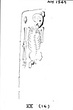
| Dorothy Burr Thompson ... Grave 10 in notebook *(E.L. Smithson : Grave VI: PG). Bones discarded. Multiple inhumation of two children in an unlined trench in bedrock. No offerings. Nb. says two skeletons.
JP *Note in nb.: we continue ... LH III/EPG (date uncertain) ... C 9:3 ... C 9:3 |
Perhaps originally a grave cutting ... Ca. 390-380 B.C ... C 11:3 ... C 11:3 |
Includes fill behind well tiles ... Ca. 425-400 B.C. |
Small deposit in bedrock. Coins:
20 April 1936 #2-#3 ... 4th c. B.C. to early 3rd c. B.C. |
Casting pit near SE corner of Poros Building, Room C 3. Combined with D 18:4 ... 1st c. B.C.-1st c. A.D ... Casting pit near SE corner of Poros Building, Room C 3. |
Coins:
30 July 1947 #3-#11
31 July 1947 #4-#19
1 August 1947 #1-#9
4 August 1947 #1-#20
5 August 1947 #3-#20
6 August 1947 #1-#38
7 August 1947 #1-#21
8 August 1947 #1-#41
9 August 1947 #3-#6
57-59/*
66-67/* ... 28-31 July 1947
6-9 August 1947 |
Coins:
28 May 1937 #30
29 May 1937 #1
31 May 1937 #1-#3 ... 2nd c. |
Cistern System #1d: Manhole at 24/ΝΘ. Coins:
29 February 1936 #3
2 March 1936 #1 ... Byzantine with 4th c. to Hellenistic |
Stratified well. Coins:
22 July 1947 #1 Subdivisions:
.1=top to -5.20m.
.2=5.20-7.80m.
.3=7.80-10.30m ... Second half 1st-early 3rd c. A.D. |
Well cut through cistern at 6/ΝΕ (C 9:7).
The stele I 3244 in position in the cistern over the mouth of the well is listed with the cistern deposit C 9:7. Coins:
26 February 1936 #2-#4
27 February 1936 ... A.D. 1st ... Well cut through cistern at 6/ΝΕ (C 9:7).
The stele I 3244 in position in the cistern over the mouth of the well is listed with the cistern deposit C 9:7 ... Coins:
26 February 1936 #2-#4
27 February 1936 #2-#10
28 February 1936 #3-#6
29 February 1936 #2
2 March 1936 #2-#3
3 March 1936 #1-#6
4 March 1936 #2-#4
5 March 1936 #1-#2 |
Coins:
29 May 1947 #1
30 May 1947 #7-#9
31 May 1947 #1-#8
2 June 1947 #1-#3 ... Early 2nd c.-mid-3rd c. |
Coins:
22 February 1936 #4-#13
26 February 1935 #1-#2
27 February 1936 #1-#4
28 February 1936 #3-#5 |
"Oinophorus Well".Tiled well in House H (diameter 0.80m, water level -4.70m). Height of tiles 0.64m Heavy well deposit; lamps,, type XXVII; many basket-handled water jars; oinophoros with labors of Herakles ... Use filling of early 2nd-mid.-3rd c. A.D. |
Coins:
26 May 1936 #2-#3
Fragments of "A" ware and of micaceous water jars; no basket-handled water jars; and a lead seal with the name and portrait of Hadrian ... Late 2nd.-early 3rd. c. A.D. |
| In area West of the Areopagus. Fills with many figurines and molds, possibly from a terracotta factory.
Twelve stamped amphora handles; no long-petal bowls; Type 54 A lamp Coins:
31 May 1939 #11
1 June ... Mostly 200-150 B.C. |
Cistern System #1f: Shaft at 1/ΝΘ = Well A. Scanty dumped filling. Coins:
19 February 1936 #2-#3
20 February 1936 #16-#20
21 February 1936 #5-#7
22 February 1936 #1 ... Mid-4th to 3rd c. B.C. |
Pocket of pottery to south of grave at 36/ΛΔ; uncertain context. Terracotta figurines resembling those from the Coroplast's Dump (S 19:3) No containers (cf. O 18:2).
T 2468, T 2476, ST 412 from Hellenistic ... 350-320 B.C. |
Fillings below the courtyard floor of the Poros Enclosure west of the Areopagus. The lowest layer, over bedrock, is of the archaic period and may have accumulated on the spot before the start of building ... First half of 5th c. B.C. |
Pit (Well?) under Building A, Room 2. Coins:
9 May 1949 #1-#2
11 May 1949 #4
12 May 1949 #3 (not a coin, bronze fragment in lotted metal tins ΠΠ 295). Estimated Grid
Remains of coloring matter found with ... Hellenistic-Early Roman ... Coins:
9 May 1949 #1-#2
11 May 1949 #4
12 May 1949 #3 (not a coin, bronze fragment in lotted metal tins ΠΠ 295) ... Estimated Grid
Remains of coloring matter found with 4th c. sherds. |
A burnt deposit set down into Hellenistic fill in a shaft dug into bedrock. A consistent dumped fill [post AD 150, with Group G, layer III, JWH]. Coins:
27 January 1936 #1-#3
28 January 1936 #1-#7
29 January ... First half of A.D. 2nd c. |
| Dorothy Burr Thompson ... Grave 11 in notebook (E.L. Smithson: Grave XII: PG). Bones discarded. Burned deposit in a rectangular trench in bedrock.
JP ... Late Protogeometric |
Cistern System #1b: Shaft/manhole and gallery at 18-19/ΞΑ-ΞΓ.
Objects divided between the two features, shaft and gallery, according to deposit notebook list, not according to remarks on cards. 22 February ... Late 1st c. B.C.-early 1st c. A.D. |
POU 3.50-10.30m. dumped filling of 5th or 6th century. Coins:
10 May 1949 #1
16 May 1949 #1
17 May 1949 #1-#2
19 May 1949 #1-#2
20 May 1949 #1-#12
21 May 1949 #1-#4 from dump
23 May 1949 #1-#3 from dump ... 3rd-5th c. A.D. |
Well in the bottom of chamber cistern at 106/ΛΓ, stratified. A soft spot in the bedrock at the west side of the well caved in and was packed with typical coarse Roman first century amphoras; the well was ... A.D. 200-150 |
This is associated with Building A. It had a circular marble well-head with a rectangular well slab beneath. The construction throughout was of well tiles. It produced little to a depth of -8.60m. Between ... 4th c. A.D ... Between this point and bottom at -9.70m it produced quantities of pitchers and amphorai, many complete, of the 5th-6th c. A.D ... Coins:
22 July 1947 #1
23 July 1947 #2-#3 |
Cistern System #1e: Shaft at 11/ΞΑ.
Agora XXIX: "Well (not cistern shaft, as in Agora XII) ... Communicates with water system through small hole (see C 8:1) probably fortuitously. Single fill, mostly of ... 350-300 B.C ... Communicates with water system through small hole (see C 8:1) probably fortuitously. ... Coins:
4 March 1936 #10-#11
5 March 1936 #2-#3
16 March 1936 #1-#1a |
Well in house R of industrial area west of the Areopagus. This well, originally tiled, was abandoned and filled at the time of the conversion of the house into a stone-cutters' workshop.
Tiled well but ... Ca. 425-400 B.C ... The well had been filled at once with a miscellaneous dump which contained some marble chips, a great many animal bones and some sawn-off ends of animal bones such as were found in House F and to the north of it, and a quantity of very fragmentary pottery of the late 5th c. B.C. The fill in the mouth of the well, evidently thrown in after the deep dump had settled, was slightly later. ... Subdivisions:
.1=fill 1, fill over top of well plus box 1, to ca. 390 B.C.
.2=fill 2, abandonment period, to ca. 410 B.C.
.3=fills 3 and 4, POU, late 5th c. |
| Rodney S. Young ... Grave 3 in notebook (E.L. Smithson: Grave XIII: PG). Urn cremation (trench-and-hole), adult female.
JP
Rectangular trench, measuring approximately 1.10x0.45m, but which may have been larger, cut through ... Late Protogeometric |
(Roman Group J). The upper fill to a depth of ca. 16.00m. was of earth scooped up elsewhere and thrown in ... The latest piece noted from this fill was a TC fragment dated late 4th to 5th(?) c. BC. From ... 2nd.-3rd. c. A.D ... The latest piece noted from this fill was a TC fragment dated late 4th to 5th(?) c. BC. From 16.00m. to the bottom there was a heavy deposit of well pottery. ... Coins:
19 March 1936 #1-#4
21 March 1936 #1-#2
24 April 1936 #5-#6
Coins found in going through earth from well after drying:
2 May 1936 #1
5 May 1936 #1-#3
6 May 1936 #1-#4
11 May 1936 #1-#4
14 May 1936 #1-#4 |
| James H. Oliver ... (E.L. Smithson: Grave IX: PG). Two children's skeletons one on top of the other. Cf. PD 329 for PD 430 for second skeleton, same deposit.
PG grave about 25m. SW of Cistern A at 46/ΜΔ.
[In some records, ... Developed Protogeometric |
Roman well, stratified.
Finds from the earth (not recorded in a subdivision):
P 7995, P 8036, P 21834, SS 6338, IL 483, IL 486, BI 309, BI 310,
BI 314.
According to the excavator the shaft had been cleaned ... 2nd-4th c. A.D. |
Well (diameter 0.91m, water level -7m) in House H, Room 10 (and pit over). Plain shaft cut in stereo; pit at mouth of well,reused as drainage pit at start of tile drain running west.
Scanty use filling ... Ca. 425-400 B.C ... This system was abandoned and the pit filled probably in the 3rd. c.
a) use and lower dumped filling (425-400 B.C.)
b) Filling behind tiles (450-400 B.C.)
c) Abandonment filling (3rd c. ... P 18400, although found in the drain channel, appears to be a good 5th c. collar rim type,and was perhaps dislodged in this same disturbance ... Subdivisions:
.1=Pit above well
.2=Fills 1, 2 and 3 |
| Rodney S. Young ... Grave 20 (E.L. Smithson: Grave X: PG). Bones discarded. Pit tomb, inhumation (on bier or in coffin?), perhaps of a child. Little ash and carbon in the filling, but the grave offerings were unburned.
JP ... Developed Protogeometric ... No trace of formal tomb covering.
3 distinct strata of the fill:
a) Upper half, to a depth of 0.40m, redeposited bedrock chips mixed with earth. ... The se pots, all unburned and clustered together, would have been placed in the area immediately above the feet of the deceased.
c) in the lowest 0.30m, very damp earth with very little ash, much heavy black matter "of a different character", from that in the layer above.
|
Hellenistic-Early Roman fill over bedrock, along west side of Kolonos Agoraios. Consistent dumped filling; occasionally there is a late Roman fragment intruded from the filling above, but this seems not ... 26-29 February 1936
2-12 March 1936 |
| Pyre in House C, Room 8 (RSY=Pyre 6).
Near east corner of room 8. Artifacts, burnt bone, burnt sticks, and large cinders in a shallow pit dug into surface of layer 3, and covered by layer 2. Some cinders ... 350-325 B.C.-end of 4th c. B.C ... Pyre in House C, Room 8 (RSY=Pyre 6).
... Artifacts, burnt bone, burnt sticks, and large cinders in a shallow pit dug into surface of layer 3, and covered by layer 2. |
Mixed filling in a well cut rectangular pit. Debris of the second half of the 5th. c., deposited as late as the second quarter of the 4th. c. B.C ... 4th c. B.C. and earlier |
Well dug through cistern at 64/Γ. Seems to have been stratified; four fills recorded but here treated as one as divisions are rather "arbitrary".
Agora V, p. 126: Constructed in late 1st c.; use filling ... 3rd c. A.D. POU (before 267 A.D.) ... 1 Top to -11m (containers 1-8), dump 7th c. ? ... 2 -11m to -13.20m (containers 9-13), POU (?) 4th c.-Fill III ... POU late 3rd-early 4th c. |
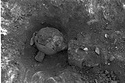
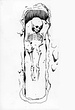
| Grave 2 in notebook. Child of about two (or 10?) months, body placed in plain pithos, which rested on its side at the bottom of a pit; the mouth closed with a stone slab.
The burial forms a group with ... 750-725 B.C |
PG Well opposite ΣΑ Pier 18 Container 1, chiefly 6th c. B.C. discarded. Estimated Grid ... Protogeometric-Early Geometric |
N-S Cut on 20m. line (area of Road, area of Stoa, area N of Stoa)
various levels and dates over the three areas.
Investigations to the northwest of the market square in the area of the road that bordered ... Protogeometric to Late Roman ... B.C., with later (1st c. B.C.)
Layer VII: 4th c. ... Layer IV: 7th-3rd c. B.C.
Layer V: 8th-7th c. ... Plundered trench of early N-S wall: geometric to 4th c. B.C.
Area North of Stoa:
Habitation earth above gravel: gray minyan, protogeometric
See also cut on 50m. line (E-F 2-3:2). |
N-S Cut on 50m. line (area of Road, area of Stoa, area N of Stoa) various levels and dates over the three areas.
Investigations to the northwest of the market square in the area of the road running out ... Prehistoric to Roman ... Layer III-IV: 1st c. A.D.
Layer V-VI: 1st c. B.C.-1st c. A.D.
Layer VII-VIII: 3rd-early 4th c. ... Layer III: 1st c. B.C.
Layer IV: 4th-3rd c. |
| Grave XX in notebook = RSY Grave 16. PD 731-i ... Late 6th. c. B.C. |
Well at 123/ΝΑ.
At the bottom a few water jars; above , a dumped filling with a small amount of pottery; at the top supplementary fill with scattered sherds.
POU, ca. 500 B.C.
Dumped filling, of ca. 500 ... 6th c. B.C. |
Well outside market square to the southeast, west of the Panathenaic Way. Accumulated use filling from first half of 1st c. A.D. to early 3rd c. Top to 14.65m. 4th c. dump; nothing significant catalogued ... POU First half of 1st c.-early 3rd c. A.D ... Accumulated use filling from first half of 1st c. A.D. to early 3rd c. Top to 14.65m. 4th c. dump; nothing significant catalogued. ... Coins:
21 June 1923 #1-#3
23 June 1939 #1-#4(#1 from dirt pile)
24 June 1939 #5-#18(#6-#18 from dirt pile) |
A great shaft 2.65m in diameter and over 10m deep cut out in the mid 1st c. to serve in some connection with the Brick Shaft system (U 22:1). Filled in to top (layer 2) in late 1st- early 2nd c. A.D. with ... 18 March 1937,
1-13 April 1937,
24 May-14 June 1937 |
Road SE of altar, below 51.56m.
In 1981, p. 1883: "A single pass, ca. 0.03m. thick and we hit another surface, at 51.56m. which we take as Layer XV. Fairly loose gravelly fill under surface, sandy, greenish ... 1st c. B.C ... 1st c. B.C ... J/6,8-3/15,16 |
Crosscut between Middle stoa Piers 1 and 2 from west (south aisle), layer II.
Chiefly late 5th to mid-4th c. B.C. Coins:
2 July 1965 #1 ... Late 5th to mid-4th c. B.C. |
Coins:
6 May 1937 #2-#3
7 May 1937 #10
24 May 1937 #1 ... 13th-14th c. A.D. |
| Tiled Well at S edge of E-W Road, 73/ΜΗ. Contemporary upper and lower fills separated by layer of sterile mud.
Latest coin dates ca. 200. Koan amphora handle with stamped handle dates slightly after 200 ... 210-160 |
Well at edge of east slope of Kolonos Agoraios. Essentially uniform fill of second half of 8th c. B.C. but some earlier material. Thrown out from destroyed graves ... Early Geometric to third quarter of 8th c. B.C. |
Cistern system on Kolonos Agoraios, shaft into south passage (81/ΝΘ). The fill again seemed to be a dumped fill; probably rather late 3rd. c. Coins:
8 June 1936 #1-#3 ... Late 3rd. c ... The fill again seemed to be a dumped fill; probably rather late 3rd. c ... Coins:
8 June 1936 #1-#3 |
Digging terminated at 14.50m. due to falling bedrock. Scanty pottery remains at 10.00m. In the mouth and upper part of the shaft was a heavy dumped filling of much shattered fragments, for the most part ... Last quarter of 5th c. B.C ... In the mouth and upper part of the shaft was a heavy dumped filling of much shattered fragments, for the most part of the last quarter of the 5th c. but with a few pieces (uninventoried) of the second quarter of the 4th c ... Coins:
3 June 1932 #3 [a modern coin which the 'workmen deny fell in today'] |
| Dumped filling mostly of 3rd c. A.D., but dumped as late as 5th century. Nbp. 143: The fill in this cistern was of three kinds: to within .60m. of the floor plain broken bedrock with no sherds; then a ... 10-17 February 1937 |
Pit I at 45/ΙΘ (= Well) (noted also 4th c. pocket in side of this pit).
This is part of the Terracotta Deposit (H 17:4) and the objects listed here are also listed in H 17:4. Containers/lots for this ... Geometric-Protoattic |
7th c. well below east part of Odeion Cavea Trench K). Use filling negligible; dumped filling of the second half of the 7th c. B.C.
Brann Well H. Diameter 1.10m. Cut into bedrock. During excavation seepage ... 650-600 B.C. |
| Pyre in north central room of house, measuring 0.50m east-west by 0.35m north-south. Pottery, bone, and burnt material in pit dug into layer IIb (crushed bedrock floor: lot Ω 464, 4th c.) and covered by ... 350-325 B.C. |
| Pit, partly cleared; dumped filling of first half of 3rd. c. B.C., but with considerable material of the 4th. c. Hellenistic.
Its rotten schist walls collapsed some time near then and it was filled up ... 4th-3rd c. B.C ... 4th-3rd c. B.C ... ΠΠ:3/ΞΑ |
| Susan I. Rotroff ... Burial 3 beneath the floor of the Stoa Basileios. It consisted of a rectangular pit cut into bedrock to a depth of 0.44m, lined on all sides and covered with an admixture of narrow stone slabs of soft ... Final Mycenaean/Submycenaean |
Well in Stoa Shop 2. Diameter at top 1.20m. P 2527, P 25280 and P 25281 found at the bottom indicated a short period of use. The dumped filling above consisted in large part of clay of different colors, ... Ca. 525-500 B.C. |
Cistern (and passage) on the north slope of the Areopagus. Fill badly disturbed in modern and Turkish times. The few ancient sherds seem to be chiefly early Roman-1st c. B.C. (p. 256).
Some finds labeled ... 1st c. B.C. |
| David Scahill ... Burial in Geometric well (J 3:8), in Classical Building II, Room I, next to south ashlar wall. "No grave goods!"
ADDENDA: J. Papadopoulos later associated P 34449 and P 34450 to that grave. (Cf. Agora ... Geometric ... Burial in Geometric well (J 3:8), in Classical Building II, Room I, next to south ashlar wall ... AA 362 a, b, c |
| Sacrificial pyre, disturbed; a small pyxis (P 14864) is close to that from B 18:4. First half of 4th. c. B.C., perhaps first quarter.
West of House C. Pottery and cinders in pit in stratum. The pyre was ... First half 4th. c. B.C ... First half of 4th. c. B.C., perhaps first quarter.
West of House C. Pottery and cinders in pit in stratum. The pyre was excavated in two parts: the first in 1939 (A 18:3) and the second in 1940. |
| Well in West Colonnade of Roman House H. Covered by a large handsome marble well-head, apparently reused. Cut through bedrock. Diameter ca. 1.20m, water at -3.60m.
Two distinct POU fills. One at ca. -4.50m ... June-August 1970 |
Fifth century lekythos deposit in area of Mycenaean Tomb. Lot Η 81a ... 5th c. B.C. |
| Hole (Well) and adjoining water channel with 4th c. pottery, probably a dumped fill.
At a depth of about -5.70m we started yielding some very crude potsherds, clearly not made on the wheel (maybe Prehistoric) ... Prehistoric-Roman |
Cutting in bedrock (Panathenaic Way Cut II, Cutting C1); loose gravelly filling over bedrock including a number of terracotta figurines. Lot ΠΑ 61? P 26458 is probably a slip. One fragment noted as from ... 4th c. B.C. |
Pocket in cobble paving in road west of Fountain House ... 1st c. A.D. |
North of Eleusinion: Fill in Room 3 of Roman Building. 614 sherds (6 miniature shapes, 20 intrusive sherds).
Objects : terracottas; loom weights; spindle whorls; disks; handmade tray; lamps.
Early ware ... First half of 6th c. B.C.-Mixed Fill to ca. 480 B.C ... North of Eleusinion: Fill in Room 3 of Roman Building ... Some 2nd half of 6th c. B.C. intrusions; much Mycenaean and Middle Helladic; 4th c. |
Ash and Carbon Dump in Corridor directly behind Room C of Brick Building.
This material comprises what appears to have been a household dump associated with the period of use of the Brick Building, but ... To mid-2nd century |
| Classical dump at N/1,6-6/6,8.
Layer 14 in Early Trench E. A tremendously thick layer of dumped fill with ceramic contents ranging down through the second half of the 5th century and into very early years ... Late 5th c. (Early 4th c.) |
Michael Laughy ... Debris pit, located in Room 2 of ΒΘ East. Pit measures ca. 2.30 by 1.70m., and nearly a meter deep. The pottery from the pit dates ca. 10th-12th c. A.D. The fill of the pit consisted of soft, black charcoal ... 10th-12th c. A.D ... The pottery from the pit dates ca. 10th-12th c. A.D. The fill of the pit consisted of soft, black charcoal and earth, within which we recovered ca. 800 goat horns, representing over 400 unique adult goats. ... Coins: ΒΘ-130
Finds: ΒΘ 77-81
Pottery lots: T 199, T 200
Notebook: ΒΘ IX
Baskets: 40, 50; pp. 1729, 1751
X-Section: p. 1650
Grid: L/2,4-3/14,16
Elevation: 54.086-53.100m ... Lot T 199:
coarse body sherds, handles, rims; base; amphora handle; combed ware; ridged ware; cooking ware; monochrome glaze; polychrome sgraffito (late Byz); monochrome sgraffito (12th - 13th c and 13th - 14th); monochrome with tripod still on sherd (13th c onwards); slip painted ware; green and brown glaze (Late Byzantine); slip painted (Early Modern)
(mostly 12th-14th c. |
Clearing bedrock on line of early (Archaic) peribolos wall, east of entrance on the south side, west end. Uncatalogued material: 50 sherds, 83 fragments. of plemochoai.
Classical Ware : lekythos; plemochoai ... Early 2nd c. B.C. |
Double Well by Entrance to Square Building (Well B)
Wall A (R 9:2) was Late Geometric or transitional well, into one-half of which a bothros had been sunk in Turkish times (16th c. A.D.)-R 9:3.
This bothros ... ca. 17th century A.D ... Double Well by Entrance to Square Building (Well B)
Wall A (R 9:2) was Late Geometric or transitional well, into one-half of which a bothros had been sunk in Turkish times (16th c. A.D.)-R 9:3.
This bothros was lined on the side of the Geometric well by a wall made of rough stones and pink cement, supported by three small round wooden beams. |
Well in Room 5 of Roman House H.
Under cement border of andron of Greek House G. Diameter 1.10m, cut through bedrock. water at ca. 3.55m. Hand or foot holes along one side.
0-7.25m crushed bedrock fill ... 5th c. B.C. |
Mycenaean well and grave.
Single burial, that of a middle-aged man, had been made in the mouth of an unproductive well near the southeast corner of the South Square ... Myc. IIIB-C:1 |
Soft Trench behind Stoa Stylobate, opposite Piers 21 and 22, along W face of Shop front wall. Herulian destruction debris at the north end of the Stoa of Attalos. Coins:
20 February 1954 #1-#2
22 February ... Late 3rd c. A.D. |
| Grave XVI in notebook = RSY Grave 3.
Bones of a young child found inside. Discarded? ... 6th. c. B.C ... Hesperia 20 (1951), p. 87, pls. 35 d and 38 c, e (Grave 3). |
Shaft fill, not mouth fill, of drawshaft at 42/Θ. This is part of the cistern system 44/ΙΓ - 46/ΙΑ - 42/Θ.
Thirteen stamped amphora handles; fragments of Arretine pottery; over half of bowls long-petal ... 1st c. B.C.-early 1st c. A.D. |
Greek Deposit at 42/ΙΖ Lot Ι 164a: fish plates, rouletting etc ... 4th c. B.C. and possibly into 3rd c. B.C. |
| Although separated by a sterile rocky fill the two use fillings are apparently one continuous accumulation (GRE).
Packing around well includes SS 14261, P 25943-P 25953. These are not given a subdivision ... 350-300 B.C. to ca. 225 B.C ... These are not given a subdivision and are dated to third quarter 4th c. B.C ... Subdivisions:
.1=Upper dumped fill
.2=Upper use fill
.3=Lower use fill |
| Sacrificial Pyre II, Classical Building II.
Found right beneath the stuccoed channel built for sluicing in the 1st c. A.D., and must have been partly disturbed when the channel was constructed. It may ... Ca. 250 B.C. |
Filling on original floor of Primitive Bouleuterion = Building D.
Metroon pit η. H 10:2 is also contemporary with the construction of the building ... Third quarter 6th c. B.C. |
Water channel in north part of section. Coins:
20 February 1936 #2-#3
Five stamped amphora handles; Type 48 A lamp; one-third of bowls long-petal; one long-petal mold ... Second half of 3rd c.-Early third quarter of 2nd c. |
| Not completely excavated due to instability of chamber walls and water. Sherds of all periods - Greek, Roman and Byzantine - were found in it [nbp. 424].
Re-examined in 2010. Photos and notes on NB pages ... 10th c. A.D ... 10th c. A.D ... Δ:3/ΣΤ |
Pithos at NE corner of Byzantine Building. Coins:
20 May 1938 #1, #3 ... Late 11th-Early 12th c. A.D. |
Channel J (in ΗΗ)
Cutting that probably originally held a drain. Packed with amphoras and other coarse pottery. It tapped the poros aqueduct wall just East of our explanatory trench at the East end of ... 1st c. B.C. - early 1st. A.D. |
Pit in SW corner of Heliaia Peristyle (mint).
The four Athenian imperial coins (Κ-1641 - Κ-1644) belong to the Athenian Imperial Group III, a series that can be very closely dated to the middle of the ... Mid 3rd c. A.D. |
Patch of undisturbed filling over bedrock (at east edge of Kolonos Agoraios) ... Third quarter of 4th c. B.C. |
Catch Basin in Building P, Room 7. Coins:
26 April 1948 #20-26 ... 3rd. c. A.D. to pre-Herulian |
|
|