|
|
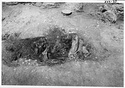
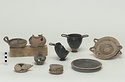
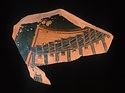
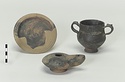
"Oinophorus Well".Tiled well in House H (diameter 0.80m, water level -4.70m). Height of tiles 0.64m Heavy well deposit; lamps,, type XXVII; many basket-handled water jars; oinophoros with labors of Herakles ... Use filling of early 2nd-mid.-3rd c. A.D ... C 20:1 ... C 20:1 |
Coins:
29 May 1947 #1
30 May 1947 #7-#9
31 May 1947 #1-#8
2 June 1947 #1-#3 ... Early 2nd c.-mid-3rd c ... C 20:1.3 ... C 20:1.3 |
Cistern with mixed dumped filling uniform throughout cistern and two short blind channels. Coins:
16 May 1939 #6-#7
17 May 1939 #1 ... 6th-1st c. B.C ... C 20:3 ... C 20:3 |
Coins:
31 May 1947 #1-#4 ... Post-Herulean, end 3rd c ... C 20:1.2 ... C 20:1.2 |
| In area West of the Areopagus. Fills with many figurines and molds, possibly from a terracotta factory.
Twelve stamped amphora handles; no long-petal bowls; Type 54 A lamp Coins:
31 May 1939 #11
1 June ... Mostly 200-150 B.C ... C 20:2 ... C 20:2 |
Late Roman ... C 20:1.1 ... C 20:1.1 |
Now C 20:2 Asterisk: B 20:6* ... Now C 20:2 ... Asterisk: B 20:6* |
| RSY Grave 51.
The grave lay on the slope of the Areopagus in Roman house O, just east of the line where the hillside is scarped for the foundation of the west wall of the house.
Cutting:the pit cut in ... Archaic period/6th or 7th c ... Hesperia 20 (1951), p. 109, pl. 48 c, d (Grave 51), plan pl. 33. |
Small deposit in bedrock. Coins:
20 April 1936 #2-#3 ... 4th c. B.C. to early 3rd c. B.C. |
Cistern System #1f: Shaft at 1/ΝΘ = Well A. Scanty dumped filling. Coins:
19 February 1936 #2-#3
20 February 1936 #16-#20
21 February 1936 #5-#7
22 February 1936 #1 ... Mid-4th to 3rd c. B.C. |
Well M: EG, under the south court of the Poros Building.
Hesperia 20 (1951), p. 144 (noted) ... Middle Geometric |
Coins:
30 July 1947 #3-#11
31 July 1947 #4-#19
1 August 1947 #1-#9
4 August 1947 #1-#20
5 August 1947 #3-#20
6 August 1947 #1-#38
7 August 1947 #1-#21
8 August 1947 #1-#41
9 August 1947 #3-#6
57-59/*
66-67/* ... 28-31 July 1947
6-9 August 1947 |
Filling associated with construction of Poros Building. A small amount of fragmentary pottery found in the clay filling of the original floor; perhaps deposited as late as ca. 425-400 B.C. Cf. 18:4 and ... Ca. 475-450 B.C. or later. |
Patch of early fill, disturbed. 20/9/1962: Tin 145 is checked and is chiefly late archaic, but some of the coarse ware is late 5th with 4th c. B.C., and a few bits are 4th c. A.D ... Late 6th.-early 5th c. B.C ... 20/9/1962: Tin 145 is checked and is chiefly late archaic, but some of the coarse ware is late 5th with 4th c. B.C., and a few bits are 4th c. A.D. |
Well (diameter 0.98m) in House H, Room 13.
Two dumped fills apparently of the same date, but separated by a clay deposit of over 2.00m.
Cf. Hesperia 20 (1951), p. 253. (noted) Subdivisions:
.1=Upper ... Ca. 425-400 B.C. |
Well, unfinished?
The shallow depth, small diameter, lack of water and any use fill make it possible that this was not a well, although the character of the cutting is difficult to explain otherwise. The ... Ca. 440-420 B.C. |
Well in house R of industrial area west of the Areopagus. This well, originally tiled, was abandoned and filled at the time of the conversion of the house into a stone-cutters' workshop.
Tiled well but ... Ca. 425-400 B.C. |
Fillings below the courtyard floor of the Poros Enclosure west of the Areopagus. The lowest layer, over bedrock, is of the archaic period and may have accumulated on the spot before the start of building ... First half of 5th c. B.C. |
POU 3.50-10.30m. dumped filling of 5th or 6th century. Coins:
10 May 1949 #1
16 May 1949 #1
17 May 1949 #1-#2
19 May 1949 #1-#2
20 May 1949 #1-#12
21 May 1949 #1-#4 from dump
23 May 1949 #1-#3 from dump ... 3rd-5th c. A.D. |
Great Drain sand fill under Roman bath including small area at north end under tiles that was excavated separately.
See also A-B 19-20:1 for additional Great Drain sand fill at ca. 70-113/* Subdivisions: ... 30 July-11 August 1947 |
House R, fill under drain tiles and fillings associated with house K in industrial area, including what was C 19:15, plus C 19:16 and
C 19:17.
a) House built as dwelling in second half of 5th.c.
b) Used ... Ca. 5th and 4th c. B.C. |
Ostrakon deposit, sand fill in a shallow channel in bedrock at the bottom of the Great Drain in the valley between the Areopagus and the Hill of Nymphs.
This group of ostraka may well come from a single ... Ca. 490-480 B.C. |
| Located in House H, Room 13 on the lower northwest slope of the Areopagus ... Late 2nd c. B.C. |
| North of House G (RSY=Pyre 13).
Concentration of artifacts, small pieces of bone, and burnt material in stratum, no pit discerned. The pyre is cut by the trench of a wall of a Roman house to north. It ... 290-250 B.C. |
| James H. Oliver ... (E.L. Smithson: Grave IX: PG). Two children's skeletons one on top of the other. Cf. PD 329 for PD 430 for second skeleton, same deposit.
PG grave about 25m. SW of Cistern A at 46/ΜΔ.
[In some records, ... Developed Protogeometric |
| Rodney S. Young ... Grave 20 (E.L. Smithson: Grave X: PG). Bones discarded. Pit tomb, inhumation (on bier or in coffin?), perhaps of a child. Little ash and carbon in the filling, but the grave offerings were unburned.
JP ... Developed Protogeometric ... Grave 20 (E.L. Smithson: Grave X: PG). ... The se pots, all unburned and clustered together, would have been placed in the area immediately above the feet of the deceased.
c) in the lowest 0.30m, very damp earth with very little ash, much heavy black matter "of a different character", from that in the layer above.
|
Cleaning over bedrock along west side of Kolonos Agoraios. Context Protogeometric-Geometric disturbed. Objects from ΠΘ 24-28/ΝΗ-ΞΔ are added because P 8141 is published in Hesp. Suppl. 20, p. 153 as this ... To 2nd. c. B.C. |
Hellenistic-Early Roman fill over bedrock, along west side of Kolonos Agoraios. Consistent dumped filling; occasionally there is a late Roman fragment intruded from the filling above, but this seems not ... 26-29 February 1936
2-12 March 1936 |
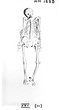
| Grave XXI in notebook = RSY Grave 11. Pottery discarded; late Roman, mostly coarse. PD 731-e ... Ca. 530 B.C ... Hesperia 20 (1951), pp. 92-93, fig. 9 and pl. 41b-c (Grave 11). |
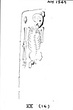
| Grave XX in notebook = RSY Grave 16. PD 731-i ... Late 6th. c. B.C ... Hesperia 20 (1951), pp. 97-98, fig. 13 and pl. 44 c-d (Grave 16). |
Well dug through cistern at 64/Γ. Seems to have been stratified; four fills recorded but here treated as one as divisions are rather "arbitrary".
Agora V, p. 126: Constructed in late 1st c.; use filling ... 3rd c. A.D. POU (before 267 A.D.) |
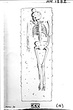
| Grave XXV in notebook = RSY Grave 4. PD 731-b ... 750-725 B.C ... Hesperia 20 (1951), pp. 87-88, fig. 6 and pl. 38 a-c (Grave 4). |
| Sacrificial Pit I in notebook = RSY Grave 20 ... Ca. 510-490 B.C ... Hesperia 20 (1951), pp. 101-102, pl. 46 c-d (Grave 20). |
Use filling of first half of 1st c.; dumped filling of late 1st c.(?). This well, near its mouth, cuts off the end of the upper passage of the cistern at 53/Ε. Subdivisions:
.1=Dumped filling
.2=POU ... First half of 1st c. A.D. POU |
Well at 74/Ι, on the lower north slope of the Areopagus.
Use fill from early 1st to 3rd c. A.D.
Dump fill from 4th c. A.D. Coins
9 April 1938 #2
9 May 1938 #1 Container 20 (lost) p. 1529 ... 1st c. to 3d c. A.D ... Use fill from early 1st to 3rd c. A.D.
Dump fill from 4th c. ... Container 20 (lost) p. 1529. |
Top fill to 1.00m. = dump of late Hellenistic ware mixed with some Roman of 2nd c. to early 3rd. c. Intermediate fill 1.20-2.00m. = dump with tiles and stucco, almost no sherds. Coins:
6 February 1937 ... 2nd-3rd c. A.D. |
Well at 75/Ε. Dumped debris of Herulian destruction, including much material from the first half of the 3rd c ... 3rd c. A.D. |
Scanty debris filling in a pit. The wishbone-handled bowl (P 16753) is of the middle of the third quarter of the 5th. c. century, as are also two red figured fragments, P 25820 and P 25821; the deposit ... Ca. 450-400 B.C ... The wishbone-handled bowl (P 16753) is of the middle of the third quarter of the 5th. c. century, as are also two red figured fragments, P 25820 and P 25821; the deposit as a whole is somewhat later. Last quarter of the 5th. c. B.C ... Merged with A 20:8. |
Filling in a cistern chamber in the area west of the Areopagus. Main dumped fill of 2nd. c. B.C., with small amount of later material in uppermost 1.00m. A connecting passage contained some material of ... 2nd. c. B.C. |
| Pyre in north central room of house, measuring 0.50m east-west by 0.35m north-south. Pottery, bone, and burnt material in pit dug into layer IIb (crushed bedrock floor: lot Ω 464, 4th c.) and covered by ... 350-325 B.C. |
Greek House J, under room 8 of Roman House H.
Typical though very fragmentary pyre pottery lay dispersed in a stratum over bedrock with pottery ranging from the 5th to the mid-3rd c.
In same general area ... Early 4th c. B.C.? ... Typical though very fragmentary pyre pottery lay dispersed in a stratum over bedrock with pottery ranging from the 5th to the mid-3rd c.
In same general area as pyre Q 20:4, it must come from a different, earlier pyre. |
Containers 1-14. Very fragmentary pottery. Some material earlier than late 1st c. A.D. Coins:
10 May 1939 #4-#5
11 May 1939 #4-#9
12 May 1939 #5
15 May 1939 #7-#9
17 May 1939 #1-#2
23 May 1939 #1 ... Late 1st c. A.D. |
| Identified as Pyre by SIR.
Debris filling of the middle of the 4th c. B.C. including the remains of a sacrificial pyre.
Objects dispersed in red-clay fill uncovered in removal of modern staircase. A broken ... 4th c. B.C. disturbed |
East-West Street (63-64/ΙΣΤ, etc.)
Packing in line of ancient east-west street along Areopagus north slopes.
Lower fills, predominantly late 6th-early 5th c. B.C.
Middle fills, last quarter of the 5th ... Various levels and dates |
"South Triangle" abandonment filling over Brown House (House A) in the industrial area. Layers 1-3 and layer 4, to floor of second period. As late as the 3rd. c. B.C. but composed largely of earlier material ... 3rd c. B.C. and earlier ... As late as the 3rd. c. B.C. but composed largely of earlier material.
For fillings connected with construction and rebuilding of house, see
A 20:6 ... Coins:
16 April 1948 #1-#2
17 April 1948 #1-#2
19 April 1948 #1-#3
20 April 1948 #1-#2 |
| Investigations in the area of Archaic Temple Added by E.V June 1963 ΕΛ 324-331. In the annual report for 1959 both the building of the temple itself, and the red limestone addition are dated in the early ... First half of 6th c. B.C. - early 5th c. B.C. |
Fills from construction and reconstruction of a house. "Brown House" = House A (RSY Hesp. 20) (and pit under Layer 4) in the industrial area west of the Areopagus.
Under the original floor of this house ... Second half of the 5th. c. B.C ... "Brown House" = House A (RSY Hesp. 20) (and pit under Layer 4) in the industrial area west of the Areopagus.
... First period: mid-5th. c. B.C. Second period: late 5th. c. |
From disturbances in original floor of Tholos with ash and burning. Probably reflects the military and political conditions of 307 B.C.
The broken pottery, both that left lying on the floor of the building ... Ca. 340-295 B.C. |
Firm fill over bedrock on east edge of section, north of the early (Archaic) peribolos wall. Uncatalogued material: 10 sherds, 30 fragments of plemochoai. Deposit created by Margie Miles, 4 inventoried ... 3rd quarter 4th c. B.C. |
House F, room 4 below floor at -2.00m., fill 4. Deposit created by A.W. and first appears in his thesis (Biblio. below). Coins;
19 May 1949 #1-#16 Cf. coins from 17 June 1949 #1-#4 listed with lot OO 490 ... First quarter 2nd c A.D. |
Well outside market square to the southeast, west of the Panathenaic Way. Accumulated use filling from first half of 1st c. A.D. to early 3rd c. Top to 14.65m. 4th c. dump; nothing significant catalogued ... POU First half of 1st c.-early 3rd c. A.D ... POU First half of 1st c.-early 3rd c. A.D ... ΒΒ:20/ΙΘ |
A great shaft 2.65m in diameter and over 10m deep cut out in the mid 1st c. to serve in some connection with the Brick Shaft system (U 22:1). Filled in to top (layer 2) in late 1st- early 2nd c. A.D. with ... 18 March 1937,
1-13 April 1937,
24 May-14 June 1937 |
Roman Dump/Cesspool ... Second half 1st c.-1st half 2nd c. A.D. |
Cistern at 70/ΛΣΤ in the northeast slope of the Areopagus.
Part of system with two chambers and well. Homogeneous fill.
13 stamped amphora handles. Latest lamp type 46 B. N 72206 (Ω-344), picked up near ... Second half of 3rd c. - Early 2nd c. B.C. |
Cistern at 60/ΙΕ; bell-shaped cistern with a channel 1.65m high and 4.60m long, leading to a dead end against bedrock. This channel runs north with a slight curve to the east and looks as though it was ... Second half of 3rd c. B.C.-Early 2nd c. B.C. |
Well at 67/ΛΓ on the northeast slope of the Areopagus. Connected with the same cistern system as O 20:2.
Dug as several fills but probably a continuous accumulation Coin
28 May 1938 #1 (?) Illegible N ... 300-250 B.C. |
Cistern on lower northeast slope of the Areopagus.
Two Hellenistic fills with late Hellenistic to Roman fill above.
Use fill characterized by broken water jars (lower fill); contemporary dump (middle fill); ... Early 1st c. B.C. |
Dumped fillings thrown in during second quarter of 1st c. B.C. containing mostly debris resulting from Sulla's sack in 86 B.C.
Agora XXIX, p. 464: Four fills distinguished during excavations ... but seemingly ... Late 2nd c. and early 1st c. B.C. POU; 110-75 B.C. |
| Matt McCallum ... Plaster lined cistern. The cistern seems to have been bottle shaped; the walls are narrower at the preserved top, which is broken along its entire circuit, and gradually widen until about a third of the ... 12th c. AD |
Grid notation in error as 99/ΚΑ sometimes.
A well (diameter 1.20m; diameter inside tiles at bottom 0.85m) in the industrial area west of the Areopagus, at the bottom of the valley, about 10.00m. east of ... 3rd. c. B.C. |
Cistern at 27/ΚΔ Coins:
22 April 1937 #9
23 April 1937 #1 ... 10th or 11th c. |
Well at 72/ΟΔ.
Partially excavated to depth of 8m. Turkish fill in upper 3m. Hellenistic fill mostly of roof tiles and coarse pottery. Coin
12 February 1937 #4 (disintegrated) ... 3rd c. B.C. |
Pocket roughly cut in bedrock; its greatest dimensions ca. 1.50m Terracotta figurines; some pottery fragments ... Early 5th c. B.C. |
Exploration of packing below paving blocks of Panathenaic Way.
Uncatalogued material: 66 sherds, 2 objects (50A) and 43 sherds (50B). Coins:
26 April 1960 #1-#2
3 May 1960 #1-#4, #6-#9 Deposit created ... 1st c. A.D. |
| Construction filling of well N 20:3 which was dug through this cistern; a few later sherds at upper levels may result from late repairs to well tiling. Coins:
6 April 1938 #14-#15
8 April 1938 #4 Some ... Second half 1st c. A.D. |
Upper fill (top to around 4.50m.) was in a pit of large dimensions above the preserved well shaft. From the bottom and shaft proper no catalogued pottery. No tiling in place in well but fragments of tiles ... 3rd-4th c. A.D. |
Rectangular cutting, not entirely preserved, west of underground drain. Contained good black glazed pottery, some stamped, and a little coarse ware, along with bits of bone and part of a skull ... Third quarter 5th c. B.C. |
Grave (?) under wall 4. Infant burial(?); a kados, P 16747, lying sideways with a tall cylindrical stand, P 16748, set over it as a cover; the upper parts of the pots cut away ... Late 6th. c. B.C. |
Grave XXVII in notebook = RSY Grave 8.
Possibly a child's grave ... Ca. middle of the 6th. c. B.C ... Hesperia 20 (1951), p. 90, pls. 39 c, 40 c (Grave 8). |
Well at 69/ΟΒ (Late 5th c.)
Lower fill dated to 420-400 B.C. in Agora XXX.
There were no use filling and the well was apparently not a success as a water-supply: there was no concentration of water-jars ... 420-400 B.C ... Well at 69/ΟΒ (Late 5th c.)
Lower fill dated to 420-400 B.C. in Agora XXX.
... I can't find out what M 20:3-S is (Cf. P 9347) as published in Agora XII (SD) |
Deposit alongside Greek House I, perhaps giving the construction date of the second phase. Deposit list title it as : outside of east wall of Roman House H ... Last quarter of the 4th c. B.C ... Last quarter of the 4th c. B.C ... R 20 |
Dump, Sullen clean-up. Coins:
9 February 1937 #6-#10
10 February 1937 #11-#13
11 February 1937 #16-#20 ... First quarter 1st c. B.C. |
At 67/ΙΗ, at the northeast slope of the Areopagus.
Cistern with drawshaft, 4.60m deep. The drawshaft had been cleared to bottom in the eighteenth or nineteenth century, and some of the fill in the main ... Most second half of 3rd c. B.C. |
Disturbed "Votive Deposit" at 27-28/ΙΖ-ΙΗ
Reddish fill in five circular cutting in bedrock, considered by the excavators to have been one deposit. Fill was disturbed in later periods, probably by construction ... 7th c. B.C, with intrusions |
Early cutting beside Great Drain: 103-111/Λ-ΛΓ (= "Deep cutting" Pit at 107/ΛΑ).
Abandonment filling in channel for early drain; the fragment of a red figured bell krater, P 17000, probably to be dated ... Ca. 425-395 B.C ... Abandonment filling in channel for early drain; the fragment of a red figured bell krater, P 17000, probably to be dated between 400 and 397 BC, is the latest dated object from the deposit, otherwise a consistent filling of the last quarter of the 5th. c. with some earlier material.
... Hesperia 20 (1951) 255-256. |
"Not much earlier than middle fill" Coins:
12 February 1937 #5-#7 ... Fourth quarter of 2nd c. B.C. |
Containers 15-37. Masses of pots, largely water jars; fragments of Pergamene; Samian B; brittle ware; ER unguentaria.
The following finds on deposit list as bottom fill (.2) are from depths of level .1: ... First half of 1st c. A.D. |
| (RSY=Pyre 2). Pyre in the industrial area west of the Areopagus, in House B. In northern corner of room. No pit discerned. A deposit of small stones (a marker/) lay 0.30m above the level of the pyre, ... Third quarter of the 4th. century. |
Patch of burned filling at 66-67/ΚΘ-Λ (or Λ-ΛΑ) Coin
18 May 1938 #10 P 34428 added from Lot Ω 102 ... Early 5 c. B.C. (?) |
Lower fill in shaft; upper and lower drain filling; shaft, in upper chambers. Coins:
31 March 1938 #1
9 May 1939 #1-#2
20 June 1939 #1 Estimated Grid ... Late 2nd-earliest 3rd c. A.D. |
| Disturbed pyre dispersed in fill of Room 5, House D.
Pyre pots in very fragmentary condition were noticed by Barbara Tsakirgis in later analysis of pottery that had been excavated in 1938; no mention of ... 14 June 1938 |
| A compact group of four complete vases and a lamp, found on a house floor; possibly the remains of a sacrificial pyre but without evidence of burning or the characteristic votive vases.
Layer II, "nest ... 425-400 B.C. |
House A destruction debris over floors. All floors (rooms 1-7) dug in 1939. Re-examination of House A in 1967 (nbpp. 648 ff.). Coins:
27 February 1939 #5-#9
7 March 1939: #1
9 March 1939 #4-#6
11 March ... First half 3rd. c. A.D ... First half 3rd. c. A.D ... F-G 19-20 |
Fillings to either side of the Great Drain, in the southern part of the area west of the Areopagus; various levels, late 6th. and early 5th c. B.C. to Sullan destruction. Coins:
26 July 1946 #1-#2
30 July ... Late 6th. c. B.C.-1st. c. A.D. |
South Tunnel: Bone Factory. Starts at 4-6/Μ and runs south to well. Coin
14 March 1938 #33 Lot ΑΑ 19, does it belong here? ... Second half of 2nd c. A.D. |
Accumulated fillings in a system of underground drains at west end of section ΔΔ with northward continuation into and across Section Υ.
The filling in the "underground passages" in section ΔΔ appears to ... 3rd c. B.C.
2nd c A.D. |
House C, Room 4 (Pottery dump of stamnos wall and fill below floor). Coins:
1 July 1947 #13
2 July 1947 #1
Coins from House IV:
14 May 1947 #1-#2
19 May 1947 #6-#7
20 May 1947 #32 ... First half 3rd c. B.C ... House C, Room 4 (Pottery dump of stamnos wall and fill below floor) ... Coins:
1 July 1947 #13
2 July 1947 #1
Coins from House IV:
14 May 1947 #1-#2
19 May 1947 #6-#7
20 May 1947 #32 |
Great Drain South (ca. 70-113, from SW edge of section as far north as the Roman Bath) Hellenistic Sand Fill. Silted-up filling of the southern branch of the Great Drain, abandoned due to some damage at ... 4th. c.-86 B.C. |
Pit in House N, Room 2 (RSY, House C). Filling thrown in behind the west wall of the Great Drain South at the time of the building of the drain and the extension of House C.
Cf. Hesperia 20 (1951), pp ... Ca. 430-410 B.C ... Pit in House N, Room 2 (RSY, House C). Filling thrown in behind the west wall of the Great Drain South at the time of the building of the drain and the extension of House C.
... Hesperia 20 (1951), pp. 211-212, 256. |
Fillings immediately antedating the building of the Stoa.
Cf. Hesperia 6 (1937), p. 20 and the debris of a pottery works behind the Stoa (H 7:1). |
| Pyre in House C, Room 8 (RSY=Pyre 6).
Near east corner of room 8. Artifacts, burnt bone, burnt sticks, and large cinders in a shallow pit dug into surface of layer 3, and covered by layer 2. Some cinders ... 350-325 B.C.-end of 4th c. B.C ... Hesperia 20 (1951), pp. 120-121, pl. 51 c (Pyre 6). |
RSY Grave 49. Outside Archaic Cemetery ... 550-525 B.C ... Hesperia 20 (1951), p. 108, pls. 47 c, 48 a (Grave 49). |
| Pyre in House C, Room 12 (RSY=Pyre 9) in the industrial area west of the Areopagus.
Notebook refers to House N.
Beside west wall of room 12. Pottery, burnt bone, and cinders in a roughly round pit; disturbed ... Ca. 250 B.C ... Hesperia 20 (1951), pp. 125-126, pl. 52 c (Pyre 9). |
| Grave XV in notebook = RSY Grave 1.
Part of a burial jar with bones of 18-month-old child. Position of body not determinable. Foot of jar had been broken to insert body of child and stopped with stones ... Second half of 8th. c. B.C ... Hesperia 20 (1951), pp. 82-85 and pl. 35 c-d (Grave 1). |
Sacrificial Pit VI in notebook = RSY Grave 18 See also B 21:23 ... Ca. 525-500 B.C ... Hesperia 20 (1951), p. 100, pl. 45 c (Grave 18). |
|
|