|
|
Great Drain north end, filling under tiles (55-58).
Only the finds from 55-58/* are recorded here (as found in the notebooks) although the deposit notebook shows additional finds from the entire sand fill ... 3rd-2nd c. B.C ... These additional finds are recorded separately C 18:14.2 (pf). |
Construction filling of the Poros Building west of the Areopagus. Patch of stony fill beneath the courtyard. Accumulation of the second quarter of the 5th c., deposited in the last quarter ... Ca. 475-450 B.C. and later ... C 18:7 ... C 18:7 |
Well, neatly stone-curbed to bottom. Diameter 0.70m. The use filling, from about 3.50m to bottom, consisted chiefly of water-jars with a few small vases and some black-figured fragments.
Upper filling, ... Use filling of ca. 575-550 B.C ... C 18:8 ... C 18:8 |
Pit in floor of House S ... Geometric to mid-5th c ... C 18:12 ... C 18:12 |
Fillings below the courtyard floor of the Poros Enclosure west of the Areopagus. The lowest layer, over bedrock, is of the archaic period and may have accumulated on the spot before the start of building ... First half of 5th c. B.C ... C 18:4 ... C 18:4 |
Surface layer ... First half of 5th c. B.C ... C 18:4.1 ... C 18:4.1 |
POU 3.50-10.30m. dumped filling of 5th or 6th century. Coins:
10 May 1949 #1
16 May 1949 #1
17 May 1949 #1-#2
19 May 1949 #1-#2
20 May 1949 #1-#12
21 May 1949 #1-#4 from dump
23 May 1949 #1-#3 from dump ... 3rd-5th c. A.D ... C 18:1 ... C 18:1 |
Early 3rd c. A.D ... C 18:2.1 ... C 18:2.1 |
Deposit in the industrial area west of the Areopagus, underlying a Roman bath. Pottery examined in June 1955; latest pieces noted: one fragment Pergamene and one fragment brittle ware; no certainly post-Sullan ... Late 2nd c. B.C ... C 18:3 ... C 18:3 |
First half of 5th c. B.C ... C 18:10 ... C 18:10 |
| Pit with traces of burning ... Probably 3rd qtr. 5th c. B.C ... C 18:13 ... C 18:13 |
Second half 2nd c. A.D ... C 18:2.2 ... C 18:2.2 |
Second half 1st c. A.D ... C 18:2.3 ... C 18:2.3 |
Second half of 6th c. B.C ... C 18:8.1 ... C 18:8.1 |
Stratified well. Coins:
22 July 1947 #1 Subdivisions:
.1=top to -5.20m.
.2=5.20-7.80m.
.3=7.80-10.30m ... Second half 1st-early 3rd c. A.D ... C 18:2 ... C 18:2 |
First half of 5th c. B.C ... C 18:4.2 ... C 18:4.2 |
Ca. 480 B.C ... C 18:4.3 ... C 18:4.3 |
Near the Poros Enclosure. Diameter 0.76m. water level -1.20m. Plain shaft sunk in the stereo ... 14-22 July 1947 ... C 18:5 ... C 18:5 |
Well M: EG, under the south court of the Poros Building.
Hesperia 20 (1951), p. 144 (noted) ... Middle Geometric ... C 18:6 ... C 18:6 |
Ca. 575-550 B.C ... C 18:8.2 ... C 18:8.2 |
Geometric ... C 18:9 ... C 18:9 |
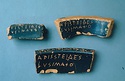
Ostrakon deposit, sand fill in a shallow channel in bedrock at the bottom of the Great Drain in the valley between the Areopagus and the Hill of Nymphs.
This group of ostraka may well come from a single ... Ca. 490-480 B.C ... C 18:11 ... C 18:11 |
Great Drain sand fill under Roman bath including small area at north end under tiles that was excavated separately.
See also A-B 19-20:1 for additional Great Drain sand fill at ca. 70-113/* Subdivisions: ... 30 July-11 August 1947 ... C 18:14 ... C 18:14 |
Coins:
30 July 1947 #3-#11
31 July 1947 #4-#19
1 August 1947 #1-#9
4 August 1947 #1-#20
5 August 1947 #3-#20
6 August 1947 #1-#38
7 August 1947 #1-#21
8 August 1947 #1-#41
9 August 1947 #3-#6
57-59/*
66-67/* ... 28-31 July 1947
6-9 August 1947 ... C 18:14.2 ... C 18:14.2 |
| Late 4th-early 3rd c. B.C ... C 9:18 ... C 9:18 |
Filling associated with construction of Poros Building. A small amount of fragmentary pottery found in the clay filling of the original floor; perhaps deposited as late as ca. 425-400 B.C. Cf. 18:4 and ... Ca. 475-450 B.C. or later ... A small amount of fragmentary pottery found in the clay filling of the original floor; perhaps deposited as late as ca. 425-400 B.C. Cf. 18:4 and C 18:7. |
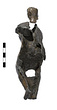
Pocket of pottery to south of grave at 36/ΛΔ; uncertain context. Terracotta figurines resembling those from the Coroplast's Dump (S 19:3) No containers (cf. O 18:2).
T 2468, T 2476, ST 412 from Hellenistic ... 350-320 B.C. |
| Rodney S. Young ... Grave 9 (E.L. Smithson: Grave XVIII: PG). Bones discarded.
JP
Roughly circular pit, about 0.59m in diameter, cut into soft bedrock to a depth of 0.42m. Tomb encountered only about 0.12-0.15m below the ... Protogeometric |
Cistern System #1b: Shaft/manhole and gallery at 18-19/ΞΑ-ΞΓ.
Objects divided between the two features, shaft and gallery, according to deposit notebook list, not according to remarks on cards. 22 February ... Late 1st c. B.C.-early 1st c. A.D ... Late 1st c. B.C.-early 1st c. ... ΚΚ:18-19/ΞΑ-ΞΓ |
Coins:
22 February 1936 #4-#13
26 February 1935 #1-#2
27 February 1936 #1-#4
28 February 1936 #3-#5 |
A large chamber cistern filled in the second c. BC when a well (C 9:16) was dug through its floor. Well tiles were run up from the floor of the cistern to just below its neck; a double layer of complete ... Late 2nd c. B.C ... A large chamber cistern filled in the second c. BC when a well (C 9:16) was dug through its floor. ... Coins:
18 February 1936 #1 |
| In area West of the Areopagus. Fills with many figurines and molds, possibly from a terracotta factory.
Twelve stamped amphora handles; no long-petal bowls; Type 54 A lamp Coins:
31 May 1939 #11
1 June ... Mostly 200-150 B.C. |
Great Drain fills, including "packing over elliptical tiles" and "gravel fills". The central drain area covered by the sections below; other sections are with other deposits. Coins:
9 May 1947 #2-#5
16 ... 1st c. A.D. |
Hellenistic-Early Roman fill over bedrock, along west side of Kolonos Agoraios. Consistent dumped filling; occasionally there is a late Roman fragment intruded from the filling above, but this seems not ... 26-29 February 1936
2-12 March 1936 |
| James H. Oliver ... (E.L. Smithson: Grave IX: PG). Two children's skeletons one on top of the other. Cf. PD 329 for PD 430 for second skeleton, same deposit.
PG grave about 25m. SW of Cistern A at 46/ΜΔ.
[In some records, ... Developed Protogeometric |
Small deposit including red figured fragments ... Second and third quarters of 4th c. B.C. |
| Pyre in House C, Room 12 (RSY=Pyre 9) in the industrial area west of the Areopagus.
Notebook refers to House N.
Beside west wall of room 12. Pottery, burnt bone, and cinders in a roughly round pit; disturbed ... Ca. 250 B.C ... Pyre in House C, Room 12 (RSY=Pyre 9) in the industrial area west of the Areopagus.
... The pyre predates the fill of the cistern in the room (B 18:13), and it is therefore contemporary with continued activity there. |
Grave 2.
Shallow cutting, 1.00x0.47m, in bedrock; possibly a child's burial, but no skeletal remains preserved ... Late 5th c. B.C. |
Appears to be use filling from 3rd c. A.D., pre-Herulian into 4th c. or later. Lined with tiles. Coins:
6 May 1937 #1-#2 (disintegrated) ... Early 3rd-early 6th c. |
| Thamneus' Cellar, a storage cellar on the north slope of the Areopagus. Lower filling of mid-6th c. B.C., upper filling of last quarter of 6th c. B.C ... 6th c. B.C. |
House C, Room 5, small hoard. Deposit created by A.W. and first appears in his thesis (Biblio. below).
"Another small hoard or purse of Herulian date", A.Walker (1980), p. 127. Coins:
23 June 1947 #7-#13 ... Ca. 267 A.D. |
House C, Room 4 (Pottery dump of stamnos wall and fill below floor). Coins:
1 July 1947 #13
2 July 1947 #1
Coins from House IV:
14 May 1947 #1-#2
19 May 1947 #6-#7
20 May 1947 #32 ... First half 3rd c. B.C. |
Casting pit near SE corner of Poros Building, Room C 3. Combined with D 18:4 ... 1st c. B.C.-1st c. A.D ... Casting pit near SE corner of Poros Building, Room C 3 ... Combined with D 18:4. |
| Sacrificial Pit I in notebook = RSY Grave 20 ... Ca. 510-490 B.C. |
Great Hole at 33/Ζ = Area of early wells Some of the objects may have come from N 18:7 or from a neighboring 7th c, well, not separately cleared, but no definite association is possible ... 7th-5th c. B.C ... Some of the objects may have come from N 18:7 or from a neighboring 7th c, well, not separately cleared, but no definite association is possible. |
It may perhaps be assumed that in the 5th c. the Romans cleaned the well to 25.30m., thus removing 2nd c. and subsequent fill, and then began to reuse the shaft. Coins
20 May 1938 #6
21 May 1938 #1
25 ... POU 1st c. and 5th-6th c. A.D. |
Well on the north slope of the Areopagus; depth at 9.65m; scanty dumped fillings. From about 3.20m to the bottom, little but tile fragments appeared; in the fillings above, the lower is characterized by ... Ca. 350-290 B.C. |
| Grave (?). Identified as pyre by SIR.
Pyre pots dispersed in fill over a pebble floor, with pottery ranging from the 5th c. B.C. to 3rd c. A.D. (lot ΑΑ 168), and lying directly below modern fill. No burning ... 400-350 B.C. |
Sacrificial Pit VI in notebook = RSY Grave 18 See also B 21:23 ... Ca. 525-500 B.C ... Hesperia 20 (1951), p. 100, pl. 45 c (Grave 18). |
| Upper mixed dumped fill (last quarter 3rd c.-4th c.) with Roman POU below 10.40m. Coins:
16 February 1937 #1 (disintegrated)
17 February 1937 #1 (disintegrated)
8 April 1937 #5-#10 (dump)
9 April 1937 ... 2nd half of 1st c.-first half of 3rd c. A.D. |
Pocket in bedrock 35/Ε. The filling consisting chiefly of coarse ware and roof tiles; some of the material Archaic, but the deposit as late as the mid-5th c. B.C ... Ca. 500-450 B.C. |
Filling of a well on the lower north slopes of the Areopagus, dug early in the 1st c. B.C. [construction fill]; in use into the the 2nd c. A.D.[well fill] (H Ms.) No apparent stratification.
Hellenistic ... 2nd c. A.D ... Filling of a well on the lower north slopes of the Areopagus, dug early in the 1st c. B.C. [construction fill]; in use into the the 2nd c. ... Coins:
17 April 1937 #1
19 April 1937 #1-#4
18 May 1937 #1-#3 |
| Sacrificial pyre, disturbed; a small pyxis (P 14864) is close to that from B 18:4. First half of 4th. c. B.C., perhaps first quarter.
West of House C. Pottery and cinders in pit in stratum. The pyre was ... First half 4th. c. B.C ... Sacrificial pyre, disturbed; a small pyxis (P 14864) is close to that from B 18:4. First half of 4th. c. ... West of House C. Pottery and cinders in pit in stratum. ... Published together with A 18:9 in Hesperia 47. |
| Dumped filling mostly of 3rd c. A.D., but dumped as late as 5th century. Nbp. 143: The fill in this cistern was of three kinds: to within .60m. of the floor plain broken bedrock with no sherds; then a ... 10-17 February 1937 |
A drain pit with red gravely fill. Coins:
5 April 1939 #1-#8
Pottery continuing to at least 3rd c. A.D. ADDENDA: See also tins Lot ΝΝ 70, ΝΝ 71.
ADDENDA: P 14822 probably also belongs ... Mixed Hellenistic to Roman. |
| Cistern in the valley between the Areopagus and the Hill of the Nymphs. Simple, flask-shaped chamber withdraw-shaft; no tunnels. Mouth cut away in Byzantine times. Lower filling, 3rd c. B.C. Coins:
25 ... 25-30 April 1947 |
Well on lower slopes of Areopagus.
Diameter ca. 1.50m. Dumped filling of 8th c. at the top. Fill mostly Geometric but containing bits of later (even Roman) pottery. Perhaps cleaned out and refilled with ... 730-700 B.C. |
| Pyre in House T, Room 1, Layer 5-6 (RSY=Pyre 3) in the industrial area west of the Areopagus.
First quarter 4th. c. B.C.
Artifacts, bone, and cinders in pit in floor sequence. The pyre was found in digging ... 400-375 B.C.(?) |
North of Eleusinion: Fill in Room 3 of Roman Building. 614 sherds (6 miniature shapes, 20 intrusive sherds).
Objects : terracottas; loom weights; spindle whorls; disks; handmade tray; lamps.
Early ware ... First half of 6th c. B.C.-Mixed Fill to ca. 480 B.C ... First half of 6th c. B.C.-Mixed Fill to ca. 480 B.C ... T 18 |
Cistern in Room 12, House C=House N.
Simple flask-shaped chamber with draw shaft, in House M, Room 1; no tunnels. Excavated as single fill, but later analysis of material suggested two fills. Coins:
24 ... 4th. c. B.C. |
| Mycenaean grave to west of House N, room 5, with the burial of two young children. Rough rectangular cutting in soft stereo (0.95x0.64x0.28), lying under the western wall of a Geometric house, contained ... Myc. III C:1 |
Fill in abandoned cistern, lower terrace adjacent yo the Eleusinion on the north.
Uncatalogued material: 189 sherds, 4 objects. Many kernoi fragments.
Objects : loom weights; lamp.
Early ware : Gray Minyan; ... Mid. 4th c. B.C. |
This shaft in the NE corner of House A, Room III, depth of one tile, is perhaps connected with drain A. Coins:
13 May 1940 #1-#13
14 May 1940 #2-#101 ... Early 3rd. c. B.C. |
Small deposit in earlier grave cutting. No bones or any other indication that the cutting had been reused as a grave ... Mid-5th c. B.C. |
Pit in House T, Room 3 (through layer 6), in the industrial area west of Areopagus. Very likely pit may have been respectable archaic context, but nothing to go on beyond the two catalogued pieces (LT ... Ca. 500-480 B.C. |
| Small pit (in Layer I) = Grave ("Pyre") Identified as pyre by SIR.
Pottery and burning ("pit filled with black") in pit slightly west of Panathenaic Road, dug into layer I (lot AA 180, much earlier 6th ... 275-250 B.C. |
Drain Trench at 62/ΜΗ.
The presence of a number of fairly well preserved vases of good quality suggested to the excavator the possibility that the cutting might once have contained a burial. No skeletal ... 325-300 B.C. |
| Pit (6x10) in the valley between the Areopagus and the Hill of the Nymphs. Large cutting in bedrock with 540 ostraka, mainly of the late eighties of the 5th. c. B. C. Much pottery, principally of the early ... Ca. 500-450 B.C. |
| Cistern at 75/ΜΓ connected with cistern N 18:3 by tunnel.
Only coin is Bioiotian dating between 220 and 197. Only indications of date are 1st c. lamps, two long-petal bowls, and fragments of early Roman ... 1st. c. B.C ... Cistern at 75/ΜΓ connected with cistern N 18:3 by tunnel.
Only coin is Bioiotian dating between 220 and 197. Only indications of date are 1st c. lamps, two long-petal bowls, and fragments of early Roman brittle ware. |
Ancient fill in cistern tunnel leading to north; contained undisturbed fill which produced late Hellenistic sherds; it had been refilled in modern times ... 2nd c. B.C. |
| A tiled well with two periods of use, Byzantine and Late Roman.
Some coarse Byzantine pottery from the upper part. from the lower part, pre-Herulian pottery, lamps and figurines. Also ΑΡ 221 (A 1202) the ... 3rd c. A.D. (before 267 A.D.)
11th-12th c. A.D ... 3rd c. A.D. (before 267 A.D.)
11th-12th c. ... J/2,3-18/8,9 |
A well in House T, Room 2W (Publ. House D), industrial area west of the Areopagus. Lower filling of dug bedrock including a small amount of pottery of the Geometric period. Gravelly filling in collapsed ... 3rd. quarter of 8th. c. B.C ... 3rd. quarter of 8th. c. B.C ... B/10,11-18/3,4 |
North of Eleusinion: Loose fill in pit outside Roman Building. 14 inventoried items, 22 objects, 325 sherds.
Objects : terracottas; handmade object; large figurine; lamps.
Early ware : Gray Minyan; Mycenaean; ... 6th c. B.C. and earlier ... 6th c. B.C. and earlier ... T 18 |
Hellenistic construction fill mainly of amphoras used as packing between well tiles and bedrock. Estimated Grid ... 1st c. B.C ... 1st c. B.C ... M/10,11-18/2,3 |
Estimated Grid ... 2nd c. A.D ... 2nd c. A.D ... M/10,11-18/2,3 |
| Large tile-lined well in SW Bath, Room A4. The top had been sealed with ca. 1.30m of concrete, and the floor to carry the hypocaust columns of the room in Phase C had been carried over it.
The well was ... Late 2nd-early 1st c. B.C. |
Hellenistic Fill at 70/ΛΣΤ.
Fill in irregular hollow. Pottery resembles Sullan debris, but lack of late duoviri handles suggests deposit slightly predates the sack. Coins
6 March 1937 #1-#4 ... Late 2nd c. B.C. |
Well at 32/ΣΤ ... Late 6th c. B.C. |
Note of 20-III-52 (deposit nb): Have looked up notebook pp. 1101 ff. The fill of this well was certainly Roman, also some part of the fill behind the tiles - but is that only a part tunneled as a passage ... 2nd-3rd c. A.D. |
| Fill in stone-curbed well P 35772 possibly belongs to this deposit, Lot 899 ... 3rd. c. A.D. |
A well in the industrial area west of the Areopagus, in part beneath one corner of the northwest room of the West Bath. A waterless shaft (diameter 1.05m) refilled with dug bedrock containing no pottery ... Early 6th. c. |
The pottery of the first six meters (containers 1-3 of 117 containers total) contains a good deal of unglazed early Byzantine along with very late Roman. Below this begins a great mass of Roman pottery ... 4th-6th c. A.D. POU |
Well dug through N 18:1 (cistern at 79/ΜΗ) on the lower north slopes of Areopagus; the cistern was the northern chamber of a system; the southern chamber is at 84/ΝΣΤ (N 19:1).
A single dumped deposit ... 3rd-4th c. A.D. |
Coins:
20 March 1947 #1 Estimated Grid ... 11th-12th c. A.D ... 11th-12th c. A.D ... J/2,3-18/10,11 |
Estimated Grid ... Mid-3rd c. A.D ... Mid-3rd c. A.D ... J/2,3-18/10,11 |
| Grave over drain A1 (House A). Date based on the fact that the lopas has the upturned handle and the flat rather than domed lid, not found in examples from the later pyres. LT
West of House C. Pottery ... First half of 4th. c. B.c ... LT
West of House C. Pottery and cinders in pit in stratum. The pyre was excavated in two parts: the first in 1939 (A 18:3) and the second in 1940. ... Published together with A 18:3 in Hesperia 47. |
Coins:
29 April 1947 #2-#4
30 April 1947 #1-#2 ... 2nd. c. B.C. |
A small square well at 37/ΚΑ (about 0.60x0.70m), on the north slope of the Areopagus. Curbed with rough stones.
Filling of a small shallow well which contained nothing from the POU and since no water was ... Ca. 350-320 B.C. |
Pit A lies tangent to Pit B (J 18:4) and cuts into its loose fill.
Small deposit ... Second half of 5th c. B.C. |
| Cistern at 77/Μ on lower north slopes of the Areopagus. Bottom diameter of 2m connected by tunnel to cistern M-N 18:1.
Only stamped amphora handle dates slightly after 240. Latest coin dates about 200 ... 3rd c. B.C.-196/190 B.C. |
Archaic house with Distyle Porch (= Building J) in southeast of section: packing beneath floors (Layers a and b of Tholos Trench S.Layer b=Beneath original floor dated to ca. 500 B.C.
Layer a=Between original ... 6th-early 5th c. B.C. |
Unfinished well in corridor of Poros Building ... Third quarter 5th c. B.C. |
Coins:
27 March 1937 #1 ... Early Byzantine, 11th c. A.D. |
| Roman Bath, Herulian destruction debris in A3. The high proportion of vessels for eating suggests that this was not the actual bath fill but was probably dumped in from the ruined houses higher on the ... Second half of 3rd and into 4th c. A.D. |
|
|