|
|
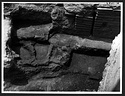
Tiled basin at ΚΗ (66-67/ΚΖ). Finds grouped with and published with C 19:5. Asterisk: C 19:16* ... 22 July 1947 ... C 19:16 ... C 19:16 |
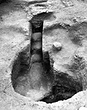
Well cut through cistern at 6/ΝΕ (C 9:7).
The stele I 3244 in position in the cistern over the mouth of the well is listed with the cistern deposit C 9:7. Coins:
26 February 1936 #2-#4
27 February 1936 ... A.D. 1st ... C 9:16 ... C 9:16 |
16 March 1957 pottery discarded nb.p. 122 ... 20-21 June 1947 |
Listed in nb. as 16-17/ΞΖ. Pit with furnace debris ... 5th c. B.C. - Hellenistic |
Dumped fill in mouth of well. Coins:
16 May 1937 #1 ... Early 5th c. |
A large chamber cistern filled in the second c. BC when a well (C 9:16) was dug through its floor. Well tiles were run up from the floor of the cistern to just below its neck; a double layer of complete ... Late 2nd c. B.C ... A large chamber cistern filled in the second c. BC when a well (C 9:16) was dug through its floor. |
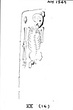
| Dorothy Burr Thompson ... Grave 16 in notebook. Adult skeleton.
In some records as Grave XXXIII (JP) ... Middle Geometric I |
| Dorothy Burr Thompson ... Grave 14 in notebook. Cutting in bedrock. Cremation: bones in pit (E.L. Smithson: Grave XXIV: PG). Bones discarded.
[JP] Nb. says at 16-17/ΞΖ and 16/ΞΖ on cards and on deposit list.(SD) ... Early Geometric I |
Cistern with mixed dumped filling uniform throughout cistern and two short blind channels. Coins:
16 May 1939 #6-#7
17 May 1939 #1 ... 6th-1st c. B.C. |
Cistern System #1f: Shaft at 1/ΝΘ = Well A. Scanty dumped filling. Coins:
19 February 1936 #2-#3
20 February 1936 #16-#20
21 February 1936 #5-#7
22 February 1936 #1 ... Mid-4th to 3rd c. B.C. |
Great Drain fills, including "packing over elliptical tiles" and "gravel fills". The central drain area covered by the sections below; other sections are with other deposits. Coins:
9 May 1947 #2-#5
16 ... 1st c. A.D. |
POU 3.50-10.30m. dumped filling of 5th or 6th century. Coins:
10 May 1949 #1
16 May 1949 #1
17 May 1949 #1-#2
19 May 1949 #1-#2
20 May 1949 #1-#12
21 May 1949 #1-#4 from dump
23 May 1949 #1-#3 from dump ... 3rd-5th c. A.D. |
House R, fill under drain tiles and fillings associated with house K in industrial area, including what was C 19:15, plus C 19:16 and
C 19:17.
a) House built as dwelling in second half of 5th.c.
b) Used ... Ca. 5th and 4th c. B.C ... House R, fill under drain tiles and fillings associated with house K in industrial area, including what was C 19:15, plus C 19:16 and
C 19:17.
a) House built as dwelling in second half of 5th.c.
b) Used as marble-workers' shop from beginning of 4th. c. to near middle of century. Rebuilt as an industrial establishment about middle of 4th. c.
c) Area built over in Hellenistic times.
... Originally numbered C 19:15. |
Cistern System #1e: Shaft at 11/ΞΑ.
Agora XXIX: "Well (not cistern shaft, as in Agora XII) ... Communicates with water system through small hole (see C 8:1) probably fortuitously. Single fill, mostly of ... 350-300 B.C ... Communicates with water system through small hole (see C 8:1) probably fortuitously. ... Coins:
4 March 1936 #10-#11
5 March 1936 #2-#3
16 March 1936 #1-#1a |
| In area West of the Areopagus. Fills with many figurines and molds, possibly from a terracotta factory.
Twelve stamped amphora handles; no long-petal bowls; Type 54 A lamp Coins:
31 May 1939 #11
1 June ... Mostly 200-150 B.C. |
Late 3rd-first half 4th c ... Late 3rd-first half 4th c ... -16--13m. |
Well in the bottom of chamber cistern at 106/ΛΓ, stratified. A soft spot in the bedrock at the west side of the well caved in and was packed with typical coarse Roman first century amphoras; the well was ... A.D. 200-150 |
Pocket N of drain C A. Walker coin deposit |
| Filling in eastern channel at W. end of casting pit A 16:1. Early Roman (1st c. A.D.) but with some later disturbances (3rd. and 4th. c. A.D. and Byz.). P 25747 (VG thinks strayed from A 16:1)
Estimated ... 1st. c. A.D ... 1st. c. A.D ... A/11,12-16/3,4 |
Coins:
4 May 1932 #1-#8 (#8 from dump) ... 4th c. A.D. |
Bottom of well plus dump. Coins:
4 May 1932 #8
5 May 1932 #8-#42 'from mud', #42 uncertain ... 2nd. c. A.D. |
Coins:
5 May 1932 #1-#7
Laughing faun found at this level with pottery similar to that of group K (miniature) ... 3rd c.-267 A.D. |
| Grave 2 in notebook. Child of about two (or 10?) months, body placed in plain pithos, which rested on its side at the bottom of a pit; the mouth closed with a stone slab.
The burial forms a group with ... 750-725 B.C |
After the abandonment of the well and the collapse of the well-curb, the upper 2.00m. of the shaft were filled with a dump apparently dug up nearby. Material for the most part of the 5th c. B.C. but containing ... 7th c. A.D. |
Rectangular shaft at northwest foot of Areopagus; dumped filling of second half of 4th c. B.C. Pit at 16/Δ-Ε recorded one time as an extension of shaft 17/Δ-Ε (see L 506 and nb.p. 395), but items from ... Ca. 325-275 B.C ... Rectangular shaft at northwest foot of Areopagus; dumped filling of second half of 4th c. B.C. Pit at 16/Δ-Ε recorded one time as an extension of shaft 17/Δ-Ε (see L 506 and nb.p. 395), but items from there are not recorded with this deposit. |
Nbp. 661: Dug in 1st c. Cleaned out almost to bottom shortly after the middle of the 3rd c. and used for a few years. During Herulian invasion of 267, Laughing Faun broken up and thrown in. Thereafter ... 1st-5th c. A.D., 2nd c. A.D.=POU |
| Tiled Well at S edge of E-W Road, 73/ΜΗ. Contemporary upper and lower fills separated by layer of sterile mud.
Latest coin dates ca. 200. Koan amphora handle with stamped handle dates slightly after 200 ... 210-160 |
Cistern at 79/Γ (= 80/Δ) on lower north slope of the Areopagus. Filling of 2nd c. B.C. with some later intrusions (Turkish pottery indicates disturbance).
Single Knidian stamped amphora handle dates around ... Hellenistic-Turkish |
Early Roman well with four fills.
fill 1: well sealed 1st. c. A.D.
fill 2: more bones than pots.
fill 3: nothing later than 1st. c. B.C.=POU
fill 4: similar to fill 3, a little earlier? Coins:
7 May 1940 ... Early Roman |
Pit 2 in Grave area. Small deposit in a pit; a fragment of a red-figured nuptial lebes recalls the early Kerch style of the second quarter of the 4th c.; the deposit as a whole runs somewhat later ... Ca. 375-315 B.C. |
| Grave XX in notebook = RSY Grave 16. PD 731-i ... Late 6th. c. B.C ... Hesperia 20 (1951), pp. 97-98, fig. 13 and pl. 44 c-d (Grave 16). |
Tiled well cleared only to a depth of 6.60m. where fallen tiles and broken bedrock made further work impossible. So far as dug, a dumped filling as late as the 6th c. A.D. Coins:
16 May 1949 #2
18 May ... As late as 6th c. A.D ... So far as dug, a dumped filling as late as the 6th c. A.D ... Coins:
16 May 1949 #2
18 May 1949 #1
23 May 1949 #1 (dump) |
| Hole (Well) and adjoining water channel with 4th c. pottery, probably a dumped fill.
At a depth of about -5.70m we started yielding some very crude potsherds, clearly not made on the wheel (maybe Prehistoric) ... Prehistoric-Roman ... Hole (Well) and adjoining water channel with 4th c. pottery, probably a dumped fill.
... B 1199 has been placed with A 16:1. |
"Iron Pit" beneath house 634/20 and in the upper part of a well. Coins:
22 April 1958 #1-#3 (illegible)
23 April 1958 #1
25 April 1958 #1 (illegible) ... 1st C. B.C. |
East Building, pit in footing trench. Coins:
20 April 1959 #5-#6 ... 2nd c. A.D. |
Homer A. Thompson ... Well at the northwest foot of the Areopagus. Use filling of the Roman period. After the abandonment of the well and the collapse of the well-curb, the upper 2m of the shaft were filled with a dump apparently ... 1st-3rd c. A.D., 5th century ... Material for the most part of the 5th c. B.C., but containing a little that is alter and also pots apparently from a sacrificial pyre of the early 4th c. ... Same deposit with I 16:2. |
Pit 6 in Grave area. South cut, Metroon Section. Pit with burning ... Late 5th. c. B.C. |
Located beneath line of Poros Gutter, from a square settling basin cut in bedrock at the north end of Trench II, South of Theseion, 1.30m below the modern road surface. The basin is lined with rough-picked ... Last quarter of 5th c. B.C.-early 4th c. B.C ... Last quarter of 5th c. B.C.-early 4th c. ... I 16 |
| Well on lower northwest slope of Areopagus. Dug to 6.60m. and abandoned because of danger. Single dumped deposit.
Perhaps this context: P 528, P 1223 (JWH). Coins:
22 April 1932 #1 ... Second half 1st c. B.C.-early 1st c. A.D. |
Filling over drain from East Room of Archaic Fountain House. Lot T 16, fill e.
Τ 1567 (SS 11587) and Τ 1734 (P 22538) from upper disturbed fill (p. 2448) ... Late 5th. into 4th c. B.C. |
| Pithos ay the bottom of the north slope of the Areopagus with single fill; Part of Hellenistic Group D.
One stamped amphora handle dates slightly after 146. Latest coin dates in first two decades of 2nd ... 160-130 B.C ... Latest coin dates in first two decades of 2nd c. many long-petal bowls indicate date somewhat after ca. 145 for closing of deposit ... Coins:
12 April 1932 #6-11
13 April 1932 #1-#2
16 April 1932 #10
18 April 1932 #4 |
Pithos in NW corner (room) of Poros Building. Marble chips ... Mid-4th c.? |
Cistern chamber in the area of the southeast Temple, the mouth cut back in antiquity ... Late 4th - early 3rd c. B.C. |
Child's burial in south wall of Marble Worker's House.
Bones examined 20 June 1975 and found to be an immature animal, not human (canid-puppy?).
Identified as pyre by SIR. Set into a shallow roughly ovoid ... Late 4th c ... Late 4th c ... F/14,15-16/7,8 |
Cistern (diameter 0.90m) with two channels; the fill of the cistern proper, below the scant upper (Byzantine) deposit, appears to have been dumped all at the same time, to 325-275 B.C. Notebook says "all ... 325-275 B.C. |
| Bronze-casting pit and furnace against S apse of Church (106/ΛΕ). Late Roman sherds of the 4th and the 6th c. A.D. were found with fragments of moulds from bronze casting. The west end was destroyed by ... 5th-6th c. A.D. |
Coins:
3 June 1932 #1
8 June 1932 #1-#9 ... 5th c. A.D. |
Cistern at 9/Β (10/Β on plan), at the NW foot of the Areopagus, some 200m to the west of the Coroplast's Dump. It had evidently belonged to one of the small houses in that thickly populated residential ... Second half 4th c. B.C. |
Coins:
8 June 1932 #2-#9
9 June 1932 #1-#14
10 June 1932 #1-#13
11 June 1932 #1-#9
13 June 1932 #1-#3, #6 (dump) ... 1st-3d c. A.D. |
| Debris filling in a bronze casting pit and workshop, characterized by mold fragments but including also a few plain vases and fragments of wine jars. Third quarter of 4th. c. BC.
The pit was cut into the ... Ca. 350-325 B.C. |
| Laura Gawlinski ... Bronze foundry north of bridge on Piraeus street, east of Great Drain.
Keyhole-shaped bronze casting pit, cut into bedrock.
2016: Continuation of the excavation of a rectangular pit with foundry debris, ... Late 6th-early 5th c. B.C.
(Late Archaic/ Early Classical) ... Late 6th-early 5th c. B.C.
(Late Archaic/ Early Classical) ... E/2,3-16/3,6 |
A small concentration of pottery in lowest 1.80m., possibly a use fill. Three fills above, with little pottery, ranging from Hellenistic to late Roman in date. Coins:
26 February 1934 #4-#6
27 February ... 325-200 B.C. |
| Homer A. Thompson ... Cremation burial (trench-and-hole) under S. edge of E-W Street, northern burial. In some records as Grave XLVII.
The western part of the offering trench of the tomb was lost to a Turkish cess pit, and ... Middle Geometric I |
| An extensive cistern system on the lower north slope of the Areopagus, south chamber with blind tunnel extending further south (south tunnel); north chamber; drawshaft further north, extends to north tunnel ... Ca. 320-240 B.C ... The cisterns and chains of cisterns must have been filled up at various times between the end of the 4th B.C. and the 1st c. A.D.
Cistern System, 45/Β and 45/ΙΑ (Hell. ... Coins: ΣΤ
13 April 1932 #1-#3
14 April 1932 #3-#5
16 April 1932 #9, #15
20 April 1932 #2-#3
21 April 1932 #5-#13
23 May 1932 #1
Coins: ΣΤ'
25 May 1932 #1-#4
26 May 1932 #4
30 May 1932 #1-#2
31 May 1932 #1
1 June 1931 #1-#2 |
Cistern shaft at 63/ΚΓ. Part of H-I 16-17 system. Contents of 3rd c. disturbed.
Part of extensive cistern system, of which one chamber, three drawshafts, and two blind tunnels were excavated (H 16:2, ... 3rd c., disturbed ... Part of H-I 16-17 system. Contents of 3rd c. disturbed.
Part of extensive cistern system, of which one chamber, three drawshafts, and two blind tunnels were excavated (H 16:2, I 16:6, I 17:4) |
Roman Group L.
Layer I (cont. 59-64) Pre-Herulian second half of 3rd c. (bottom, 15.95-13.90).
Layer II (cont. 42-58) 4th c.-first quarter of 4th c. (11.90-13.90).
Layer III (cont. 17-41) -4th c. (10.00 ... Second half 3rd c.-early 5th c. A.D ... Layer II (cont. 42-58) 4th c.-first quarter of 4th c. (11.90-13.90).
... Layer IV (cont. 1-16) nearly 5th c. ... Coins:
16 May 1939 #3 (?) |
Use filling of early to late 2nd c. A.D., and dumped filling of late 2nd c. Coins:
16 April 1948 #1-#6
17 April 1948 #5
28 April 1948 #1 ... POU 2nd c. A.D ... Use filling of early to late 2nd c. A.D., and dumped filling of late 2nd c ... Coins:
16 April 1948 #1-#6
17 April 1948 #5
28 April 1948 #1 |
Coins:
16 April 1932 #1 ... First quarter 4th. c.-2nd c. B.C. |
Well dug through cistern at 64/Γ. Seems to have been stratified; four fills recorded but here treated as one as divisions are rather "arbitrary".
Agora V, p. 126: Constructed in late 1st c.; use filling ... 3rd c. A.D. POU (before 267 A.D.) ... 1 Top to -11m (containers 1-8), dump 7th c. ? ... POU late 3rd-early 4th c. ... 5 -13.75m to -14.75m (containers 16-17) 3rd c. Pre-Herulian.- Fill IV |
| Anne McCabe ... Adjacent to the SW face of Byzantine Wall 14. The circular cutting, 0.90m in diameter, appeared at 53.504m under a layer of loose rubble (Lot 481). Wall of the well roughly built, consisting at the top ... 11-19 July 2006
24 June-21 July 2009 |
Horos terrace trench Layer III, under line of tiles. Coins:
19 March 1953 #16-#17 ... 2nd c. A.D. |
Coins:
23 April 1937 #1-#16 d22.80m. (bottom)-22.25m.d ... 2nd. c. B.C. POU |
Coins:
16 April 1937 #1-#2
17 April 1937 #1 ... Early 1st (or 2nd) c. B.C. |
Well on south slope of Kolonos Agoraios. Coins:
23 March 1936 #5-#6
31 March 1936 #3
30 April 1936 #1
1 May 1936 #6
2 May 1936 #2
5 May 1936 #8
6 May 1936 #15-#16
14 May 1936 #5-#8 (#6 N 51520 is from ... 50 B.C-3rd c. A.D ... =Dump of 4th. c.
.2=3.50-22.20m.=Original fill dumped back in; 1-3rd. c. A.D.
.3=22.20-23.25m.=POU Second half of 1st. c. B.C.-first half of 1st. c. |
| Marcie Handler ... The Pyre was revealed in a layer of 4th c. fill in the north end of Room 6, just south of Wall 8. Room 6 is defined by the street wall (Wall A) on the west, Wall 7 on the east, Wall 9 on the south (preserved ... 4th c. B.C. |
Furnace Dump from N. Hypocaust in Bath to East of Poros Building. Coins:
26 March 1948 #4-#8
27 March 1948 #1-#3
29 March 1948 #2-#7
1 April 1948 #2-#3
3 April 1948 #14-#15
7 April 1948 #16-#27
8 April ... Second half 3rd c.-first half 4th c. A.D. |
Well at 16/ΚΗ, in SW corner of Gymnasium complex. Lowest Roman deposit. 9th-10th century Byzantine and Turkish
Coins:
24 April 1935 #3
Envelope 4 in Tin 14 ... 5th c. A.D. - 10th c. A.D ... 5th c. A.D. - 10th c. ... Π:16/ΚΗ |
Diameter 0.95m; water level -9.10m.
Plais shaft cut in stereo from bottom of slender flask-shaped cistern. Scanty fill from house destruction in 5th c. A.D.; Christian lamps; unfinished statuette of Castor ... Late Roman ... Scanty fill from house destruction in 5th c. A.D.; Christian lamps; unfinished statuette of Castor ... Coins:
16 April 1948 #35
27 April 1948 #62 |
| The cistern was lined with stones at the top with an opening 0.80 m in diameter. For the most part, it seemed to cut into bedrock except along its northern edge where some 5th c. B.C fill remains and main ... 2-19 July 2010 ... For the most part, it seemed to cut into bedrock except along its northern edge where some 5th c. B.C fill remains and main continue further down (Lot 663). ... Coins
7 July 2010 #507-#508
14 July #510-#511
16 July #512
20 July #513-#515
21 July #516, #520 |
Dump, Sullen clean-up. Coins:
9 February 1937 #6-#10
10 February 1937 #11-#13
11 February 1937 #16-#20 ... First quarter 1st c. B.C. |
7th c. well below east part of Odeion Cavea Trench K). Use filling negligible; dumped filling of the second half of the 7th c. B.C.
Brann Well H. Diameter 1.10m. Cut into bedrock. During excavation seepage ... 650-600 B.C. |
| Upper mixed dumped fill (last quarter 3rd c.-4th c.) with Roman POU below 10.40m. Coins:
16 February 1937 #1 (disintegrated)
17 February 1937 #1 (disintegrated)
8 April 1937 #5-#10 (dump)
9 April 1937 ... 2nd half of 1st c.-first half of 3rd c. A.D ... Upper mixed dumped fill (last quarter 3rd c.-4th c.) with Roman POU below 10.40m ... Coins:
16 February 1937 #1 (disintegrated)
17 February 1937 #1 (disintegrated)
8 April 1937 #5-#10 (dump)
9 April 1937 #2-#5 (dump)
10 April 1937 #1-#8 (dump)
12 April 1937 #7-#8 (dump)
13 April 1937 #25 (dump)
14 April 1937 #3-#4 (dump)
19 April 1937 #6-#7 (dump) |
Well at the southeast foot of Kolonos Agoraios.
Use filling of 1st c. A.D.; dumped fillings of 3rd c. and of early Byz. times. Coins:
15 June 1937 #1-#2 (earth)
16 June 1937 #14-#20 (earth)
17 June 1937 ... 1st c. A.D.=POU ... Use filling of 1st c. A.D.; dumped fillings of 3rd c. and of early Byz. times ... Coins:
15 June 1937 #1-#2 (earth)
16 June 1937 #14-#20 (earth)
17 June 1937 #1-#11 (earth)
18 June 1937 #4-#5 (earth)
19 June 1937 #4-#6 (earth) |
| Coins:
16 June 1981 #89
17 June 1981 #94-#95, #100 (not a coin).
19 June 1981 #103-#104, #335-#336
23 June 1981 #111-#112 ... 9th-13th c. A.D. |
| Dumped filling mostly of 3rd c. A.D., but dumped as late as 5th century. Nbp. 143: The fill in this cistern was of three kinds: to within .60m. of the floor plain broken bedrock with no sherds; then a ... 10-17 February 1937 ... Dumped filling mostly of 3rd c. A.D., but dumped as late as 5th century. Nbp. 143: The fill in this cistern was of three kinds: to within .60m. of the floor plain broken bedrock with no sherds; then a layer 15-20 cm. thick with Turkish sherds, and [then] Roman 3rd c. pottery, mostly fragments of micaceous red water jars, over the floor ... Coins:
13 February 1937 #1-#2
16 February 1937 #2 |
| Urn Burial in Tholos Cemetery. Grave 9 in notebook.
Amphora containing bones of a small child. Little pots had been put under its neck ... Late 8th-Early 7th c. B.C. |
West Terrace, South End, Layers IV and V. Heavy dumped filling associated with terrace walls at the extreme south end of the excavations in the Areopagus industrial area. The proportion of figured and ... Ca. 420-390 B.C. |
Shaft (= well + caves) at 116-118/ΚΕ-ΚΣΤ Coins:
6 May 1939 #16-#21
8 May 1939 #35-#37
9 May 1939 #1
24 April 1940 #6 ... 2nd. quarter - mid-5th. c. A.D. |
| David Scahill ... Behind northeast corner of Classical Building; east wall C. Below Hellenistic levels and early Classical pit. Chamber cut through bedrock, depth ca. 0.90m., diameter ca. 2m., roughly square in shape, angling ... LH III A:1 |
Well at 16/Γ = Well at 15/Β.
Dug to 14.90m. and abandoned due to influx of water. Coins:
15 May 1936 #1
20 May 1936 #2-#5
18 June 1936 #1, dump ... 3rd c. B.C ... 3rd c. B.C ... ΜΜ:16/Γ |
| Includes finds from layer II and III of cistern passage. Coins:
1 April 1937 #1 (east end of passage)
14 April 1937 #2-#8
15 April 1937 #1-#7
16 April 1937 #1 ... Second half 1st c. A.D. |
House F, room 4 below floor at -2.00m., fill 4. Deposit created by A.W. and first appears in his thesis (Biblio. below). Coins;
19 May 1949 #1-#16 Cf. coins from 17 June 1949 #1-#4 listed with lot OO 490 ... First quarter 2nd c A.D. |
Early cutting beside Great Drain: 103-111/Λ-ΛΓ (= "Deep cutting" Pit at 107/ΛΑ).
Abandonment filling in channel for early drain; the fragment of a red figured bell krater, P 17000, probably to be dated ... Ca. 425-395 B.C. |
Cistern connected by tunnel to another chamber filled in Byzantine period. Small Hellenistic deposit on floor. somewhat contaminated by Byzantine fill above
No stamped amphora handles later than 3rd c.; ... 250-190 B.C ... Small Hellenistic deposit on floor. somewhat contaminated by Byzantine fill above
No stamped amphora handles later than 3rd c.; latest lamp type 45C; fragments of many bowls (ca. 40), similar to those in M 21:1 and P 21:4 ... Coins:
16 February 1937 #7-#9
22 February 1937 #23-#26 |
Essentially uniform fill of III-IV c. A.D. with a Byzantine upper fill. Coins:
14 June 1937 #1-#3
15 June 1937 #2
16 June 1937 #1
17 June 1937 #1-#2
18 June 1937 #1-#4
19 June 1937 #1-#4
9 June 1938 #1-#3 ... Late 3rd-mid-4th c. A.D ... Essentially uniform fill of III-IV c. A.D. with a Byzantine upper fill ... Coins:
14 June 1937 #1-#3
15 June 1937 #2
16 June 1937 #1
17 June 1937 #1-#2
18 June 1937 #1-#4
19 June 1937 #1-#4
9 June 1938 #1-#3
10 June 1938 #1
13 June 1938 #1
15 June 1938 #1-#4
5 July 1938 #1-#3 (dump) |
"South Triangle" abandonment filling over Brown House (House A) in the industrial area. Layers 1-3 and layer 4, to floor of second period. As late as the 3rd. c. B.C. but composed largely of earlier material ... 3rd c. B.C. and earlier ... As late as the 3rd. c. B.C. but composed largely of earlier material.
... Coins:
16 April 1948 #1-#2
17 April 1948 #1-#2
19 April 1948 #1-#3
20 April 1948 #1-#2 |
Continuous filling over its mouth and in it to a depth of -7.30m. Clearly the fill thrown in at the time of Archaic Building, to raise the ground level. The last few centimeters of the well represented ... 550-500 B.C. |
| Sacrificial Pyre II, Classical Building II.
Found right beneath the stuccoed channel built for sluicing in the 1st c. A.D., and must have been partly disturbed when the channel was constructed. It may ... Ca. 250 B.C. |
Containers 24-72.
Masses of pottery; including many BHWJ's; lamps XVIII and XXIV
Coins:
12 June 1937 #14-#53
13 June 1937 #1-#7 (from earth of 12 June)
13 June 1937 #8
14 June 1937 #1-#3
15 June 1937 ... First half 1st c. A.D. |
Well cut through the floor of a cistern. Apparently a dumped fill in an unused well. Coins:
16 March 1934 #15 (illegible)
17 March 1934 #2
19 March 1934 #1-#4
20 March 1934 #1-#3
22 March 1934 #1
23 March ... 1st-early 2nd c. A.D. |
Actually in 38/ΙΕ, nbp. 766).
Pit contained at top much pottery and a few coins; sand for about 0.70m below, produced little pottery but many coins including some 2nd century Imperial and one of Salonica ... 3rd c. A.D. |
Coins:
5 April 1937 #1
8 April 1937 #3 (disintegrated)
9 April 1937 #1
10 April 1937 #9-#67
12 April 1937 #3-#6
13 April 1937 #1, (found 7 April 1937), # 24
14 April 1937 #1-#2 (found 8 April 1937)
16 ... Late Roman, 4th-early 5th. c. A.D. |
Cistern system, 88/ΝΓ (shaft and passages). Apparently a dumped filling of Roman times, drawn mostly from some Hellenistic deposit. Coins:
31 March 1937 #1-#5
1 April 1937 #4-#5
3 April 1937 #1-#2
5 April ... Hellenistic and Roman, 4th c. A.D. |
"Red Fill" (extending to bedrock or near, over most of area). Mainly first century after Christ with later disturbance. Coins:
17 April 1936 #10-#13
18 April 1936 #1
20 April 1936 #13-#17
21 April 1936 ... 1st-2nd c. A.D. |
Connected with G 14:3.
There was a layer of Late Roman fill. It rested over a layer of 2nd c. B.C Hellenistic and then another of 4th c. B.C Hellenistic; the passage between the two cisterns contained ... Late Hellenistic ... It rested over a layer of 2nd c. B.C Hellenistic and then another of 4th c. ... Coins:
16 April 1932 #4
18 April 1932 #1-#3
19 April 1932 #1-#2
20 April 1932 #1-#3
21 April 1932 #1-#4 |
Nb page 5044: Great shapeless pit with a well (62/Ξ) at its bottom which we were unable to dig because it was too dangerous. Fill in the pit was of sand and white ash. The finds and pottery 4th. and perhaps ... Late 4th.-early 3rd. c. |
Pit A lies tangent to Pit B (J 18:4) and cuts into its loose fill.
Small deposit ... Second half of 5th c. B.C ... Second half of 5th c. B.C ... ΑΡ:16/ΙΘ |
Water channel in north part of section. Coins:
20 February 1936 #2-#3
Five stamped amphora handles; Type 48 A lamp; one-third of bowls long-petal; one long-petal mold ... Second half of 3rd c.-Early third quarter of 2nd c ... Second half of 3rd c.-Early third quarter of 2nd c ... ΠΘ:16/ΚΣΤ |
Dumped fillings thrown in during second quarter of 1st c. B.C. containing mostly debris resulting from Sulla's sack in 86 B.C.
Agora XXIX, p. 464: Four fills distinguished during excavations ... but seemingly ... Late 2nd c. and early 1st c. B.C. POU; 110-75 B.C ... Dumped fillings thrown in during second quarter of 1st c. B.C. containing mostly debris resulting from Sulla's sack in 86 B.C.
... Coins:
7 March 1938 #16-#17
8 March 1938 #23-#25
9 March 1938 #8
10 March 1938 #6-#17
11 March 1938 #3-#12
12 March 1938 #14-#29
14 March 1938 #7-#14
15 March 1938 #10-#11
10 May 1938 #1-#10 |
|
|