|
|
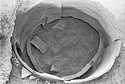
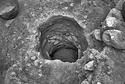
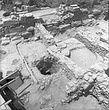
A circular pit below Byzantine floor. It Is 1.28m deep and its bottom rests upon virgin soil, a gray clay formed by the disintegrated native rock. It is constructed for about 0.30m at the top with tiles, ... 12th c. A.D ... A circular pit below Byzantine floor. It Is 1.28m deep and its bottom rests upon virgin soil, a gray clay formed by the disintegrated native rock. |
Well at 73/Δ Coins:
24 April 1939 #1 (stuck to sherd in bottom container) A box (4B) and three tins of pottery have been kept (T5-T7). The rest discarded ... Byzantine ... Byzantine |
9-10 c. A.D ... Byzantine fill. |
9th-10th c. A.D ... Byzantine fill |
Coins:
20 March 1947 #1 Estimated Grid ... 11th-12th c. A.D ... Byzantine POU |
Estimated Grid ... Byzantine dump |
Well L: Early Byzantine ... Early Byzantine ... Early Byzantine |
Excavations in Byzantine Building ... 2nd quarter 4th c. B.C ... Excavations in Byzantine Building. |
Byzantine Well at 22/ΜΕ ... 24 February 1936
16 June 1951 ... Byzantine Well at 22/ΜΕ |
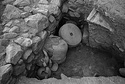
Original bottom of pithos was damaged (probably by ground water) and a second, higher bottom consisting of squarish terracotta tiles laid. Fill above second, higher floor was unusually rich in pottery ... Byzantine ... Byzantine Built Pithos |
Mudbrick Pithos at N/8-6/3.
Constructed in conical shape of mudbricks, including the floor. Top cut by modern basement wall. Diameter at floor 1.45m Coin
30 May 1930 #113 ... Byzantine ... Byzantine |
| Anne McCabe ... Enchytrismos burial of an infant in Byzantine Room C, L/15-2/13, at 52.915m. Although disturbed by roots, the skeleton (AA 373) was articulated and lay parallel to Wall 1, with head at the NW and feet ... 14-15 June 2007 ... Byzantine Baby's Grave |
Byzantine Well in Stoa Shop 15 Estimated Grid ... Byzantine ... Byzantine Well in Stoa Shop 15 |
Byzantine Well at 54/ΜΣΤ, belonging to the house over the eastern part of the Odeion. Coins:
3 May 1935 #5
4 May 1935 #1 ... Byzantine ... Byzantine Well at 54/ΜΣΤ |
Well in Byzantine Room 9. Excavation of the well terminated at 49.00m. due to cave-in danger. Topped by a stone sill and marble putael, the upper part of well is of Byzantine-period stone masonry; lower ... Byzantine ... Well in Byzantine Room 9. Excavation of the well terminated at 49.00m. due to cave-in danger. Topped by a stone sill and marble putael, the upper part of well is of Byzantine-period stone masonry; lower part lined with tiles.
|
Well at 81/ΝΑ ... Byzantine ... Byzantine |
Well at 53/ΛΖ ... Byzantine ... Byzantine Pit at 53/ΛΖ |
| Johanna Hobratschk ... South end of Byzantine Room J, adjacent to Pithos B and under St. Philip's st scarp. Built lining at the E and N side, roughly constructed of some large square blocks and slabs, smaller field stones of ... 21 July-3 August 2006
2011
28 June 2012-16 July 2012 ... Well in Byzantine Room J. |
Well at 69/Ο Coins:
29 May 1935 #8
30 May 1935 #1-#2 11th c? ... Byzantine-Mid to late 2nd c ... Byzantine Well at 69/Ο |
Byzantine Well at 66/ΛΑ.
Semi-curbed well at the west wall of the Byzantine room.
From the mouth of the well, a few brown glazed sherds ... Byzantine ... Byzantine |
| James Artz Pirisino Daniele Kylindreas Miltiades ... Excavation in Room 3 of ΒΘ West revealed 5 ceramic vessels in a row against the eastern face of Wall 12. 3 complete vessels (ΒΘ 122, 124, and 125) were catalogued, along with the base of a plain glazed ... 9th-11th c. A.D ... The primary types of glazed Byzantine pottery found in the fill included green and brown painted ware, plain glaze ware, Constantinople white ware, and monochrome glaze.
... In addition to the 3 vessels, a roof cover tile was mended from the tile debris in the same area, and 10 coins were found within the fill directly above and around the surface, mostly Anonymous Byzantine Folles datable to 1070-1075 A.D.
... We also uncovered fragments of a Byzantine vessel at an elevation of 53.590m, which were later removed entirely (ΒΘ 302).
|
Pit at 23/ΚΣΤ Coins:
9 May 1935 #2-#17 "In addition to the catalogued pieces, it contained some coarse ware and a few glazed sherds, either painted or with simple sgraffito design" These all thrown. Hesperia ... 1100 A.D ... Byzantine Pit at 23/ΚΣΤ |
Well at 19/ΙΑ (corrected from O 13:2) Incised bowl
Graffito bowl
Water jug x2
Small amphora
Amphora x2
Canteen x2 Tins 132-138 (not found in notebook) ... 12th c. A.D ... Byzantine Well at 19/IA |
Scanty remains of use fill in lowest 0.30m. with Byzantine dump above ... 400-350 B.C ... Scanty remains of use fill in lowest 0.30m. with Byzantine dump above. |
Pithos at NE corner of Byzantine Building. Coins:
20 May 1938 #1, #3 ... Late 11th-Early 12th c. A.D ... Pithos at NE corner of Byzantine Building. |
Grave south of Hephaisteion, in Byzantine cistern. Grave III in notebook. Disturbed. One skeleton ... 30 March 1936 ... Grave South of Hephaisteion in Byzantine Cistern (Grave III) |
Roman well re-used in Byzantine times. Subdivisions:
.1=0.00-13.80m.
.2=13.80-23.50m.
.3=23.50-25.00m ... Late 1st-early 2nd, 4th-5th, 11th centuries ... Roman well re-used in Byzantine times. |
| A tile lined well under Room I of Byzantine House.
A concrete shaft belonging to the mill cut off the top of the well and left in place 3 complete sets of tiles and most of a fourth set. All but the lowest ... 17-18 c. A.D ... Well Under Room I of Byzantine House |
Chamber of water system with one blind tunnel and two cisterns connected by tunnel. Pottery consistent throughout, late Hellenistic. Late 2nd c. B.C.
Ten stamped amphora handles. Most of bowls long-petal ... 100-75 B.C ... Cistern in NW Corner of Byzantine Building |
| "Room D" is the triangular area at L/15,16-2/10,12, NW of Wall 1, in E corner of basement of No.3. Hastings Street, bounded by the NE and SE walls of basement).
Bell-shaped vessel built of horizontally-laid ... 10th-11th c. A.D ... Pithos or Bothros in Byzantine "Room D". |
Called a Turkish pit, located under a Byzantine wall and filled with an upper level of Byzantine material under which a level of Roman material. Coins:
5 April 1932 #1-#3
6 April 1932 #1-#5
7 April 1932 ... 6-11 April 1932 ... Called a Turkish pit, located under a Byzantine wall and filled with an upper level of Byzantine material under which a level of Roman material. |
Byzantine Building: Room XV (loose black filling). Coins:
12 April 1933 #5-#15
13 April 1933 #1 ... Byzantine ... Byzantine Building: Room XV (loose black filling). |
Loose filling below earliest Byzantine Floor. Coins:
25 February 1939 #3-#5
27 February 1939 #2-#4 ... To 11th c. A.D ... Loose filling below earliest Byzantine Floor. |
| Byzantine vaulted chamber at 94/ΚΕ, that overlay monument bases on the west side of the Panathenaic Way ... Byzantine ... Byzantine |
Cistern system West of Bouleuterion: (see also B: cistern system to West of Tholos). First Chamber from North.
Part of three-chamber cistern system, including also G 11:1, with Byzantine and modern disturbance ... 150-ca. 75 B.C., with Byz. disturbance ... Part of three-chamber cistern system, including also G 11:1, with Byzantine and modern disturbance throughout; The uppermost fill-modern. The middle fill, Byzantine. Extensive Byzantine disturbance evidenced by coins |
| A well in the courtyard (Room 8) of a Byzantine House of Period II. The well was covered by a large squared poros wellhead and a marble puteal (apparently neither inventoried). Within the well shaft, the ... 14 July-9 August 1989
2-13 July 1990 ... A well in the courtyard (Room 8) of a Byzantine House of Period II. ... Within the well shaft, the stratified deposit produced two dumped filings of debris that resulted from two distinct destructions, and these were separated by a filling that had accumulated during the Byzantine period of use. ... Finds not from well fill but from Byzantine fill around well:
A 4801, J 195, S 3414, SS 14948, ST 866, Coin 31 July 1990 #254, container ΒΖ 198. |
| Square Byz. Well South of Middle Stoa Pier 21 (Iliad Well) Estimated Grid ... Byzantine ... Square Byzantine Well South of Middle Stoa Pier 21 |
Byzantine pottery begins after 4.70m.; above that Roman.
Diameter 0.92m; water level -5m. Tiled well; height of tiles 0.62m ... Byzantine re-use of Roman well ... Byzantine re-use of Roman well. |
Very little pottery and mainly broken tiles in this well, all mixed from Hellenistic to Early Byzantine (nbp. 1441) ... 25 May-1 June 1939 ... Very little pottery and mainly broken tiles in this well, all mixed from Hellenistic to Early Byzantine (nbp. 1441). |
Top to 13.15m. called Byzantine by excavator; 13.15m.-18.10m., 6th c. 18.00-19.00 period of disuse, brick and tile fragments ... 5th-6th and 9th-10th c. A.D ... Top to 13.15m. called Byzantine by excavator; 13.15m.-18.10m., 6th c. 18.00-19.00 period of disuse, brick and tile fragments. |
| In NE corner of Room D. In a Byzantine vessel=P 34464.
The position of the vessel in the corner of the room suggests that the burial was made after the construction of Byzantine Walls G and E. This type ... 10th-11th c. A.D ... In a Byzantine vessel=P 34464.
The position of the vessel in the corner of the room suggests that the burial was made after the construction of Byzantine Walls G and E. ... Disturbed Roman floor surfaces inside Byzantine Room D. |
Cistern System #1c: Shaft (well) at 25/ΞΑ. Began as a manhole but opened up by early-mid Byzantine as a well ... Late 12th c. A.D ... Began as a manhole but opened up by early-mid Byzantine as a well. |
Hoard of 10 Byzantine coins ("all turned up with one blow of pick"). Late strosis. Coins:
15 March 1934 #12-#21 (hoard)
16 March 1934 #17 ... Byzantine ... Byzantine |
Well 6 = Pit 6 under Church but it antedates the church. Late Byzantine or early Turkish. Coins:
17 March 1936 #4-#5
18 March 1936 #5 ... Late Byzantine ... Late Byzantine |
Tile-lined well at T/18,19-14/4,5 (Byzantine). Reused in Byzantine times, originally Roman (?). Upper 1.85m. built of mortared rubble, tile-lined below. Diameter ca. 0.70m., depth 6.80m., top at ca. 68.40m ... Tile-lined well at T/18,19-14/4,5 (Byzantine). Reused in Byzantine times, originally Roman (?). |
Cistern connected by tunnel to another chamber filled in Byzantine period. Small Hellenistic deposit on floor. somewhat contaminated by Byzantine fill above
No stamped amphora handles later than 3rd c.; ... 250-190 B.C ... Cistern connected by tunnel to another chamber filled in Byzantine period. Small Hellenistic deposit on floor. somewhat contaminated by Byzantine fill above
No stamped amphora handles later than 3rd c.; latest lamp type 45C; fragments of many bowls (ca. 40), similar to those in M 21:1 and P 21:4. |
Tiled well (diam. 0.78m); height of tiles 0.61m. Water level -5m. Well found at bottom of Byzantine pit, uppermost tiles cut down. Coins:
7 July 1947 #1-#2 ... Post-Herulian ... Well found at bottom of Byzantine pit, uppermost tiles cut down. |
| Well at 99/ΜΕ.
Just outside of SE corner of Fountain House. This well was used in at least two periods; the marble well curb of the second period, certainly Byzantine, was found in place. The fill was ... 5 May 1952
5-14 July 1952 ... This well was used in at least two periods; the marble well curb of the second period, certainly Byzantine, was found in place. The fill was Byzantine to bottom, representing a period of use deposit of the 10th to 11th centuries. |
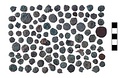
Practically at surface. 17 Byzantine coins stuck together. One group of 11, one of 3, and 3 loose. Coins:
29 March 1934 #1-#17 Deposit created 4 October 2001 ... Byzantine ... Practically at surface. 17 Byzantine coins stuck together. |
Well at 16/ΚΗ, in SW corner of Gymnasium complex. Lowest Roman deposit. 9th-10th century Byzantine and Turkish
Coins:
24 April 1935 #3
Envelope 4 in Tin 14 ... 5th c. A.D. - 10th c. A.D ... Lowest Roman deposit. 9th-10th century Byzantine and Turkish
Coins:
24 April 1935 #3
Envelope 4 in Tin 14. |
Nbp. 3104: Container includes a miscellaneous accumulation of Greek and Roman pottery with some fragments of Byzantine brown glaze. No joins were observed between this layer and Layer II ... 16-24 May 1937 ... Nbp. 3104: Container includes a miscellaneous accumulation of Greek and Roman pottery with some fragments of Byzantine brown glaze. |
| A tiled well with two periods of use, Byzantine and Late Roman.
Some coarse Byzantine pottery from the upper part. from the lower part, pre-Herulian pottery, lamps and figurines. Also ΑΡ 221 (A 1202) the ... 3rd c. A.D. (before 267 A.D.)
11th-12th c. A.D ... A tiled well with two periods of use, Byzantine and Late Roman.
Some coarse Byzantine pottery from the upper part. from the lower part, pre-Herulian pottery, lamps and figurines. |
P.H. 1.98m; greatest diameter 1.70; wall thickness 0.20. The walls are of rubble set in clay, and the bottom is flat. Pottery was coarse Byzantine sherds but discarded except for one graffito ... 25 May 1956 ... Pottery was coarse Byzantine sherds but discarded except for one graffito. |
Coins:
9 June 1936 #2-#4
Coins from the dump:
18 May 1937 #1-#15
4 June 1937 #1, #3-#4
10 June 1937 #3-#5 d1.50m. to top.d. Mixed to Byzantine ... Mixed to Byzantine. |
Well in the southeast corner of the section, at 58/ΝΑ. It must have been originally made in the Roman period to judge from the character of the curbing tiles. It was however cleaned out and reused in ... 10th-Early 11th c. A.D ... It was however cleaned out and reused in Early Byzantine times, but produced among a number of Byzantine water-jars, a fine archaic figurine (T 1097). |
Cistern through which well G 14:4 was dug. Filling in cistern, early Byzantine, but with various objects resembling those from the upper dumped filling in the well, below the cistern floor (5th c. A.D.) ... Early Byzantine ... Filling in cistern, early Byzantine, but with various objects resembling those from the upper dumped filling in the well, below the cistern floor (5th c. |
Area IV, surface fill. Group of 5 bronze coins corroded into one lump. Coins:
20 July 1981 #302-#306
(Anonymous Byzantine Coins (Bronze) 976-1030/1035 A.D., Cf. DOC III, pt. 2, p. 649ff (Class A2) ... 976-1030/1035 A.D ... Coins:
20 July 1981 #302-#306
(Anonymous Byzantine Coins (Bronze) 976-1030/1035 A.D., Cf. |
| Marcie Handler ... Located in the south section of Room E in the Byzantine Building east of the North-South Road. The uppermost 1.5 meters of well lining was built of well-coursed stones (some reused marble blocks) and tiles ... 12th c. A.D ... Well in the South Section of Room E in the Byzantine Building East of the North-South Road |
Stratified well; very late Roman verging on Byzantine. Coins
19 April 1939 #1-#8
22 April 1939 #1-#2
25 April 1939 #1
15 May 1939 #1 Subdivisions:
.1=0.00-15.25m.
.2=15.25-21.00m.
.3=21.00-22.00m ... 3rd-5th c. A.D.
9th c A.D ... Stratified well; very late Roman verging on Byzantine. |
Just east of Building II near its south end. The tiles were in place.
Upper filling (to 3.00m.) of Hellenistic-Byzantine dump all discarded.
POU fill a gradual accumulation of typical Justinianian ware ... 6th c. A.D. POU-7th c. A.D ... Upper filling (to 3.00m.) of Hellenistic-Byzantine dump all discarded.
|
Well (Hole) at 19/Ι(ΙΑ). Collapsed well creating a hole above; mixed fill in hole, early Byzantine in well proper. Coins:
26 April 1934 #12
27 April 1934 #28
28 April 1934 #38
1 May 1934 #3 ... Early Byz ... Collapsed well creating a hole above; mixed fill in hole, early Byzantine in well proper. |
The fill in this cistern is Byzantine with considerable admixture of Greek IV-III c. B.C. Coins:
7 March 1932 #9
9 March 1932 #1
10 March 1932 #1-#2
11 March 1932 #2
12 March 1932 #1 ... 11th-12th c. A.D ... The fill in this cistern is Byzantine with considerable admixture of Greek IV-III c. |
Martyr at Δ6. Top strosis (Byzantine-Turkish) discarded.
Strosis 2, late Hellenistic (Lot ΔΕ 21)
Strosis 3, early Hellenistic (Lot ΔΕ 22)
Strosis 4, to mid-4th c. B.C. (Lot ΔΕ 23)
Nothing catalogued from ... To mid-4th c. B.C ... Top strosis (Byzantine-Turkish) discarded.
|
Pithos in Turkish Pathway Coins
26 May 1937 #2-#7 ... Byzantine ... Byzantine |
Grave in south peristyle of Hephaisteion. Grave LXVI in notebook.
Burned layer with bones, skulls. Coins:
13 March 1939 #25
14 March 1939 #9-#10 Neg. KK 394 ... Byzantine ... Byzantine |
Grave in north peristyle of Hephaisteion. Grave LVIII in notebook. No mention of bones. Neg. KK 391 ... Byzantine ... Byzantine |
Grave in north peristyle of Hephaisteion. Grave LIX in notebook.
No mention of bones. Containers 473 and 474 represent filling between graves. Coins:
11 March 1939 #16 Neg. KK 391 ... Byzantine ... Byzantine |
Grave in north peristyle of Hephaisteion. Grave LX in notebook.
No mention of bones. Coins:
11 March 1939 #9-#11 Neg. 397 ... Byzantine ... Byzantine |
Cistern at 6/ΛΓ.
Hellenistic lower fill, with mixed Hellenistic and late Roman fill above, and Byzantine fill in mouth. Coins
1 June 1938 #1-#8
2 June 1938 #1-#6
3 June 1938 #1-#3
4 June 1938 #1-#2
6 June ... 2nd century, with Byzantine disturbance ... Hellenistic lower fill, with mixed Hellenistic and late Roman fill above, and Byzantine fill in mouth. |
| Marcie Handler ... Continued from 2000 season, 10-12 July 2000; BZ XXIII p. 4472.
The hoard was originally excavated during the 2000 season (Lot BZ 1049, 5th-6th centuries AD), from a higher elevation through a gap in the ... 10-12 July 2000
21-22 July 2003 ... Excavations | 2003 | Trenches | Handler | Byzantine Building East of the North-South Road | Room F | Coin Hoard J 1:2 | Fill |
A late curbed well. The filling consisted of clay and small stones. The sherds were uniform from top to bottom and appear to be late Byzantine. From measurements in notebooks (pp. 340, 729), S 2855 is ... Late Byzantine ... Late Byzantine |
Roman use fill in lowest 6.70m; Byz upper fill (dump). Notebook lists eight fills; subdivisions based on shelf groupings.
Subdivisions:
.1=Dumped fills 1-2, Byzantine
.2=Fill 3 (baskets 18-37)
.3=Fill ... 50-150 A.D. to Early Byz ... Subdivisions:
.1=Dumped fills 1-2, Byzantine
.2=Fill 3 (baskets 18-37)
.3=Fill 4 (baskets 38-61)
.4=Fills 5, 6, 7 (baskets 62-76)
.5=Fill 8 (baskets 77-87) |
Well east of Geometric Grave. The upper part collapsed into a pit, cut into by Middle Geometric grave I 18:1 and by a Byzantine wall. Some evidence for period of use; little pottery. At the top a few Geometric ... Early Protogeometric ... The upper part collapsed into a pit, cut into by Middle Geometric grave I 18:1 and by a Byzantine wall. Some evidence for period of use; little pottery. |
Grave 3 ... Dark Ages - Byzantine ... Dark Ages - Byzantine |
Grave 9 ... Dark Ages - Byzantine ... Dark Ages - Byzantine |
Grave 10 ... Dark Ages - Byzantine ... Dark Ages - Byzantine |
Grave 11 ... Dark Ages - Byzantine ... Dark Ages - Byzantine |
Grave 12 ... Dark Ages - Byzantine ... Dark Ages - Byzantine |
Grave 13 Coin
2 May 1934 #1 (inside with B 167) ... Dark Ages - Byzantine ... Dark Ages - Byzantine |
Grave 15 ... Dark Ages - Byzantine ... Dark Ages - Byzantine |
Grave 18 ... Dark Ages - Byzantine ... Dark Ages - Byzantine |
Well B: early Byz.
Water level ca. -7.80m. Diameter Top ca. 1.10m, Bottom ca. 0.80m Coins
17 February 1937 #1 ... Early Byzantine ... Early Byzantine |
Within the precinct of the Hephaisteion, about 10m. north of the north stylobate of the temple.
Flask-shaped pit (W. (bottom) 3.14 x 2.73m) probably originally intended as a cistern; used for dumping ... Ca. 375-310 B.C.-Byzantine ... An upper supplementary fill was of Byzantine material.
... Subdivisions:
.1=Layer I, top (Mid-late Byzantine)
.2=Layer II of stones
.3=Layer III, bottom |
| Stephen G. Miller ... Irregular circular tomb (Diam. 2.20-2.60) with blocked dromos to northwest. Top of tomb lost in Archaic grading of area, center disturbed by Byzantine pit, overbuilt by northern-eastern walls of Room 3 ... LH III ... Top of tomb lost in Archaic grading of area, center disturbed by Byzantine pit, overbuilt by northern-eastern walls of Room 3 of Roman House E.
|
Michael Laughy ... West and adjacent to Modern Wall 5, we excavated 12th-13th c. A.D. fill, in some places a half meter deep or more. The fill was remarkably uniform in content throughout. Typical pottery included: fine ... 12th-13th c. A.D ... Typical pottery included: fine sgraffito; slip painted ware; inscribed ware; plain glaze; brown and green glaze; polychrome glaze; Byzantine lamp fragments; coarse wares; and cooking wares. ... Lot T 131:
amphora toe; coarse handles, body sherds, rims, bases; cooking ware; combed ware; ridged ware; slip painted; inscribed sgraffito; Byzantine lamp; monochrome sgraffito; polychrome sgraffito; monochrome glaze; brown and green ware; plain glaze.
sherds: 1824
"classical black glaze": 38
Lot T 143:
fine sgraffito; slip painted; inscribed ware; plain glaze; brown and green glaze; polychrome glaze; Byzantine lamp fragments; coarse handles, rims, bases, body sherds; cooking ware; earlier finewares; ridged ware; combed ware; amphorae fragments; bone.
|
Coins:
11 March 1935 #1-#8 ... Byzantine ... Byzantine |
Joins occur between this pit and the cistern in section ΛΛ (87/ΛΕ)
(E 5:3). Coins:
16 May 1936 #6 ... Byzantine ... Byzantine |
Use filling of early to late 2nd c. A.D., and dumped filling of late 2nd c. Coins:
16 April 1948 #1-#6
17 April 1948 #5
28 April 1948 #1 ... POU 2nd c. A.D ... 1 Top to -2.50m. Byzantine-discarded. |
The filling from top to bottom uniform, yielding small bits of ancient worked marbles and pottery of the fifth and fourth centuries B.C. mixed with undecorated coarse ware, probably of Byzantine times ... 5th c. A.D.-Byz ... The filling from top to bottom uniform, yielding small bits of ancient worked marbles and pottery of the fifth and fourth centuries B.C. mixed with undecorated coarse ware, probably of Byzantine times. Apparently cleaned out and refilled in modern times. |
One of two late wells [the other at 59/ΙΗ] cutting the line of the east wall of the peribolos and the line of the Byzantine enclosure. The shafts of the two were close together and in their upper parts ... Turkish ... One of two late wells [the other at 59/ΙΗ] cutting the line of the east wall of the peribolos and the line of the Byzantine enclosure. |
Essentially uniform fill of III-IV c. A.D. with a Byzantine upper fill. Coins:
14 June 1937 #1-#3
15 June 1937 #2
16 June 1937 #1
17 June 1937 #1-#2
18 June 1937 #1-#4
19 June 1937 #1-#4
9 June 1938 #1-#3 ... Late 3rd-mid-4th c. A.D ... A.D. with a Byzantine upper fill. |
| Second century B.C. fill with early 13th c. A.D. fill in mouth.
The Byzantine objects from the mouth are P 13713-P 13718, L 3585.
Lower fill contained bones of many infants and dogs.
The bones from this ... Mid-2nd c. B.C ... A.D. fill in mouth.
The Byzantine objects from the mouth are P 13713-P 13718, L 3585.
... Lower fill contained bones of 100-200 infants and 85 dogs; Byzantine upper fill. |
Well at the southeast foot of Kolonos Agoraios.
Use filling of 1st c. A.D.; dumped fillings of 3rd c. and of early Byz. times. Coins:
15 June 1937 #1-#2 (earth)
16 June 1937 #14-#20 (earth)
17 June 1937 ... 1st c. A.D.=POU ... Subdivisions:
.1=Early Byzantine destruction fill.
.2=Transitional upper fill.
.3=Bottom fill, POU. |
Pit below floor at 69/ΛΗ ... Early Byzantine ... Early Byzantine |
Coins:
29 April 1936 #17 ... Byzantine ... Byzantine |
Coins:
24 May 1937 #1
27 May 1937 #1
31 May 1937 #1
2 June 1937 #1 ... Byzantine ... Byzantine |
Cut down through the west back foundation of the Royal Stoa immediately to the east of the 'Cave' ... Byzantine ... Byzantine |
In front of room III from the South. Coins:
28 June 1933 #1
1 July 1933 #1
8 July 1933 #1 (dump)
12 July 1933 #1 (dump)-#2 (dump)
3 May 1934 #1
12 May 1934 #1 Estimated Grid ... Byzantine ... Byzantine |
Coins:
24 March 1947 #1 ... Byzantine ... Byzantine |
Well at 73/ΜΓ.
The upper walls were of small stones but changed to tiles at a depth of ca. 12m which suggests that it perhaps was originally built in Late Roman times ... Byzantine ... Byzantine |
|
|