|
|
Grave 2.
Shallow cutting, 1.00x0.47m, in bedrock; possibly a child's burial, but no skeletal remains preserved ... Late 5th c. B.C. |
| Pyre in House T, Room 1, Layer 5-6 (RSY=Pyre 3) in the industrial area west of the Areopagus.
First quarter 4th. c. B.C.
Artifacts, bone, and cinders in pit in floor sequence. The pyre was found in digging ... 400-375 B.C.(?) |
Grave in cella of Hephaisteion. Grave XLVI in notebook. No mention of bones. Coins:
9 March 1939 #1-#4 ... 8 March 1939 |
| Small pit (in Layer I) = Grave ("Pyre") Identified as pyre by SIR.
Pottery and burning ("pit filled with black") in pit slightly west of Panathenaic Road, dug into layer I (lot AA 180, much earlier 6th ... 275-250 B.C. |
| Cistern at 77/Μ on lower north slopes of the Areopagus. Bottom diameter of 2m connected by tunnel to cistern M-N 18:1.
Only stamped amphora handle dates slightly after 240. Latest coin dates about 200 ... 3rd c. B.C.-196/190 B.C. |
POU 3.50-10.30m. dumped filling of 5th or 6th century. Coins:
10 May 1949 #1
16 May 1949 #1
17 May 1949 #1-#2
19 May 1949 #1-#2
20 May 1949 #1-#12
21 May 1949 #1-#4 from dump
23 May 1949 #1-#3 from dump ... 3rd-5th c. A.D. |
| Pyre in House D, Room 4 (RSY=Pyre 4) in the industrial area west of the Areopagus.
Notebook refers to House N.
Pottery belongs late in third quarter of the 4th. c. BC. Pyre burned near beginning of last ... 350-300 B.C. |
Filling of a well on the lower north slopes of the Areopagus, dug early in the 1st c. B.C. [construction fill]; in use into the the 2nd c. A.D.[well fill] (H Ms.) No apparent stratification.
Hellenistic ... 2nd c. A.D. |
| Cistern in the valley between the Areopagus and the Hill of the Nymphs. Simple, flask-shaped chamber withdraw-shaft; no tunnels. Mouth cut away in Byzantine times. Lower filling, 3rd c. B.C. Coins:
25 ... 25-30 April 1947 |
| Pyre in layer 8a in SW corner of Room 7 of Greek House δ.
Oval pyre; 0.60 (n-s)x 0.35 (e-w).
The pyre was covered by the surface of layer 8 and extended slightly into layer 9 below it. Small bone fragments, ... 325-300 B.C. |
No independently datable objects. Coins:
17 February 1932 #29
18 February 1932 #4 ... 325-300 B.C. |
Dumped filling in a well on the west slope of the Areopagus (apparently separate, no mends between them, but differing little in date) the bottom filling apparently thrown in towards the beginning of the ... Ca. 425-400 B.C. and earlier |
| Sacrificial pyre, disturbed; a small pyxis (P 14864) is close to that from B 18:4. First half of 4th. c. B.C., perhaps first quarter.
West of House C. Pottery and cinders in pit in stratum. The pyre was ... First half 4th. c. B.C. |
Part of the cistern system 44/ΙΓ - 46/ΙΑ - 42/Θ.
Objects with context as "cistern 44ΙΓ, mouth of 46/ΙΑ" are listed with D 12:2.
The following objects are from "earth", i.e. no context layer:
SS 5334, ... Late Hellenistic-Early Roman |
House N, Room 4, Pit through layers 5-6. Debris filling, mixed context. Estimated Grid ... Late 4th. c. B.C. into early 3rd c. B.C. |
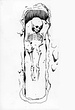
| James H. Oliver ... (E.L. Smithson: Grave IX: PG). Two children's skeletons one on top of the other. Cf. PD 329 for PD 430 for second skeleton, same deposit.
PG grave about 25m. SW of Cistern A at 46/ΜΔ.
[In some records, ... Developed Protogeometric |
Roman use fill in lowest 6.70m; Byz upper fill (dump). Notebook lists eight fills; subdivisions based on shelf groupings.
Subdivisions:
.1=Dumped fills 1-2, Byzantine
.2=Fill 3 (baskets 18-37)
.3=Fill ... 50-150 A.D. to Early Byz. |
Well dug through cistern at 64/Γ. Seems to have been stratified; four fills recorded but here treated as one as divisions are rather "arbitrary".
Agora V, p. 126: Constructed in late 1st c.; use filling ... 3rd c. A.D. POU (before 267 A.D.) |
Evidence of stratification into five layers, although joins between the layers. Layer VI added when the construction of the Roman building above required it. No subdivisions assigned.
Flask-shaped cistern ... Early 3rd-late 2nd c. B.C. |
| Mike Laughy ... This pyre was found within an otherwise mostly sterile fill directly under a white floor surface in the southern section of Area IV. It was located ca. 0.50m. east of a similar deposit, Pyre J 2:25. The ... 4th c. B.C. |
| Julia Shear ... Burial. Roman Temple south half, in fill south of temple crosswall and norh of polygonal wall, layer 37a.
Small, roughly circular pit. The diameter of the pit appeared to be only slightly greater than ... Late Helladic IIIC Late-Final Mycenaean/Submycenaean |
At 67/ΙΗ, at the northeast slope of the Areopagus.
Cistern with drawshaft, 4.60m deep. The drawshaft had been cleared to bottom in the eighteenth or nineteenth century, and some of the fill in the main ... Most second half of 3rd c. B.C. |
Cistern at the southeast foot of Kolonos Agoraios.
Nbp. 2369: Two chamber cisterns, 88/ΛΔ and 100/ΚΘ, united by a long straight passage running almost due N-S. A draw shaft at 95/ΚΘ is set just off the ... Use filling of late 4th-early 3rd c. B.C.
Accumulative fillings of late 3rd-early 2nd and late 1st c. B.C.
Upper dumped filling of 3rd c. A.D. |
Accumulated debris on the west side of the market square.
Related layers added 1999/2000 (JWH), e.g. "Gravelly layer above burning", "Clearing Classical floor", "Lowest level above bedrock", "Below burning", ... First half of 5th c. A.D. |
| Extract from notebook ΠΘ XIX, pp. 3644-3646. Well at 105/ΝΗ (report on sorting of pottery, July 19, 1951 - H.S. Robinson).
"Not a useful well" HSR.
Well dug to 1.50m., vi/9/36; dug from 1.50m. to bottom ... Early Roman; use fillings of 2nd. c. B.C. and 1st. and 4th. c. A.D.; dumped filling of late 4th. c. (HSR)
Fill I: 2nd. c. B.C.
Fill II-V: to second half of 4th. c. A.D.
Fill VI: mixed to Byzantine. |
| Pyre in House N, room 2, layer 5 (RSY=Pyre 8).
Near northern corner of room 6. Artifacts, bone, burnt logs, and cinders in square pit dug from level of layer 5, through layers 5 and 6; thin clay floor ... 325-300 B.C. |
Cistern at 9/Β (10/Β on plan), at the NW foot of the Areopagus, some 200m to the west of the Coroplast's Dump. It had evidently belonged to one of the small houses in that thickly populated residential ... Second half 4th c. B.C. |
|
|