|
|
Sacrificial Pit V in notebook = RSY Grave 19 ... Last quarter 6th. c. B.C. |
Cistern at 21/ΙΗ
Period of use fill dated to ca. 375-350 B.C., Upper fill dated to mostly first half of 6th c. B.C. in Agora XXX ... Ca. 375-350 B.C ... Cistern at 21/ΙΗ
Period of use fill dated to ca. 375-350 B.C., Upper fill dated to mostly first half of 6th c. B.C. in Agora XXX. |
Destruction debris in Late Roman Buildings on Lower north slope of Areopagus (see summaries) see now O-Q 18-19. See Agora VII, p. 227 and lists in JP's file (JP is Judith Perlzweig)
Deposit list under ... See Agora VII, p. 227 and lists in JP's file (JP is Judith Perlzweig)
Deposit list under O-Q 18-19.
Asterisk: M-Q 17-21* |
Well outside market square to the southeast, west of the Panathenaic Way. Accumulated use filling from first half of 1st c. A.D. to early 3rd c. Top to 14.65m. 4th c. dump; nothing significant catalogued ... POU First half of 1st c.-early 3rd c. A.D. |
A well outside the market square to the southeast, 20m west of the Panathenaic Way; Modern fill in upper 1.65m. with Early Roman dumped fillings below. Coins:
9 May 1939 #37 (dirt pile)
10 May 1939 #53 ... Late 1st c. B.C.-early 1st c. A.D. |
Laura Gawlinski ... Pebble floors of Roman date covered the northern half of a 6x6m square trench in ΕΛ, bounded to the west by the post-Herulian Wall and to the east by a wall from Byzantine Building D (Wall A) to the east ... Hellenistic/ 220-150 B.C ... This deposit should be called T 21-22: but won't be changed for practical reason. ... Also, in Agora XXXI, p. 151, a deposit T 21:1 was created by Margie Miles, changed to T 21:4 in the Database. |
Cistern on the lower Acropolis slopes, west of Panathenaic Way; dumped filling of 1st century B.C.
Bottom diameter 3.90m. Cistern with connecting draw-shaft and a dead end tunnel dates from Late Hellenistic ... 1st century B.C. |
Mouth and upper part of chamber cut away in modern times; two short passages, one to SW, encroaching on Mycenaean chamber tomb; here the builders apparently found the fill too soft for tunneling, so they ... Early third quarter of 3rd c. B.C. |
Circular well cut through the old road after it had gone out of use, and filled probably at the time of the building of the drain and building A, and the throwing of fill over the road ... Ca. 430-400 B.C. |
Well. Construction, use and dumped fillings of the Hellenistic period. Tile-lined well with a packing of jars behind the tiles; the well cut through (Fill 4) the passage of a cistern (B 21:25). At 9.00m ... Hellenistic |
Pit (= collapsed cistern). Fill mixed, late Hellenistic to early Roman. The cistern floor has an E-W channel, no doubt running from the pit at 107/Ζ to the well at 107/ΙΓ (B 21:24). Coins:
10 June 1939 ... 150-100 B.C. |
Dumped filling of 6th c. A.D. Coins:
3 May 1939 #1-2 (red earth above well)
9 June 1939 #1
10 June 1939 #1
12 June 1939 #1-#5
13 June 1939 #1
19 June 1939 #1-#2, #3 (Dump)
7 May 1940 #1
9 May 1940 #1
27 ... Early 1st-5th c. A.D. POU |
| Osteotheke. (Group N). Coin
7 May 1938 #7 83/ΜΔ (83-84/ΜΓ-ΜΕ: If I judge from p. 811, this grid would be the concrete retaining wall). Somebody else wrote the following grid on page 878: 83-85/ΜΓ-ΜΣΤ ... Early 7th cent. |
Reused as part of a modern cistern; scanty remains of ancient fill towards bottom. No containers of pottery ... 1st c. A.D. |
Cistern (and passage) on the north slope of the Areopagus. Fill badly disturbed in modern and Turkish times. The few ancient sherds seem to be chiefly early Roman-1st c. B.C. (p. 256).
Some finds labeled ... 1st c. B.C. |
Refuse pit at 51/Ζ; it had been partly cut away at the north by the late Roman retaining wall; the dumped filling a homogeneous deposit of figured, black and plain wares. Red figure oinochoe in the style ... Ca. 450-420 B.C. |
Cistern in valley west of the Areopagus. Dumped filling of late 1st. to early 2nd. c. and of 5th to 6th century. Coins:
7 June 1939 #12
8 June 1939 #18-#19
9 June 1936 #26 ... 1st.-2nd. c. A.D. |
A well outside the market square to the southeast, west of the Panathenaic Way; Diameter 1.10m ... 600-550 B.C. |
Pit in Tholos Trench V (below Layer e).
In plan it would seem to have been oval, though its east end is c/../ by the south wall of the North Archaic Home. Its N-S width is 1.25m, its E-W length is 1.40m ... 7th-early 6th c. B.C. |
Well at 34/ΚΔ.
a) Depth 13.60m. Little pottery (14 tins) and some of that made useless by loss of tickets during war.
b) Top to 13.00m (upper and transitional fills) 4th century. LRP ware and a 4th century ... Late 2nd to middle of 3rd cent; 4th century |
Back fill in an unfinished well, originally dug only to a depth of 3.80m. Apparently dug in the 3rd. c. B.C. and refilled at once; the filling contained a scattering of 5th. and 4th. c. fragments as well ... To early 3rd century. |
Crescent-shaped cutting in bedrock at 47/ΙΓ; on the north slope of the Areopagus, slightly to the west of the dromos of the Mycenaean Chamber Tomb.
Dimensions of cutting : max. diameter ca. 2.50m.; depth ... Ca. 500-450 B.C.
400-350 B.C. |
Pocket on the line of the early (Archaic) peribolos wall at entrance on the south side. Uncatalogued material: 215 sherds, 186 + frags. plemochoai and 4 objects.
Classical Ware : black glaze; mug; rilled-rim ... 3rd quarter 4th c. B.C. |
| Komos Cistern at 66/Κ, on the north slope of the Areopagus. Homogeneous fill.
Thirty-four stamped amphora handles. Eight Histiaian tetrobols, dating 170-160 at the earliest, found near top, possibly an ... Last quarter of 3rd c. B.C.-Early 2nd century B.C. |
Early Roman well with four fills.
fill 1: well sealed 1st. c. A.D.
fill 2: more bones than pots.
fill 3: nothing later than 1st. c. B.C.=POU
fill 4: similar to fill 3, a little earlier? Coins:
7 May 1940 ... Early Roman |
Well at 30/ΛΒ; the shaft possibly never used as a well; dumped filling with a small amount of fragmentary pottery ... Ca 500 B.C. |
Fill around the upper block of the southwest corner of the early (Archaic) peribolos wall, south of the Propylon, and hard fill at the side of a trench for a modern wall.
Uncatalogued material: 181 sherds ... 2nd c. B.C. |
Cistern with two tunnels, the one entering its neck cut off by an early Roman well, the other, at the bottom not excavated.
Chamber conical in shape, with a depressed draw basin in the center of the floor ... Early Roman-3rd c. B.C. |
Sacrificial Pit VI in notebook = RSY Grave 18 See also B 21:23 ... Ca. 525-500 B.C. |
Shaft (= well + caves) at 116-118/ΚΕ-ΚΣΤ Coins:
6 May 1939 #16-#21
8 May 1939 #35-#37
9 May 1939 #1
24 April 1940 #6 ... 2nd. quarter - mid-5th. c. A.D. |
Cistern at 53/ΝΕ, bottle-shaped, stucco-lined, in the east aisle of the peristyle of Roman House H (courtyard of Greek House G, just west of andron).
Lower diameter 2.73m.
Homogenous fill all apparently ... Into early 2nd century B.C. |
Called a Middle Helladic Well in the notebook ... Middle Helladic |
Clearing bedrock on line of early (Archaic) peribolos wall, east of entrance on the south side, west end. Uncatalogued material: 50 sherds, 83 fragments. of plemochoai.
Classical Ware : lekythos; plemochoai ... Early 2nd c. B.C. |
| Grave XXVI in notebook = RSY Grave 12 ... Ca. 525-500 B.C. or sightly later |
| Sacrificial Pit III in notebook = RSY Grave 6.
Small bit of calcined bones (discarded?) ... Ca. 550-530 B.C. |
| Rodney S. Young ... RSY/JP Disturbed Geometric burial over "Sacrificial Pit VI" (Grave B 21:22). Grave IX in notebook. Bones discarded?
Pottery found in the upper filling of a sixth century cremation pit, which had perhaps ... Middle Geometric II/Transitional to Late Geometric |
Small Mycenaean Chamber Tomb ... Myc. III A:1-2 |
Middle Helladic Gully ... Middle Helladic |
| Sacrificial Pit I in notebook = RSY Grave 20 ... Ca. 510-490 B.C. |
| Mycenaean Small Chamber tomb.
The cist measures 1,90m E to W, 0.75-0.90m N to S, max. depth -1.30m. Nothing was found in it; cleaned in modern times and used as a cesspool. Some of the SW part of it had ... Myc. IIIA, early 14th c. |
| Grave XV in notebook = RSY Grave 1.
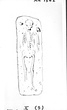
Part of a burial jar with bones of 18-month-old child. Position of body not determinable. Foot of jar had been broken to insert body of child and stopped with stones ... Second half of 8th. c. B.C. |
| Grave X in notebook = RSY Grave 14. PD 731-g ... Ca. 525-500 B.C. |
| Grave XIV in notebook = RSY Grave 13. PD 731-f ... Late 6th. c. B.C. |
| Grave XVI in notebook = RSY Grave 3.
Bones of a young child found inside. Discarded? ... 6th. c. B.C. |
| Eugene Vanderpool ... Grave. Bones discarded.
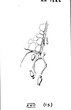
Burial lies over dromos of Mycenaean chamber tomb N 21-22:1. The roots of a tree had upturned the bones, but the head probably lay at the northeast ... Middle Geometric II |
| Grave I in notebook = RSY Grave 2.
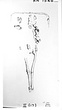
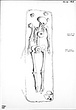
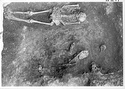
Inhumation burial in Cemetery on West Slope of Areopagus. Outline of grave disturbed by later cutting. Outstretched skeleton, probably of adult female. PD 731-a ... Late 8th century B.C. |
| Grave II in notebook = RSY Grave 17. PD 731-j ... Ca. 510-490 B.C. |
| Grave XVII in notebook = RSY Grave 15.
Only lower half of skeleton preserved. Bones discarded? ... Last quarter of the 6th. c. B.C. |
| Grave VI in notebook = RSY Grave 10. PD 731-d Ptg. 251 ... Ca. 520-525 B.C. |
| Sacrificial Pit II in notebook = RSY Grave 7 ... Ca. 540 B.C. |
| Grave V in notebook = RSY Grave 5. PD 731-c, Ptg. 244 ... Second quarter of the 6th. c. B.C. |
Early cutting beside Great Drain: 103-111/Λ-ΛΓ (= "Deep cutting" Pit at 107/ΛΑ).
Abandonment filling in channel for early drain; the fragment of a red figured bell krater, P 17000, probably to be dated ... Ca. 425-395 B.C. |
| Mycenaean Chamber Tomb Burials ... Myc. III A:1-2 |
| Grave VII in notebook = RSY Grave 21. PD 731-k ... Date uncertain, presumably 7th. or 6th. c. B.C. |
| Marcie Handler ... Fill within the drain from the basin on the west side of Roman Room B through Wall A.
After we removed the fill within the basin on the west side of Roman Room B (BZ XXVII p. 5325), we began excavating ... Late Roman |
| Well in East Colonnade of Roman House H. Diameter 0.80m, lined with field stones set in mortar. used as a cistern as well.
No useful pottery dates. Capital from colonnade A 3866 and part of shaft found ... 29 July 1970 |
| Well in West Colonnade of Roman House H. Covered by a large handsome marble well-head, apparently reused. Cut through bedrock. Diameter ca. 1.20m, water at -3.60m.
Two distinct POU fills. One at ca. -4.50m ... June-August 1970 |
| Well cut into bedrock under late Roman building in ΕΛ. 1.2m in diameter with small cutting of unclear function at south edge about 0.2m wide. Walls cut straight down, tapering near bottom to 0.8m. Footholds ... Late Archaic |
| Well in Room 7 of Roman House H, partially covered by caldarium of added bath complex (Room 6). Stone well-head; 0.85m in diameter. Stpped because of danger of collapse. Cut through bedrock, water from ... 6th c. A.D. |
Well south of the apse of Room 3, Roman House H. Cut through bedrock, diameter ca. 1.15m, stopped at ca. -10.80m because of danger of collapse. Water at very top, up to bottom of parapet between well and ... 2nd-4th c. A.D. |
Grave in cella of Hephaisteion. Grave XXII in notebook.
One skull with messy disintegrated bones ... 22 February 1939 |
Containers 1-ca. 139. The well shaft broken out into a large hole so that no sequence could be observed ... Mixed post-Herulian |
Containers ca. 140-207. From containers ca. 170 to bottom, catalogued objects seem to represent a gradual accumulation from 1st c. A.D. to mid-3rd c. Divisions between are arbitrary and therefore combined ... Mixed post-pre-Herulian |
'Mouth and upper passage' on deposit list. Containers 1 and 2. Pottery in mouth of cistern in upper tunnel. Coins:
5 May 1939 #1
9 May 1939 #10-#11
12 May 1939 #4 ... 1st c. with earlier material |
'Upper fill' on deposit list. Containers 3-8. Terminus post quem in 190s given by coins. Some mixing with upper fill. Coins:
9 May 1939 #4, #6, #8
10 May 1939 #2-#3(?)
11 May 1939 #3
12 May 1939 #3
13 ... Ca. 225-175 B.C. |
'Lower fill' on deposit list. Containers 8-33, (34 mouth of lower passage). Coins:
9 May 1939 #1-#3, #5, #7, #9
10 May 1939 #1
11 May 1939 #1-#2
12 May 1939 #1-#2
13 May 1939 #2-#3(?)
15 May 1939 #1-#6 ... Ca. 250-215 B.C. |
Pit in bedrock (disturbed child's grave?). No bones or ashes. No lots.
No coins listed. P 14520 was certainly from the north end, doubtless a grave offering; few sherds (first half of 5th century) came ... Late 6th - early 5th c. B.C. |
Pit under floor of "Storeroom" south of fish mosaic in Roman House H.
Small peanut-shaped pit ca. 0.50x0.90. No association with architecture. Small group of votive miniatures ... 4th c. B.C. ? |
Destruction fill in "Storeroom" south of fish mosaic., outside SW corner of Roman House H. In SW corner of room an area of broken jars. heavy deposit (ca. 0.45m thick) of destruction fill over whole room ... 3rd c. A.D. |
Well in Room 5 of Roman House H.
Under cement border of andron of Greek House G. Diameter 1.10m, cut through bedrock. water at ca. 3.55m. Hand or foot holes along one side.
0-7.25m crushed bedrock fill ... 5th c. B.C. |
| Grave XII in notebook = RSY Grave 9 ... Just after the middle of the 6th. c. B.C. |
Grave XXIII in notebook = RSY Grave 46.
Late Hellenistic filling in a disturbed grave, west of Areopagus ... 19 June 1939 |
Coins:
9 May 1940 #1-#2 ... 1st. c. A.D. |
House K: Brown fill (publ. House U). Filling between terrace wall and house wall at the extreme west end of the Areopagus; a brown gravelly filling of early Roman date found here undisturbed but occurring ... Early Roman |
| Mycenaean Chamber Tomb occupies a considerable part of the western half of section ΕΕ; lies about half way up the north slope of the Areopagus towards its eastern end, just below the highest point of the ... Myc. III A:1 |
West Terrace, South End, Layers IV and V. Heavy dumped filling associated with terrace walls at the extreme south end of the excavations in the Areopagus industrial area. The proportion of figured and ... Ca. 420-390 B.C ... Hesperia Suppl. 47 (2013), p. 21, n. 30 ... Agora XII, p. 384 ... Agora XXI, p. 96. |
Late Roman Fills: SE Building, Conglomerate Wall. (see O-Q 18-19)Deposit list under O-Q 18-19 Coins
21 May 1938 #14
23 May 1938 #1-#2
24 May 1938 #2, #3-#4
25 May 1938 #3 Asterisk: O-P 20-21* |
Two pebble floors of Roman date, broken into at the SE and north, covered a 6x5m trench in ΕΛ, bounded by the unexcavated east trench and a wall from Byzantine Building D (Wall A). Under these pebble floors ... 220 - 150 B.C. |
Well 21: Neolithic ... 17-19 April 1939 |
Well at 3/Ζ (see cistern 21/ΙΗ, upper fill) ... 600-550 B.C.- with some later disturbance |
Mycenaean Grave below Stoa stylobate opposite pier 21, about 0.75m below the bottom of the Stoa conglomerate foundations. Although only the south side and the west end could be certainly fixed, the dimensions ... Myc. III A-early IIIB |
| Square Byz. Well South of Middle Stoa Pier 21 (Iliad Well) Estimated Grid ... Byzantine |
Coins:
8 April 1936 #13
1 May 1936 #21 ... Byzantine-Turkish |
Also called Turkish well. Coins:
19 April 1933 #1-#4 ... 19 April-4 May 1933 |
Indicated as "Grave 6" in notebook but recognized as not a grave: "probably a rubbish pit" [deposit notebook summary]. Concentration of pottery, burning, animal bones, snail shells and seashells, probably ... Late 4th-early 3rd c B.C ... Concentration of pottery, burning, animal bones, snail shells and seashells, probably a refuse pit [Agora XXIX, p. 453) ... Coins:
21 February 1935 #1 |
Geometric Well at ca. 21/Κ beneath the west colonnade of the Square Peristyle, west of the north end of the Stoa of Attalos ... Late 8th century B.C. |
Cistern connected by tunnel to another chamber filled in Byzantine period. Small Hellenistic deposit on floor. somewhat contaminated by Byzantine fill above
No stamped amphora handles later than 3rd c.; ... 250-190 B.C. |
| Grave 21 in notebook. Grave twice disturbed. Of the skeleton only the thigh bones were found. No offerings.
Objects listed in nb. as from Grave 21 are taken to be with grave 20 (probably pyre objects) ... Late Geometric |
North of east branch of Great Drain. Coins:
21 June 1973 #1 ... 4th c. A.D. |
Roman Water Mill: Destruction fill on floor and in pit. Includes also fill from mill drain and in manhole at 14/ΛΣΤ, plus gravel fill of gully formed after construction and probably after destruction of ... Second half 6th c. A.D. |
Coins
20 May 1957 #1-#55
21 May 1957 #1-#79 P 26235 and P 26236 have nothing to do with the coins. Found in lower floor by pit ... Destroyed 267 A.D. |
Late fillings over early walls.
Tin 120 sherds put with those from the same fill dug 21 February 1934, just to the south. Coins:
21 February 1934 #3-#7
9 March 1934 #2 ... To 5th c. A.D. |
| Stucco-lined bottle-shaped cistern, with tunnel and subsidiary manhole, in SW Baths, Room Α 10. Homogeneous dumped fill, mostly of mold-made bowls and and molds for terracotta figurines. Sixteen stamped ... 225-190 B.C. |
Well in Stoa Shop 6 (5th century).
No evidence for period of use. Considerable dumped filling of fragmentary black and plain vases; no figured fragments are preserved, but the small amount of impressed ... 450-425 B.C ... Hesperia Suppl. 47 (2013), p. 21, n. 27 ... Agora XII, p. 398 ... Agora XXVII, p. 232. |
Cistern System #1f: Shaft at 1/ΝΘ = Well A. Scanty dumped filling. Coins:
19 February 1936 #2-#3
20 February 1936 #16-#20
21 February 1936 #5-#7
22 February 1936 #1 ... Mid-4th to 3rd c. B.C. |
Well at 21/Ε (beneath Library of Pantainos).
The clearing of the well was abandoned because of a cave-in of the rock walls. Heavy dumped filling, the proportion of fine black table ware high ... Ca. 440-425 B.C. |
Soft Trench behind Stoa Stylobate, opposite Piers 21 and 22, along W face of Shop front wall. Herulian destruction debris at the north end of the Stoa of Attalos. Coins:
20 February 1954 #1-#2
22 February ... Late 3rd c. A.D ... Soft Trench behind Stoa Stylobate, opposite Piers 21 and 22, along W face of Shop front wall. ... Crosby, Agora X, pp. 119-120, no. ... Crosby, Agora X, pp. 121-122, no. |
Small compact deposit. Cutting. High proportion of good black glaze; 21 loom weights (19 pyramidal, 2 lentoid); a very large red-figured skyphos somewhat recalls the style of earlier work of the Dinos ... Ca. 430-420 B.C. |
Martyr at Δ6. Top strosis (Byzantine-Turkish) discarded.
Strosis 2, late Hellenistic (Lot ΔΕ 21)
Strosis 3, early Hellenistic (Lot ΔΕ 22)
Strosis 4, to mid-4th c. B.C. (Lot ΔΕ 23)
Nothing catalogued from ... To mid-4th c. B.C. |
|
|