|
|
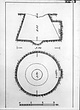
Rectangular shaft neighboring the well D 17:12. Dug only to a depth of 4.40m. and provided with two galleries or channels extending from it. Apparently never intended as a well. Refilled with the dug bedrock ... 4th c. B.C. |
Coins:
16 April 1934 #2
17 April 1934 #1 ... Late Roman- Ca. A.D. 400 |
Pithos at 15-17/ΠΕ-ΠΣΤ. Coins:
9 March 1937 #6-#8
16 March 1937 #15-#17 ... 8-16 March 1937 |
Stratified well; very late Roman verging on Byzantine. Coins
19 April 1939 #1-#8
22 April 1939 #1-#2
25 April 1939 #1
15 May 1939 #1 Subdivisions:
.1=0.00-15.25m.
.2=15.25-21.00m.
.3=21.00-22.00m ... 3rd-5th c. A.D.
9th c A.D. |
Containers 43-47. Coins:
22 April 1939 #1-#2
25 April 1939 #1
15 May 1939 #1 ... 3rd c. A.D. |
| Stucco-lined bottle-shaped cistern, with tunnel and subsidiary manhole, in SW Baths, Room Α 10. Homogeneous dumped fill, mostly of mold-made bowls and and molds for terracotta figurines. Sixteen stamped ... 225-190 B.C. |
Furnace Dump from N. Hypocaust in Bath to East of Poros Building. Coins:
26 March 1948 #4-#8
27 March 1948 #1-#3
29 March 1948 #2-#7
1 April 1948 #2-#3
3 April 1948 #14-#15
7 April 1948 #16-#27
8 April ... Second half 3rd c.-first half 4th c. A.D. |
Channel J (in ΗΗ)
Cutting that probably originally held a drain. Packed with amphoras and other coarse pottery. It tapped the poros aqueduct wall just East of our explanatory trench at the East end of ... 1st c. B.C. - early 1st. A.D. |
Great Drain and Pit at 55-56/ΙΗ-ΙΖ (Roman Group K). Coins
8 June 1933 #4
9 June 1933 #5-#6
10 June 1933 #1-#12, #13-#16
13 June 1933 #1-#25, #26-#29
14 June 1933 #3-#4
15 June 1933 #1-#5, #6-#8
17 June ... Mid 3rd century |
| Hole at 57/ΛΣΤ = Pottery Dump at 57/ΛΣΤ. May well have accumulated on the spot where it was found, its fragmentary state being attributable to the later rubble wall laid over it.
Cf. also P 19982 (ΟΟ ... Ca. 400-375 B.C. |
Great Drain fills, including "packing over elliptical tiles" and "gravel fills". The central drain area covered by the sections below; other sections are with other deposits. Coins:
9 May 1947 #2-#5
16 ... 1st c. A.D. |
A small concentration of pottery in lowest 1.80m., possibly a use fill. Three fills above, with little pottery, ranging from Hellenistic to late Roman in date. Coins:
26 February 1934 #4-#6
27 February ... 325-200 B.C. |
Digging abandoned at 17.10m.
Nbp. 2863: The fill in the mouth to -6.50 was a dump of mixed hellenistic and late roman sherds. From -6.50 to -11.00m. small stones with a few late roman sherds 4th-5th c ... 4th-5th c. A.D. |
Foundry dumps north of Church of Holy Apostles. Coins
27 March 1952 #3-#6
28 March 1952 #1-#3
29 March 1952 #1-#7
14 April 1952 #15-#17
15 April 1952 #7
22 April 1952 #5-#6
29 April 1952 #1
9 May 1952 ... |
| Herulian Debris in a house on the lower slopes of the Hill of the Nymphs: House P = South House; Room 2 = Dining Room; Room 3 = Kitchen; Room 18; Room 23; Room 24. Coins:
9 August 1947 #1-#37, #47-#49 ... Mid 3rd c. A.D. |
Cistern at the southeast foot of Kolonos Agoraios.
Nbp. 2369: Two chamber cisterns, 88/ΛΔ and 100/ΚΘ, united by a long straight passage running almost due N-S. A draw shaft at 95/ΚΘ is set just off the ... Late 2nd-early 1st c. B.C.-86 B.C. |
| Use filling of middle of 1st to late 6th c. (Roman Group M); dumped filling of 9th and 10th c. Down to a depth of about 21.00m. the fill of the well contained very few objects, the latest of them being ... 1st-6th c. A.D. |
Turkish Pit at 39/Ε Coins:
14 March 1935 #17
15 March 1935 #16 ... Turkish |
Sullan destruction debris. Coins:
27 April 1940 #3-#5
14 May 1940 #5-#6
15 May 1940 #3-#7
17 May 1940 #11-#13 ... 3rd. to 1st. c. B.C. |
| A flask-shaped storage pit or cellar, cut in the rock at the south edge of the levelled top of Kolonos Agoraios. Filled late in first quarter of 6th. c. B.C. (2.95m from east to west by 2.70m from north ... First quarter 6th. c. B.C ... Hesperia 17 (1948), p. 159, n. 15 ... Agora IV, p. 234 ... Agora VIII, p. 125. |
Hoard of 10 Byzantine coins ("all turned up with one blow of pick"). Late strosis. Coins:
15 March 1934 #12-#21 (hoard)
16 March 1934 #17 ... Byzantine |
A very homogeneous dumped filling and no period of use. Apparently a failure as a well.
T 263-T 289 resorted and reduced August 1967. Cf. BI 157 "from behind the curbing of the well by Stoa pier 3." Estimated ... Ca. 470-460 B.C ... Hesperia 6 (1937), pp. 15-17 ... Agora XII, p. 392 ... Agora XXI, p. 98. |
Essentially uniform fill of III-IV c. A.D. with a Byzantine upper fill. Coins:
14 June 1937 #1-#3
15 June 1937 #2
16 June 1937 #1
17 June 1937 #1-#2
18 June 1937 #1-#4
19 June 1937 #1-#4
9 June 1938 #1-#3 ... Late 3rd-mid-4th c. A.D. |
| Hellenistic filling in N.W. corner of Section (39-46/ΙΘ-ΚΓ inclusive). Coins:
14 July 1931 #42, #64
15 July 1931 #6 but grid 42/ΚΔ, #34-#37
16 July 1931 #15-#16
17 July 1931 #4-#12
18 July 1931 #1-#5, ... 4th.-early 2nd. B.C. |
Pit in Road at 52/ΚΖ-ΚΗ Coins:
11 March 1938 #10-#17
12 March 1938 #1-#6, #88-#93
14 March 1938 #8-#10
15 March 1938 #21-#23 Herulian? ... Roman |
Cistern with two fills. Lower fill in cone on floor, with dumped upper fill above. Coins:
27 April 1940 #3-#5
14 May 1940 #5-#6
15 May 1940 #3-#7
17 May 1940 #11-#13
20 May 1940 # 8-#9
21 May 1940 #1 ... Late Hellenistic |
Well dug through cistern at 64/Γ. Seems to have been stratified; four fills recorded but here treated as one as divisions are rather "arbitrary".
Agora V, p. 126: Constructed in late 1st c.; use filling ... 3rd c. A.D. POU (before 267 A.D.) |
Well cut through the floor of a cistern. Apparently a dumped fill in an unused well. Coins:
16 March 1934 #15 (illegible)
17 March 1934 #2
19 March 1934 #1-#4
20 March 1934 #1-#3
22 March 1934 #1
23 March ... 1st-early 2nd c. A.D. |
Dumped fillings thrown in during second quarter of 1st c. B.C. containing mostly debris resulting from Sulla's sack in 86 B.C.
Agora XXIX, p. 464: Four fills distinguished during excavations ... but seemingly ... Late 2nd c. and early 1st c. B.C. POU; 110-75 B.C ... B.C. containing mostly debris resulting from Sulla's sack in 86 B.C.
Agora XXIX, p. 464: Four fills distinguished during excavations ... but seemingly with no chronological differentiation (p. 580).
... Coins:
7 March 1938 #16-#17
8 March 1938 #23-#25
9 March 1938 #8
10 March 1938 #6-#17
11 March 1938 #3-#12
12 March 1938 #14-#29
14 March 1938 #7-#14
15 March 1938 #10-#11
10 May 1938 #1-#10 |
"Red Fill" (extending to bedrock or near, over most of area). Mainly first century after Christ with later disturbance. Coins:
17 April 1936 #10-#13
18 April 1936 #1
20 April 1936 #13-#17
21 April 1936 ... 1st-2nd c. A.D. |
| Anne McCabe ... Adjacent to the SW face of Byzantine Wall 14. The circular cutting, 0.90m in diameter, appeared at 53.504m under a layer of loose rubble (Lot 481). Wall of the well roughly built, consisting at the top ... 11-19 July 2006
24 June-21 July 2009 |
Well at the southeast foot of Kolonos Agoraios.
Use filling of 1st c. A.D.; dumped fillings of 3rd c. and of early Byz. times. Coins:
15 June 1937 #1-#2 (earth)
16 June 1937 #14-#20 (earth)
17 June 1937 ... 1st c. A.D.=POU |
Great Drain South (ca. 70-113, from SW edge of section as far north as the Roman Bath) Hellenistic Sand Fill. Silted-up filling of the southern branch of the Great Drain, abandoned due to some damage at ... 4th. c.-86 B.C. |
Filling of Middle Drain (Tr. H+F in Section Ζ). Sand and gravel filling of the old course of the west branch of the Great Drain, a large (ca. 1.00m. deep and 1.30m. wide) underground channel in the area ... 150-100 B.C. |
Accumulated debris on the west side of the market square.
Related layers added 1999/2000 (JWH), e.g. "Gravelly layer above burning", "Clearing Classical floor", "Lowest level above bedrock", "Below burning", ... First half of 5th c. A.D. |
Containers 1-14. Very fragmentary pottery. Some material earlier than late 1st c. A.D. Coins:
10 May 1939 #4-#5
11 May 1939 #4-#9
12 May 1939 #5
15 May 1939 #7-#9
17 May 1939 #1-#2
23 May 1939 #1 ... Late 1st c. A.D. |
Square Peristyle (Square Building) Constructions fill + other (square peristyle area); fragmentary and with some earlier material but in the main, where undisturbed, a homogenous deposit. Coins:
26 May ... Βefore 300 B.C. |
At 67/ΙΗ, at the northeast slope of the Areopagus.
Cistern with drawshaft, 4.60m deep. The drawshaft had been cleared to bottom in the eighteenth or nineteenth century, and some of the fill in the main ... Most second half of 3rd c. B.C. |
"Fauvel Collection"
Collector's dump? Debris in the cellar of a modern house, probably once that of F.S. Fauvel.
The collection included vases of all periods, from Geometric to Turkish; a number of the ... Modern Context |
Rodney S. Young ... (E.L. Smithson: Grave XXXVI:PG). Early fill over bedrock. No remains.
Two fragmentary unburned vases were found together on bedrock, beneath Roman and Byzantine fill. Disturbed earth over bedrock for several ... Early Protogeometric |
| Komos Cistern at 66/Κ, on the north slope of the Areopagus. Homogeneous fill.
Thirty-four stamped amphora handles. Eight Histiaian tetrobols, dating 170-160 at the earliest, found near top, possibly an ... Last quarter of 3rd c. B.C.-Early 2nd century B.C. |
Burned filling over area of NW Temple (apparently Herulian destruction debris) = Trench I, 18-22/ΛΑ-ΜΣΤ and northwest trench, center at 15-19/ΛΣΤ-Μ Coins:
28 March 1933 #25-#28
29 March 1933 #16-#21
30 ... 28-30 March 1933
5-6 April 1933 |
| In room A. Concentration of artifacts and burning in stratum, no pit discerned. The pyre lay below a Late Hellenistic fill with a smooth earth surface. It is described as a black patch of earth with sherds, ... 350-250 B.C. |
| Cistern at 77/Μ on lower north slopes of the Areopagus. Bottom diameter of 2m connected by tunnel to cistern M-N 18:1.
Only stamped amphora handle dates slightly after 240. Latest coin dates about 200 ... 3rd c. B.C.-196/190 B.C. |
| Cistern on lower north slope of Areopagus.
Latest of thirteen amphora handles dated ca.199; twelve legible coins, the latest dating ca. 196-190. Three intrusive pieces:two semiglazed fragments and piece ... 260-190 B.C. |
Evidence of stratification into five layers, although joins between the layers. Layer VI added when the construction of the Roman building above required it. No subdivisions assigned.
Flask-shaped cistern ... Early 3rd-late 2nd c. B.C ... Hesperia Suppl. 50 (2018), pp. 15, 17, 18, 71, 153, nn. 32, 7 ... Agora IV, p. 238 ... Agora XII, p. 389. |
Two periods of use.
Outside the SW corner of the market square, to the west of the north-south road; lower use of filling, of 1st to early 2nd c. A.D. Coins:
26 May 1937 #1 [to 8.30m.]
9 June 1937 #2-#4 ... 10 -11 June 1935
20 May-20 June 1937 |
West Road and Drain. (Road, drain and closely related cuts.) Packing in line of ancient road running along the northwest shoulder of the Areopagus. Includes excavation of 1957 titled "Road Area to North", ... Late 6th c. B.C. - Roman |
Middle Stoa Building Fill (with filling to S) (See also Κ: H-I-J 14-15 and Λ: K-M 13-14)
This deposit is not definitive and must be considered with the above deposits before details are entered into database; ... To ca. 180 B.C. |
House R, fill under drain tiles and fillings associated with house K in industrial area, including what was C 19:15, plus C 19:16 and
C 19:17.
a) House built as dwelling in second half of 5th.c.
b) Used ... Ca. 5th and 4th c. B.C. |
A 3rd. c. B.C. cistern and an unfinished rectangular cutting of the 2nd c. B.C. which destroyed some of its upper part. These two features are combined in this deposit; the following objects are identified ... 3rd-2nd c. B.C. |
Dumped filling in a well on the west slope of the Areopagus (apparently separate, no mends between them, but differing little in date) the bottom filling apparently thrown in towards the beginning of the ... Ca. 425-400 B.C. and earlier |
Cistern-shaft at the southeast foot of Kolonos Agoraios.
Nbp. 2369: Two chamber cisterns, 88/ΛΔ and 100/ΚΘ, united by a long straight passage running almost due N-S. A draw shaft at 95/ΚΘ is set just ... Upper fill, Late Roman with some Hellenistic.
Middle fill, Sullan debris to last quarter of 1st c. B.C.
Lower fill, 4th-3rd c. B.C.=POU and abandonment |
| Second century B.C. fill with early 13th c. A.D. fill in mouth.
The Byzantine objects from the mouth are P 13713-P 13718, L 3585.
Lower fill contained bones of many infants and dogs.
The bones from this ... Mid-2nd c. B.C. |
Lamps all found together at the southeast corner of the excavated area, in a deposit running in part under the dike of earth which has been left against the wall of the street.
Includes 10 lamps in Section ... 17-18 June 1931
15 May 1933 |
Destruction debris in Late Roman Buildings on Lower N slope of Areopagus (see summaries under M-Q 17-21).
Over 130 coins came from this filling, of which some 51 survived in a condition to permit accurate ... 6th c. A.D. |
|
|